RICO
Was the Georgia Election Stolen?
Roger Stone, a man with a tattoo of Nixon on his back, suggests that it was. Hot Air is gravely upset at the suggestion:
Brian Kemp didn’t steal the 2022 election from Stacey Abrams. The truth is that rightly or wrongly Kemp believes that Trump lost Georgia fair and square and is unwilling to lie about it. Guess what? Lying is a bad trait, and while common enough in politics it is hardly something to be admired. How many of us hate politicians because they are a bunch of liars? Count me in that camp.... it is just... disgusting. Every Trump “influencer” repeats the same tired lines about Trump’s opponents and regurgitates the most fanciful and slanderous attacks.
I don't know if the 2022 election was stolen, but it was a repeat contest from an election in 2018 that I actually voted in. That election was as shady as it was possible for an election to be; I've written about it in detail (scroll to "Georgia"). I don't have any confidence at all that Kemp isn't cheating in every election, because his behavior in that one was absolutely disgraceful. The system they had in place was perfect for fraud, too, lacking any capacity to be audited because there were no actual ballots to check it against.
Hot Air points out that Kemp won by 300,000 votes, which you might think was outside the margin of fraud. The un-auditable system they had in 2018 was replaced with another vote system, Dominion, at the order of a Federal court. Yet over 400,000 votes in Georgia's 2020 election lacked chain of custody, which was 67% of the 'drop box' votes. That election was decided by 12,000 votes.
Ultimately the establishment remains invested in assuring us that our elections are reliable and, therefore, that they justify and legitimate the power of the elected. I don't believe that anymore, and I definitely don't believe it in Georgia's case particularly. Anything Kemp and his ilk are in charge of is is untrustworthy, as they have proven by their own actions.
The Language of Trees
Yesterday I took a hike on the Mountains-to-Sea Trail. I didn't do the whole thing, just a section near Haywood Gap.
Rest in Peace, Mr. Buffett
I remember first hearing this one playing on the radio in the family car when I was a kid. It gave us all a laugh and I've enjoyed his music ever since.
Local Government
Continuing the topic of rebuilding, one of the themes that emerged in the recent discussion was that of local government. AVI suggested that a lot of the difference in the need of government has to do with the facts on the ground about a locality: dense populations may need more, he suggests, whereas rural areas may be able to make do with much less. Douglas added that he thought there was a general problem about trying to nationalize rather than localize problem-solutions, and that a focus on locality might be beneficial. Elise's proposal makes a lot of sense in a community in which people know each other, and is harder to implement as actual knowledge of candidates has to be mediated by, well, media.
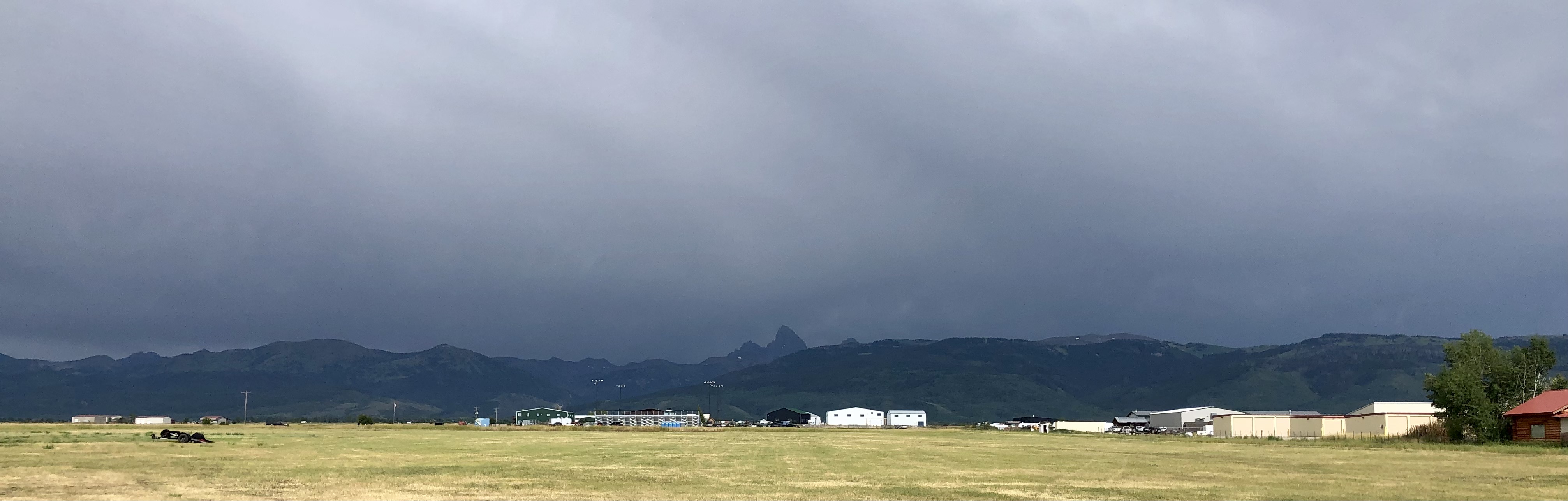
By coincidence, Thos. and I had a discussion on the same subject in person over some Thai food (which is improbably popular in the Teton Valley: there are a surprising number of Thai restaurants given a population that is relatively non-diverse, mostly descended from the Mormon settlers of the late 19th to early 20th centuries). The role of the local is often underexamined, but it is also where I have been focusing my practical efforts for several years now: abandoning national and state politics as hopelessly corrupt, nevertheless there is a lot of practical good to be done in your own community.
One of the reasons that a voluntarist society has come to make sense to me is that I can see how much practical good is actually done by such organizations in communities, which compares extremely favorably to the good actually accomplished by larger-scale government organizations (or professional organizations like public schools even at the local level). There's no reason that you can't make your living privately, and still contribute to the public good as a member of a volunteer local 'government' organization -- to whatever degree it is really proper to refer to such an organization as a government, since no one acting in the public interest here is employed by the government.*
There is another question about the importance of planning. Localities really do benefit from planning at a higher level than the individual: while the market can do a lot to align interests about how various properties are used, it can also be helpful to have a higher-level perspective to ensure that there are not bottlenecks in traffic, pollution of water sources that are of general utility, a large amount of wild space that does not get developed so that the natural beauty and wildlife continue to flourish, and so forth. In principle a voluntary council like the old Icelandic Thing could do this, but in practice America has long chosen to depend on coercive organizations -- even privately, as with Home Owners Assocations -- in order to compel obedience to the decision of the planning council. There is an important discussion to be had as to whether coercion is really required, and if so to what degree, and how to ensure that it minimally troubles human liberty.
So again: what do you think about all of that?
* I think I've told the story of an old man who was upset that we had temporarily blocked his driveway with a fire truck while fighting a wildfire that was literally just over the ridge behind his house -- indeed, the truck was stationed there specifically to protect his house. He was furious with us anyway, and finally said the worst thing he could think to say to us: "The Fire Department is no better than the government."
A Well-Earned Ale
Today I got up and lit my smoker before my first meeting. Over the course of the day, in addition to work, I smoked two whole Boston Butts and a beef Chuck roast. I also pressure washed the motorcycles and my deck, then waxed the bike, then made dinner out of some of the smoked meats. Then I broke the rest down and stowed it — three gallons of pulled pork alone.
Sierra Nevada has a brewery over by the airport, so we get their local stuff. I haven’t tried this one before. I’m pretty sure I have earned it, though, so I hope it’s good.
'The Gun-Show Loophole'
A restoration of rights for nonviolent felons in Wyoming took effect July 1 and includes the right to “use or knowingly possess” a firearm.But it remains unclear for some whether that means nonviolent felons can buy firearms from licensed gun dealers. Having and using a gun is one thing, but legally being able to buy a gun, which still requires a federal background check, isn't as clear....Dennis Mazet, who owns High Country Sporting Goods in Riverton, told Cowboy State Daily that he was also OK with selling firearms to nonviolent felons who meet all the same qualifications as anybody else legally eligible to buy them.However, he also wondered if somebody with any sort of felony on their record could pass a federal background check. Dealers must refuse any sales to people who don’t pass.“I would have no problem with it, but I don’t know if they could pass the federal background check,” he said. “That’s done through the FBI.”
The rest of the piece includes an interesting perspective from GOA, whose opinion is that the right to keep and bear arms was never barred to nonviolent felons under Wyoming law anyway. They opposed the section restoring the right to bear arms -- along with the rights to vote, hold office, and several others -- on the grounds that it gave the impression that the right had been 'restored' when it was never removed.
This is, of course, exactly what is meant when you hear people talk about 'closing the gun-show loophole.' Only gun dealers have to go through the FBI before they can sell you a gun; private citizens do not. You could buy a gun from me if I had one I wanted to sell you at a price we agreed upon, just as with any other piece of property I own that I wish to sell. The FBI has no part in our private business. Dealers at gun shows still have to run the FBI checks, but private citizens who happen to meet there and want to trade, buy, or sell their private property can do so lawfully. These restored Wyoming citizens therefore have an option to lawfully purchase the arms they may lawfully carry.
That's what the advocates of control would like to change. Then it wouldn't matter what your state legislature said, as long as they could trust the Federal agents at the FBI to say "no."
A Pricey Renovation in W. Asheville
Tennessee Holds the Line
The Athenian Way
Last week the NYT published an opinion piece suggesting what the author described as a better way for American democracy: dispensing with elections in favor of the distribution of offices by lottery. Students of history will know that this was in fact tried during the Athenian Democracy.
There are two broad things to be said here. The first is that, like all suggested reforms, this is bootless because the system is too corrupt at this stage to be reformed. There will be no elimination of mass-scale deficit spending until the dollar collapses because the political class is too addicted to the power of spending money. Nor will the size of government will be reduced, certainly not at the scale that would be required to make it affordable. The bureaucracy will not return its stolen legislative function to Congress, and Congress doesn't want it back in any event. The national debt will not be reined in, but will eventually destroy the dollar at least and the nation most likely. There will be no term limits because Congress itself would have to vote on them, and so too here. They will not replace the system they've already learned how to control in a manner that reliably lends them power. We can only wait patiently for the collapse that is coming, and we can afford to be patient because the course they are determined upon leads there inevitably.
That first thing said, the second thing is that ideas about how to rebuild once the collapse occurs are wisely considered. We shall have to do so eventually, and probably sooner than later. So what about this one?
Plato was hotly against it, to start. He felt that this lottery idea took the notion of equality much too far; or, more precisely, that it arose from the error of deciding that equality meant that everyone was equally good rather than that everyone should have the same test of their goodness applied to them. On the former view, the lottery seems sensible since anyone is as good as anyone else, and therefore it hardly matters who is sheriff or mayor or President; on the latter, it's obvious that you want to apply the test and then select only the best candidate.
The old saying, that "equality makes friendship," is happy and also true; but there is obscurity and confusion as to what sort of equality is meant. For there are two equalities which are called by the same name, but are in reality in many ways almost the opposite of one another; one of them may be introduced without difficulty, by any state or any legislator in the distribution of honours: this is the rule of measure, weight, and number, which regulates and apportions them. But there is another equality, of a better and higher kind, which is not so easily recognized. This is the judgment of Zeus; among men it avails but little; that little, however, is the source of the greatest good to individuals and states. For it gives to the greater more, and to the inferior less and in proportion to the nature of each; and, above all, greater honour always to the greater virtue, and to the less less; and to either in proportion to their respective measure of virtue and education. And this is justice, and is ever the true principle of states, at which we ought to aim, and according to this rule order the new city which is now being founded, and any other city which may be hereafter founded. To this the legislator should look-not to the interests of tyrants one or more, or to the power of the people, but to justice always; which, as I was saying, the distribution of natural equality among unequals in each case.
But there are times at which every state is compelled to use the words, "just," "equal," in a secondary sense, in the hope of escaping in some degree from factions. For equity and indulgence are infractions of the perfect and strict rule of justice. And this is the reason why we are obliged to use the equality of the lot, in order to avoid the discontent of the people; and so we invoke God and fortune in our prayers, and beg that they themselves will direct the lot with a view to supreme justice. And therefore, although we are compelled to use both equalities, we should use that into which the element of chance enters as seldom as possible. (Lawx VI 757b-d)
At our present moment, one might argue (thinking of WF Buckley's dictum, perhaps) that we could hardly do worse. Indeed, how much worse could the lottery do than to assign powers to the senile, to crackheads, to those so aged or infirm as to be incapable of effectively wielding office? To the corrupt, the wicked, etc? I could easily provide links to exemplars of each of those charges, but each of you can readily call to mind examples of them also.
Since we cannot reform things in the present moment, however, it is sensible to take Plato's objection on board in anticipation of the rebuilding to come. We do need a system for identifying those with the right virtues for any offices that we decide are necessary.
That leads to another question: what offices are those, really? I am increasingly of the view that there should be none, or almost none; and those that do exist should be filled voluntarily and without pay, thus having neither power nor money to entice the corrupt to enter into the business. Yet it is worth pausing, first, to list what functions we really want a government to perform -- and, then, whether or not those functions might be performed as well or better by a private agency. Presumably we will still want roads, for example; but here in Western North Carolina roads are built by private contractors, and the only role the government plays is a fundraising one (well, and regrettably also a planning one: that would be far more wisely outsourced to private engineers than the corrupt officials who end up in charge of it).
Presumably there needs to be someone to fight fires, but volunteers do that well in most of the country already; again, the government's primary role is in funding the volunteer effort. I think policing could be done at least as well by a volunteer group, perhaps an elected (and unpaid) sheriff backed as necessary by a posse drawn from the trusted members of the community. Perhaps we could do without prisons, even, if we resumed hangings and beatings of the criminal; I suspect that would be more effective at reducing predatory crimes, as well. Juries are in fact already drawn by lottery, more or less; perhaps judges could be, at least from a pool of people admitted as qualified to serve as a judge.
What else? Food safety? We already rely on private ratings (even free ones, like Yelp) to make many purchasing decisions. If someone wanted to rate food or drug safety and developed a reputation for reliable ratings and honest work, would they not enjoy more public trust than the CDC or FDA?
It might seem as if there might be a need for concentrated power to resist concentrated power: perhaps only a government could effectively restrain a powerful corporation. Yet we have seen, in Afghanistan as elsewhere, that distributed power is often most effective at resisting concentrated power. In spite of the President's favored suggestion that you would need an F-15 rather than an AR-15 to resist the US government, in fact the opposite is true. F-15s require easily broken supply chains and easily-killed experts to be effective; what worked was a vast number of determined men, widely distributed, with rifles.
It is worth thinking about all of this. What do you think?
"30% Chance of Rain"
In fairness, that was the Weather Channel. The radar app on my phone said 90%. I had a pretty good feeling which one was going to prove to be correct.
All the same, I got a lot wetter today riding the motorcycle than I'd hoped.
Home on the Mountain
Atlanta in August
Goodbye to the West
Saving dogs
A Perfect Tracking Day
Disgruntled Jujitsu
A Good Feed
Top of the Summit
Wind Cave
I’m Going to Jackson
Conservatism Properly Understood
I have long thought the true value of conservatism is it's cultural and philosophical component, as opposed to the various political movements contending for power under its banner. I certainly think that conservatism should be, and is, more than a single-minded focus on free market economics. The free market is simply a tool, a means to an end and not an end in and of itself.
Consequently, I was pleasantly surprised to read this excellent article. I had never heard of the poet Peter Viereck before, but thanks to Mr. Syck's article I was directed to Peter Viereck's equally excellent article, "But - I'm a Conservative! While I certainly didn't agree with every point he made, I still think his essay makes some valuable points that conservatives would do well to embrace. That essay reminded me of one of my favorite quotes from another conservative writer, Russell Kirk.
This should boost EV sales
The Horse Pull
Singing the Song of the Common Man
Virginian Oliver Anthony came across my twitter feed today, and instantly I'm a fan. Have a listen and maybe you'll be too.
The song that got him attention is "Rich Men North of Richmond" (in other words, around D.C.)-
I also liked this Waylon cover of his, recorded on his cell phone, so forgive the sound quality-
And he seems like a pretty nice guy who it would be nice to sit a spell with-
(h/t @shouse)s://twitter.com/Shouse34/status/1689793700224733184?s=20
Cowboy Cooking
More Beer News
That Eugenics Though
It’s one thing to deplore eugenics on ideological, political, moral grounds. It’s quite another to conclude that it wouldn’t work in practice. Of course it would. It works for cows, horses, pigs, dogs & roses. Why on earth wouldn’t it work for humans? Facts ignore ideology.I would argue that the reason it wouldn’t work is ideology. People would want to make more people of the kind they like, which would lead to failures in the species. Consider how Dalmatians are selected for color, but that means they’re now mostly stupid.
Pig Wrestling
New homes
A County Fair
Motherly Love
My niece Clio, in the midst of a story about kids who were mean: "But my mom always says, if somebody does something mean to you, do it back."
Me: "Wait, what does your mother say?"
Clio: "Do it back to them."
Me: "Your momma taught you 'Get revenge'?"
Clio: "Yes."
"Are we the baddies?"
“History is a graveyard of classes which have preferred caste privileges to leadership.”Unearned caste privileges are a good way to get the guillotines to be rolled out.
That stuff that never happened was OK and we knew all about it anyway
Dreaming and thinking
“I slept and dreamt that life was joy. I awoke and saw that life was service. I acted and behold, service was joy.”
Another way to say "dreaming and waking" is "gut and head," or feeling and discerning: the wise heart. Add action, and you have the will, or soul.Rabindranath Tagore
Way Out West
Rescue
Bad Christians
A Less Glorious Outing
We had a call overnight that lasted 14 hours. A big storm left us pulling security for the electrical workers who were repairing the damage so two districts could get power back. It was necessary to completely close the only artery through this area for more than twelve hours, and that on a Saturday night when many people were traveling up or down the mountain while a little tipsy.
On the upside, power has been restored and no electrical workers were hurt by crazy drivers crashing through their work zones after midnight. I had a chance to get to know one of the elders in the community, who had many interesting stories about his decades with the department of transportation, mountain foods he'd grown up with and recommended, and which creeks were good fishing. He kept coming back on foot all night because his family was trapped on the other side of the barricade, and he was worried about them. We had eyes on them, we just couldn't let anybody through all night.
I can't remember the last time I actually stayed up all night until dawn, which is an experience I remember more fondly from my youth. I think I might forgo it, as fate allows, for the future.
“Thank you for saving our House”
Arming Victims Changes Things
A firearm represents a much bigger change in a woman’s ability to defend herself. Men can readily hurt women without a gun, and if a woman is already in physical contact with the attacker so that he can take away their gun, they are already in trouble.The peer-reviewed research shows that murder rates decline when people carry concealed handguns, whether men or women. But a woman carrying a concealed handgun reduces the murder rate for women by about 3 to 4 times more than a man doing the same.
I have been asked to train women in the use of handguns, when they've separated from a partner and become afraid of him. I did so gladly, even though I might have liked the guy and doubted that he would in fact pursue any sort of harm towards her. If he did not, as I suspected he would not, no harm would befall him; and if he did, well, then he had it coming.
It's strange, I reflect, to live in an era that turns every piece of once-jovial intellectual property into a complaint by women against men -- Star Wars, Indiana Jones, Ghostbusters, Marvel comic movies, apparently even Barbie dolls -- yet dodges this simple, practical remedy for the worst sort of actual harm that men do to women. We festoon the complaint rather than solving it.
Victims who are armed aren't victims anymore. They are, to use the language of the complaint, transformed into active agents rather than passive patients. They can assert their will, defend their interests, not be harmed against consent. I might suggest to them that their friends, the real allies, are those who help you get there rather than those who commiserate in the complaint.
This was unexpected
A Crisis of Masculinity
A Quiet Afternoon
So today, after the weekend of intense rescue training, I intended to take a day off from firefighting and rest up.
As we were driving to the store, not even a half mile from home, I looked over and saw a big fire through the trees. I went running over after I jumped out of the truck and found a building that was so completely engulfed with rolling flames that I couldn't see any part of it. All I could see was the shape of a building, made out of fire.
I got back to my truck and a neighbor lady was saying that she was going to call 911, so instead of doing that I drove as fast as I could to the Fire Station and got my gear. I passed the fire engine on the way -- they'd just been paged off her call -- so I changed into my turnout gear and went back. I got there almost the same time as the truck, was handed one of the attack hoses, and fought the fire on the rear of the house.
We fought that fire for quite a while before any other stations arrived to back us up. After a while, though, there were enough of them that another crew could relieve us. By then we'd knocked down the worst of it.
I told you all of that to tell you this: after we were relieved, some EMTs who had responded were assigned to check the attack team's pulse, blood pressure, and other vitals. The lady who was trying to check mine couldn't get a blood pressure reading because my upper arm was too big. She then shifted to my lower arm. She still couldn't get a blood pressure reading because my lower arm was too big.
She asked her partner if they had a bigger cuff, and he said no. I replied, "No worries, ma'am. After hearing you say that my arms are too big to get a blood pressure reading, I'll be just fine. I'll be walking on air all afternoon."
She just rolled her eyes and said, "Oh my God. Firefighters."
Legacies
Off to the Wilderness
“Hey y’all”
Duties versus Responsibilities
Last night I took the last exam in the Technical Rescuer - General series (which in NC is also combined with the Rope Rescue specialization). One of the multiple choice questions asked you whether certain things were DUTIES of the incident commander, or instead RESPONSIBILITIES.
These exams are often badly written. I have found them harder than the exams I took in graduate school, sometimes, just because of the bad writing by the exam authors. Sometimes the issue is that the questions are antiquated and haven't been replaced:
- Last night's exam also featured two questions about an acronym used in rope rescue, both the current one we were taught about and the old one they long ago replaced and no one had ever heard of before;
- another exam featured a series of questions about a type of harness that was long ago discontinued by NFPA, and about which we therefore knew nothing;
- a third exam had a Vietnam-era question about helicopters that hasn't been current in decades.
Those questions don't necessarily feature bad writing, just outdated information that needs to be cleaned up but apparently never is. They could be fixed if there were ever a review.
What really gets to me is the logic problems in the exams that are created by authors not understanding how logic works. One question on an early test asked if a kind of rescue material should be replaced after exposure to temperatures above 160 degrees Fahrenheit, 200 degrees, 220 degrees, or 240 degrees. Now logic will tell you that only 240 could be correct, as otherwise there would be multiple correct answers on a question that only accepts one. For example, if the correct answer were 220, then anything exposed to 240 should also be replaced because 240 > 220.
However, 220 was in fact the correct answer, and the fact that 240 was also correct didn't bother the authors. The question could have been asked differently without creating that problem, which is why test authors should have some training in logic. "What is the standard for the maximum temperature beyond which these materials should be replaced?" would not have created the same issue.
Here too the real point of the question was to see if you had memorized the exact wording of the answer. There is no technical distinction in the literature between 'duty' and 'responsibility' that would justify including both answers in the test. If you look up the definition for 'responsibility,' you will find that the appropriate entry includes the word 'duty.' Either of these words would, in ordinary English, correctly describe the concept. However, one of them was right, and the other was counted towards failure of the exam.
I imagine this sort of thing comes up in many similar technical fields. I know it's something that the authors of the Law School Admissions Test take seriously, because they hired a friend of mine who is a professional logician to review their tests. At the technical school level, though, students have fewer resources and are unlikely to sue if they should wrongfully fail an exam. They're just working class people who are expected to put up with it, as they are often expected to put up with worse conditions in society. You failed? Eh, repeat the course. It won't hurt you to hear it again.
Cyberpunk Update
Home in the High Country
A Visit with Uncle J
Longtime readers will remember Uncle Jimbo, former Green Beret and fellow BLACKFIVE blogger. I dropped in on him today while passing through Arlington. He has a new sign.
It’s hilarious in the context of his neighbors, who all have those “IN THIS HOUSE WE..” rainbow signs they probably got at their Unitarian or Methodist church.
The Black Sea Deal
Traditional Conservatism on Parade
Liberalism began by emancipating the heretics, proceeded to emancipate the serfs and slaves, turned its hand to emancipation of the women, and has most recently been striking the manacles from off the wrists of sexual deviants and thieves. [Link added for emphasis. -Grim]There is a Pollyanna liberalism that believes emancipation must always be followed by improvement, that is full of childish self-confidence and hatred of restraint. Like a child sulking and chaffing under the restraints of his father’s house, Pollyanna liberalism does not see that there are dreadful possibilities in freedom. When a young man comes of age and is emancipated from the restraints of his father’s house, he soon discovers that he is free to stay up as late as he pleases, and also, if need be, to sleep on the street. He soon realizes that he is now free to eat whatever he likes, and also, if need be, to eat nothing at all.The dreadful possibilities of freedom become clear.
The idea is properly a significant challenge to those -- like myself -- who advocate for human freedom in the strongest terms. What should be done with those described? Plato's answer is a sort of ancient totalitarianism; Aristotle, a kind of slavery-for-their-own-good. Kant likes execution, frankly; he is high on the value of capital punishment. Probably I mostly like removing the protections that keep them from realizing the natural consequences of their actions, and letting them learn -- or letting them die.
What we've done instead is driven the idea out of the mind, which seems more and more popular as an approach. No good will come of that for certain. Hard ideas might breed hard men, but they might also engender thoughtful resolutions. Or both: we could do worse than having hard but thoughtful men, and probably will.
IRR
These numbers are fairly small, which suggests to me that they already had a specific list in mind. The Inactive Ready Reserve is generally the fate of those whose enlistment has otherwise ended, but are contractually obligated to remain available in that way for a certain period (usually 4 years). This is not necessarily cause for alarm; it may be more to do with recruiting shortfalls leaving them lacking a few companies’ soldiery.
Still, it looks like it is slated for Ukraine. Our continuing commitment to that conflict, which has already pushed a Democratic administration to endorse the cluster bombs they normally prefer to discuss as war crimes, has created an extended risk given that we are not formally a combatant in the war.