I just like this song.
Voice Squad is a favorite of mine, but they have the strangest tendency to drift up in pitch between verses. Most people drift down.
These aren't quite the lyrics that Voice Squad uses, but they're close:
As I roved out one fine May morning,
To view the meadows and the flowers gay,
Whom should I spy, but my own true lover
As she sat under yon willow tree?
I took off my hat and I did salute her;
I did salute her most courageously.
But she turned around, and the tears fell from her
Saying, False young man, you have deluded me.
A diamond ring I own I gave to you,
A diamond ring to wear on your right hand.
But the vows you made, love, you went and broke them
And married the lassie that had the land.
If I married the lassie that had the land, my love,
It's that I'll rue 'till the day I die.
When misfortune falls, sure no man may shun it.
I was blindfolded, sure I'll ne'er deny.
And at night when I go to my bed of slumber,
The thoughts of my true love are in my mind.
When I turn around to embrace my darling,
Instead of gold, sure 'tis brass I find.
And I wish the queen would call home her armies
From the West Indies, America and Spain.
And every man from his wedded woman,
In hopes that you and I might meet again.


Japan melts down
Financially, that is. Trading has been halted on Japanese government bonds future for the second time this week as prices went into freefall.
Money is a promise. If no one believes the promise, it has no value.
Money is a promise. If no one believes the promise, it has no value.
Eyes on the ball
Good advice from Benjamin Domanech at RealClearPolitics:
[Republicans] must willfully set aside Obama’s presence in the fray, leaving the short term personalized attacks on the table, and go after the much bigger prize. Obama isn’t running for office again. Liberalism is.* * *
When this period of scandal draws to a close, if the idea still survives that a more competent and ethical president would be able to effectively govern a $4 trillion bureaucracy, it will be a sign Republicans have failed. They can succeed by ignoring the tempting bait of making this about the president they despise, and focusing instead on the false philosophy of expansive government which represents the true danger to the American experiment.Yes, his name should be mud for trying to evade responsibility for all of this, whether through willful ignorance or outright lying. But that can wait. By exposing himself as an empty credential-collector, he's made himself irrelevant. The country remains important.
Why is she still drawing a paycheck?
Is there any excuse for failing to fire a high-level administration official who takes the Fifth in testifying before Congress about abuses committed by her own agency and division?
Congress is noodling over whether Lerner waived her Fifth Amendment rights by choosing to start with an exculpatory speech, then refusing to take questions about it. They also offered to negotiate limited or "use" immunity, but she stuck to her refusal to answer. This discredits every boss she has, right to the top.
Congress is noodling over whether Lerner waived her Fifth Amendment rights by choosing to start with an exculpatory speech, then refusing to take questions about it. They also offered to negotiate limited or "use" immunity, but she stuck to her refusal to answer. This discredits every boss she has, right to the top.
A Merciless Wind
Yesterday I was talking with an Egyptian I know, who happens also to be an expert on the French language and culture. Apparently when he was young, the Catholic schools once set up by the French government there were still very active. Education was in both French and Arabic, with the result that he was able to attend a university in France, and then eventually become an academic himself.
A scholar of that sort naturally thinks of the current revolutionary changes in Egypt in the light of the French Revolution. At least the current revolutionaries have something they consider sacred, which provides a stability not found in France. There the desire was to overturn every heritage, to sweep away every sacred or traditional thing.
He told a story of a man who came to Paris in 1793. The guard demanded he introduce himself.
Je suis le monsieur le Marquis de Saint-Janvier.
The guard said this was impossible, as there was no such thing as a "monsieur" anymore -- the word means literally 'my lord,' and the revolution had eliminated the class of gentlemen. Everyone is now a 'citoyen.' So, what is your name?
Je suis le Marquis de Saint-Janvier.
Impossible! There are no longer marquis. The revolution has eliminated nobility. Who are you?
Je suis a citoyen de Saint-Janvier.
Impossible! The revolution has eliminated religion. There are no longer saints. Who are you?
Je suis Janvier.
As it turns out, that too was impossible, because the revolution had eliminated the months of the year.
Sometimes it seems like our current society is bent on the same thing, except in slow motion so everyone has a chance to get used to it.
A scholar of that sort naturally thinks of the current revolutionary changes in Egypt in the light of the French Revolution. At least the current revolutionaries have something they consider sacred, which provides a stability not found in France. There the desire was to overturn every heritage, to sweep away every sacred or traditional thing.
He told a story of a man who came to Paris in 1793. The guard demanded he introduce himself.
Je suis le monsieur le Marquis de Saint-Janvier.
The guard said this was impossible, as there was no such thing as a "monsieur" anymore -- the word means literally 'my lord,' and the revolution had eliminated the class of gentlemen. Everyone is now a 'citoyen.' So, what is your name?
Je suis le Marquis de Saint-Janvier.
Impossible! There are no longer marquis. The revolution has eliminated nobility. Who are you?
Je suis a citoyen de Saint-Janvier.
Impossible! The revolution has eliminated religion. There are no longer saints. Who are you?
Je suis Janvier.
As it turns out, that too was impossible, because the revolution had eliminated the months of the year.
Sometimes it seems like our current society is bent on the same thing, except in slow motion so everyone has a chance to get used to it.
Blowing whistles
HotAir claims there is new Benghazi testimony about to break:
Stevens’ mission in Benghazi, they will say, was to buy back Stinger missiles from al-Qaeda groups issued to them by the State Department, not by the CIA. Such a mission would usually be a CIA effort, but the intelligence agency had opposed the idea because of the high risk involved in arming “insurgents” with powerful weapons that endanger civilian aircraft.
Hillary Clinton still wanted to proceed because, in part, as one of the diplomats said, she wanted “to overthrow Gaddafi on the cheap.”Meanwhile, Jim Geraghty reports on a looming "Pinnochio" shortage in his piece entitled "Washington Post Forced to Begin Using Its Strategic Pinnochio Reserve," but sadly, the NRO site appears to be down for the moment. Meanwhile, as a commenter I read yesterday noted, Disney is considering cracking down on copyright infringement in the widespread use of that meme, prompting the Washington Post to look around for another example of a lying puppet; he suggested "Jay Carney."
Nice small business.
Wouldn't want to see anything happen to it.
This story raises the usual question: deliberate coordination of attack on a political enemy, or just a government so large and intrusive that this kind of interference and hostile scrutiny is the norm?
This story raises the usual question: deliberate coordination of attack on a political enemy, or just a government so large and intrusive that this kind of interference and hostile scrutiny is the norm?
The High Feast of Pentecost
“The king stablished all his knights, and gave them that were of lands not rich, he gave them lands, and charged them never to do outrageousity nor murder, and always to flee treason; also, by no mean to be cruel, but to give mercy unto him that asketh mercy, upon pain of forfeiture of their worship and lordship of King Arthur for evermore; and always to do ladies, damosels, and gentlewomen succor upon pain of death. Also, that no man take no battles in a wrongful quarrel for no law, ne for no world’s goods. Unto this were all the knights sworn of the Table Round, both old and young. And every year were they sworn at the high feast of Pentecost.”
-Sir Thomas Malory

When the day of Pentecost came, they were all together in one place. Suddenly a sound like the blowing of a violent wind came from heaven and filled the whole house where they were sitting. They saw what seemed to be tongues of fire that separated and came to rest on each of them. All of them were filled with the Holy Spirit and began to speak in other tongues as the Spirit enabled them.
-Acts of the Apostles

Then anon they heard cracking and crying of thunder, that them thought the place should all to drive. In the midst of this blast entered a sunbeam more clearer by seven times than ever they saw day, and all they were alighted of the grace of the Holy Ghost. Then began every knight to behold other, and either saw other, by their seeming, fairer than ever they saw afore.... Then there entered into the hall the Holy Greal covered with white samite, but there was none might see it, nor who bare it.... And then the king yielded thankings to God, of His good grace that he had sent them. Certes, said the king, we ought to thank our Lord Jesu greatly for that he hath shewed us this day, at the reverence of this high feast of Pentecost.It was on Pentecost that the Holy Grail went about in the world, leading the knights out from Camelot to their destruction in quest of God's truth. It was on Pentecost that the apostles, likewise keeping together in safety and company, were set afire to go out into the world to quest.
-Sir Thomas Malory
Of the knights who went on that quest few returned again to Camelot. For a long time I thought that was a warning against seeking too much after a perfection that was not meant for human kind.
But of the apostles, almost all were martyred: all but John.
Reply to Keats
Ah, a day of gentle South wind
In August, when the mercury,
heat-hardened as an artery
of bacon, readily sends
a comforting wake to each our friends;
Where they drink and sing old songs,
Each one a scoundrel, a waste
of morals, such that in haste
we made them brothers of drinking long
necked beer, when we were wrong
and young, as once we were
before the heat made us suffer.
I dashed that off purely to amuse the companions at Brandywine Books, but some of you might enjoy it too.
In August, when the mercury,
heat-hardened as an artery
of bacon, readily sends
a comforting wake to each our friends;
Where they drink and sing old songs,
Each one a scoundrel, a waste
of morals, such that in haste
we made them brothers of drinking long
necked beer, when we were wrong
and young, as once we were
before the heat made us suffer.
I dashed that off purely to amuse the companions at Brandywine Books, but some of you might enjoy it too.
Cassandra Was Right!
We can see the inequality inherent in the system in Marine Corps regulations on umbrellas:
If it's winter and your hands are cold, are female Marines permitted to put their hands in their pockets 'at their option'? If not, why the discrepancy in the pursuit of female comfort? After all, the new primary mission of the US military could reasonably be defined as ensuring the psychological comfort of female servicemembers. Why not their physical comfort as well?
H/t: Althouse, who is also having a ton of fun mocking this story.
Per Marine Corps uniform regulations, the men are not allowed to carry or use umbrellas while in uniform. Female Marines can carry “an all-black, plain standard, or collapsible umbrella at their option during inclement weather” but not with combat uniforms.At their option? What kind of nonsense is this? As is well known, everything in the military is either forbidden or required. My favorite example of this was at the military-controlled portion of Baghdad airport, where there was a signpost near the entrance. On the way in, the sign directed, 'Absolutely no headgear shall be worn past this point. Stow all covers.' On the way out, it said, 'Headgear mandatory past this point.'
If it's winter and your hands are cold, are female Marines permitted to put their hands in their pockets 'at their option'? If not, why the discrepancy in the pursuit of female comfort? After all, the new primary mission of the US military could reasonably be defined as ensuring the psychological comfort of female servicemembers. Why not their physical comfort as well?
H/t: Althouse, who is also having a ton of fun mocking this story.
Did Any Of You Still Need Convincing That The ACA Was A Terrible Idea?
Funny thing about this recent IRS scandal: the guy taking the fall wasn't really in charge while the problem was at its height. No, the person in charge was a woman, and she now has a new job. That job is overseeing Obamacare implementation.
UPDATE: Yes, it could.
The Internal Revenue Service official in charge of the tax-exempt organizations at the time when the unit targeted tea party groups now runs the IRS office responsible for the health care legislation.That's perfect. Really, it couldn't be better.
Sarah Hall Ingram served as commissioner of the office responsible for tax-exempt organizations between 2009 and 2012. But Ingram has since left that part of the IRS and is now the director of the IRS’ Affordable Care Act office, the IRS confirmed to ABC News today.
Her successor, Joseph Grant, is taking the fall for misdeeds at the scandal-plagued unit between 2010 and 2012.
UPDATE: Yes, it could.
André Maurois on Confession
It is perhaps surprising to find a most insightful a comment on the sacrament of confession composed by a Jew. Nevertheless, André Maurois, in his novel The Silence of Colonel Bramble, has an extraordinary scene that does it justice. It is as fine an exploration of the difference between human morals and divine grace as I have seen.
The setup: a man has committed a terrible murder, and the weight of it is heavy on his soul until he is very close to suicide. The Anglican Church, to which he belongs, has recently begun to offer confession in an attempt to regain something of its roots. At first, few Anglicans were interested in confessing their sins, though the church pushed the offer strongly. The man who bears the sin is drawn, though, and eventually works up his courage to ask the vicar to hear his confession.
The setup: a man has committed a terrible murder, and the weight of it is heavy on his soul until he is very close to suicide. The Anglican Church, to which he belongs, has recently begun to offer confession in an attempt to regain something of its roots. At first, few Anglicans were interested in confessing their sins, though the church pushed the offer strongly. The man who bears the sin is drawn, though, and eventually works up his courage to ask the vicar to hear his confession.
The vicar was a very well brought up
young man, and had been at Eton and Oxford.
Enchanted with this rare piece of luck, he
said eagerly, 'Most certainly, open your heart
to me; you can talk to me as if I were your
father!' The other began : 'I have killed a
man.' The vicar sprang to his feet. 'And
you come here to tell me that? Horrible mur-
derer! I am not sure that it is not my duty
as a citizen to take you to the nearest police
station. In any case it is my duty as a gen-
tleman not to keep you a moment longer un-
der my roof.'
And the man went away. A few miles
farther on he saw a Roman Catholic church.
A last hope made him enter, and he knelt
down behind some old women who were wait-
ing by the confessional. When his turn came
he could just distinguish the priest praying in
the shadows, his head in his hands. 'Father,'
he said, 'I am not a Catholic, but I should
like to confess to you.' 'I am listening, my
son.' 'Father, I have committed murder.'
He awaited the effect of this terrible rev-
elation. In the austere silence of the church
the voice of the priest said simply, 'How many
times, my son?'
The black hole of pigment
The Gaboon viper has impressive camouflage:

But even more impressive is the black-black-blackness of its black spots, which achieve a velvety light absorption though very tiny hairy structures. Great electron-microscope pics at the link.
On the other end of the spectrum, the Pollia fruit puts itself right out there, using reflection and iridescence to make the most of the available light:

Lots of birds and insects know this trick, but for some reason it's rare in plants.
H/t Rocket Science.

But even more impressive is the black-black-blackness of its black spots, which achieve a velvety light absorption though very tiny hairy structures. Great electron-microscope pics at the link.
On the other end of the spectrum, the Pollia fruit puts itself right out there, using reflection and iridescence to make the most of the available light:

Lots of birds and insects know this trick, but for some reason it's rare in plants.
H/t Rocket Science.
The State Is For The Weak
Literally, the weak. Physically strong men tend to have right-wing views, and physically weak men tend to support more government intervention in daily life, because for the most part people are self-interested. To the strong, the state is chiefly a burden.
For the weak, the state is a much better proposition. It may give you money. While it restricts your freedom in some ways, it also provides some freedom to you by restricting the freedom of others who might run over you. It imposes some costs, but also provides some benefits. The more you don't think you can take care of yourself, the more you are likely to be inclined to want someone empowered to protect you and provide for you.
As a teenager I was inclined to Anarchism. I thought, at that time, that the world would be a better place if people were forced to overcome their weaknesses and stand or fall on their own. This would promote the kind of natural virtue, I thought then, that comes where Darwinian forces are allowed to play out.
Over time I've come to see that position is wrong, in several ways. For one thing strength is not earned, it is a gift from God. While you can make yourself stronger, or neglect to develop the strength you could possess, ultimately you are bound by limits that you did not create, and if you find yourself on the higher side of this divide, you did not earn your place there. It was given. Such gifts are given for a purpose, and the purpose of the strong is to defend and uphold the weak.
I've often quoted this line from Ivanhoe:
When the weak become this strong, you can strive against them without disgrace. Only, that is, insofar as they are strong. It would be cruel to strive against weak individuals, but as a faction they are powerful and interested. Defending the right means restraining the state they so desperately want, but only to its due and proper bounds.
Alas! But it is a flawed and fallen world. Perhaps in the next world we will need no government, and no law, beyond that truth and beauty that flow from the divine.
For the weak, the state is a much better proposition. It may give you money. While it restricts your freedom in some ways, it also provides some freedom to you by restricting the freedom of others who might run over you. It imposes some costs, but also provides some benefits. The more you don't think you can take care of yourself, the more you are likely to be inclined to want someone empowered to protect you and provide for you.
As a teenager I was inclined to Anarchism. I thought, at that time, that the world would be a better place if people were forced to overcome their weaknesses and stand or fall on their own. This would promote the kind of natural virtue, I thought then, that comes where Darwinian forces are allowed to play out.
Over time I've come to see that position is wrong, in several ways. For one thing strength is not earned, it is a gift from God. While you can make yourself stronger, or neglect to develop the strength you could possess, ultimately you are bound by limits that you did not create, and if you find yourself on the higher side of this divide, you did not earn your place there. It was given. Such gifts are given for a purpose, and the purpose of the strong is to defend and uphold the weak.
I've often quoted this line from Ivanhoe:
``Deny it not, Sir Knight---you are he who decidedWe have come to a pass, though, wherein the forms of government have given a power to the weak that is greater than that which they find in themselves; in other words, the weak are no longer as weak as they think that they are. Just as the strong man must not reason only from his strength, the weak man must not reason only from his sense of weakness, whether physical or financial or moral. It is no more right for the weak acting together to enslave the strong than it would be right for the strong to oppress the weak, or to deny them the basic protections of a state that are required by justice.
the victory to the advantage of the English
against the strangers on the second day of the
tournament at Ashby.''
``And what follows if you guess truly, good
yeoman?'' replied the knight.
``I should in that case hold you,'' replied the
yeoman, ``a friend to the weaker party.''
``Such is the duty of a true knight at least,'' replied
the Black Champion; ``and I would not willingly
that there were reason to think otherwise of
me.''
When the weak become this strong, you can strive against them without disgrace. Only, that is, insofar as they are strong. It would be cruel to strive against weak individuals, but as a faction they are powerful and interested. Defending the right means restraining the state they so desperately want, but only to its due and proper bounds.
Alas! But it is a flawed and fallen world. Perhaps in the next world we will need no government, and no law, beyond that truth and beauty that flow from the divine.
Who can keep them straight?
Guy Benson at HotAir asks: "But why did Lois Lerner secretly monitor Susan Rice’s talking points for two months before trying to coerce a 'donation'?"
Now you're talking my language
I visited FireDogLake out of curiosity to see whether they would acknowledge the Gosnell story (no, of course not), and was amused to see they're talking like Tea Partiers in the wake of the DOJ AP wiretap scandal. They're passionately discussing limited government and traditional Constitutional values. One of them quoted this passage from Justice Brandeis in the 1928 Olmstead case:
The makers of our Constitution … sought to protect Americans in their beliefs, their thoughts, their emotions and their sensations. They conferred, as against the Government, the right to be let alone—the most comprehensive of rights, and the right most valued by civilized men.
Experience should teach us to be most on our guard to protect liberty when the Government’s purposes are beneficent. Men born to freedom are naturally alert to repel invasion of their liberty by evil-minded rulers. The greatest dangers to liberty lurk in insidious encroachment by men of zeal, well meaning but without understanding.
If the Government becomes a lawbreaker, it breeds contempt for law; it invites every man to become a law unto himself; it invites anarchy … to declare that the Government may commit crimes in order to secure the conviction of a private criminal—would bring terrible retribution.”
Justice Louis Brandeis,
dissenting in
Olmstead v. United States,
277 U.S. 438,
June 4, 1928
dissenting in
Olmstead v. United States,
277 U.S. 438,
June 4, 1928
Bad week for anti-conspiracy theorists
Also from a Hoyt commenter: what the week feels like in some corners.
Getting up off the floor (minor version)
One of Ms. Hoyt's readers recounted this story about a man who, in his small way, stood up for reasonable principles at his office (see Robin Munn reply at May 14 1:13pm).
Now, AofS guy and Che guy worked in the same division, with Che guy on a different team, one that happened to have poor results. The company reassigned Che guy's team leader and replaced him with AofS guy, with explicit directions to let go anyone he thought necessary to improve the poor team results. Did he immediately fire Che guy? No, he said he wanted to give him a fair shake and judge by the numbers, not the personalities. His attitude so impressed other team members, including Che guy's running buddies, that one of them upped her game and improved her performance. Che guy, on the other hand, improved nothing and in fact quit before he could be fired, crowing that he'd now get unemployment benefits. (Actually, by quitting he forfeited them.) AosS guy then called the remaining team together to announce that the numbers were now so improved that no one else faced a layoff. Meanwhile, AofS guy became good friends with the bodyguard and even better friends with the bodyguard's highly eligible older sister.
As the commenter notes:
The day after Andrew Breitbart died, this guy saw a coworker (of the 20-something hipster-liberal variety) wearing a Che T-shirt. Normally, he said, he would have brushed it off, but after losing Andrew and seeing all the “Breitbart is here” and “Be Breitbart” slogans that were popping up, he decided to say something. The Che T-shirt guy didn’t take it kindly, and got a few of his hipster-liberal buddies to complain to HR, and an anonymous email (which later proved to have been from a liberal-leaning HR person) got distributed widely among the Ace of Spades commenter (hereafter called AoS guy)’s group—WAY more widely than company policy said it should have. AoS guy immediately stopped driving his nice car to work and started driving his junky car, which proved to be wise because a few days later, someone slashed his tires in the parking lot. He reported this fact to HR (to someone he was pretty sure was NOT the person who sent out the anonymous email).The upshot, described in more detail at Hoyt's site, is that more sensible people in this financial company got wind of the situation and were unhappy with the first HR person's flagrant violation of company policy re the privacy of HR disputes—enough so to fire him. Management also assigned AofS guy a young bodyguard to take him to and from his parking spot. Presently the bodyguard witnessed some guys trying to spraypaint a message on the car, broke the vandal group up, and received minor injuries. Fortunately, he also took down the escaping car's license plate, which proved to have an indirect connection to Che guy, though not enough to get him fired.
Now, AofS guy and Che guy worked in the same division, with Che guy on a different team, one that happened to have poor results. The company reassigned Che guy's team leader and replaced him with AofS guy, with explicit directions to let go anyone he thought necessary to improve the poor team results. Did he immediately fire Che guy? No, he said he wanted to give him a fair shake and judge by the numbers, not the personalities. His attitude so impressed other team members, including Che guy's running buddies, that one of them upped her game and improved her performance. Che guy, on the other hand, improved nothing and in fact quit before he could be fired, crowing that he'd now get unemployment benefits. (Actually, by quitting he forfeited them.) AosS guy then called the remaining team together to announce that the numbers were now so improved that no one else faced a layoff. Meanwhile, AofS guy became good friends with the bodyguard and even better friends with the bodyguard's highly eligible older sister.
As the commenter notes:
So go ahead and stand up for your beliefs — you never know WHAT might happen.
Hearing voices

Biggest difference? One of them had enough class to resign.
When there is evidence of scandalous or bizarre behavior on the part of a political figure, and no reasonable explanation is revealed within 24 to 48 hours, then the truth is probably as bad as everyone suspects.
Nobody withholds exculpatory information. Nobody who's been accused of something wrong waits for "just the right moment" to unveil information that proves the charge baseless. Political figures never choose to deliberately let themselves twist in the wind. It's not the instinctive psychological reaction to being falsely accused, it's not what any public communications professional would recommend, and to use one of our president's favorite justifications, it's just common sense.As someone else said recently,
Unfortunately, you've grown up hearing voices that incessantly warn of government as nothing more than some separate, sinister entity that's at the root of all our problems. Some of these same voices also do their best to gum up the works. They'll warn that tyranny always lurking just around the corner. You should reject these voices.I should reject something, that's for sure.
The eighth deadly sin
Sarah Hoyt urges us to "Get up off the Floor":
And right now you’re going “It’s all done, we’re done, we—”
Get up off the floor. First, if you’re a believer, despair is a sin. And if you’re not a believer, despair is spitting on the graves of all the men and women who fought in much worse conditions than you face. The ghosts of Tiananmen Square rise up against you. The men who in the Gulags carried a hope of freedom accuse you. The victims of communism point fingers at you. The millions of dead at the hands of marching statism would like to remind you that to give up is to die. And that’s when you should give up. Not a second earlier.
The government loans me my children
Here's a proposal so wrong-headed in so many ways I hardly know how to begin. Kristin Wartman's NYT Op-ed observes that:
Something Must Be Done, and as usual, it takes the form of totally misunderstanding what salaries are for, as in "money that one person (or group) gives to another for performing a service that the first person (or group) values enough to pay money for it." Here, it obviously wouldn't help much for the husband or the children to pay the wife a salary for putting a fresh, healthy dinner on the table and then washing the dishes. Evidently it doesn't count that the husband deposits his salary into the household account and pays the bills. What to do? Somehow I knew it would involve tax subsidies, tax penalties, and the phrase "sugary foods," and Wartman did not disappoint:
One thing I don't understand is why the tax subsidy would be limited to families with young children. Don't older children deserve to avoid obesity, illness, incivility, and immorality? What about middle-aged people who don't have parents any more?
The home-cooked family meal is often lauded as the solution for problems ranging from obesity to deteriorating health to a decline in civility and morals.Well! That certainly identifies the high stakes. What to do? We're way too busy to cook, even those of us who stay home. And it's expensive to buy fresh food! We need affordability and convenience, but without sacrificing good looks, health, civility, or morals. Fantasy economics comes to the rescue. Remember in the early days of feminism the proposals for housewives to earn salaries? Acknowledging that "[i]t’s nearly impossible for a single parent or even two parents working full time to cook every meal from scratch, planning it beforehand and cleaning it up afterward," Wartman notes that families "of means" just hire outsiders to take care of these problems. But then what happens to the obese, unhealthy, uncivil, and immoral children of the paid housekeepers?
Something Must Be Done, and as usual, it takes the form of totally misunderstanding what salaries are for, as in "money that one person (or group) gives to another for performing a service that the first person (or group) values enough to pay money for it." Here, it obviously wouldn't help much for the husband or the children to pay the wife a salary for putting a fresh, healthy dinner on the table and then washing the dishes. Evidently it doesn't count that the husband deposits his salary into the household account and pays the bills. What to do? Somehow I knew it would involve tax subsidies, tax penalties, and the phrase "sugary foods," and Wartman did not disappoint:
Stay-at-home parents should qualify for a new government program while they are raising young children—one that provides money for good food, as well as education on cooking, meal planning and shopping—so that one parent in a two-parent household, or a single parent, can afford to be home with the children and provide wholesome, healthy meals. These payments could be financed by taxing harmful foods, like sugary beverages, highly caloric, processed snack foods and nutritionally poor options at fast food and other restaurants. Directly linking a tax on harmful food products to a program that benefits health would provide a clear rebuttal to critics of these taxes. Business owners who argue that such taxes will hurt their bottom lines would, in fact, benefit from new demand for healthy food options and from customers with money to spend on such foods.Progressives are so cute when they try to talk about market principles. See, it makes sense for the taxpayers to pay mom's salary, because business owners benefit when families demand healthy food options at the store! Also, we need "workplace policies that incentivize health, like 'health days' that employees could use for health-promoting activities: shopping for food, cooking, or tending a community garden." I guess there's not much a family should supply for itself by deciding that it's important and paying for it with money the family brings in by doing valuable work for outsiders. If it needs to be done at all, the taxpayers should fund it. Probably best if the government mandates it, too, just to be sure, because you can never be sure that most parents will take care of their children out of love, duty, or simple self-interest.
One thing I don't understand is why the tax subsidy would be limited to families with young children. Don't older children deserve to avoid obesity, illness, incivility, and immorality? What about middle-aged people who don't have parents any more?
A Book Review Of Unusual Persuasiveness
It's rare that I read a review that very much makes me more (or less) inclined to read a book than I would have been just from knowing the book's title and genre, the author's qualifications, and its subject. But this sounds like a really good book.
Familiar steps, part two
How we get from here to there: France is toying with Step 3 now.
(1) We want to spend more than we have.
(2) People who will get the goodies can outvote those who will pay for them.
(3) People who will pay for them start thinking about leaving.
(4) Build fences at the border, and make the gun turrets point in.
(1) We want to spend more than we have.
(2) People who will get the goodies can outvote those who will pay for them.
(3) People who will pay for them start thinking about leaving.
(4) Build fences at the border, and make the gun turrets point in.
The taxman guideth
Terrific, if horrifying, analysis from Megan McArdle of how tax policy bankrupted a lot of pensions.
We just love using tax deductions to guide public policy. Unfortunately, it always leads to making economic decisions on the basis of tax treatment rather than on the basis of rational economics. Then the IRS has to step in and try to substitute its rules and judgment for the rational economics. How many time does it have to fail? If taxes were low enough, it wouldn't be necessary to have so many deductions for things like healthcare and retirement expenses, and there's never any need for the government to micromanage how people provide those things for themselves, either.
We just love using tax deductions to guide public policy. Unfortunately, it always leads to making economic decisions on the basis of tax treatment rather than on the basis of rational economics. Then the IRS has to step in and try to substitute its rules and judgment for the rational economics. How many time does it have to fail? If taxes were low enough, it wouldn't be necessary to have so many deductions for things like healthcare and retirement expenses, and there's never any need for the government to micromanage how people provide those things for themselves, either.
Don't be so cynical
More sequester fun: the BLM cancels auctions of more than 3,000 acres of oil & gas leases on public land. As the Wall Street Journal noted, that makes as much sense as unmanning toll booths and forgoing the income from drivers, citing budget cuts. MacDonald's can save money by not selling hamburgers! But, as the WSJ also notes, it makes perfect sense if the idea is to exert maximum pain, so as to build political pressure to stop the sequester, and to cripple the O&G industry in service of environmental orthodoxy as a bonus. Meanwhile, President Obama advises us not to be cynical about government.
I'm not cynical about government. I think government is the crowning glory of our social species, used for its right purposes. I am cynical about our president.
I'm not cynical about government. I think government is the crowning glory of our social species, used for its right purposes. I am cynical about our president.
This Is A Good Way To Support a Dentist
Apparently the French have picked up on Hank Williams III, without quite getting the culture that underlies the music.
H/t: Our brothers of the BSBFBs.
H/t: Our brothers of the BSBFBs.
IRS apologizes for not politicizing tax-exempt org applications
On the plus side, the New York Times is actually covering this story. On the other hand, is anybody really buying this explanation?
Lois Lerner, the director of the I.R.S. division that oversees tax-exempt groups, acknowledged that the agency had singled out nonprofit applicants with the terms “Tea Party” or “patriots” in their titles in an effort to respond to a surge in applications for tax-exempt status between 2010 and 2012. She insisted that the move was not driven by politics, but she added, “We made some mistakes; some people didn’t use good judgment. . . . For that we’re apologetic,” she told reporters on a conference call. . . . But Ms. Lerner said the examinations of the Tea Party groups were not a response to [campaign watchdog activist] pressure. She portrayed it more as a bureaucratic mix-up. . . . Staff members at that office singled out the terms “Tea Party” and “patriot,” she said, but not out of political bias; it was “just their shortcut.”
That's All Right, We Find It Comforting To Be Proven Correct About You
The IRS issues an apology.
UPDATE: Powerline says of the story:
We all always knew it was true.
UPDATE: Powerline says of the story:
This is a shocking news story–one that would be a major scandal in a Republican administration–but...Come off it. The "but..." gives it away. None of us are shocked by this. This is exactly what we expect from our government. That's why the President made his famous joke about it. It's funny because it's true, right?
We all always knew it was true.
It's Not Just The Gas Can
In an essay called "How Government Wrecked the Gas Can," writer Jeffrey Tucker describes the frustration of just trying to pour gasoline into a car. It's hard to do, not because we don't understand how to do it better, but because we aren't allowed to: gas cans are no longer permitted to have vents.
More than that, it enabled us to be free in the literal sense. We could go where we wanted to go. We could do many things, as individuals, that we could not have done by ourselves before. With a chainsaw I can, by myself, fell a great oak and buck it into logs in part of an afternoon. There's enough stored energy in that tree to heat my home for a good part of a winter, but the only reason I can access it is the stored energy in the gasoline. The ability to bring that to bear on the work I need to do is what enables me to live as a free individual, outside of a city and in no larger a community than I want.
It used to be that gasoline was a kind of energy you could store. When I was a boy, we would have a gas can -- with a vent -- that had a few gallons inside of it in case we needed it around the place. It might be used for a lawnmower, or the tiller for our garden that excused us from owning a mule, or to mix up with fuel oil for a chainsaw.
These days you can't store gasoline for very long. Even with fuel stabilizers, the stuff will go start to go bad after about thirty days. It's not that we don't know how to make it better, so that we could store it up and use it when we liked. It's that we aren't allowed to do it.
The new stuff rots, partially turns into varnish. It'll burn so hot it will score your pistons, destroying the engine it was supposed to serve. Why? Because we said so.
That sound of frustration in this guy’s voice was strangely familiar, the grumble that comes when something that used to work but doesn’t work anymore, for some odd reason we can’t identify.Let's talk not just about the gas can, but about the gasoline itself. The ability to store energy is at the basis of all our advances in civilization. The ability to produce more food than we could use and store it up was one of the things that enabled cities, with all the advances of philosophy and its products, mathematics and the early sciences. The ability to bring the energy stored in a rushing river to work brought us the mills that were such an amazing technical advance at their time. The ability to bring the energy stored in wood and coal to work in the steam engine enabled us to cross mountains and vast distances at speeds as fast as a horse could run, and faster, without tiring. And the internal combustion engine, and the gasoline that powers it, enabled us to fly.
I’m pretty alert to such problems these days. Soap doesn’t work. Toilets don’t flush. Clothes washers don’t clean. Light bulbs don’t illuminate. Refrigerators break too soon. Paint discolors. Lawnmowers have to be hacked. It’s all caused by idiotic government regulations that are wrecking our lives one consumer product at a time, all in ways we hardly notice.
It’s like the barbarian invasions that wrecked Rome, taking away the gains we’ve made in bettering our lives. It’s the bureaucrats’ way of reminding market producers and consumers who is in charge.
More than that, it enabled us to be free in the literal sense. We could go where we wanted to go. We could do many things, as individuals, that we could not have done by ourselves before. With a chainsaw I can, by myself, fell a great oak and buck it into logs in part of an afternoon. There's enough stored energy in that tree to heat my home for a good part of a winter, but the only reason I can access it is the stored energy in the gasoline. The ability to bring that to bear on the work I need to do is what enables me to live as a free individual, outside of a city and in no larger a community than I want.
It used to be that gasoline was a kind of energy you could store. When I was a boy, we would have a gas can -- with a vent -- that had a few gallons inside of it in case we needed it around the place. It might be used for a lawnmower, or the tiller for our garden that excused us from owning a mule, or to mix up with fuel oil for a chainsaw.
These days you can't store gasoline for very long. Even with fuel stabilizers, the stuff will go start to go bad after about thirty days. It's not that we don't know how to make it better, so that we could store it up and use it when we liked. It's that we aren't allowed to do it.
The new stuff rots, partially turns into varnish. It'll burn so hot it will score your pistons, destroying the engine it was supposed to serve. Why? Because we said so.
Unnatural
One of those things that gets passed around:

Ought nature to be illegal? It might be a reasonable argument against the illegal status of cannabis, as opposed to (say) manufactured drugs such as methamphetamine or cocaine. On the other hand cyanide is all natural, and it's still good policy to at least advise people about the effects of its consumption.
Still, perhaps there ought to be a presumption of legality in the natural. Else we depend on masters, where once we could grow our own food.

Ought nature to be illegal? It might be a reasonable argument against the illegal status of cannabis, as opposed to (say) manufactured drugs such as methamphetamine or cocaine. On the other hand cyanide is all natural, and it's still good policy to at least advise people about the effects of its consumption.
Still, perhaps there ought to be a presumption of legality in the natural. Else we depend on masters, where once we could grow our own food.
The politics of the cheerful
Apropos of recent discussions about both the NRA and state nullification, the Texas legislature is considering the following bill:
It's nice to get cheerful political news now and then. If you'll excuse me, I've got to go pop some corn in preparation for the kick-off of the Benghazi hearings. To my amazement, the subject is finally getting coverage on CBS, PBS, and CNN. Even more shocking: on NBC and in the Washington Post. The NewYork Times has gone so far as to publish comments from its Public Editor about whether the New York Times should be covering the story. Much of the coverage naturally focuses on attempts by unscrupulous Republicans to politicize a story about the Obama administration's presidential campaign strategy to leave Americans to die without help overseas and then lie about it.
____________________________________________________________________
*I got the House bill information from an NRA email update, but the website is here.
House Bill 1076 by state Representative Steve Toth (R-The Woodlands) would prohibit any state agency or agency employee from enforcing a federal statute or regulation on firearms or firearm accessories that does not exist under Texas state law. Any agency that violated this prohibition would not be allowed to receive state grant funds for the fiscal year in which a violation occurred.This is only one of a raft of bills* that recently passed significant legislative hurdles in the same week when the NRA held a big rally in Houston, including proposals to eliminate criminal penalties for inadvertent display of a concealed weapon, to streamline the CHL license procedure, to penalize state agencies that post erroneous notices prohibiting the carrying of weapons, to limit the ability of private college campuses to restrict the transport of licensed firearms in students' cars, and to allow police to auction seized firearms rather than destroy them, if they can't be returned to their rightful owners.
It's nice to get cheerful political news now and then. If you'll excuse me, I've got to go pop some corn in preparation for the kick-off of the Benghazi hearings. To my amazement, the subject is finally getting coverage on CBS, PBS, and CNN. Even more shocking: on NBC and in the Washington Post. The NewYork Times has gone so far as to publish comments from its Public Editor about whether the New York Times should be covering the story. Much of the coverage naturally focuses on attempts by unscrupulous Republicans to politicize a story about the Obama administration's presidential campaign strategy to leave Americans to die without help overseas and then lie about it.
____________________________________________________________________
*I got the House bill information from an NRA email update, but the website is here.
Not doing nothing
The president has been doing some repair work on the fuzzy pink boundary-like area that his political enemies have unfairly read into his off-script remarks on Syria:
[I]f we say we’re taking a position, I would think at this point, the international community has a pretty good sense that we typically follow through on our commitments. . . . I think there’d be severe costs in doing nothing. That’s why we’re not doing nothing.”So our credibility is undiminished. I'm glad he cleared that up. I had been worrying that he might have been indulging himself in a little preening trash-talk that he didn't expect to be taken seriously.
NRA = IRA
Apparently some of our own fellow citizens are not as taken with the NRA.
On the upside, it's better than the proposal to kill NRA members we heard earlier. At least this one does something to provide jobs! Our liberal friends have finally found an idea capable of achieving full employment: guards to watch over a vast number of political prisoners.
I have seen the light. After all these years, I now agree that it’s fruitless to give the benefit of the doubt to people who are so obviously corrupt, so clearly malevolent, so bent on hurting innocent people for their own sick gain. No more due process in the clear-cut case of insidious terrorism. When the facts are so clearly before all Americans, for the whole world to see, why bother with this country’s odious and cumbersome system of justice? Send the guilty monsters directly to Guantanamo Bay for all eternity and let them rot in their own mental squalor.Are we sure Guantanamo Bay will hold another five million prisoners?
No, no, no. Not the wannabe sick kid who blew up the Boston marathon or the freak that’s mailing ricin-laced letters to the president. I’m talking about the real terrorist threat here in America: the National Rifle Association.
I’m not laughing. What the NRA did last week was no laughing matter.
On the upside, it's better than the proposal to kill NRA members we heard earlier. At least this one does something to provide jobs! Our liberal friends have finally found an idea capable of achieving full employment: guards to watch over a vast number of political prisoners.
UKIP = NRA?
For a long time we've heard it said that the Tory party in the UK is just the Labor party in slow motion. That is, there's been a consensus about how to govern: taxes go up, freedom goes down, government grows, union with Europe proceeds. All you get to vote for is whether it happens more or less quickly.
Sounds like that consensus may be breaking up a bit.
Good for them.
Sounds like that consensus may be breaking up a bit.
Good for them.
This Should Be Interesting
The state legislature has passed a bill that would make it a crime for any person to attempt to implement the PP-ACA -- which is to say that, if Gov. Haley signs the bill, it will be against state law to implement Federal law. She may or may not sign it, but she's on the record as being totally opposed to implementation:
Today we have both aggravating conditions as well as a law that is likely to meet nullification efforts elsewhere as well as in South Carolina. Its implementation may well prove incredibly unpopular given the vast increases in cost and taxes, and the damage it will do to people's ability to find work adequate to making a living. Congress can take no effective action to fix the problems with the law until 2015 at the earliest, and it will be 2017 before there is a chance of repeal. The Supreme Court has upheld the law, twisting themselves in a knot in attempt to find it constitutional. So the states have to be the field of action for the necessary resistance: there's no getting around that.
Well, it'll be an exciting time to be alive, anyway.
South Carolina does not want, and cannot afford, the president’s health care plan. Not now, and not ever. To that end, we will not pursue the type of government-run health exchanges being forced on us by Washington. Despite the rose-colored rhetoric coming out of D.C., these exchanges are nothing more than a way to make the state do the federal government’s bidding in spending massive amounts of taxpayer dollars on insurance subsidies that we can’t afford.The article portrays this attempt at nullification as a "viable alternative to secession," but seeing organized resistance to the Federal government at the state level does not make secession less likely. Nullification crises also preceded the Civil War, after all, as well as other very tense moments in early American history that led to the several great compromises of the early 19th century. Another compromise might have put off, or avoided, the Civil War -- but there were some set on having their way, including not just the hot-tempered folks from South Carolina but a president, Lincoln, who was utterly sure of the rightness of his position.
Today we have both aggravating conditions as well as a law that is likely to meet nullification efforts elsewhere as well as in South Carolina. Its implementation may well prove incredibly unpopular given the vast increases in cost and taxes, and the damage it will do to people's ability to find work adequate to making a living. Congress can take no effective action to fix the problems with the law until 2015 at the earliest, and it will be 2017 before there is a chance of repeal. The Supreme Court has upheld the law, twisting themselves in a knot in attempt to find it constitutional. So the states have to be the field of action for the necessary resistance: there's no getting around that.
Well, it'll be an exciting time to be alive, anyway.
Mitt Romney Gives Democratic Advice
Mother Jones is subtly mocking him for his suggestion to new college graduates that they should begin having children as soon as is feasible, but it's the progressives who need to be rethinking their opposition to young marriage and child-rearing. More than they have yet realized, their beloved social insurance programs depend on solid families. For one thing, a married couple raising their own children is the one group least likely to drain the coffers of such programs. For another, a married couple is statistically likely to be far richer, and thus capable of paying higher taxes to support such programs. Finally, large families provide the seeds for more such families in the future -- more taxpayers, and taxpayers whose upbringing in successful marriages mean they are more likely to sustain successful marriages themselves.
The day is coming when they will no longer be able to pretend that is not so. The loudest calls for family and children will be coming from the Left: before you know it, now that the Baby Boomers have begun to retire, the young will be hearing that this is their patriotic duty.
The day is coming when they will no longer be able to pretend that is not so. The loudest calls for family and children will be coming from the Left: before you know it, now that the Baby Boomers have begun to retire, the young will be hearing that this is their patriotic duty.
Prison Couldn't Happen To A More Deserving Couple
It's rare to see our justice system produce so poetic a result.
If the result were fully poetic, of course, they would not have been offered a plea deal. They'd be railroaded into prison for an excessive period of time, having been kept away from legal representation. They benefit from the prosaic concerns of justice that they so often denied to others, in order to enrich themselves.“Your statement that I have disgraced my judgeship is true. My actions have destroyed everything I worked to accomplish and I have only myself to blame.”The two judges face up to seven years in prison under a plea agreement made with the state.
Democracy May Have Had Its Day
So argues a hero of the academy, in his final hour.
What I've realized very recently is that the Founders took some pains to give us all three forms of government. It isn't just that the branches of government have checks and balances. It is that they are different forms of government, on just Aristotle's terms. The Congress is a polity (or democracy). It is popularly elected, and enacts decisions by majority rule. It is susceptible to both the goods and the harms of rule-by-many.
The judiciary is an aristocracy (or oligarchy). It is built around an elite class with barriers to entry. It has the strengths and the weaknesses of rule-by-few.
The executive is essentially a monarchy (or tyranny). One man dominates it, selects its leaders, and orders its functions. It has all the potential benefits and hazards of rule-by-one.
What the Founders did was to give us a system that not only checked three branches with three separate functions against one another. They also provided us with a system in which the three basic kinds of government were all present, and counterbalanced. We could get every good Aristotle saw in every system; and when one branch went bad, there was the hope that the competing interests of the other forms of government might right it.
It was a good idea. There is only one problem, and it is one Aristotle did not consider: the problem of scale. More and more, I think a government must adhere to a human scale in order to be just. I mean by "a human scale" that maximum set of people such that the members can all know one another, and care about one another. At levels beyond this, a fundamental aspect of humanity is lost: we don't love each other any more, and are content to treat the unloved members as less than the beloved ones.
Whether such a government can practically exist on earth, I do not know: much of that depends on the difficulty of being able to defend yourself against the other humans outside the order, who do not love you in any case. Unless we find a way to achieve it, though, I cannot imagine a society that will escape Jefferson's requirement: that of periodic overthrow and replacement, in order to keep the tree of liberty hale.
Democracy, wrote Mr. Kagan in "Pericles of Athens" (1991), is "one of the rarest, most delicate and fragile flowers in the jungle of human experience." It relies on "free, autonomous and self-reliant" citizens and "extraordinary leadership" to flourish, even survive.In just the last few weeks I have come to a realization about the way the Founders structured our system of government. As we have discussed here many times, Aristotle argued that there were three basic forms of government, each of which could become perverted by self-interest among the ruling class. Each of the three had characteristic strengths and weaknesses. The three forms of government are rule-by-one, rule-by-few, and rule-by-many: you can call them monarchy, aristocracy, and polity. If the monarch comes only to care about his own thoughts and interests, he becomes a tyrant; the aristocracy, an oligarchy; and the polity, on Aristotle's terms, a democracy.
These kinds of citizens aren't born—they need to be educated. "The essence of liberty, which is at the root of a liberal education, is that meaningful freedom means that you have choices to make," Mr. Kagan says. "At the university, there must be intellectual variety. If you don't have [that], it's not only that you are deprived of knowing some of the things you might know. It's that you are deprived of testing the things that you do know or do think you know or believe in, so that your knowledge is superficial."
As dean, Mr. Kagan championed hard sciences, rigorous hiring standards for faculty, and the protection of free speech. Those who see liberal education in crisis return to those ideas. "Crisis suggests it might recover," Mr. Kagan shoots back. "Maybe it's had its day. Democracy may have had its day. Concerns about the decline of liberty in our whole polity is what threatens all of the aspects of it, including democracy."
Taking a grim view of the Periclean era in Athens, Plato and Aristotle believed that democracy inevitably led to tyranny. The Founding Fathers took on their criticism and strove to balance liberty with equality under the law.
What I've realized very recently is that the Founders took some pains to give us all three forms of government. It isn't just that the branches of government have checks and balances. It is that they are different forms of government, on just Aristotle's terms. The Congress is a polity (or democracy). It is popularly elected, and enacts decisions by majority rule. It is susceptible to both the goods and the harms of rule-by-many.
The judiciary is an aristocracy (or oligarchy). It is built around an elite class with barriers to entry. It has the strengths and the weaknesses of rule-by-few.
The executive is essentially a monarchy (or tyranny). One man dominates it, selects its leaders, and orders its functions. It has all the potential benefits and hazards of rule-by-one.
What the Founders did was to give us a system that not only checked three branches with three separate functions against one another. They also provided us with a system in which the three basic kinds of government were all present, and counterbalanced. We could get every good Aristotle saw in every system; and when one branch went bad, there was the hope that the competing interests of the other forms of government might right it.
It was a good idea. There is only one problem, and it is one Aristotle did not consider: the problem of scale. More and more, I think a government must adhere to a human scale in order to be just. I mean by "a human scale" that maximum set of people such that the members can all know one another, and care about one another. At levels beyond this, a fundamental aspect of humanity is lost: we don't love each other any more, and are content to treat the unloved members as less than the beloved ones.
Whether such a government can practically exist on earth, I do not know: much of that depends on the difficulty of being able to defend yourself against the other humans outside the order, who do not love you in any case. Unless we find a way to achieve it, though, I cannot imagine a society that will escape Jefferson's requirement: that of periodic overthrow and replacement, in order to keep the tree of liberty hale.
The worldwideweb
We lost our internet connection briefly this morning, which deprived me of access to essential information like this:
Update: I guess that first link was broken. This one is from YouTube, and should inspire you to check out the other offerings from these total nutcases.
Update: I guess that first link was broken. This one is from YouTube, and should inspire you to check out the other offerings from these total nutcases.
Long 'Ere We Came to the Streets of Aberdeen
In the comments to one of Tex's posts, I mentioned having dinner last night with an older gentleman who had been in Iraq as a British soldier just about fifty years before I was there. He is of English origin, but at one point he had spent significant time teaching in Aberdeen. The Scots of Aberdeen, he said, feel about the same way about their English visitors as Southerners do about Yankees.
He told a story to illustrate the point. An Englishman is driving north from Edinburgh toward Aberdeen, when he comes to a fork in the road. The signpost pointing to the left fork reads "Aberdeen, 30 miles," and the sign on the right fork reads the same thing. Puzzled, he pulls off to ponder the situation until he sees an old Scot working his field.
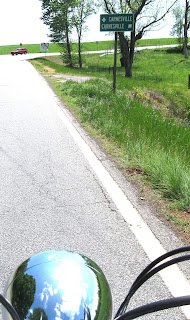
Grim faces a similar dilemma.
The Englishman gets out of the car and steps over to where the Scot is laboring, and calls down to him from the road. "Excuse me, good man," he says, "but does it make any difference which road I take to Aberdeen?"
The Scot ponders the question in a dark silence for a moment. Then he replies, "Nae ta me!"
He told a story to illustrate the point. An Englishman is driving north from Edinburgh toward Aberdeen, when he comes to a fork in the road. The signpost pointing to the left fork reads "Aberdeen, 30 miles," and the sign on the right fork reads the same thing. Puzzled, he pulls off to ponder the situation until he sees an old Scot working his field.

Grim faces a similar dilemma.
The Englishman gets out of the car and steps over to where the Scot is laboring, and calls down to him from the road. "Excuse me, good man," he says, "but does it make any difference which road I take to Aberdeen?"
The Scot ponders the question in a dark silence for a moment. Then he replies, "Nae ta me!"
Kicking the anthill
Minor excitement in my neighborhood this morning as a fellow who was either off the right meds or on the wrong ones gave several people the alarmed creeps over the course of the morning. He ultimately followed my next-door neighbor right up to her house, making inappropriate conversation, and increasing the "eww" factor by choosing to take off his shirt as they approached the door. She went inside, locked the door, armed herself, and called for help. Presently her husband and his co-worker arrived (armed) to block off our "loop" on both ends, while various other neighbors ventured out (armed) to see what was up, the phone tree having reached most nearby households by that time. Two sheriff's deputies arrived to take him into custody at about the time more distant neighbors started driving up (armed) to look into something they'd heard on the scanner.
Once he'd been hauled off, my neighbor's husband came home to hear the details from her. When she got to the part about the guy taking off his shirt, her husband's face assumed a dead-eyed expression I'd never seen on it before. He's normally the most amiable of fellows. His face made me want to back up a step.
We get the occasional passers-through who irritate us mildly by loitering on our loop for the apparent purpose of drinking a six-pack and dumping the cans before driving home, or perhaps waiting for a chance to ditch an old appliance rather than spend the time or money necessary to leave it at the dump. We invite them to clear out, but we don't go ape. This guy didn't do or say anything overtly threatening. Nevertheless, he punched every button we own, inducing that atavistic reaction of "snake. Kill it." The sheriff's deputies were giving his truck and his person a thorough searching the last I saw. If he was carrying, he picked the wrong way to call attention to himself.
Once he'd been hauled off, my neighbor's husband came home to hear the details from her. When she got to the part about the guy taking off his shirt, her husband's face assumed a dead-eyed expression I'd never seen on it before. He's normally the most amiable of fellows. His face made me want to back up a step.
We get the occasional passers-through who irritate us mildly by loitering on our loop for the apparent purpose of drinking a six-pack and dumping the cans before driving home, or perhaps waiting for a chance to ditch an old appliance rather than spend the time or money necessary to leave it at the dump. We invite them to clear out, but we don't go ape. This guy didn't do or say anything overtly threatening. Nevertheless, he punched every button we own, inducing that atavistic reaction of "snake. Kill it." The sheriff's deputies were giving his truck and his person a thorough searching the last I saw. If he was carrying, he picked the wrong way to call attention to himself.
More rituals that bind
A friend's father died a few days ago. It was not a tragic death; he was very old, had been miserably ill for years, and badly missed his wife of 57 years, who died a couple of years back. He got a proper send-off yesterday. A preacher spoke briefly and to the point. We sang hymns. The Masons conducted their elaborate, touching ceremony, then an honor guard of Marines from Corpus Christi delivered a 21-gun salute, folded the flag properly for delivery to our friend, and finished up with a very fine "Taps." The Masons put on a lunch for the visiting family.
Ray Brashears joined the Navy in 1944, then again in 1945, having been ousted the first time when they discovered he was only 17 years old. He served in the Bikini Islands during the atomic testing there and was one of the few surviving members of that cohort. He settled in our neighborhood in 1974, which by local standards made him quite the old timer. He left nine great-grandchildren.
Ray Brashears joined the Navy in 1944, then again in 1945, having been ousted the first time when they discovered he was only 17 years old. He served in the Bikini Islands during the atomic testing there and was one of the few surviving members of that cohort. He settled in our neighborhood in 1974, which by local standards made him quite the old timer. He left nine great-grandchildren.
Television News
As most of you know, Grim's Hall has been without television since 2006 -- originally as a cost-saving measure, and later because we found we didn't miss it. I didn't have a lot of time for television before that, and one reason it made so little impact on us was that we were always too busy to watch it anyway. I mostly used it to watch old movies that happened to be on late in the evening as I was winding down for bed, but that can be done more cheaply in many ways. In addition I've often been out of the country, in places where television wasn't necessarily available or in English.
For these reasons I've been largely immune to many of the worst trends afflicting society these last twenty years: reality television, the general decline of standards of obscenity, the general rise of libertine standards on displays of sexuality. But I had thought I was more or less engaged with the news, because I keep up with the news carefully as a citizen ought to do.
These last few days have disabused me of that notion. Visiting a relative in the hospital, I've been exposed to television news as it is now done on both local and cable networks. I am appalled.
We used to watch the news at home when I was a boy, and I remember that it was nearly always bad. But I don't remember the obsessive focus on getting and displaying footage of those whom the overwhelming force of tragedy has momentarily turned to screaming, crying, emotional wrecks. At some point the news has become genuinely wicked, preying on disaster for the pure voyeuristic pleasure of seeing a human being reduced to an animal.
This is horrifying and shameful. I dread to consider what it says about our culture.
For these reasons I've been largely immune to many of the worst trends afflicting society these last twenty years: reality television, the general decline of standards of obscenity, the general rise of libertine standards on displays of sexuality. But I had thought I was more or less engaged with the news, because I keep up with the news carefully as a citizen ought to do.
These last few days have disabused me of that notion. Visiting a relative in the hospital, I've been exposed to television news as it is now done on both local and cable networks. I am appalled.
We used to watch the news at home when I was a boy, and I remember that it was nearly always bad. But I don't remember the obsessive focus on getting and displaying footage of those whom the overwhelming force of tragedy has momentarily turned to screaming, crying, emotional wrecks. At some point the news has become genuinely wicked, preying on disaster for the pure voyeuristic pleasure of seeing a human being reduced to an animal.
This is horrifying and shameful. I dread to consider what it says about our culture.
All's not lost in the world of architecture
A collection of weird architecture. Most of these are great. Not crazy about the hotel in Dubai. Two are by Gaudi, just about my favorite architect.


Eggshells
If you've ever raised chickens, you know how long the eggs stay fresh in their shells even without refrigeration. Some clever people are working on a genetic trick to get vaccines to form their own calcium shells so they can more easily reach remote populations lacking refrigeration.
H/t Rocket Science.
H/t Rocket Science.
My kind of bishop
I'm amazed Grim hasn't posted about this yet.
Update: Hey, c'mon! No one likes this story? It's got it all: damsel in distress, neighborhood comes together instead of going all Kitty Genovese, and a Mormon bishop is a full-on Ninja hero with a sword. Definitely not what the bad guy expected.
Update: Hey, c'mon! No one likes this story? It's got it all: damsel in distress, neighborhood comes together instead of going all Kitty Genovese, and a Mormon bishop is a full-on Ninja hero with a sword. Definitely not what the bad guy expected.
Assumptions
In his ongoing quest to give migraines to Cassandra, James Taranto has written again about women and the workplace. His argument isn't the one that interests me, though, but the one to which he is responding.
There are lots of men who get degrees from Ivy League schools, but it has never occurred to me to think that their degrees do me (or men generally) any good. In fact, the opposite is true: men ordinarily think of other men as competition, and so a man obtaining an advanced degree from a school with a high reputation means that my opportunities are in a certan sense going to decrease, not increase. This is because any job that we might compete for he is more likely to obtain, given the respect his credentials will enjoy.
That is not necessarily true, of course: he could use the knowledge gained while seeking his degree to start a business that could employ me, and that would increase my opportunities. But entrepreneurs don't usually require advanced degrees, let alone from famous schools: given the expense of obtaining such a credential, most seekers understandably put it to use in competition for positions in government, finance, or in universities. That's where the big advantages of high starting pay favor them most. So normally, then, a man (or a woman) who gets an Ivy League degree is occupying a space that is then not available for others to occupy.
Of course, there's a sense in which whatever they do (apart from government), they're contributing to an economy whose expansion increases opportunities for everyone. But if you're a man (or woman) who wants a job, the less competition the better -- and the fewer people with Ivy League degrees seeking the job you want, the more likely you will get it.
Now, Goff might be arguing that women have a duty to get into positions to hire and promote women; but of course discriminating in favor of women is illegal, so surely she doesn't mean to advocate for that. After all, a business who made it a policy to hire and promote only or especially men would be in danger of large lawsuits. Certainly she can't be advocating for women who obtain such positions to put their company at risk. That would be a violation of their duty to their employers.
It used to be said that women being present at all in a job opened opportunities for women, simply because getting their first made the point that women could do it. Surely, though, that is at least a generation past: there aren't any jobs left in the economy that women don't do, except the ones they don't choose to do. We haven't had a female President, but not because anyone thinks we couldn't possibly have one: rather, it is only because Democrats in 2004 preferred then-Senator Obama to then-Senator Clinton. If she had won the Democratic primary that year, it is all but certain she would have been elected to the Presidency.
So maybe Goff's assumption is outdated. It could be the mark of a true equality if women began to regard other women with advanced degrees the same way they think of the men who compete with them: as competitors out for their own good, and if hired, the good of their employer. Expecting them to help you is an expectation misplaced. Not only will they probably not, they probably ought not. Their duties in the market lie elsewhere.
The headline is a grabber: "Female Ivy League Graduates Have a Duty to Stay in the Workforce." In the piece itself, Goff actually stops well short of endorsing that position wholeheartedly. She acknowledges that "most sane and fair people can agree that any woman has the right to make whatever choice she believes is best for her family--whether that is choosing to stay home full-time or work outside of the home," but in the same sentence she suggests that "women have a definite responsibility to make choices for the good of all women, such as putting an elite degree to use outside of the home."What I'm curious about is this assumption by Goff that women in the workplace can be assumed to be, even in part, doing something that advances "the good of all women." That could be true, but why ought it to be assumed?
Similarly, Goff disavows the belief "that every woman should be made to feel as though [she] must choose between being committed to [her] children or committed to the sisterhood of women's advancement," then in the next sentence affirms that a woman with a Harvard Law School degree who forgoes a lengthy professional career has "wasted" an "opportunity."
There are lots of men who get degrees from Ivy League schools, but it has never occurred to me to think that their degrees do me (or men generally) any good. In fact, the opposite is true: men ordinarily think of other men as competition, and so a man obtaining an advanced degree from a school with a high reputation means that my opportunities are in a certan sense going to decrease, not increase. This is because any job that we might compete for he is more likely to obtain, given the respect his credentials will enjoy.
That is not necessarily true, of course: he could use the knowledge gained while seeking his degree to start a business that could employ me, and that would increase my opportunities. But entrepreneurs don't usually require advanced degrees, let alone from famous schools: given the expense of obtaining such a credential, most seekers understandably put it to use in competition for positions in government, finance, or in universities. That's where the big advantages of high starting pay favor them most. So normally, then, a man (or a woman) who gets an Ivy League degree is occupying a space that is then not available for others to occupy.
Of course, there's a sense in which whatever they do (apart from government), they're contributing to an economy whose expansion increases opportunities for everyone. But if you're a man (or woman) who wants a job, the less competition the better -- and the fewer people with Ivy League degrees seeking the job you want, the more likely you will get it.
Now, Goff might be arguing that women have a duty to get into positions to hire and promote women; but of course discriminating in favor of women is illegal, so surely she doesn't mean to advocate for that. After all, a business who made it a policy to hire and promote only or especially men would be in danger of large lawsuits. Certainly she can't be advocating for women who obtain such positions to put their company at risk. That would be a violation of their duty to their employers.
It used to be said that women being present at all in a job opened opportunities for women, simply because getting their first made the point that women could do it. Surely, though, that is at least a generation past: there aren't any jobs left in the economy that women don't do, except the ones they don't choose to do. We haven't had a female President, but not because anyone thinks we couldn't possibly have one: rather, it is only because Democrats in 2004 preferred then-Senator Obama to then-Senator Clinton. If she had won the Democratic primary that year, it is all but certain she would have been elected to the Presidency.
So maybe Goff's assumption is outdated. It could be the mark of a true equality if women began to regard other women with advanced degrees the same way they think of the men who compete with them: as competitors out for their own good, and if hired, the good of their employer. Expecting them to help you is an expectation misplaced. Not only will they probably not, they probably ought not. Their duties in the market lie elsewhere.
Lars Walker's Problem On Display
The very issue that I had wanted to discuss, in Lars Walker's Hailstone Mountain, is on display today in TIME Magazine.
It's an attractive view. An educated and thoughtful man wrote it.
It's an attractive view. An educated and thoughtful man wrote it.
The little girl smiled. "Nobody hurts anybody anymore."There are, aren't there?
There are worse things than this in the world, I thought.
From Jim Geraghty:

From the Daily Caller: The bill Rubio has been pushing isn't as bad as you might have expected. For one thing:
Congressional Democrats wanted Obamacare exchanges to cover all immigrants. However, in addition to putting all illegal immigrants who legalize under the same constraints as legal immigrants with regard to benefit-seeking (i.e., they are legally barred from seeking or receiving welfare), the immigration bill also prevents access to Obamacare. As Sen. Marco Rubio said on Fox News Sunday, “[T]hey don’t qualify for any federal benefits…. This is an important point. No federal benefits, no food stamps, no welfare, no Obamacare. They have to prove they’re gainfully employed. They have to be able to support themselves, so they’ll never become a public charge.” This is a point on which President Obama was forced to concede, and a make-or-break point from conservatives’ standpoint.
Hailstone Mountain: A Review & Invitation for Discussion

Like several of you, I have purchased Lars Walker's newest work, Hailstone Mountain. I finally had time to finish reading it last night, and after reflection I wanted to offer a review. Since I know that I am not the only one among us to have read it, it's also a good opportunity for us to discuss it in the comments below.
Two things I thought the book did exceptionally well. The first is in the early chapters, when Erling is cursed and must show his heroic nature in a very different way: by struggling to eat though it is painful, and by accepting the shaving of his head. This is done so that he can look like a slave, but with all the connotations of loss of hair -- loss of beauty, loss of identity, and with a nod toward Samson, a recognition of his loss of that physical strength that is characteristic of the hero. These are clear analogues for the kind of courage that is required of those who fall victim to cancer, and other severe illnesses of the body. So much is lost, and so much must be borne. Those who manage to come through this without surrendering their dignity of soul are indeed demonstrating a kind of high heroism, though it is one difficult to portray in a novel of the sort that people find pleasant to read. I thought that was well done.
Even more than that, I liked the way in which Father Ailill struggles with the violence of creation. There's a comforting answer given toward the end, but for the most part the book looks in the face the strength that death has been given in the world. It is a difficult theological problem, and it is good to see a religious figure represented as treating it with the severity of mind that it deserves.
One thing that I wish to raise -- not as a criticism, but as a point of theological discussion, because I think I can see two viable arguments here -- is a point Mr. Walker also raises in Troll Valley. As you remember, toward the end of that book a mysterious figure in town comes to speak before the local Lutheran church, and he speaks on the Pharisees.
"We get a bad picture of the Pharisees from the gospels, but I think we miss the point.... The Pharisees were the best and wisest of Israel. I do not say that in irony.... I do not say Jesus was a Pharisee. But it is a fact that he agreed with them in many things. As to why He condemned them, the answer to that is a hard one. It is found in Hebrews 12:6 -- 'For whom the Lord loveth He chasteneth.' Christ wasted little time on the Sadducees. Their souls had long since been sold. But for the Pharisees He had hopes, I think, and so He argued with them, hammer and tongs, for three years. The Pharisees were lovers of the Law.... and like many kinds of lovers, certain kinds of parents... they way they chose to love only smothered the Object of their love." (There aren't page numbers in the Kindle book, but this is 92% through the work.)
So in Troll Valley, Christ argues with those whom he loves best -- even the ones who do not lay down the Law and follow him as disciples. They are wrong, but they are almost right -- they are trying to be right -- and yet that means they are still completely wrong.
In Hailstone Mountain, we have an interesting variation on the same problem. Now the speaker is Christ himself, coming to Father Ailill in a vision:
"Do you know what the greatest enemy of the good is?... [T]he greatest enemy of the good is the almost-good. The thing that is nearly true but not quite. The almost-good brings men to damnation at the least cost."
This is wrapped up with the meditation on how Jesus came to send not peace but a sword, and it is nicely done. The almost-good has managed to bring actual peace and safety to a community. People have laid down their weapons, and children can travel freely and in safety even across the river to hear the popular public sermons. The people don't hurt each other any more. There is real peace.
What Christ wants Ailill to do is to destroy that peace, because it is based upon lies and an unjust bargain. He wants Ailill to restore -- indeed, to very much heighten -- the violence and destruction, so that most of these people living in peace will be killed at war. That is the narrow road.
This is a hard problem, and it is a good problem. Good problems are very good things to have. You can burnish your mind and your soul by rubbing against them.
So rather than taking the problem away from you, I'll ask you to tell me what you think about it. Let's share the problem together.
On Marriage
A commentary on the recent funeral of Baroness Thatcher mentioned that the presiding priest had given an excellent address at the royal wedding. It's about seven minutes long, but it's one of the most insightful brief speeches on the subject I can recall having heard. I trust the young couple was -- as I was on my own wedding day -- far too excited to understand or remember any of the sermon. It was for them in a way, but perhaps it was more for us.
Treasure boxes
From the 1911 Encyclopedia Britannica I'm working on now at Project Gutenberg (we're up to the S's!):


SAFES, STRONG-ROOMS AND VAULTS. . . . Although it is practically certain that boxes provided with locks or coffers must have followed closely on the development of locks (q.v.) and been in use in ancient Egypt, yet no examples remain to us of earlier date than the middle ages. The earliest examples extant were constructed of hard wood banded with hammered iron, and subsequent development took place rather on artistic than on practical lines up to the time of the introduction of boxes entirely of iron. On the continent of Europe the iron box was developed to a very high standard of artistic beauty and craftsmanship, but with no real increase of security. Several specimens of these coffers supposed to be of 17th-century workmanship are preserved in the museum at Marlborough House. Cast-iron chests seem to have been made in various parts of Great Britain in the early part of the 19th century, but the use of wrought iron was probably confined to London until 1820, or thereabouts, when the trade spread to Wolverhampton.Attention then shifted to making them fireproof, and later to making them more burgle-proof. There were great improvements in both areas, but they were never as beautiful again.


Another blow to warmenisticals
I hope this isn't going to interfere with Al Gore's retirement planning.
Revolution
The "Les Mis" flash mob gag has spread so wide you can find dozens of YouTube examples. They don't always have great voices, and when they do, sometimes the gag doesn't quite work, or the sound quality is bad. This one in Polish really works, and who needs the words, anyway, after the darn thing was on Broadway for 20 years and just won Oscars in movie form?
This is a good twist.
I could be made completely happy by someone pulling a flash mob on me.
This is a good twist.
I could be made completely happy by someone pulling a flash mob on me.
Sad song part deux
Those of you who've had quite enough shape-note music from me lately ought not to click on this one.
Just so everyone will know, I'd like that performed at my funeral. So if I die, get right to work learning all four parts.
Here's one much more cheerful:
Just so everyone will know, I'd like that performed at my funeral. So if I die, get right to work learning all four parts.
Here's one much more cheerful:
The Brotherhood of Volunteers
My father sends:
"Texas brothers standing guard over the fallen in West."

This is how it was of old. Do you remember how much attention the Greeks before Troy, or the Trojans themselves, gave to guarding the bodies of their fallen? These are the opening lines of the Iliad: "Sing, O goddess, the anger of Achilles son of Peleus, that brought countless ills upon the Achaeans. Many a brave soul did it send hurrying down to Hades, and many a hero did it yield a prey to dogs and vultures[.]"
But not if we watched, and held the field, that honor might be done to them instead. That was the force of the last chapters of the Iliad, when Priam came to beg Achilles for the right to bury his son, and when that burial was done with all honor. Do we remember these things? Perhaps it does not matter that we remember, so long as we still do.
"Texas brothers standing guard over the fallen in West."

This is how it was of old. Do you remember how much attention the Greeks before Troy, or the Trojans themselves, gave to guarding the bodies of their fallen? These are the opening lines of the Iliad: "Sing, O goddess, the anger of Achilles son of Peleus, that brought countless ills upon the Achaeans. Many a brave soul did it send hurrying down to Hades, and many a hero did it yield a prey to dogs and vultures[.]"
But not if we watched, and held the field, that honor might be done to them instead. That was the force of the last chapters of the Iliad, when Priam came to beg Achilles for the right to bury his son, and when that burial was done with all honor. Do we remember these things? Perhaps it does not matter that we remember, so long as we still do.
Sad songs
The news has me down.
I recognize many faces in that crowd. The fellow in the middle in one-quarter view is Gaylon Powell, a good friend and a mainstay of Sacred Harp in Texas for decades.
God of my life, look gently down,
Behold the pain I feel;
But I am dumb before Thy throne,
Nor dare dispute Thy will.
I’m but a sojourner below,
As all my fathers were;
May I be well prepared to go,
When I the summons hear.
But if my life be spared awhile,
Before my last remove,
Thy praise shall be my business still,
And I’ll declare Thy love.
--Isaac Watts, 1719
I recognize many faces in that crowd. The fellow in the middle in one-quarter view is Gaylon Powell, a good friend and a mainstay of Sacred Harp in Texas for decades.
God of my life, look gently down,
Behold the pain I feel;
But I am dumb before Thy throne,
Nor dare dispute Thy will.
I’m but a sojourner below,
As all my fathers were;
May I be well prepared to go,
When I the summons hear.
But if my life be spared awhile,
Before my last remove,
Thy praise shall be my business still,
And I’ll declare Thy love.
--Isaac Watts, 1719
No mealy mouth here
When was the last time you heard such a cogent and devastating speech from an American politician?
Warm welcomes
In what one commentator at Maggie's Farm correctly identifies as "the therapeutic approach to evil," NPR ran radio interviews this morning with Cambridge deep-thinkers explaining that "this is what happens when we're not welcoming enough to immigrants." As another commenter mused, it's interesting to imagine what would have happened if the MSM had been able to fulfill their fond dreams of pinning this thing on a Tea Partier. "This is what happens when we're not welcoming enough to conservatives?"
"Reports of my death. . . ."
What happens to a Reuters staffer who inadvertently publishes a decidedly unflattering canned obituary about an unimaginably wealthy, ruthless political operative . . . just a bit before the fellow is quite dead and harmless?
Plant safety
Almost as soon as the news hit about the explosion in West, Texas, reports agreed that anhydrous ammonia was involved, and I began hearing how dangerous it is to let water get near the stuff. Here is a very brief CNN interview explaining that a plant of this sort generally is considered very safe, but apparently there was a small fire, then firehoses, then . . . .
Not using firehoses near the anhydrous ammonia tanks doesn't seem to have been part of the emergency plan for the plant or the town. There are reports that the EPA was unhappy with the place in 2006, but it was a minor problem about having an emergency plan on file that was quickly remedied to the EPA's satisfaction. OSHA hasn't been onsite since 1985.
The plant is nestled among homes, schools, and a nursing home, but it originally was out in the country. The very small town grew up around it in apparent ignorance of the danger. The head of the local EMS reports that he was conducting some kind of training at the nursing home the night of the explosion. Although he didn't explain exactly what he feared might happen, somehow he got the idea he'd better move the residents to the far side of the building, which he'd just about finished doing when the plant blew. Even so, the roof came down on them. He looked pretty beat up on camera, and couldn't account for most of his personnel.
I'm familiar with the 1947 Texas City blast, naturally, growing up in Houston, but was surprised to read about a worse one in Halifax, Canada, in 1917, which leveled two-and-a-half square kilometers. Two thousand people were killed, including many spectators who were lined up on the haborfront watching a fire in a munitions ship stuffed with TNT. The ship had been struck in harbor by a Belgian relief vessel.
Not using firehoses near the anhydrous ammonia tanks doesn't seem to have been part of the emergency plan for the plant or the town. There are reports that the EPA was unhappy with the place in 2006, but it was a minor problem about having an emergency plan on file that was quickly remedied to the EPA's satisfaction. OSHA hasn't been onsite since 1985.
The plant is nestled among homes, schools, and a nursing home, but it originally was out in the country. The very small town grew up around it in apparent ignorance of the danger. The head of the local EMS reports that he was conducting some kind of training at the nursing home the night of the explosion. Although he didn't explain exactly what he feared might happen, somehow he got the idea he'd better move the residents to the far side of the building, which he'd just about finished doing when the plant blew. Even so, the roof came down on them. He looked pretty beat up on camera, and couldn't account for most of his personnel.
I'm familiar with the 1947 Texas City blast, naturally, growing up in Houston, but was surprised to read about a worse one in Halifax, Canada, in 1917, which leveled two-and-a-half square kilometers. Two thousand people were killed, including many spectators who were lined up on the haborfront watching a fire in a munitions ship stuffed with TNT. The ship had been struck in harbor by a Belgian relief vessel.
Rituals bind
I like the way the crowd took over from the professional singer, with his encouragement. (The anthem is after the pop-music photo montage, at about 1:30.)
Those bombers must have felt like germs with a whole body's white blood cells after them. At least one probably still does.
H/t HotAir.
Those bombers must have felt like germs with a whole body's white blood cells after them. At least one probably still does.
H/t HotAir.
The Tupelo Mississippi Flash
If you'd written a movie in which the terrorist attempting to assassinate government officials was an Elvis impersonator, you'd have been accused of some heavy-handed, improbable stuff.
Even Quentin Tarantino only went as far as this (Tarantino warning for language and violence):
Oh, well. Here's a lighter video on topic.
Even Quentin Tarantino only went as far as this (Tarantino warning for language and violence):
Oh, well. Here's a lighter video on topic.
Baseball: 65-0 in Three Innings
Apparently it's possible to score 65 runs in three innings, if they last so long that the game has to be called on account of encroaching darkness (because your team can't get any outs!).
I understand this is a video feed from the game:
I understand this is a video feed from the game:
Bad explosion
A fertilizer plant has blown up in Waco. No reason to suggest it was deliberate, but it's very bad--many square blocks "leveled."
The Neuro
That's a New Euro, or perhaps a Northern Euro. They're going to need one soon.
In "The Wreck of the Euro" (hey, that would make a good song), Walter Russell Mead points out:
H/t Maggie's Farm.
In "The Wreck of the Euro" (hey, that would make a good song), Walter Russell Mead points out:
Politicians in Europe thought they were living in a post-historical period in which mistakes didn’t really matter all that much.But mistakes that involve lying to ourselves by diddling a currency always matter eventually. It's very much like Richard Feynman's caution in a different context:
For a successful technology, reality must take precedence over public relations, for nature cannot be fooled.A currency has many functions, but its primary one is a credible promise. Lying destroys its value, though the harm sometimes is delayed until enough people are disillusioned.
H/t Maggie's Farm.
Edie Brickell & Steve Martin Collaborate
NPR has a report about, as well as an opportunity to listen to, a new album by the above-named artists. Steve Martin is actually quite a banjo player, as we have known since he turned up to play with Earl Skruggs. Not just anyone could have pulled that off!
As for Edie Brikell, I hadn't thought of her in years. I do remember her, though.
If that is the frame, it sounds like an odd pairing. I've only listened to the first track so far, but it appears they've made it work surprisingly well. I'm always surprised to hear someone from Hollywood reference the South in their songs in a way that shows a kind of feel for the place.
As for Edie Brikell, I hadn't thought of her in years. I do remember her, though.
If that is the frame, it sounds like an odd pairing. I've only listened to the first track so far, but it appears they've made it work surprisingly well. I'm always surprised to hear someone from Hollywood reference the South in their songs in a way that shows a kind of feel for the place.
Emails, I Get Emails
I don't know how I get on so many email lists. I try and try to keep off them, but somehow I keep getting more and more emails from political action groups of all kinds. In a way it's been educational. You learn that all sides to our present conflict tend to think of their supporters as suckers... er, as easily swayed by conspiracy theories. They must be highly effective to be so common as political rhetoric.
Once in a while, though, a real conspiracy is uncovered!
Once in a while, though, a real conspiracy is uncovered!
Is Pope Francis Laying The Groundwork For A One World Religion?It turns out, he really is.
States are Better, Red States Better Still
The most interesting thing here isn't the one showing the abysmal rating for the Federal government, which has more than deserved the current disgust of the American people. It's the state rating charts.
Compare the numbers of satisfied and unsatisfied Democrats living in states controlled by Republican legislatures and governors, and vice versa. It appears clear that satisfaction is higher under Republican leadership right now -- not surprising given that Republican-led states are outperforming others in improving the incomes of their citizens as well as being a good place to start a business.
State budgets in Red states are also beginning to get under control, due to large cuts in public sector payrolls -- which, given that means a reduction of public-sector jobs, increases the degree of admiration you might have for the fact that these states have also been increasing citizens' incomes. I'm not sure that is warranted, though, because Red States also show higher food-stamp usage, which may mean that they are pushing off some of their budgetary concerns onto the Federal taxpayers. Still, insofar as they can foster higher private sector job growth, finding jobs for those formerly-public-sector workers, there's hope that such food stamp usage is merely a symptom of necessary budget cuts, and not a permanent feature of these state-level economies.
Compare the numbers of satisfied and unsatisfied Democrats living in states controlled by Republican legislatures and governors, and vice versa. It appears clear that satisfaction is higher under Republican leadership right now -- not surprising given that Republican-led states are outperforming others in improving the incomes of their citizens as well as being a good place to start a business.
State budgets in Red states are also beginning to get under control, due to large cuts in public sector payrolls -- which, given that means a reduction of public-sector jobs, increases the degree of admiration you might have for the fact that these states have also been increasing citizens' incomes. I'm not sure that is warranted, though, because Red States also show higher food-stamp usage, which may mean that they are pushing off some of their budgetary concerns onto the Federal taxpayers. Still, insofar as they can foster higher private sector job growth, finding jobs for those formerly-public-sector workers, there's hope that such food stamp usage is merely a symptom of necessary budget cuts, and not a permanent feature of these state-level economies.
Subscribe to:
Posts (Atom)