Yesterday AVI had a post called "Mountains and Nature" that was, I think, allied with his series of posts about naturalism, vegetarianism, and the like being aligned with Germanic paganism and therefore nazism (of the real sort, not the MSNBC sort). In it he quite correctly argued that early Christians viewed the city as the model for heaven rather than the Wild -- think of St. Augustine's City of God.
Mountains have not always been considered beautiful. The Psalmist says that he lifts up his eyes unto the hills, and only then asks, "From whence cometh my help?" He never says that the hills are where his help comes from. That is an entirely modern interpretation, post Romanticism.
It was the Romantics who believed that we learned about God through Nature. They had gotten the idea from Puritans and other NW European Protestants, who indirectly inherited it from the concept of Wyrd among the pagans of that region. I discussed that in detail in 2010. (Be warned. It's a series)
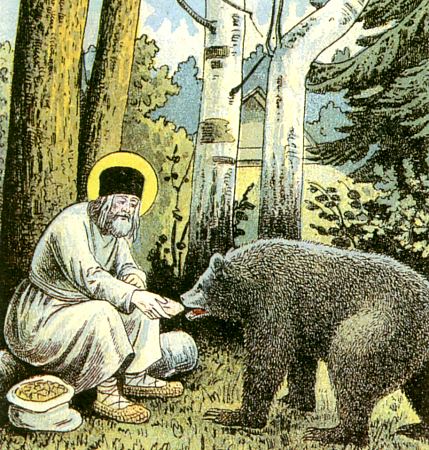
I commented yesterday in agreement, noting that the Medievals and even Tolkien had made much of the garden, but viewed forest and mountain with grave suspicion -- at best, as places for adventure and spiritual development; at worst, places for madmen and outlaws. Somewhere in between the spiritual and the mad lies the hermit/eremetic ("desert") tradition that is said to have given rise to monasticism, but the monks built gardens and not wildernesses: not even St. Francis did that.
...wonderful places like Rivendell and Beorn's hall are kinds-of gardens 'on the edge of the Wild,' where travelers can rest and regain strength after a challenging passage through dangerous mountains and forests. Forests, especially Mirkwood but even the old forest right by the Shire, follow the medieval presentation of being dangerous, frightening places.
And so they are; I have been through the certification course for Wilderness Rescue, which comes up regularly out this way. People get lost, hurt, and need rescuing when they go into the wilderness: not every time, but all the time.
I had the opportunity to reflect on this discussion last night, when a Mountain Search and Rescue call went out for a lost hiker, with the weather coming on 35 degrees and humid. We were out past 2 AM doing tight grid searches in a region of mountain wilderness, replaced by others who searched until dawn when we returned for another round. The hiker was eventually found alive, cold and rather viciously scratched up by the thickets of rhododendron and thorn.
One can say without question that Bilbo Baggins or the Arthurian knights would hardly have been the admirable figures they became without the testing hardship of the Wild. In Tolkien, too, there is a third mode available to the elf whose faerie-like ability to live with the Wild is something like the hermit's, a kind of sacred existence that embraces the genuine wilderness in a way ordinary people can not do. Clearly Tolkien presents his elves as being metaphysically closer to God, beings among whom the angelic maiar walk and even marry. Even the fairy wants for a higher-fairy bride!
It's the sort of place a man can love, though; and for some of us, who hate the cities, the Wild is a happier place. It does require much from a man, and is more difficult to love in the middle of a cold night in a thicket on a steep mountainside. Even then, it is not entirely without its joys.
We did find a bear on that midnight search. He was above hip-high when sitting down, and not especially inclined to run as many of them are. Eventually, he let us continue our search without incident.