The more formal the meeting or the more public the situation, the more codified it will be and the more the tatemae will be displayed and the honne pushed down and repressed. Public and private are separated so ruthlessly in Japanese society that one rarely mixes with the other: sharing your recent family issues with your colleagues is as unthinkable as your wife coming to visit you at work. Should you decide to burden everyone with your worries and negative emotions, you would drop in the esteem of all Japanese around you for disturbing the positive effects of the tatemae.For although it may take a hard toll on the individual, forbidden from speaking out his distress for fear of troubling his listener, it does create a harmonious atmosphere as all do their best to be cordial and outwardly friendly.
Honne and Tatemae
"Chinese Vision of Freedom" Redux
State propaganda outlet China Daily assures you that the rapid decline in Uighur birthrates is not at all due to forced sterilization, international studies notwithstanding. No, it's due to 'liberation of women'!
Yes, of course. Also, it's hard to get pregnant while you and your husband are in separate re-education camps.Decreases in the birthrate and natural population growth rate in the Xinjiang Uygur autonomous region in 2018 resulted from the eradication of religious extremism, [an official PRC] report released on Thursday said....
The changes were not caused by "forced sterilization" of the Uygur population, as repeatedly claimed by some Western scholars and politicians, it said.
In a research report released last year, Adrian Zenz, a German scholar, said there had been a significant drop in the natural population growth rate in southern Xinjiang in 2018 and claimed that proved China was trying to control the size of the Uygur population....
In the process of eradicating extremism, the minds of Uygur women were emancipated and gender equality and reproductive health were promoted, making them no long baby-making machines, it said. Women have since been striving to become healthy, confident and independent.
Coors Beer and Bootlegging
It occurred to me, in a discussion of nostalgia and freedom at AVI's place, that I couldn't think of any reason why it should have been a Federal crime to move Coors Beer east of the Mississippi. It turns out the reason was that the beer wasn't pasteurized.
It also turns out that bootlegging Coors was not just the business of truckers, but of Presidents and celebrities. There's an interesting story, as often there is with bootlegging.
Laws VI, 4
On Violence and Today
Donald Trump, a buffoon who stumbled into the Presidency and nevertheless did much more good there than I might have expected, was unwise to call for today's march. Having tens of thousands -- hundreds of thousands -- of angry people outside Congress while they counted the Electoral College votes was bound to result in an attempted incursion. The failure of the police and the military to take this seriously is almost unaccountable, but the President should have known it would happen too. It was wrong to call for such a thing unless he was intending to lead it in an actual revolutionary attempt to overthrow and replace the government.
This is a moral claim presented as a material conditional. I believe that no true son of the American revolution can ever reject political violence per se. How could you vote for a successor of George Washington, who crossed the Delaware and killed sleeping soldiers on Christmas morning? How could you honor the Founders at all, or what they built? Revolutionary violence is at least sometimes called for in human history, and when it is, it is.
What is never called for is endangering lives when you don't mean to follow-through. Trump was just attempting some political theater, the obvious consequences of which he didn't bother to understand. The military I criticize in the post below for failing to do the obvious thing too. The DC police apparently opened the barricades and let the mob though.
After a year of watching mobs storm police stations and Federal buildings, or attempt to set them on fire (often with police inside!), it should have been obvious that this was going to happen. Apparently almost no steps were taken to prevent it.
Now we will be told, in the interest of unity and calming the waters, that we should give up all our grievances and admit that there was no truth in them. There was, though.
The elections really were illegitimate and stolen, and it really has been proven: Pennsylvania blatantly violated its state constitution. Wisconsin violated its laws. Georgia violated its laws both in the 3 November election and again in the run up to yesterday's. For example, Georgia allowed Stacey Abrams to continue to register new voters even though Georgia law specifically forbids voting in a runoff if you didn't vote in the general.
There still remain important matters that haven't been proven in court, such as the ballots-in-suitcases that were pulled out in Fulton County after the poll watchers and media were dismissed from the building, then counted for hours. Even if every one of those turned out to have an innocent explanation, though, it's clear that this election was illegally conducted in ways designed to give Democrats an advantage.
That being true, it is right and proper to say that it is true. The fact that there are weak-minded people out there who might engage in bad actions if they get excited doesn't excuse us from the duty to speak the truth. This is especially binding when we are speaking a truth that those in power would very much like suppressed. Right now the whole of the media and the Democratic party -- which is about to assume all three elected parts of the government, having promised to pack the fourth one to their satisfaction -- wants you to quietly pretend that they won fair and square.
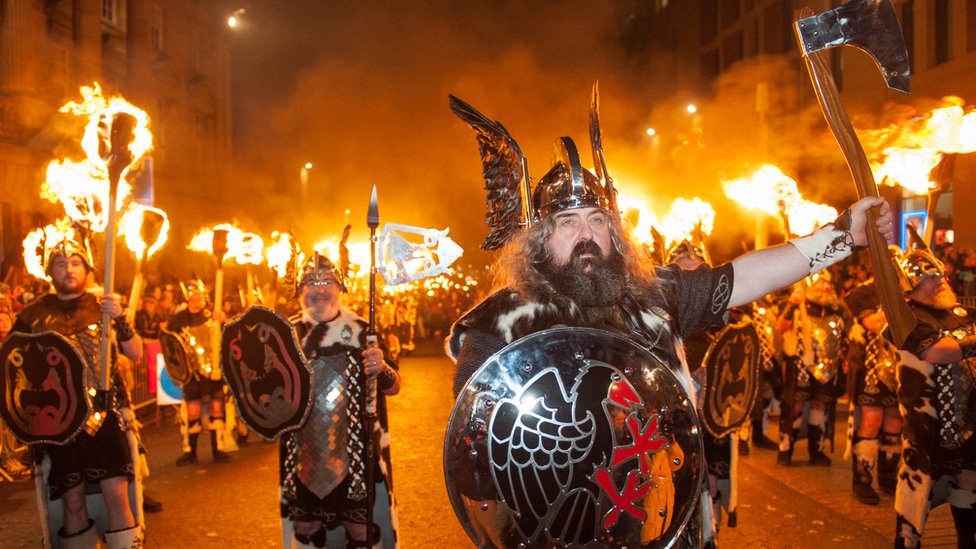
They would also like you to be ashamed to have been associated with any of this, so you won't push back on what they do with their newfound power. 'Wouldn't that be giving encouragement to crazies, like your friend in the buffalo hat and Viking tattoos? You shouldn't encourage them. We won fair and square. Say it again. Everything we're doing is legitimate and justified, because we won fairly and you are bad people.'
We do have to decide on basic question of what is to be done. Elise asks, in one of the Plato posts below, what we do if the government falls into wickedness and also there is nowhere else to go. That's a good question. There's nowhere else to go.
Does that justify revolution? Maybe. At this point, I'm inclined to be stoic in the literal sense -- to return to philosophy, accept what can't be changed, and to hope that the Biden crew of Establishmentarians won't get too crazy. I'm going to try, in other words, to obey the constitutional order and do what a citizen ought to do.
That said, I absolutely do embrace political violence on those occasions in human history when it is truly called for and necessary. I do not reject it as an option. I just intend to try to live peacefully, and see if that works. Even the mighty Declaration of Independence says:
"Prudence, indeed, will dictate that governments long established should not be changed for light and transient causes; and, accordingly, all experience has shown, that mankind are more disposed to suffer, while evils are sufferable, than to right themselves by abolishing the forms to which they are accustomed."
So we'll try that first.
"The Chinese Vision of Freedom"
The Blue Flu
Military more than political, really.
I had read that the DC guard was going to be deployed today. If I were handling the deployment, I would have put them around the Capitol as the OBVIOUS place that would be in danger, since that's where the Electoral College votes were being counted today. The only way even a very large protest could have disrupted that would be to penetrate the building; so, job one would be to prevent that from happening.
Turns out the Pentagon "rejected the request" from the civilian government to secure their own national capitol against an obvious risk at a critical moment. Just like the police who have been letting rioters carry on nationwide, the military decided it didn't want the bad press of having to enforce order against political protests that spin into violence.
National Guard units are activating now, at the President's order, to enforce the mayor's 6 PM curfew which could have been avoided if everyone had done their job in the first place. The Capitol should never have been left unsecured today.
This failure of professionalism and discipline by our officers' corps will have profound and negative consequences.
A Brief Political Post
Vice President Mike Pence, ex officio President of the Senate, has decided not to use any powers to choose alternative slates of electors. As the link notes, Pence is wrong about the history here; both John Adams and especially Thomas Jefferson used exactly the power he is disavowing.
Nevertheless, the matter is decided. Even under the understanding that the President of the Senate could choose which slate to prefer, Mike Pence has made his choice. He is the constitutional officer assigned with the duty, and he has decided what that duty entails. No one else has the right to gainsay this decision, including any of us.
As such, the electoral college results will -- after some Congressional theater -- produce a Biden presidency. Regardless of whether the popular elections that selected the electors were constitutional, legal, or fraudulent, the electors have sent their votes and the President of the Senate will accept them. Congress will count them, and Biden will win. There will be no legally legitimate grounds for further contests.
Vice President Pence has acted according to his own best judgment, in the most consequential decision of his tenure. He has the right and power to make this decision, and so the matter is settled.
Plato's Laws VI, 3
Of the modification of the laws over time, the Athenian admits its necessity but is clearly greatly bothered by it. In fact, he can barely bring himself to speak of it; almost the whole section that is supposed to be about letting future generations alter the laws turns out to be a long discourse on the importance of good courtship and marriage rituals.
The initial argument for accepting that modification should be permitted is a metaphor, or analogy, to a painter who wishes not just to perfect a painting but to keep it looking good through the ages.
Ath. Suppose that some one had a mind to paint a figure in the most beautiful manner, in the hope that his work instead of losing would always improve as time went on-do you not see that being a mortal, unless he leaves some one to succeed him who will correct the flaws which time may introduce, and be able to add what is left imperfect through the defect of the artist, and who will further brighten up and improve the picture, all his great labour will last but a short time?
Cle. True.
Ath. And is not the aim of the legislator similar? First, he desires that his laws should be written down with all possible exactness; in the second place, as time goes on and he has made an actual trial of his decrees, will he not find omissions? Do you imagine that there ever was a legislator so foolish as not to know that many things are necessarily omitted, which some one coming after him must correct, if the constitution and the order of government is not to deteriorate, but to improve in the state which he has established?
Cle. Assuredly, that is the sort of thing which every one would desire...
Ath. As we are about to legislate and have chosen our guardians of the law, and are ourselves in the evening of life, and they as compared with us are young men, we ought not only to legislate for them, but to endeavour to make them not only guardians of the law but legislators themselves, as far as this is possible.
Presumably this is of the utmost importance in the Athenian's mind toward ensuring that there is a well-settled, disciplined population into which the adjustment of the laws might be trusted. The segue is not clearly justified, so it must be a thought that follows so naturally in the Athenian's mind -- and perhaps in Plato's, though it is important to keep their identities separate given Plato's love of irony -- that he doesn't see why anyone would need a justification for what seems to me like a significant departure. Indeed, he not only does not justify the departure, he returns to the subject for a single (rather lengthy) sentence, and then immediately dives back into marriage.
In any case, right in the middle of this discussion of marriage he does eventually tell us what he thinks the process for amending the laws should be. It should be a ten year apprenticeship, with the original legislator working with a younger man to adjust the laws of the colony as they find the need. Once that ten years is past, the laws should be fixed in a permanent form. No adjustments should be possible except with the unanimous consent of many different people:
Ath. A ten years experience of sacrifices and dances, if extending to all particulars, will be quite sufficient; and if the legislator be alive they shall communicate with him, but if he be dead then the several officers shall refer the omissions which come under their notice to the guardians of the law, and correct them, until all is perfect; and from that time there shall be no more change, and they shall establish and use the new laws with the others which the legislator originally gave them, and of which they are never, if they can help, to change aught; or, if some necessity overtakes them, the magistrates must be called into counsel, and the whole people, and they must go to all the oracles of the Gods; and if they are all agreed, in that case they may make the change, but if they are not agreed, by no manner of means, and any one who dissents shall prevail, as the law ordains.
Justice
Flyboys, 2006, after a pilot complains about a German pilot who killed a bailed-out pilot unlawfully:
Captain Thenault: "Reports can be filed. But you want "justice"? *You're* the man in the air. *You're* the man with the *gun*!"
Apropos of nothing. Just an old movie quote that happened to come to mind.
Cool if it works
Plato's Laws VI, 2
These next two days are potentially momentous, politically; but few of us are in a position to have even an indirect effect on the outcome. Thus, I shall try to studiously ignore the matters of the moment in favor of the more important matters of the eternal. Let's return to Plato's Laws, Book VI.
While I am going to continue to ignore the discussion of particular offices, e.g. how judges and magistrates should be distinguished, I do want to note in passing the truth of something Plato has to say about the officer in charge of education.
Ath. There remains the minister of the education of youth, male and female; he too will rule according to law; one such minister will be sufficient, and he must be fifty years old, and have children lawfully begotten, both boys and girls by preference, at any rate, one or the other. He who is elected, and he who is the elector, should consider that of all the great offices of state, this is the greatest; for the first shoot of any plant, if it makes a good start towards the attainment of its natural excellence, has the greatest effect on its maturity; and this is not only true of plants, but of animals wild and tame, and also of men. Man, as we say, is a tame or civilized animal; nevertheless, he requires proper instruction and a fortunate nature, and then of all animals he becomes the most divine and most civilized; but if he be insufficiently or ill educated he is the most savage of earthly creatures. Wherefore the legislator ought not to allow the education of children to become a secondary or accidental matter.
The idea that children must be properly trained less the advantages of civilization be lost to the worst kinds of savagery is an important one. This is, as he says, in some ways the first business of a society. If it fails in this, as we appear to be doing in spite of sending more children to more years of education than ever before, there is a great peril of failing in everything.
That dire point aside, note Plato's interest in ensuring that the girls and boys are both considered in education. It's not just that he mentions "youth male and female," but that his ideal officer will be someone who has successfully raised both sons and daughters. (I would not qualify, both because I'm not quite old enough and because I've only raised a son.)
Plato has the Athenian restate this view of equality in his discussion of the final purpose of life and of the state:
Ath. There was one main point about which we were agreed-that a man's whole energies throughout life should be devoted to the acquisition of the virtue proper to a man, whether this was to be gained by study, or habit, or some mode of acquisition, or desire, or opinion, or knowledge-and this applies equally to men and women, old and young-the aim of all should always be such as I have described; anything which may be an impediment, the good man ought to show that he utterly disregards.
It is not merely that women are capable of some virtues, and should be encouraged to develop the ones that they can; but that, exactly like men, the whole business of their lives should be the inculcation of virtue. Courage, temperance, justice, all these things are just as important for women as men.
This is familiar ground for readers of the Republic, but it's even more strongly stated in the Laws. In the Republic, Socrates defends merely the proposition that highly capable women should be admitted to the Guardian or Auxiliary classes, 'though it is hardly to be expected that they are going to be the equals of the men in those classes.' The view of the Republic is eugenic, in that the hope is that the classes will breed true, although some measures are taken to push failures back into the lower classes. The Laws view is not: all citizens, male and female, are to be educated and taught to strive for virtue to the best of their ability.
This last passage is immediately followed by a remark, perhaps important to us today, about what is to be done if the civilization ultimately fails and falls into vice.
Ath. And if at last necessity plainly compels him to be an outlaw from his native land, rather than bow his neck to the yoke of slavery and be ruled by inferiors, and he has to fly, an exile he must be and endure all such trials, rather than accept another form of government, which is likely to make men worse.
Death before dishonor; become an outlaw before submitting to tyranny. This much I wholly endorse.
There are two more matters in this book before we finish with it that each deserve their own section. The first is the matter of leaving the legislative power to future generations, so they may correct flaws while hopefully not undermining the original project. The second is a discussion of slavery, which even this idealized ancient society did not imagine it could avoid.
A Band Like This
It's been a tough year, but this guy's was at least as bad as yours.
I hope so, anyway.
Tempora, Mores
This is quite a development.
This means that in my lifetime we will have gone from a nation that could be scandalized by a President giving an interview to Playboy to a nation incapable of being scandalized by a President plagiarizing from Playboy.
Authority and Legitimacy
D29 links an essay with an interesting conception of what the terms "authority" and "legitimacy" mean. It's a little idiosyncratic, but it's a plausible frame for thinking about the problems Plato's Athenian has been encountering. (The essay, and its predecessor, are also worth reading in their own right; at least for those who accept that the recent election, characterized by outright violations of law and state constitutions, which were then blessed by all the courts, represents an effective end to constitutional government. However, I am here interested in the philosophy, not the politics.)
So here is how he defines his concepts:
I'll try to be more explicit about what I mean by the terms 'authority' and 'legitimacy'. Authority derives from the degree that a regime reflects the truth of human nature. Legitimacy refers to the degree that a regime reflects the views of the population it purports to represent. A bit of reflection will suggest that a given regime may be legitimate, yet lack authority--and vice versa, unfortunately. In an imperfect world, authority and legitimacy will normally be imperfect, as well. However, I take it as given that the regime established by our written Constitution had sufficient authority and legitimacy to command the consent of the population.
Arguably those are exactly the problems the Athenian is wrestling with in the last two books of the Laws. On the one hand, he needs a state that has legitimacy in this sense: the people who live under it will continue to consent to be governed by it. He takes it as read that some sort of equality is necessary to maintaining this legitimacy. So, in Book V, he proposes several approaches to ensuring this legitimacy, e.g., the complete equality of common ownership of everything, or the proportionate equality of his more complex system of tiered wealth.
Book V falters on the ground of human nature, though: the first approach is one no one will endure, anywhere at any time. The second is also one that is going to break up on the rocks of human nature, including the ordinary human activities of reproduction, economic activity, etc. These states can't exercise authority on these terms, which means that whatever legitimacy is gained is insufficient.
Book VI has the Athenian turn to an important point of human nature, which is inequality: specifically the inequality of virtue, which enables only some to be trustworthy with powerful political offices. He has an elaborate system, again, designed to try to ensure that only the best people gain power and exercise it well: that is, a system of authority that one could trust.
The problem here proves then to be legitimacy: human beings will not accept that they are unworthy of equality of power, and will revolt against a scheme that sets out to rule them without giving them a share. The Athenian proposes accepting some schema that will allow the less-worthy to participate in government offices, but proposes that it needs to be minimized because it's terribly dangerous and destructive to give power to the vicious.
So whether or not you think these essays describe our current conditions well, I think it's very helpful for trying to see the problems Plato is teasing out. Feel free to reference it in our discussions of the Laws.
“Awomen”
It’s more rhetoric than prayer, I guess.
UPDATE:
Some clever rejoinders:
"How will the churches know which are the hymns and which are the hers?"
"Joe Biden to call for national mask mandate and womandate."
Add any more you find in the comments.
Venison Mince Pies
I forgot to take a picture, but the venison pies were great. I took AVI’s advice and omitted ingredients I wasn’t sure about, but left in Christmas spices that sounded plausible with game. Highly recommended.
Plato's Laws VI
A Short Delay
I was planning to get to Laws VI today, but we have lost power. I could try reading by candlelight, and perhaps I shall when the meager sunlight is gone. I won’t be able to write much today, though: just picking on my phone while it has power.
So you are excused from your philosophy lecture for today. Do catch Elise’s explanation in the last section about how she had a similar approach in mind, distinct from both Plato’s and UBI in interesting ways.
The Late, Great Hank Williams
I have a few records that belonged to my grandfather that give "Hank Williams" as the artist -- not Hank Williams, Sr., but just the name of the man. He died on New Year's Eve, 1953.
A Refutation of Plato?
Confer this with all you have read.
Is this a refutation, or a confirmation? Is Ireland a proof of his concept, given its commitment to this mathematical music? Or is it a denial of the claims, given that Ireland is not foremost among the world's nations?
The High Reel
Our friend Plato would have had good things to say about this, I do not doubt. Men who can play like that are on the spectrum with gods, as discussed not long ago.
Philosophy and Safety
A younger cousin is expecting a child. I called to congratulate him. He asked if we were being safe. “I ride motorcycles for fun,” I told him.
Philosophy is the base human discipline not only because it happened to give rise to all the others, but also because it is the discipline for determining what is best in life.
Safety ain’t it.
Plato's Laws V, 6
Plato's Laws V, 5: Divisions of Land Part Two
Again, today I'm handling only a few paragraphs of this section, because there's a lot buried in them. The rest of this book turns on the division of land, and tomorrow or thereabouts I'll get to the rest of it. For the moment, though, I want to examine just the introduction to the problem.
"Ath. Another piece of good fortune must not be forgotten, which, as we were saying, the Heraclid colony had, and which is also ours-that we have escaped division of land and the abolition of debts; for these are always a source of dangerous contention, and a city which is driven by necessity to legislate upon such matters can neither allow the old ways to continue, nor yet venture to alter them. We must have recourse to prayers, so to speak, and hope that a slight change may be cautiously effected in a length of time. And such a change can be accomplished by those who have abundance of land, and having also many debtors, are willing, in a kindly spirit, to share with those who are in want, sometimes remitting and sometimes giving, holding fast in a path of moderation, and deeming poverty to be the increase of a man's desires and not the diminution of his property. For this is the great beginning of salvation to a state, and upon this lasting basis may be erected afterwards whatever political order is suitable under the circumstances; but if the change be based upon an unsound principle, the future administration of the country will be full of difficulties. That is a danger which, as I am saying, is escaped by us, and yet we had better say how, if we had not escaped, we might have escaped; and we may venture now to assert that no other way of escape, whether narrow or broad, can be devised but freedom from avarice and a sense of justice-upon this rock our city shall be built; for there ought to be no disputes among citizens about property. If there are quarrels of long standing among them, no legislator of any degree of sense will proceed a step in the arrangement of the state until they are settled. But that they to whom God has given, as he has to us, to be the founders of a new state as yet free from enmity-that they should create themselves enmities by their mode of distributing lands and houses, would be superhuman folly and wickedness."
So here the Athenian begins by nothing something mentioned in an earlier book, i.e., that the colony is lucky because it doesn't have pre-existing distributions of land or debt to worry about. It can divide land anew without having to tread among the pre-existing jealousies and resentments of the people.
These very issues are problems for us, though. As Congress proposes new debts or new divisions, or the elimination of whole classes of debt (like student loans), it aggravates the existing divisions in society.
This can be ok, Plato suggests, if those who have are generous about giving things up, and those who have not are not greedy. Well, many things could be ok if human nature was better than it is; but both of these are relative concepts. Who is going to say that you have been generous enough, or that the poor who want this or that concession are being too greedy? Is waiving medical debt ok, but not student loans? Both, but not mortgage payments?
In Aristotle's Politics, this very aspect of government by the many turns out to be the failing point of many constitutions. In aristocracies, the rich are powerful enough to prevent any concessions to the poor -- until the poor revolt. In democracies, the poor are powerful enough to vote to seize whatever they want from the rich -- until the rich hire mercenaries and overthrow the state, establishing themselves as its overlords. In both cases, given Aristotle's concept that there is a healthy form and an unhealthy form of every government, the movement is in the direction of a corrupted form.
Still, say you could do it. Conceptually, how would you do it? What would make sense to me is a kind of corporate form of redistribution: i.e., take land away from those who have not managed to use it productively, and assign it to those with smaller estates who seem to have developed good systems of management and fair conditions for their workers. Just as you might demote an executive, or promote one who seems to be doing well, you might redistribute land and resources in this way.
You could even then ease the hard feelings from the losers by compensating them: perhaps by disguising the demotion as a "promotion to a distinguished emeritus position" with less practical power and control, but a comfortable sinecure. This kind of fine adjustment might work for the sort of system Plato is envisioning, one with a king (the analog to the CEO of a corporation) and a legislator empowered to introduce new rules.
That is not what Plato has in mind. What Plato has in mind is mathematical and geometric.
Ath. "How then can we rightly order the distribution of the land? In the first place, the number of the citizens has to be determined, and also the number and size of the divisions into which they will have to be formed; and the land and the houses will then have to be apportioned by us as fairly as we can. The number of citizens can only be estimated satisfactorily in relation to the territory and the neighbouring states. The territory must be sufficient to maintain a certain number of inhabitants in a moderate way of life-more than this is not required; and the number of citizens should be sufficient to defend themselves against the injustice of their neighbours, and also to give them the power of rendering efficient aid to their neighbours when they are wronged. After having taken a survey of theirs and their neighbours' territory, we will determine the limits of them in fact as well as in theory. And now, let us proceed to legislate with a view to perfecting the form and outline of our state. The number of our citizens shall be 5040-this will be a convenient number; and these shall be owners of the land and protectors of the allotment. The houses and the land will be divided in the same way, so that every man may correspond to a lot. Let the whole number be first divided into two parts, and then into three; and the number is further capable of being divided into four or five parts, or any number of parts up to ten. Every legislator ought to know so much arithmetic as to be able to tell what number is most likely to be useful to all cities; and we are going to take that number which contains the greatest and most regular and unbroken series of divisions. The whole of number has every possible division, and the number 5040 can be divided by exactly fifty-nine divisors, and ten of these proceed without interval from one to ten: this will furnish numbers for war and peace, and for all contracts and dealings, including taxes and divisions of the land. These properties of number should be ascertained at leisure by those who are bound by law to know them; for they are true, and should be proclaimed at the foundation of the city, with a view to use.
"Whether the legislator is establishing a new state or restoring an old and decayed one, in respect of Gods and temples-the temples which are to be built in each city, and the Gods or demi-gods after whom they are to be called-if he be a man of sense, he will make no change in anything which the oracle of Delphi, or Dodona, or the God Ammon, or any ancient tradition has sanctioned in whatever manner, whether by apparitions or reputed inspiration of Heaven, in obedience to which mankind have established sacrifices in connection with mystic rites, either originating on the spot, or derived from Tyrrhenia or Cyprus or some other place, and on the strength of which traditions they have consecrated oracles and images, and altars and temples, and portioned out a sacred domain for each of them. The least part of all these ought not to be disturbed by the legislator; but he should assign to the several districts some God, or demi-god, or hero, and, in the distribution of the soil, should give to these first their chosen domain and all things fitting, that the inhabitants of the several districts may meet at fixed times, and that they may readily supply their various wants, and entertain one another with sacrifices, and become friends and acquaintances; for there is no greater good in a state than that the citizens should be known to one another. When not light but darkness and ignorance of each other's characters prevails among them, no one will receive the honour of which he is deserving, or the power or the justice to which he is fairly entitled: wherefore, in every state, above all things, every man should take heed that he have no deceit in him, but that he be always true and simple; and that no deceitful person take any advantage of him."
So Plato is aiming at something akin to a true mathematical equality among the households. Everyone should receive as close to a perfectly equal distribution as everyone else, using 5,040 as the basis to ensure that as many perfectly equal distributions as possible are available. He also wants to establish a distribution that is as close as possible to equidistant from the capitol, ensuring equal access. He is motivated by the beauty of math here as he was in music.
Now it happens that I can think of an occasion when something like this was done in reality, and it is a thing I have occasionally praised here. Georgia was set up like this, following James Jackson's overturning of the Yazoo Land Scandal. Georgia was divided into parcels and distributed by lottery; county seats were set up no more than 24 miles from the county border so that everyone who lived in the county could travel to town, do their necessary business at the county seat, and get back in one day.
It worked well for a while, but there are two problems that the Georgian experience illuminates. The first one is that not all land is equally valuable. One of the lottery winners won Stone Mountain, for example. If you had the capitol and resources to set up a quarry, that might have been valuable; as he was a small farmer, it was useless to him. So at once you're going to need to permit trades of these mathematically equal divisions, and some of them are going to require concentration of resources to work effectively. That means inequality.
The other problem is that economics will out. Georgia's lottery system survived hardly any time because it wasn't capable of competing with the slave-based plantation system. That was a much worse system morally, but it produced titanic wealth by comparison. Plato would want the ideal government he hopes to erect to prevent a morally worse system from replacing his division of equality, but practically that is not to be expected. Wealth corrupts politics, so an immoral system that is productive of gigantic wealth will win over a morally better system that does not. Arguably we are witnessing that happening now, with China's openly genocidal tyranny winning out over the law-and-freedom-based American system by a simple practice of mass bribery of international elites.
Still, there is much to say that is positive about having made the attempt; it has a lot to praise in theory, and even practically for the short while until competition swept it away.
Plato's Laws V, 4: On the Division of Land
Moon eggs
Test with St. Stephen's Day Video
I thought I'd give posting a video a go, using Brave [Version 1.18.75 Chromium: 87.0.4280.101 (Official Build) (64-bit)] and on an old Dell laptop (2014 Inspiron 15) just to see if it works, as a test against Grim's attempts.
Here goes nothing-
Ralph Ellison
Quillette has a piece on the eminent author that begins oddly.
Ralph Ellison, author of the timeless American classic Invisible Man, was among the most commanding black literary voices to emerge in the 20th century. It is a designation he would almost certainly have resented. Ellison didn’t see his work through the prism of his racial identity but as a means of transcending it... He wanted to “do with black life what Homer did with Greek life” as Clyde Taylor, a professor at NYU, put it.
Quite right. So why label him that way? He probably succeeded as well as anyone can at that great and difficult task.
Otherwise, it's not a terrible essay. It ends on a hopeful note that race may finally be beginning to pass away, though so deep a wound does not heal quickly. Great book. I should dig out my copy and read it again.
First, though, I should get the rest of the way through the Laws. We're just getting to an interesting part, about the perils of wealth redistribution.
SCoPEx
The Barnum Effect
Saint Stephen’s Day
Here’s the Wren Song.
UPDATE: For dinner tonight I made a variation on Beef Wellington, using the eye of the standing rib roast instead of a proper fillet. I suspect that it will not receive many complaints all the same.
UPDATE: No complaints. The whole thing was devoured.
In Defense of the Swastika
Obviously there is nothing to defend about the ideology of Nazi Germany, nor would I undertake such a defense. Yet I think our friends -- Sen. Cruz, for example -- got this one wrong. This was a matter of honor, and we have failed it.
The news story predictably and characteristically fails to explain the side with which it disagrees, if it bothered to try to understand it in the first place. You are left with the impression that there was one side that was clearly and authoritatively correct, and no other side but hate.
Yet that is not the case. The only reason there ever were Nazi swastikas on those grave markers was that the United States signed a treaty governing the honorable treatment of prisoners of war. This treaty required us, by our given word, to bury prisoners of war who died in our custody with all ranks and honors they were entitled to by their own national laws. This was not for reasons of 'preserving history,' because it wasn't history at the time: it was a matter of ongoing action, at a time when we had soldiers being held as prisoners of war by the Nazi regime as well. Our word was given for the succor of our own, and we should have kept it as we honor our own.
Nothing should make one regret standing over a Nazi's grave in any case. There is no more fit place for a swastika, or a Communist sickle-and-hammer, than on a tombstone. If anything, we have too few such tombstones.
Really clear user instructions
The people that discovered this should be walking around high-fiving themselves incessantly. Unbearable amounts of smugness should be emanating from them. And it would all be well deserved.
The High Feast of Christmas
That is a duck and bacon Great Pie in the Medieval style, spiced with cinnamon, mace, and cloves. Also a standing rib roast with an herb butter crust. And trimmings.
I hope your feasting was good, but more that you each found spiritual wealth and divine goods on this holiest day.
UPDATE: I usually post videos with favorite carols, but I continue to have trouble with Blogger. I tried Brave, but although I like it it seems equally incapable of accessing the HTML editing function without crashing Blogger. Also, now Firefox -- which worked last week -- is incapable of making the switch without crashing. Whatever is wrong is spreading to the other browsers I'm trying to use as a workaround.
Christmas Eve
A wintry, White Christmas here.
But inside the Hall, it is bright and warm.
I added my sister's glasses to the holiday decorations.