No Future

I promptly asked, “What’s the situation?” Our shared patrimony obviated any need for further elaboration; as a European Jew addressing an American one, he knew exactly at what I was aiming. “There is no future for Jews in France,” he said.


As you know, I recently returned from Jerusalem. While I was there, I had many opportunities to talk with thoughtful Israelis on the subject of their country and its mission -- no subject seemed more dear to them. Some of them were not only thoughtful but professional historians and philosophers, who discussed Zionism from a position of personal conviction. Some were immigrants, Jews born elsewhere but who had taken advantage of Israel's open offer to all Jews everywhere to 'come home' -- the term in Hebrew means 'to go up.'

Right now the figures are tiny. 7,000 Jews out of a population of a half a million might not even interfere much with natural replacement. But I heard Natan Sharansky -- a genuine hero of anti-Communism, a man who stood firm in the prisons of the KGB on charges of being an American agent -- say that immigration from the First World was, for the first time in Israel's history, the leading source of immigration.

The people I spoke to clearly believe, and I see why they think they are right, that Israel is the only home for the world's Jewish population. They clearly believe, and I think they really are right, that having the option to resort to Israel is key to the safety of Jews everywhere.

Now, I'm not a Jew, but as long as I live I can say that Jews will be safe within the realm of my right arm. I suspect many Americans would say the same, and so perhaps this place may long be a place where they can linger, if they wish.

In another way, I'm sorry we do not have what they have: a NĂºmenor to their Undying Lands, our ancient home now sunk in the sea, a place to which we as they might withdraw if our values came under a similar assault.

There is no such place for us. We have only the sword.

Conrad Black on the Defense of the Christian West

His introduction is an amusing transgression of the social restraints on married couples seeming too interested in each other, but he goes on to a high note.
As I was sitting down to write about the atrocity in France, my wife Barbara hove into view, always a delicious sight, and announced that she was writing elsewhere on the same subject and that I could not do it. So I will not, other than to say that France.. has been comparatively indulgent of Muslims... but this incident... will motivate France to lead the Western counter-attack against militant Islam that should have been launched by our united civilization many years ago.... [W]hen French possession and enjoyment of their country is threatened, the national faith in liberty, equality and fraternity will give way to more systematic repression of violent Islamists than would be acceptable in an Anglo-Saxon democracy.

...[I]n France there will be none of the faddish and abusive meddling of human rights commissions such as persecuted Mark Steyn and Ezra Levant in this country. Since the barbarians comingled with the Romanized Gauls 1,500 years ago, no one has displaced the French from their complete cultural occupation of la douce France. Those who have tried, including the Moors, the Plantagenet kings of England, and the German Empire and Third Reich, were a great deal more formidable and comparatively numerous than the venomous rag-tag of contemporary Islamist terrorists. Vive la France, which now awaits the continuator of Charles Martel, Joan of Arc, and Charles de Gaulle; a relatively easy victory awaits him or her.

Since I have been cyber-gagged from pursuing this subject further, I will retreat to a related one.
The related subject is more interesting.

An Article in the NYT I'm Glad To See

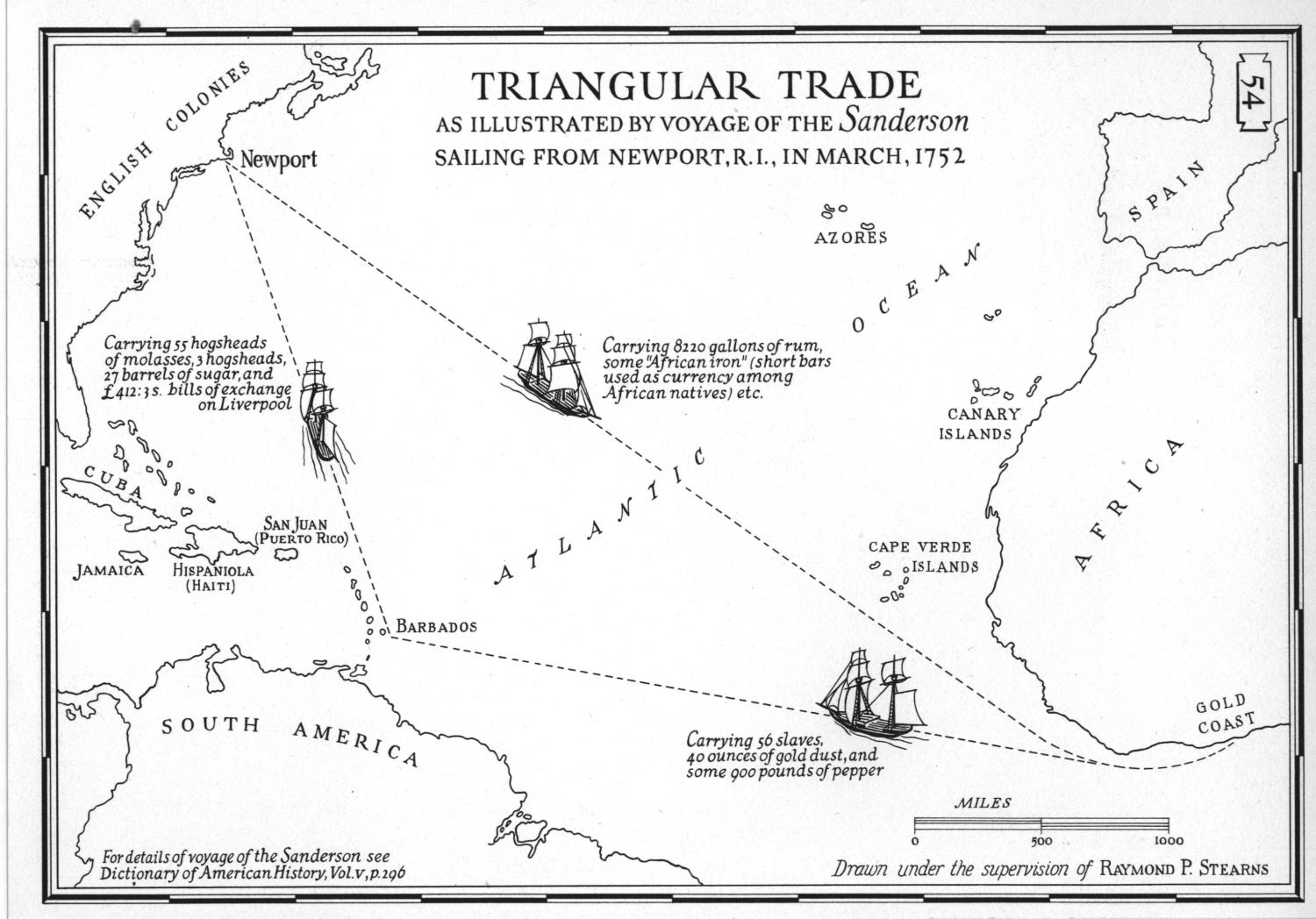
It's been the case since the beginning of the nation that the North has told itself a story of racism in which it was the hero and the South was the bad guy. We hear about slavery, but not about how the slave ships that fueled the Middle Passage sailed so often out of Boston and New York. We hear about how the cotton economy was built on slave labor, but not about how the North's industry was built from the proceeds of the Triangular Trade. The Civil War is the reflex point, in which whatever marginal guilt the North admits for having 'compromised' with the South on slavery is washed clean in blood. Subsequent history is virtuous Northerners periodically forcing vicious Southerners to amend their Jim Crow ways, until at last LBJ came down to help MLK and victory was achieved.

So it's not merely a timely but an evergreen question that the Times is asking today: "When Will The North Face Its Racism?"
In matters of racial injustice, the South has been the center of attention since before the time of the Civil War. But the North, with its shorter history of a mass black population, has only more recently dealt with the paradox of an enlightened ideal coexisting with racial disparity. The protests have become a referendum on the black condition since the Great Migration. “The protests are beginning to wake people up to the idea that the problems are not only there but have been obvious all along,” the historian Taylor Branch told me. “It feels like the South in the 1950s.”
Yet the parallels drawn aren't to the South in the 1950s, but to the South at the height of lynching. The parallel between lynchings and police killings of blacks is overblown, as we've discussed before, because even if the rate at which such killing occur is about the same, the population growth means that the rate per black citizen is a fraction of what it was. Still, "it feels like" doesn't require much substantiation: the feeling may not be purely rational, but feelings are often not. Grappling with the problem means both that many in the North may have to acknowledge a greater degree of structural racism than they want to admit to or recognize; it may also mean that some in the black community may have to admit to a kind of objective improvement in the facts, even if there are times when they still feel strongly the sense of oppression.

Shooting the unarmed

A Phoenix anti-cop activist shows surprising flexibility of thought after completing a shoot/don't-shoot training course.  It obviously made him rethink what should happen when an unarmed man walks right up into an officer's face.

Photo anti-op

Cut Eric Holder some slack.  He was in Paris as the sole representative of the U.S. government in the current crisis, but he had to meet with some senior people.  In the meantime a bunch of senior people were marching arm in arm:


Left to right: Greek Prime Minister Antonis Samaras, Spanish Prime Minister Mariano Rajoy, British Prime Minister David Cameron, Danish Prime Minister Helle Thorning-Schmidt, European Union foreign policy chief Federica Mogherini, Paris Mayor Anne Hidalgo, European Commission President Jean-Claude Juncker, Israeli Prime Minister Benjamin Netanyahu, Malian President Ibrahim Boubacar Keita, French President Francois Hollande, German Chancellor Angela Merkel, European Union President Donald Tusk, Palestinian president Mahmud Abbas, Jordan’s Queen Rania, Jordan’s King Abdullah II, Italian Prime Minister Matteo Renzi, Turkish Prime Minister Ahmet Davutoglu, Ukrainian President Petro Poroshenko and other guests.
Holder wasn't meeting any of them.

Is this sorry enough?

It's not clear to me from this report that the newspaper used the "s" word, but I'd say this was pretty thoroughly abject:  no weaseling.

Magna Carta

A free online course by the University of London will explore the history of Magna Carta, and how the ideas expressed in it -- little things like "no taxation without representation" and trial by jury -- have influenced the world.


I think it sounds like fun. If you want to do it too, you can sign up here.

More unclear motives

A German tabloid that reprinted the Mohammed cartoons has been firebombed.  Police say it's too soon to ascribe motives to the attack.

A couple of comments from David Foster's place, ChicagoBoyz:
There is an interesting piece today in the Wall Street Journal about historian Tom Holland and the writing of his "In the Shadow of the Sword, the Rise of Islam," which is about the origins of Islam and Muhammed, which do not agree with the Quran or the Hadiths. He was OK until the BBC made a documentary about the book then he started getting lots of death threats. He said he never thought that a historian would be at such risk since all he wanted to do was tell a true story.
I’m ordering all three of his books about the Middle East. Apparently Muslims do not read much but do watch TV. Maybe they read cartoons, as well.
and
#JESUISCHARLIE is one thing.
I think that we are more in need of #JESUISCHARLIEMARTEL.

His motives remain obscure

Don't call him an Islamist.  It might stir up anti-Islamist sentiment.  Who can really say why he acted as he did?  Well, other than himself, of course.

A brief stint as Oskar Schindler

A nice vignette from the troubles in France:  a black guy amusingly described as "African-American" by a CNN news anchor used quick thinking to shove about 30 Jewish customers of a kosher store into a basement freezer to protect them from the Islamist hostage-takers.  They all survived; the hostage-taker is now at room temperature.

The British Press Has A Banner Week

The British press has never seemed as out of touch as it is today. All our broadsheet papers are packed with pleas to the people of France, and other European populations, not to turn into Muslim-killing nutjobs in response to the Charlie Hebdo massacre. The Guardian frets over “Islamophobes seizing this atrocity to advance their hatred.” The Financial Times is in a spin about “Islamophobic extremists” using the massacre to “[challenge] the tolerance on which Europe has built its peace.” One British hack says we should all “fear the coming Islamophobic backlash.” And what actually happened in France as these dead-tree pieces about a possible Islamophobic backlash made their appearance? Jews were assaulted. And killed.
It's been a great week at the Guardian particularly. Regarding the new Clint Eastwood movie about former Navy SEAL Chris Kyle, they published an article titled, "The real American Sniper was a hate-filled killer. Why are simplistic patriots treating him as a hero?"

Don't get your hopes up -- she didn't actually try to understand the answer to the question of why people think of him as a hero.

Snapshots from Hubble

The newest pictures from the Hubble orbiting telescope of our nearest large galactic neighbor, Andromeda, are sharp enough to show 100 million individual stars.  This link has images that are sharp enough to admire, but not big enough to take a long time to download.  A link within the link will take you to a 200MB image.

Andromeda, a spiral galaxy, is only 12.5 times as far away as it is wide (2.5MM to 200,000 light-years), so it shows up relatively well in our sky.  It's on a collision course with the Milky way--ETA is about 3.75 billion years--which makes it one of the few elements of the universe that isn't rushing away from us.  Andromeda is just barely visible to the naked eye in good conditions.  Human beings have been recording their observations of it since the 10th century, but only in the 19th century did its spectral lines suggest that it was not a gaseous nebula but had some kind of stellar nature.  Believing it to be a relatively close object, astronomer first guessed that it was some kind of nova.  In 1925 Edwin Hubble demonstrated that it was a separate galaxy similar to our own.

Even the old-fashioned pictures are pretty spectacular.


Men are from Dune, women are from Pemberley

Grim's link took me to other articles by Examiner writer Michelle Kerns, including her "Men are from Dune, women are from Pemberley" lists of 75 Books Every Man or Every Woman Must Read.  I'm afraid I haven't read very many of them, but I've read 16 from the men's list and only 11 from the women's.

Both lists pick a single book by a famous writer and let it go at that.  I don't read that way; I'm more likely to read all of the works of an author that suits me and never quite get through even the first book of an author that doesn't.  What's more, almost none of the books I've read from either of these lists is on my "desert island" list of the few books I'd want to have on hand to read repeatedly for the rest of my life, in a pinch.  "Lolita" isn't on either list, for instance.  But "War and Peace" is on one and "Middlemarch" on the other, so there's that.  And yet no C.S. Lewis!  I don't know what I'd do with myself if I couldn't read and re-read his works.  Not to mention Robert Heinlein, John Varley, Frederick Pohl, Larry Niven/Jerry Pournelle, and a handful of other science-fiction writers I depend on year after year--science fiction and fantasy being my true lifelong literary enthusiasms.

But as for Twain, Dickens, Joyce, Rushdie, Hemingway, Henry James, Maya Angelou, J. K. Rowling, and other high- and low-brow favorites, I just can't read them at all.

Is that why the buildings are ugly?

It's an enduring question:  is it just me, or are most of the buildings ugly?  In The New Urbanism, William Lind argues that some high-style architecture is deliberately ugly, on the theory that the essence of a capitalist system is alienation, and therefore all true art must alienate in order to be authentic.  He attributes this idea to Theodor Adorno.  I don't know about that, but here is a summary of what's supposed to be Adorno's thinking:
Adorno's claims about art in general stem from his reconstruction of the modern art movement. So a summary of his philosophy of art sometimes needs to signal this by putting “modern” in parentheses. The book begins and ends with reflections on the social character of (modern) art. Two themes stand out in these reflections. One is an updated Hegelian question whether art can survive in a late capitalist world. The other is an updated Marxian question whether art can contribute to the transformation of this world. When addressing both questions, Adorno retains from Kant the notion that art proper (“fine art” or “beautiful art”—schöne Kunst—in Kant's vocabulary) is characterized by formal autonomy. But Adorno combines this Kantian emphasis on form with Hegel's emphasis on intellectual import (geistiger Gehalt) and Marx's emphasis on art's embeddedness in society as a whole. The result is a complex account of the simultaneous necessity and illusoriness of the artwork's autonomy. The artwork's necessary and illusory autonomy, in turn, is the key to (modern) art's social character, namely, to be “the social antithesis of society”.
It does sound as though the idea were to make us unhappy for the sake of raising our consciousness.  When someone starts talking about simultaneous necessity and illusoriness, I suspect him of being in a serious sulk.

The Lind article has defensible ideas about the use of conservative ideas in urban architecture, including the superior market appeal of mixed-use developments and therefore the absence of a need for government regulation to improve neighborhoods; the market will do that for us if we prevent the zoners from requiring undue separation between residential and commercial functions.  I'm not sure he's really nailed the ugly-architecture problem, though.  Why is our new fire station an eyesore, for instance?  No high-concept architect set out to mirror the incurable alienation of the local population.  No architect had much input at all, except in the sense that someone with minimal training did a bit of work making sure the hallways all led to rooms and some of the exterior walls had windows in them.  Otherwise it's a metal shell with a shallow roof in random colors, and a bunch of rooms jammed inside.  It was cheap, it was fairly easy to build, and it made no concessions to aesthetic experience.


The ancient Welsh-style cottage pictured below was cheap and fairly easy to build, but it's not ugly.  What are we missing?  Why should economy of construction be ugly?


It actually looks quite a lot like my cistern, which I love, and would love even more if the cylinder were shorter and the witch's hat bigger:


Lind has other ideas about making cities livable, his main thrust being that conservatives should be able to find common ground with the largely liberal urbanist crowd.  One of his most valuable insights is that beautiful public spaces rely on money and security:
We offer the understanding that traditional middle-class values work. Without them, no city, neighborhood, or town, however well designed, is likely to function. We point out the reality that order, safety of persons and property, is the first essential. [Celebrated urbanist Andres] Duany said to me at a recent CNU [Congress for the New Urbanism] meeting, “I’m beginning to understand that we design beautiful public spaces to which no one dares come.” Indeed. Conservatives understand that for New Urbanism to succeed, it must create an arena where businessmen can make money. Urban areas that are not market-friendly will remain poor.
We could blame that problem on capitalism--guys like Adorno certainly made a career of it--but it's possible that the real problem is designers who aren't interested in making forms nearby which people want to sleep, work, shop, recreate, or reflect.  Capitalism gets a bad rap for reducing "value" to "money," but I suspect what's really irritating about it is that ordinary people get to vote on whether they find something valuable.  Their betters don't always get to prescribe it for them, or force them to feed and house artists and other intellectuals who want to be the antithesis of society.  If they don't like it, they just won't buy it.

The unavoidable conclusion is that if I didn't want the fire station to be ugly by my standards, I should have found a way to fund its construction myself.  After all, I don't find my house ugly!  Of course, I didn't expect it to express the simultaneous necessity and illusoriness of art, or to serve as the antithesis of society.  I just wanted it to function properly and delight me.


Mark Twain on Jane Austen

I've occasionally mentioned Mark Twain's brutal, and completely accurate, review of Cooper's 'Leatherstocking' tales. I also knew that Jane Austen was not universally loved by American authors -- Emerson didn't care for her ("Suicide is more respectable," he wrote of her work), but who cares what Emerson thinks? Still, I hadn't realized until this morning that Twain had written occasionally about his dislike for her work.
"Jane Austen? Why I go so far as to say that any library is a good library that does not contain a volume by Jane Austen. Even if it contains no other book."

"I haven't any right to criticise books, and I don't do it except when I hate them. I often want to criticise Jane Austen, but her books madden me so that I can't conceal my frenzy from the reader; and therefore I have to stop every time I begin. Every time I read 'Pride and Prejudice' I want to dig her up and beat her over the skull with her own shin-bone."

"All the great critics praise her art generously. To start with, they say she draws her characters with sharp distinction and a sure touch. I believe that this is true, as long as the characters she is drawing are odious."
There are a host of great author-on-author put downs here. If any of you are Austen fans horrified to find that Twain held her in such low regard, there's an essay here that examines his comments in greater detail from a pro-Austen perspective.

Chanticleer

For when I see the beauty of your face,
The scarlet red you have about your eyes,
It makes my dread all wither and it dies,
As certainly as In principio,
Mulier est hominis confusio
--
Madam, the meaning of this Latin is
'A woman is man's joy and all his bliss.'
The FBI and Justice Department prosecutors recommend felony charges for General Petraeus.

Dog House Boogie

A little music for a Friday night.

Why Not Free? Well, "Free."

ThinkProgress proposes that the President's free lunch 'free two years of community college' plan is taking the wrong way 'round. We could just as readily make college free for the whole four years, at all public colleges, without spending more than we're already spending:
If President Obama truly wants to transform the cost of higher education, however, he could make college free for all students without having to lay out more money to pay for it. That’s because the federal government could take the $69 billion it currently spends to subsidize the cost of college through grants, tax breaks, and work-study funds and instead cover tuition at all public colleges, which came to $62.6 billion in 2012, the most recent data. (The government spends another $197.4 billion on student loans.) That would give all students who want to get a college degree a free option to do so. It could also put pressure on private universities to compete with the free option by reducing their costs, which have risen 13 percent over the last five years.
I have a sense that we're going to have to extend the "free" (meaning publicly subsidized) education we pay for in this country. We already provide publicly-funded education through high school. The expansion will need to come because the continual transformation of the economy by technology means that (a) whole industries are dying -- see travel agencies, secretarial pools -- and (b) the only thing like an answer to that problem is to retrain people for whatever new sectors of work are emerging from the constant technological change. But the people being forced out of dying industries are low on the list of those likely to be able to afford the cost of advanced education.

Thus, our options as a country are:

1) Allow our fellow citizens to fall out of the productive/employable classes, which means that they will not be providing tax revenues (and, most probably, will be consuming expensive public welfare programs -- but even if we were to manage to restrain those, they still will not be adding to the common fund),

2) Spend some of our public stores to help make sure people can retrain in productive ways.

The best way to do this would be to establish some right/left limits on what kinds of programs we consider productive enough to merit public funding, probably based on some rolling estimate of which industries are coming-to-be or passing-away due to current changes in technology. We would need to make sure money didn't go to waste, but was directed at programs designed to help people retrain for current careers. This is something that we're just going to have to expect people to do more and more as time goes along, and the poorest most often, so we probably need to think about a solution that doesn't require them to have either money or credit if we want them to succeed. We should want them to succeed, if only for selfish reasons of keeping them off welfare rolls and helping with the taxpaying duties for a larger percentage of their lives.

Public colleges are a good start, but we should really expand especially to vocational schools. A travel agent put out of work by Expedia may not have the chops for a degree in engineering, but might benefit from getting a CDL so she could move to Texas and drive trucks to and from the oil fields. That's something we could do pretty cheaply and relatively quickly, compared to 99 weeks of unemployment benefits, and it would get her back on her feet and into the taxpaying class as quickly as possible. We'd save money, even if it is not in any sense "free," and it would be good for the moral health of our citizenry as a whole if more of them were able to work and fewer were on welfare of any kind.

Risk and blame

Examples in another context of the confusion between ignoring risk and excusing wrongdoing:  there's a new book out, drawing attention once again to the government policies that contributed to the 2008 housing crisis.  The book is drawing the predictable criticism that it's a mistake to attribute the housing crisis to government regulatory initiatives, when it's so obvious that many bankers were greedy and incompetent.  That's a confusing criticism, considering that we're not likely to start inhabiting a world in which bankers are drawn exclusively from the ranks of the saintly and skilled.  We have systems for restraining the more unpleasant results of bankers who go wild.  They start with making it highly likely that the bankers will lose money if they keep it up, and go on to criminal penalties if, in addition to responding to a natural impulse to make money, they drift into outright fraud.  But none of that explains very well what went so dramatically wrong with our housing market in 2008.

What does explain it quite handily is a look at the impact of a government-sponsored entity that sends out a strong signal, "We'll buy the craziest mortgages you can sign up.  Lend money to people with bad credit.  Not only will you get credit of various sorts from people (on both sides of the political aisle) who want to see homeownership expand in our society, but you won't even pay a financial price for writing loans you ought to know perfectly well are going to default in above-average numbers.  We'll subsidize your losses."  What exactly did we expect to happen, especially considering that banks make money on processing fees and therefore are highly motivated, all other factors being equal, to maximize loan volume?  The force that normally puts a brake on this motivation is fear of failure.  We took fear of failure almost completely away.

Does that mean no banks behaved badly?  Obviously not.  But, as voters, we're not in control of bankers' consciences.  We are in control of the laws we pass.  We don't have to pass laws that fuel the very behavior we claim to be outraged by.  I don't know why we can't learn the lesson that you get more of whatever you subsidize.

As usual, I think the basic underlying mistake here is to imagine we can escape the price tag of a charitable impulse.  Both Democrats and Republicans had a natural, even laudable, goal to improve the lives of Americans by extending the benefits of home ownership to greater numbers of people.  We went wrong by fantasizing about a world in which such a thing would not have a cost, a real cost that real people would have to pay.  We're like people who want to feed the homeless, and place an order for restaurants to deliver hot meals to 10,000 people, then settle back in our armchairs feeling compassionate.  But when the bill comes in the mail, we throw up our hands and refuse to pay it.  "I thought it wouldn't cost anything!  I thought someone else was going to pay it!  If you don't keep delivering the hot meals without waiting for my check, you're just mean!  You must be in favor of hunger!  Restaurant owners are greedy!"

I Think It's The Other Way Around

InstaPundit:
LIVE BLOG — PARIS UNDER SIEGE: Charlie Hebdo Attackers Cornered, Hostage Situation in Kosher Store in East Paris.