An Honest Piece on Alcohol

Following last week's Surgeon General broadcast about the cancer risks of alcohol, there's been another set of fulmination on the subject. I forget that there remain Prohibitionists out there, who really do still want to eliminate the stuff and regret that it didn't work the last time around. There are, though.

This piece is the most honest thing I've read from a doctor on the subject. 
The report describes the relationship between alcohol and cancer in different ways: the number of new cases of cancer a year in the United States potentially related to alcohol consumption (roughly 100,000); the number of annual cancer deaths that might be attributed to alcohol (roughly 20,000, compared to nearly 200,000 cancer deaths attributable to smoking); the increase in absolute risk for developing alcohol-related cancers (a 2.5-percentage-point increase for women and a 1.5-percentage-point increase for men); and the relative risk for specific cancers, such as breast cancer (one study suggests that a drink a day increases a woman’s risk by 10 percent).

But it’s hard for individuals to translate statistics to their own lives. A small increase in relative risk is difficult to make meaningful, even for people who understand what “relative risk” means. (It doesn’t mean a 10 percent risk of breast cancer; it means women who drink may be 10 percent more likely to get breast cancer than women who don’t.)

There are many other open questions that might seem important to a person deciding whether to change her habits: Is a glass of wine as carcinogenic as a daily martini? Does it matter how old you are when you start or stop drinking? And perhaps most important, do you lower your cancer risk if you quit drinking tomorrow, regardless of your age? The answers to all of these questions are unclear.
A one-point-five percent increase in absolute risk doesn't seem like a lot; and I think she raises a good point about the wine-vs-martini issue as well. Wine has a lot of antioxidants, especially red wine, which are supposedly associated with decreases in things like cancer. We keep getting told that one drink is the same regardless of format, whether it's 12 oz of beer or 8 oz of wine or 1.5 oz of hard liquor; but one thing I know from first aid training is that poisoning is often wisely treated by diluting the poison. It would make sense that a drink that is 92-96% water and carbohydrates was less toxic than one that was 40% pure alcohol. 

It's good to see a medical professional trying to talk about it in an honest manner. I notice the editor changed the headline to "When it comes to drinking, there are no good answers." The original, which you can still see reflected in the bar at the top of the page, was "Don't overthink the connection between alcohol and cancer." 

Viking Stack Cake

The Appalachian stack cake apparently has an Icelandic cousin.

Equal Protection

A few people have noticed that the Federal response to California has been a little more emphatic than the Federal -- or even state or local -- response to North Carolina's suffering. Asheville is collecting property taxes on places that were destroyed at their pre-destruction valuation, 'because the law requires it.' Well, so much the worse for the law. 

FEMA got in touch with me this week to tell me that they were cutting off my housing assistance, which I never applied for and never received. They didn't get in touch with me to deal with any actual assistance; I've still never seen a FEMA employee, not even though I spent weeks doing rescue operations during the hurricane.

I'm not mad about it, though. We're better off without the government. I'll be happy to see the back of it. I feel bad for those people who've put their hopes in it to help them, protect them, or make their lives in any way better. Things are going to get better here, a little bit at a time. California isn't going to get any better because they remain enthralled by the idea that these evils are goods. 

Triumphant, Broken America

Foreign Affairs is one of those publications for those who think that managing the world is their calling in life. They've published a piece by Michael Beckley, a Tufts University professor who is also a senior fellow at the American Enterprise Institute -- famously right-wing, AEI, but hardcore pro-immigration because robust immigration boosts American power (as well as suppressing American wages in ways that are helpful to their rich donors). There's a lot of talk about the virtues of immigration in this piece. That's not what I want to talk about. 

His basic thesis is that, in spite of all the problems facing America, the USA is still far and away the most powerful state and likely to remain so. There's a lot of pieces at work in that analysis, most of which I'm going to leave as exercises for the reader. What I want to discuss is his analysis of the rural/urban divide in America, which I think is the most important thing going in determining the future and character of the nation. He also sees it as a crucial problem.

I'm going to quote quite a bit of his analysis of this one problem and discuss it, leaving out the rest of his work, after the jump.

The Pleasure of Snow

Snowfall


It has begun. We're expecting, according to the weather service, somewhere between 2 inches and a foot of snow. Given how unpredictable the weather is in these mountains, I believe that delta is the best they can do. I spent the morning putting chains on trucks to get ready for possible emergency operations, but I hope to spend the weekend not going anywhere. Snow is a rare treat even in the mountains of the Southern Appalachians, so I hope that we will get to enjoy it. 


UPDATE: The snowfall accumulation wasn’t even two inches as it turned out. Quiet day though. People had the sense to take it seriously given how little infrastructure we have for dealing with snow and ice. 

Peaceful Coexistence

Just under sixteen minutes of myth-busting from a historian speaking against a fake claim by another historian (but a well-credentialed one).

Speaking of Horses

The little town where my mother, sister, and niece live has lost a locally famous one. Her name was Clementine. 

Magic and Chivalry

The real point of the article mentioned yesterday was to uphold the idea that some things are worth the time they take, most especially the development of persons and relationships. Shortcuts end up stealing the power and the value of these most valuable of things. Maybe they make them impossible to achieve at all.
What does it take to become a reasonably mature, reasonably wise, reasonably loving person? Inescapably, a great deal of time. Not just the years of cognitive and social development from infancy through adolescence into early adulthood—roughly 25 years from birth to the maturation of the prefrontal cortex. But also years of friendship, long hours of conversation, even the pause between hearing and speaking that marks the truly personal moment of really listening. In her 2011 book Alone Together, Sherry Turkle writes of the seven-minute mark at which conversations take a turn—the point when the usual opening gambits, pleasantries about weather or sports, have run out, there is a palpable pause, and someone has to take a risk. It takes seven minutes for a conversation, a real one, to even begin.

It is at the seven-minute pause, Turkle observed in her lab, that many people take out their phones, implicitly signaling to each other that the conversation need not go any further or deeper, an exit ramp before the unpredictable and vulnerable words beyond the silence. That, of course, was more than a decade ago. What are the chances that conversations last even that long these days?...

[W]e have let [technology] colonize places where not only is it of no use—there is no magical way to raise a child—but where it actively displaces and undermines the essential process of personal formation. We have let the magic of technology into the formative stages of life—infancy, childhood, adolescence—so that from very early on, many if not most children experience the seductive power of instant, effortless results delivered through screens and digital devices (and many battery-powered toys as well).

And while these stages of life are singular and essential, magic is equally disastrous at other formative moments. A friend of mine found himself seated on an airplane departing Los Angeles next to a couple en route to their honeymoon in Hawaii. He observed with growing horror as the newly-married young woman opened up TikTok on her phone, began scrolling and swiping through videos, and did not stop, even for a bathroom break let alone a word to her husband, until the plane landed five hours later. One can only wonder how the rest of the honeymoon unfolded. 

So we want to develop virtuous people -- the author says "reasonably mature, wise, loving." Development of any sort of virtue requires time spent doing the work. As Aristotle explains, virtue is a kind of habituation to doing the right thing that is achieved by doing it, over and over, until it is what you do because it is who you are. The reason that the US Army still trains its elite soldiers as airborne units is not because it plans to drop them out of airplanes into Europe or Asia. It is because Airborne school trains the virtue of courage. It takes courage to step out of an airplane into the wild air. Habituating soldiers to do that brings about courageous soldiers. 

Courage is the model virtue for Aristotle because it's one that is easy to get as an example. Habituating wisdom (or lovingness) is harder to visualize, but it works the same way. The author has a good point here: we have to do the work, because it is only by doing the work that you develop the habits. Even if a technology came into being that made it easier to connect with and understand another -- perhaps some sort of mind-meld technology that let you experience the world from their perspective, thus shortening the process to understanding -- you'd still have to spend time doing it, and then time understanding and integrating what you'd experienced. You'd have to do this because they were worth it to you, and because you decided it was worth doing.

What this reminds me of most strongly is the old writing I did back when I rode horses a lot on the virtue of chivalry. This virtue, like lovingness, is about building the kind of character in yourself that can sustain a respectful relationship. This one requires spending time with horses.

What does it take to tame a horse? It takes courage, not recklessness, but that kind of disciplined and developed courage that comes from learning to fear being thrown, and getting on horses again. It takes self-mastery, because the horse is a prey animal that will amplify your fear. You must learn to ride through it, until even you don't really feel the fear in the same way anymore.

It takes gentleness. A horse responds to the slightest touch. You must be sensitive to its movements, its breathing, the language of its body.

What does it take to ride a horse to war? It takes trustworthiness. The horse must believe in you to charge into the smell of blood.

It takes honor. You can't ride alone. You must build relationships with other men like you, who know they can count on you while there is blood in your body. There is your self-sacrifice, even to death.

What does it build in you to do these things? Some of the things have been said. You get the virtues you practice, as Aristotle teaches in the Nicomachean Ethics. You must have some courage to begin, but you will build courage as you do. You must have some self-mastery, but you will become the master of yourself. You must be gentle, and able to understand another very different kind of living being through touch alone. You will become moreso.

The habit of keeping your word is like any other habit. After a while, it becomes part of you. The habit of honor likewise.

Can you do without chivalry? I don't know. Can you do without men like this?

That post closes by pointing out that the real question is not whether you can do without it, but whether you can build it without the horse. The author here is pointing to a similar question about other virtues, humane virtues like maturity and wisdom and being a loving person. It may be that you can capture these qualities in other ways. It may also simply prove to be true that you need the horse or the other people to get the virtue. If so, making a society where we spend time with people at the right stages and moments of life may be a necessary condition to building a life worth living, or people worth living with -- worth living for.

Good Luck to the Firefighters

All our best to the brave men and women of the LAFD as they risk their lives today.

Honors in Absence of Virtue

There is a distinction between honor and honors, the latter being ways of showing appreciation and respect and the former being the quality that really deserves such demonstrations. As Aristotle holds, honor is the quality that allows the best kind of person -- the magnanimous -- to achieve the fullest expression of virtue by rational reflection on what most deserves honors, and then doing that thing to the degree that most fully deserves to be honored. In this way, virtue and honor are properly connected.

Yet it is quite possible for honors to be deployed separately from the things that properly merit them, or refused to those who indeed do merit them. A system can honor those without virtue, in other words; it can also refuse to honor those whose virtues deserve it. This is why Aristotle rejects honor as the end of ethics: the true end has to be something internal to the person, not something that other people (who may not themselves be virtuous) ultimately control.

This kind of counterfeit use of honors was on display last week with the ridiculous conveyance of the Presidential Medal of Freedom (even with Distinction) on some very unworthy persons (though not all of the awardees are absurdities). The award itself is a little absurd; the medal with Distinction in particular is meant to ape the heraldry of a Knight Grand Cross, and exists only so that certain American elites don't have to feel like poor relations when they are rubbing elbows with European royalty. Those orders too have drifted from their roots in knightly virtue, and are now granted for reasons of high birth or social cachet rather than from merited service. 

American culture generally rejects such things. Unlike the Congressional Medal of Honor, which most Americans would know from exposure to war movies that themselves are honors paid to martial distinction, almost no Americans have ever even seen the Presidential Medal with Distinction displayed by one of our alleged grandees. The military medal, like the ancient orders of knighthood, has its basis in real virtue. Americans deeply respect it. The counterfeit medal no one dares even to wear in American company, not though our own government issues it. 

Another attempt to use honors without virtue as if they were not thereby counterfeit occurred this week when Denmark attempted to reinforce its claim to Greenland. Responding to offers of money and protection should Greenland declare its independence and join the United States, Denmark's king altered his coat of arms to include a polar bear (and also a ram symbolizing the Faroe islands, lest they get any ideas). They are trying to do with honors alone what the Royal Danish Navy, three squadrons strong, could never do with courage and virtue.

Honor is thus one of the most important things in ethics, but only when it is the internal quality. Doing what is worthy of honor, even when it receives no honors, is the mark of the best sort of person. Accepting unmerited honors is a hallmark of the scoundrel; awarding such honors, a mark of corruption among the powerful.

Frosty Morning


Magic and Alchemy

James linked an interesting article on magic and the modern world, one that deserves some commentary. 
To be modern, almost by definition, is to live without putting much stock in a supernatural “beyond” to the world. And yet, nearly every time a new technology is introduced, its promoters reach back to the ancient idea of magic to capture its significance...  Even more surprising is how often we still talk about a specific magical tradition: the practice of alchemy. For centuries, alchemists sought to transmute all metals into gold, to escape the conditions of mortality, and perhaps even to create new forms of life that would answer to our command—all summed up in the quest for the substance known as “the Philosopher’s Stone.”

Now, if to be modern is to largely disbelieve in magic, surely to be modern is to know that the alchemists’ quest failed. If we think of alchemy at all, we think of it in contrast with a proper science like chemistry. The alchemists were wrong about the natural world—the chemists, after much trial and error, were right.*
* Significantly, though, the early “natural philosophers" spent at least as much of their time on what we would call alchemy as what we would now call chemistry. Indeed, many celebrated figures now remembered for their scientific contributions—like the physician Paracelsus and the mathematician Isaac Newton—spent far more of their time on alchemy (and in Newton’s case, astrology) than on anything resembling modern science, and made no clear distinctions between them. You might almost say that we now use alchemy for the approaches to the natural world that didn’t work out—while science is the name we give, in retrospect, to the approaches that did work out.
I think what a modern philosopher might know about alchemy is not that it failed, but that it proved to be a lot more involved than Newton could imagine without a knowledge of subatomic particles. Lead has three more protons than gold, and an electron shell that is substantially different in character. To transmute one into the other is a technical feat that is still beyond us, but we understand better why it is, and it isn't obvious that it can never be done. It might not ever be worth the substantial trouble involved; or possibly we will develop a technology that will make it trivial to dis- and reassemble subatomic particles however we want, something like a replicator in Star Trek. That would be alchemy in the literal sense, not now "magic" but "science fiction." It might someday become fact. It might even be effortless, at least from the perspective of the technology's end user, as it is when Picard orders a tea and finds that the glass as well as the tea simply appears.

Thus, the connection he is finding between ideas of magic and emerging technologies is not as strange as he suggests. It's a fairly sensible way to proceed.
Alchemy failed as science, but it succeeded as a dream. Magic doesn’t “work,” in the sense that science works, but it does work as a dream. And technology is, after all, applied science. Applied to what? To a dream that was there long before science, the dream of magic.

Think of magic, for the moment, as the quest for instant, effortless power—the ability to get things done without taking time and without requiring labor or toil. In the absence of magic (or technology), getting anything done requires some amount of time, sometimes a great deal of time. But what if you could get results without waiting?
So, again, it doesn't work yet: but this is a reasonable description of how it might work. If I want hot water, instead of having to build a fire and smelt iron to make a pot (or build one out of clay, then fired in a kiln), and then fetch water from the stream, and then.... no, I just turn on the hot water faucet. Or I put water in a microwave, where a magnetron generates an electromagnetic bombardment that gives me boiling water in a minute while I wait.  The reason to imagine it this way is because this is how it works. Parts of it don't work yet, but other parts work now that our ancestors would have regarded as plain magic (and that, to be sure, many moderns don't understand either -- a joke in Oceans 13 was that a security system could only be defeated with a magnetron, "And you know what a magnetron is, don't you?" The joke was that the filmmakers could be reasonably sure that few in the audience would know that one was heavily involved in their microwaved popcorn).

That isn't what the article is about, but it impacts the frame of what it is about. Talking about how we have entered a new era in the last hundred years is likewise simply wrong: a similar thing was happening in the long middle ages with the invention and refinement of water-based technologies like grain mills. The author makes a point about how until recently everything has proceeded at the speed of digestion, as we used organic labor to create effects; but water mills could run day and night. Wind power also: witness how it drove ships across the wide world while men slept below decks, save for the night watch. It's only the speed that has increased. 

What the article is actually about is how to make good people and good relationships, and why hardship and time are important for that. That deserves a separate post, but I think this helps reframe us for that discussion. 

The Breaking of a Mighty Oak

We got that big oak I mentioned a few posts below cut into sections and off my neighbor’s fence today. It needed a tractor and a square-body Chevrolet to roll it enough to finish the cuts, one chain, four men, and two Husqvarna chainsaws. But then it didn’t take very long. 

Finding Warmth in January

You wouldn’t think that you could have a winter storm and a raging fire at the same time, but a little after midnight we managed it. Kerosene heaters are pretty safe, but not perfectly so. No one was harmed in the ensuing blaze. 

You usually only get biker photos of me, but here’s one our acting public information officer snuck last night as we were winding up. 

We had mutual aid from a neighboring county, including one of the guys with whom I’d done the long Technical Rescue general and rope rescue courses. I brought a ladder over to their unit to get them up with a chainsaw to cut a ventilation/attack hold in the eaves on that side. 

One of the guys who didn’t know me remarked that I was carrying the double ladder by myself, and the officer who trained with me said, “Yeah, I know him. Strong as a bull, can’t tell him ****, can’t teach him anything.” Then we laughed and he went up the ladder while I stabilized it in the mud. 

I’m proud of my son, who was on the interior attack last night. I think I mentioned that he finished his live Fire training late last year, and last night he put it into action. 

A Funny Story

 Scottish musician KT Tunstall tells a funny story here.

She's not our usual fare here, so maybe a couple of introductory tunes are in order.


Bleak Midwinter

The Worst Month

We are currently experiencing the first of what are said to be three Arctic blasts, accompanied by a great deal of rain locally. Snow might at least be beautiful; cold rain and attending mud are not at all. It turns to ice in the freezing nights, but the days stay just a degree or two above freezing. The air at 34 degrees with high humidity and cold wind is far worse than the air at 28 with the water frozen out of the air. The skies are grey almost every day somehow. The few hours of sunlight is veiled, the lumens lowered by the lowering clouds.

Plus it's Dry January now, an event that I participate in every year because of the rational wisdom associated with it. It is an opportunity to prove my freedom to myself on Kant's terms, by which he meant doing what you least want to do because you ought to do it. Instead of just waiting out the month with a glass of ale, every year I add abstinence to the rest of the miseries of January. Thereby, perhaps, I improve my health; certainly I improve my discipline, and demonstrate my freedom from the control of base desires and appetites. All the same, it is entirely unpleasant.

There's a chance that I will get to ride sometime before February, but so far it's not looking good. I last rode on New Year's Eve, and it is starting to look like it may be St. Brigid's Day before there's another fit chance, if indeed one comes so soon as that. 

February isn't all that much better, but at least it brings back beer and daffodils. For now, all one can do is wait and endure, and try to fit in some maintenance projects. This month I'd like to go and repair my hand-built ford, which is still functional after Helene but worse for wear; other parts of the road to the old country cemetery that our governor decided to allow to rot, leaving it to the labor of individual citizen volunteers; and help a neighbor with a massive tree trunk that fell on his fence in the hurricane. We cleared the most of the tree the same day, as well as the road to his  home, but the bulk of the tree is thousands of pounds and will require a tractor and several of us with chainsaws. This neighborly effort has been being put off until after the holidays, which are now upon us. I went out and looked at it yesterday, shortly joined by one of those neighbors bundled up like a mummy, who averred that we might wait until the current cold snap passes... and the one after... and the one after that.

Sleep and Memory

The link between good sleep and a sound mind may have to do with the way that dreams deal with memories. One might think that the engagement of the imagination with memory that occurs in dreams is a better way of processing hard memories than the wakeful obsessing over them; but the scientists say maybe the real benefit is just that the parts of your brain that suppress memories are better-rested.
Eighty-five healthy adults attempted to suppress unwanted memories while images of their brain were taken using functional MRI. Half of the participants enjoyed a restful night of sleep in the sleep lab before the task, whereas the other half stayed awake all night.

During memory suppression, the well-rested participants showed more activation in the right dorsolateral prefrontal cortex -- a brain region that controls thoughts, actions, and emotions -- compared to those who stayed awake all night. The rested participants also showed reduced activity in the hippocampus -- a brain region involved in memory retrieval -- during attempts to suppress unwanted memories.

Among the participants who slept in the lab, those who spent more time in REM sleep were better able to engage the right dorsolateral prefrontal cortex during memory suppression, pointing to a role for REM sleep in restoring prefrontal control mechanisms underpinning the ability to prevent unwanted memories from entering conscious thought.

It strikes me that REM sleep is supposed to be when dreams occur, so maybe the more natural hypothesis is (also?) correct. Dreaming may help process the memories so they aren't so upsetting; rest may help the brain deal with the need to wakefully suppress old thoughts.  

“Jackery” Indeed


My mother kindly sent me this as a gift this Christmas, thinking I might need a solar generator in case of another hurricane. This product is clearly labeled and marketed as a solar generator. 

What it is, however, is a battery. It has no electricity generating capacity of any sort. It is compatible with separately sold solar panels, which do all of the “solar generating” but are not included. The panels cost more than the fraudulently labeled “generator,” as indeed they should since they do all the work of generating electricity. 

I gather this company is doing very well on Amazon, which is thereby a (probably unwitting) participant in the fraud. I’ve tried to alert them, but their customer service for that has been outsourced to a bot that doesn’t understand the problem. 

So anyway, be warned about this company and its unethical practices.  

Beauty

I have finally found an internet link to the 1987 film "Life Story: The Race for the Double Helix," with Jeff Goldblum and Juliet Stevenson. I was struck dumb by this production when I saw it in the late 1980s and have always wanted a copy. This link to Part 1 and Part 2 is a perfectly awful print with slightly mismatched sound, and yet I was as transfixed watching it just now as I remembering being the first time. A thoroughly satisfying story from the first scene to the last.

One for Gringo


Medieval Studies

I have spent a lot of my life with Medieval texts, as have many of you. 
Boston University is offering a graduate-level “Medieval Trans Studies” course for the upcoming spring semester that explores how “medieval texts speak to the historical, theoretical, and political concerns that animate contemporary trans studies.”

The course has drawn criticism from scholars who argue that it reflects modern ideological biases rather than historical accuracy.

It considers “the deep histories of transgender embodiment” through an examination of texts stemming from the Middle Ages, according to the course description.

Students will read about “alchemical hermaphrodites, genderfluid angels, Ethiopian eunuchs, trans saints, sex workers, and genderqueer monks,” according to the university.

Adam Kissel, a fellow with the Heritage Foundation’s Center for Education Policy [...said] it is permissible for universities to study how Medieval writers understood their fantasies regarding gender. However, BU’s course is “a distraction from better emphases.”

“In the Middle Ages there was no rational doubt that humans were created only male and female. The people knew that freaks of nature were abnormal,” Kissel said.

That's stronger language than I would have used, but it is definitely true that the Medieval understanding of humanity and creation is exactly that human beings were created male and female. The most rational minds of the age were trained by the Church, for whom* it is a point of clear doctrine.

Having spent a lot of time with Medieval texts, I have to say that while there are some interesting cases, you have to go a long way to find them. There is also a lot more about cross-dressing by clear males or females than anything resembling trans-* cases. There's a certain amount of playful literature about cross-dressing, both females dressing in armor in order to pursue a knightly quest, or male knights dressing as women to humiliate each other (either by beating the other male while dressed as a woman, or by forcing the other to wear female clothes as a forfeit for losing). This wasn't aspirational, even in the literature; it was a joke, the way that in Norse mythology Thor is pictured cross-dressing in a comedy story about how he pretended to be a bride in order to recapture his hammer from a giant who had stolen it. In Malory, for example, it's usually a story involving Sir Dinadan, who is most usually a comic relief figure in the Tristan stories.

Outside literature, Joan of Arc dressed as a knight (but didn't fight as one, though she led inspirationally from the front). A Persian scholar describes female Crusaders dressing in armor but not presenting themselves as males, but it doesn't appear this really happened and the story was probably made up to make the Christians look bad. The religious ruling about this holds that such women would be 'anathema' and this scholar thinks it is unlikely women really did this, at least regularly. There were probably females in armor successfully hiding their sex in order to fight as mercenaries, I would guess, but it wasn't an ideal people were striving for -- and it was more likely, I assess, among poorer women who had relatively few options and found mercenary work palatable. 

None of this really even approaches the side cases that this course will apparently take as its foci. I think the effect is likely to suggest that the Middle Ages were quite different from what they were, which could easily be a disservice to students. Only after a basic appreciation has been conveyed should such fringe elements be taught to avoid that deception. This is said to be a graduate-level course, though, so perhaps that will be the case.


Ecclesia is a person in the Medieval Catholic understanding, indeed a female person.   

The Quality of Mercy

I'm not in principle opposed to commutations of sentences or even pardons. It's a royal prerogative that for some reason the Founders chose not only to retain, but to vest in the executive. It might also have been vested with the truer sovereign, the American people, as perhaps by having annual referenda on it. [UPDATE: Or administratively, which seems to have problems too.] It might also have been rejected as incompatible with the judiciary's independence; but the Founders usually preferred to limit independence with checks and balances between the three branches. 

Courts often get things wrong. They are human institutions, and any system of rules can end up being unjust by applying those rules to a situation that they weren't really fit to handle. The rules are written in advance of the reality of the cases to which they end up being applied, and as such the cases may involve aspects the legislators never considered. This also has the happy quality of preventing magistrates from drafting rules that will favor their own side, of course; that was what Aristotle liked about the approach, and why he recommends it strongly in Rhetoric I.1. Still, the other side of that coin remains: sometimes the only rules we have don't fit a particular case well. Justice seems to involve setting the rules aside. Pardons and commutations are an approach to that problem that has evolved over human history, and retaining it doesn't seem in principle problematic to me.

One problem with locating it in an individual, though, is that the individual may prove to have poor judgment. This works in both ways: they may lack the virtue to stand up for the interests of justice by issuing a pardon when it is deserved, or they might lack the virtue to use the power in a just manner and end up pardoning people they should not.

The use of the clemency power in grand gestures is likely to prove problematic, as it is very likely that grand gestures will end up including some candidates who shouldn't have been included. On the other hand, there is Biblical warrant for a complete jubilee -- perhaps there is a basic wisdom to the idea that everything should be wiped clean every so often. Perhaps we should even use the power in this wide-ranging way more often that we do.

These big questions are in the news because of a series of Biden administration pardons and commutations that seem to range between somewhat unjust to completely unjust (e.g. his pardoning of his own son in the face of manifest criminal wrongdoing in which the elder Biden is also involved). However, there's also a set now from the outgoing governor of North Carolina, Roy Cooper. Readers know that I think he has been a terrible governor, and I sorrow that his chosen replacement will become our next governor. That said, I don't get the sense that on this occasion he has engaged in anything unjust. 
Before Tuesday, North Carolina had 136 offenders on death row. Cooper’s office said it had received clemency petitions from 89 of them.

Cooper’s office said it considered a variety of factors, such as a defendant’s conduct in prison, the adequacy of legal representation and sentences received by co-defendants.

“These reviews are among the most difficult decisions a Governor can make and the death penalty is the most severe sentence that the state can impose,” Cooper said in a news release. “After thorough review, reflection, and prayer, I concluded that the death sentence imposed on these 15 people should be commuted, while ensuring they will spend the rest of their lives in prison.”

I'm inclined to accept this as a reasonable use of the power; it is not an extravagance, and the penalty that remains imposed is quite severe. (I'm not in fact sure that 'life in a state prison without the possibility of parole' is preferable to death.) The pardon power is possible to use well, and whether or not I agree with Gov. Cooper in each particular case, I am satisfied that he took his duties seriously here. That may be the best we can do as human beings.

What COVID taught us about censorship

The CISA was a potent source of the censorship madness that engulfed the USA in 2020.

A remarkable politician

Argentina's Milei is a rare example of a libertarian who knows how to use power.

3,500 Years of Hangover Cures

Gone

The Old Year now away is fled…

Hogmanay Muted

The event was canceled in Scotland this year due to wild weather, high winds and rain that made the outdoor Fire festival untenable. Here we are having it without the customary venison steak pie because our oven has died, and will be weeks without replacement. Such is life. 


So a very simple fire festival, expecting an intensifying winter. But today was warm enough to ride in the high afternoon, and I’ve plenty of wood that I’ve cut and split myself. We’ll be warm enough in the cold to come. 

Hogmanay Sleigh Ride


Black Moon Over Hogmanay

Tonight’s festivals will feature the second New Moon in a month. This is the “Black Moon,” a companion to the more-famous “Blue Moon” (i.e. a second full moon in a single month).

How the Victorians Celebrated Christmas


This is part of the Victorian Farm series, featuring some of the same people as the Secrets of the Castle and the Tudor Monastery Farm. I enjoyed this series quite a bit as well.

18th Century Hot Drinks for New Years

A bit of history interspersed with some cooking -- punch, egg nog, and hot buttered ale.

Good news updates

I wrote some days back how delighted I was to be able to help save two Corpus Christi dogs. One came to me last Friday for a short stay before he was to be picked up by transport to a rescue operation in Wisconsin. Within 24 hours he'd gotten away from me and disappeared. After 48 hours, however, he was safely caught up about a mile from here, thanks to the work of a lot of neighbors who kept watch and reported sightings. He won't even miss his transport, scheduled for Wednesday evening. I have another couple of days to try to fatten him up. In the continuing saga of nanopreemie Riley, he went home with his parents yesterday, weighing a little over 5 lbs. He still hasn't reached his original due date.

The 12 days of Christmas on a Tudor Monastery Farm

This is part of the Tudor Monastery Farm series, which has the same experimental archeologists and historian who worked on Secrets of the Castle living on a recreation Tudor farm for a year. I thoroughly enjoyed it.

Newly Relevant: US Army Equine Funeral Unit Troubled

Carter was Navy, but it's the US Army that runs Arlington, and their horse-drawn funeral unit has been having some serious problems. Somewhat ironically, as you can see from the formal photos, it's blue-cord Infantry from the Third Infantry Regiment that are running this equine operation, not a US Cavalry unit.

The plan as announced will have him buried in Plains, GA rather than Arlington, but it's very likely this unit would have been involved -- and may yet be. In any case the horses deserve better treatment than they've been getting at the hands of our Old Guard, another sign of the notable decline even in treasured elements of a once-unmatched military.

Requiescat in Pace Jimmy Carter

On the day I was born he was Governor of the Great State of Georgia, where I happened to come into the world due to my father's work having taken him from Tennessee to Atlanta. Georgia in the 1970s was far from the worst place in the world, and in fact a very nice place to grow up. For whatever he had to do with that, I thank him.

When I was young he was President of the United States. At the time I knew almost nothing about what that meant, and for whatever he did to keep a world in which children could be blessedly ignorant of politics, I thank him.

It is also due to him, at least in part, that I grew up in Reagan's America. That too is a matter of some gratitude he is partially owed. 

De Mortuis nihil nisi bonum.

The Feast of St. Thomas of Becket

Another feast day follows in the Christmas celebration.

The Feast of Holy Innocents

Today is the most somber of feast days. James had just invoked it the other day following the shooting at the Abundant Life Christian School.

A Handsome Beast


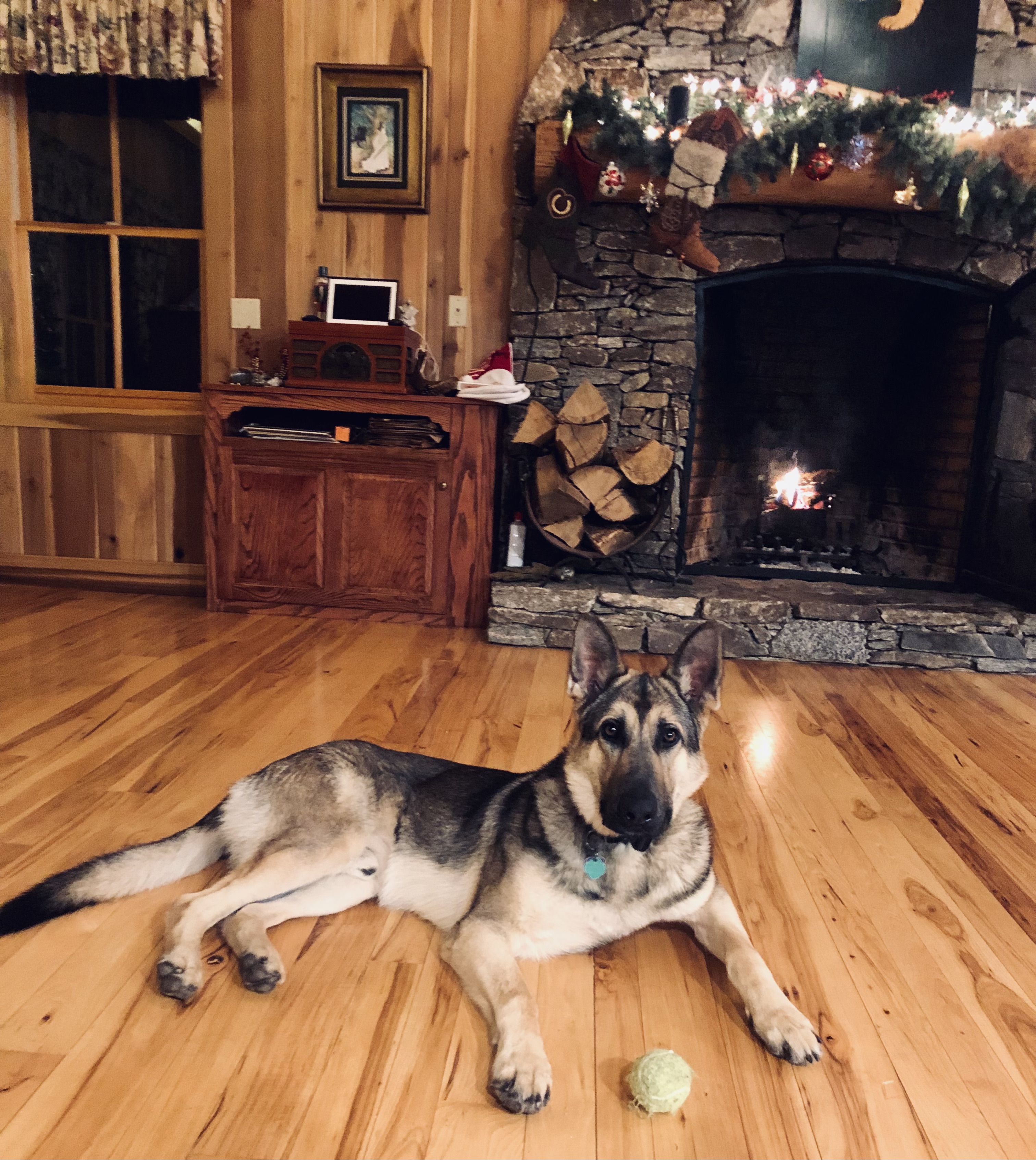
Rare to get a photo of the tiny puppy, soon to be a father, not running around in circles banging everything with his teeth like a shark. Conan is going to be a pretty dog when he finally slows down a little. A pretty good dog, too. 

The Feast of John the Evangelist

Such is the third day of Christmas.

UPDATE: In the Roman Catholic tradition; I realize Tom has a whole different set of dates to deal with.

Some Welcome Sunlight

Though we have not yet left the ancient regime for the new era that begins late next month, some welcome changes have already begun. The State Department's Global Engagement Center (GEC) has been shut down. I've mentioned the GEC once before in this space. My old think tank used to attempt to bring it to bear on its mission -- I once spoke to the Heritage Foundation about its lawful role and why it wasn't performing it, and how important it was that it might begin to do so instead of not -- and yet they never were interested in doing their job of engaging foreign publics to address damaging anti-American information wars by the Chinese or arising incidentally out of the various religious wars worldwide. The only thing the GEC actually got interested in doing was censoring American free speech.
The most astonishing thing in this congressional report on government conspiracy to censor and silence right wing media and views is that the State Department’s Global Engagement Center (GEC) was apparently an effective and enthusiastic part. As far as I know, this is the first time it’s ever been effective or enthusiastic; turns out they were really taken with silencing American citizens instead of doing their actual job. 

The GEC is assigned by Congress the role of aligning all American foreign communications in pursuit of national interests. This means diplomatic messaging aligns with Army psychological operations and CIA special activities of a communications sort; broadcasts of American state media align with the values and policies of the administration. 

Especially when Republican administrations have existed, the GEC is wholly uninterested in its mission. But even when Democratic heroes have held the reins, they’re ineffective. For one thing they’re entirely too small to actually perform the job effectively; for another, they are at State. Most of the communications infrastructure we have is military, and the military doesn’t respect the State Department. More, the State Department itself views actual diplomacy as its real job, and “public diplomacy” — that is, talking to ordinary citizens instead of other diplomats — has a lesser stature. 

So it’s a second-rate sinecure for bureaucrats who lack prestige, resources, or interest in doing the crucial job assigned to them. Occasionally they take meetings and accomplish nothing, which normally makes them one of the less harmful government bureaucracies. 

Give them a chance to play secret police and violate the constitutional rights of their own citizens, though, and apparently they were hot to trot. 

Now today the Brownstone Institute has a tremendous report, summarizing 500 pages of findings, on the work of the Cybersecurity and Infrastructure Security Agency (CISA). CISA has only been mentioned here once before, quoting RFK's endorsement of Donald Trump in which RFK notes that CISA was among those brought in to spy on and disrupt his independent campaign. Federal Judge Terry Doughty called the White House's censorship project, quote, "The most egregious violation of the First Amendment in the history of the United States of America."

CISA was one of the ways that those who called themselves 'the Resistance' attempted to get the first Trump administration to give it the rope by which they would be hanged; and while their attempt to tie him to Russia failed when the Mueller investigation found no evidence of any Americans participating with Russian intelligence, at least in the 2020 election CISA largely succeeded. They were at the heart of changing the way that election was conducted by 'handling' election security in that race as well as in the surprise-victory of Democrats in 2022. The whole report merits reading.

This report should be trumpeted from the mountains and read widely. These are two government agencies that have abandoned their Constitutional mission, and become what the Declaration of Independence calls "any Form of Government becomes destructive of these ends [i.e. protecting the natural rights of the citizenry]," activating "the Right of the People to alter or to abolish it[.]"

It's time for some alterations and abolishments. CISA should follow the GEC; let them be the first of all such institutions that have betrayed their mission.

Swannanoa


Asheville is slated to get quite a bit of rain this weekend. It’s still recovering from the hurricane, as the French Broad and Swannanoa Rivers have their confluence downtown. The nearby town named after the Swannanoa River was also hard hit. That’s where the Harley dealership that was turned into a makeshift heliport by a bunch of veterans is located. 

Hopefully no cave-ins this time. 


Those Cotton Picking Kids!

Wren Day

Or the Feast of St. Stephen as you prefer. 


Christmas Morning


I gave away the motorcycle I have ridden for about fifteen years, to the boy who grew up riding on it. I told him that it was the best gift I had to give him aside from the existence that I gave him almost 23 years ago. I hope he has the same good luck with her that I had. 

Merry Christmas.

Christmas Day


May God be praised for bringing us all together again on Christmas Day. My gratitude knows no bounds. 

Let us feast together as friends and brothers. 

Christmas joy

As if I were in a Hallmark movie, I'm experiencing two Christmas miracles this Eve: First, two urgently endangered dogs are now safely scheduled for transport to waiting homes up north. One is safe because, as I see it, God firmly told me "Don't give up. Make one more call; it's the only way to find out if they'll say yes." And they did.

Second, my friend's desperately premature grandson has strengthened so much that the hospital is very likely to send him home tomorrow, on Christmas Day, weighing just over 5 lbs.

I don't remember ever feeling so grateful.

Your Intel Report for Christmas Eve


Official up-to-the-second NORAD reports on Santa's activities this evening. NORAD has been keeping a close watch on this fellow since 1955.

Medieval Christmas

Some of this is Renaissance or later, but a fair bit is honest Latin. It’s a Spotify playlist for those who use it. 

Christmas Mead


The crystal goblets were wedding gifts, some 25 years ago. My aunt Jackie gave them to us for just such occasions. 

An Appalachian Stack Cake


In honor of my paternal grandmother, who always made this cake especially at Christmas, I have produced a poor version of my own. Hers would have had at least twice as many layers, much thinner and better fit to absorb the apple. I'm not even sure if she used apple butter or cooked the filling from dry apples; I used an apple butter that is locally produced without added sweeteners, as the cake itself has a cup of each sugar and molasses and the apples have natural sugars as well.

Hers would have looked and tasted much nicer, but hopefully wherever she is she is pleased by being remembered and included. She was the only of my grandparents to live long enough to meet my wife, and also the only one to take a switch to me when she thought I deserved it. I learned to make biscuits from her, and always enjoyed her simple country cooking. Aside from cake-making, I don't know that she ever used spices other than plain salt and black pepper, but somehow everything she cooked was delicious. Her given name was Anna Lee, née Thurman, a common Southern name with Old Norse origins. 

Green Eggs and Ham


By coincidence, we are currently getting several colors of eggs to go with the Christmas ham I will be cooking tomorrow. 

Choose electricity or gas

Or, to put it another way, choose between terrorism and your own citizens.

The NYT's recent pathetic attempt to explain Iran's collapsing energy system could take pointers from Ed Morrissey, who has no trouble sorting it out. Iran's leaders chose to pursue regional "theocratic adventurism" via terrorism and nuclear weapons, rather than develop their own lavish natural gas resources in a form that could both heat homes and power industry.

Now there's not enough natural gas extracted in usable form to heat homes while also fueling electrical power plants. The solution? Shut off the gas supplies to power plants, with the result that electrical power outages are inconveniencing homeowners but, worse, outright crippling industry. The proposed strategy for homeowners to get through the winter is to ration. Maybe in the spring there will be industry again!

Destroying Iran's nuclear program and proxy terrorism structure may be the best thing that could happen to its citizens. So if we must blame the Jews, let's blame them for not doing it sooner.

Mountain Dulcimer Christmas


“Cancel Christmas”

Our Technical Rescue instructor, a mighty mountain man of many years’ service, used this phrase once in training to warn us of the dire dangers of loading your rappelling rope wrongly through your rack’s brake bars.  If you do that and you step off the edge, he said, “Cancel Christmas.”

European people have made at least as serious an error, and are falling in upon the remedy

Finland Has it All

Now including civilian gun ranges for national defense. 


On Rituals

Sometimes we talk about archeology or anthropology assigning meanings to structures or observations. They very often tend to assign religious explanations when they can't think of anything else, but we often just don't really know why ancient ancestors did things. If there was a meaning at all, it is unknown and unknowable.

I was thinking about how easily meaning is lost when reading this article: If you're traveling out West and you see an old cowboy boot stuck up on a fence post, what does it mean? These are people who actually participate in the custom or know others who do, and they can't agree on what (if anything) it means.
Jack Farrell was a ranch boss at Sombrero Ranches in Colorado for decades. 

He said there were many a wrangler that worked for him who discarded their old boots by adding to a collection of weatherworn boots already atop fence posts surrounding the ranch property. 

“It’s like throwing bras onstage at a Tom Jones concert. Once one does it, they all have to do it and they don’t really even know why after long,” Farrell said. “I guess it all started with a purpose, but I’ll be danged if anyone ever knew what that was.”...

Most ranchers contacted for this story had either never seen it done or didn’t know the significance behind it. 

“Never heard of it,” said Kelly Lockhart, patriarch of a sixth-generation family cattle ranch based in Jackson, Wyoming....

He assumed... coyotes would associate the smell of the boots with gun-toting ranchers and steer clear....

Footwear at the end of its life simply made for a handy decoration to spruce up the property line. 

But the practicality of covering a fence post makes sense as some claim. A boot placed over a post would keep rain from seeping into the wood and decaying the post prematurely. 

Typically, it is thought boots on a fence are there as a memorial to a favorite horse, a lost member of the family or a beloved ranch worker who passed away. 

Some have speculated boots perched atop of fence post could also serve as communication in days before cellphones, for example. A visitor could instantly tell whether the homeowner was around or not.

A boot with its toe turned toward the main house indicated the rancher or farmer was at home. A boot pointed in any other direction was to show the owner was still at work — the boot pointing to the field he was working in.

How much harder is it to understand a cultural practice from the other side of the world, or an ancient age? 

Human beings don't really like admitting that they don't know something, much less that they can't know it. We like to think we have more knowledge than we do, just as we like to believe we have a lot more control than we do. It may be that there's nothing you can really do about how you're going to die except to hurry it up with very bad decisions; but endless ink is spilled on the alleged benefits of this-or-that diet, or having a glass of wine for your cholesterol, or not having a glass of wine ever at all.

What do we know that we really know? Descartes came up with one item for the list: we experience thinking, and therefore our mind must exist. Everything else is suspect to a greater or lesser degree. 

Pragmatically we have to get along in the world, though. So if you see a old boot on a fencepost, I wouldn't go as far as questioning the existence of the boot or the fencepost. If you can find the guy who put it there, maybe he can even tell you why he did it. Maybe he read this blog post and thought it sounded like a fun idea. 

The last month of the year

On a more cheerful note:

Where does electricity come from, anyway?

As far as I can tell, neither the author of this NYT piece (not paywalled, I think) nor anyone running the show in Iran knows the answer to that question. Paragraph 5 takes us as far as the Iranian president's apology for having to cripple the country with power outages, and his plan for a solution:
“God willing, next year we will try for this not to happen.”
So that's comforting. The author meanders for many more paragraphs without revealing a single clue how a country rich in natural gas can't keep the power on. Can't get it out of the ground? Can't transport it? Can't build or properly maintain power plants? No power lines to get the electricity to homes or businesses? He barely seems curious.

Eventually it occurs to him how to blame it on (1) Jews, (2) stingy foreign investors, and (3) the refusal to use less energy, but that's not until paragraphs 19 and 22.

Regime change is a tempting hope, if only there were some reason to believe the country contained people with a clue what to replace it with. I doubt the problem will be solved by blaiming Jews, demanding charity from foreign investors, or conservation. At some point they're going to have to grasp how non-totalitarian economies work, or just drift back into the stone age--a maddening fate for a people with a rich history and natural resources.

Drive the Cold Winter Away

Reason for the Season

When I was in Ocean City, Maryland, earlier this month most of the businesses were closed for the season. I was a little shocked at how much this was true; Savannah, Georgia, is a similar sort of town but has a large enough resident population that even in the depth of winter pretty much everything is still open. Not so here! Not just hotels and restaurants and bars but grocery stores and other purveyors of regularly-required necessities were shut down. 

Of the few hotels that were still operating, one of them had on its sign, "Let's keep the Christ in Christmas," or something similar to that. This greatly upset one of the comrades I had come to see, who felt it was exclusionary, perhaps even discriminatory, when displayed on a public accommodation. I said that I thought they should grant the Christians the justice of the statement, and, ah, 'turn the other cheek.' 

That is not the spirit of what has come to be known as "liberalism," which used to mean "being ok with other people disagreeing with you." Today's Asheville Citizen-Times presents locals with a lecture from a retired superintendent from Vermont who has, like so very many before him, chosen to move South and then lecture us about how we need to change to be more like it is up North.

Naturally, the newspaper was delighted to publish the letter.
Opinion: Christmas season not about religion, but about pure and simple love 
[Really? Not at all about religion? -Grim]

It is the time of the year that we are compelled to tell this wonderful story. In reality, the circumstances and conditions of this story are foreign to many of us. It is a story about poor people. It is a story about people of color. It is a story where might and wealth are on the opposite side. It is a story of Arabs. It is a story of Jews. It is a story of Phoenicians, at least that is what we are led to believe. It is a story where pieces and parts from separate Biblical writings are pulled together to give us a compelling version of what happened.

Most know what story I am talking about. While it is a story that is embraced by the Christian faith, it might also be embraced by people of all faiths or people of no faith at all for it is a story of love.
That's enough to give you the flavor of the thing; you can read the rest if you want to, but you've probably read it before. The man was a career educator, which explains a great deal about the state of our society.

A Single Political Post

I was not planning on doing any political posts during the holidays, barring unforeseen emergencies; but I do feel that I ought to note this article by David Samuels on the breakdown of the Obama machine that has been successfully manipulating American politics for the last few years. I ought to do so because we all owe Mr. Samuels a great debt, as it was his work that got Obama's messaging imp Ben Rhodes to confess the whole bit because he thought he was talking to a friendly outlet (namely, the New York Times Magazine). 

Mr. Samuels, as it turned out, was an honest journalist who really believed all that talk about the free press serving a watchdog role. In faithfully performing what he had youthfully believed was a sacred duty he was freely assuming, he first revealed what he is now explicating.

My thoughts on having read through it are that his analysis understates Elon Musk's role, even though he puts him first in honor. Musk's breaking Twitter free from the censorship program created the friction in the gears of the machine that recently, and blessedly, caused it to fly apart. Samuels comes as close as a man educated to speak to secular audiences can to referring to blessings in his shorter remarks on the role of Donald Trump's survival of the assassination attempt against him. 

It's a very long piece, and because of its author it deserves discussion. For now I will merely note it, and perhaps we will return to it in the New Year.

Yuletide


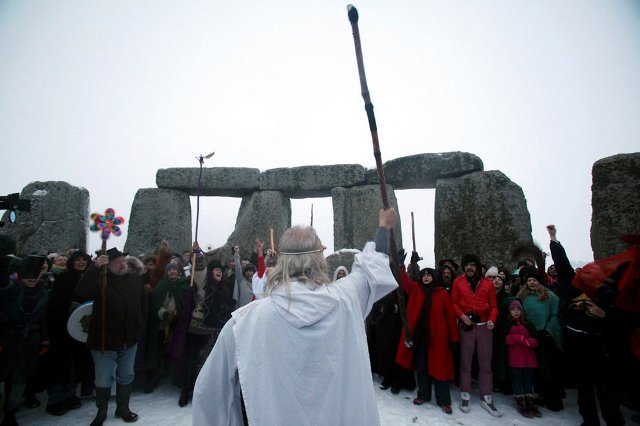
The winter solstice is today. That guy, the motorcycle-club leader cum Druid, to whom the movie sword Excalibur was freely given because he had changed his legal name to Arthur Pendragon, he’s still around. Here’s a photo series from today’s revelry at Stonehenge that includes him. 

Christmas Cookies


Strait is considered one of the greats of Texas country music, but he’s a little late for me. He’s more of a revival figure from the 80s than one of the 70s greats who were revolutionary rather than traditional. 

Thus, I’d never heard this piece until tonight. It’s not bad at all. 

A Little Boogie Woogie Christmas


Christmas Tunes


It is Illegal, Isn’t It?

I always wondered why DEI-style programs didn’t count as illegal discrimination. I once applied for a job with the Department of the Navy and was told I wasn’t qualified before they actually asked about my qualifications— just my demographics alone sufficed to exclude me from consideration. For any other demographic group, the law explicitly forbids such a ruling. For me and those in mine, somehow the discrimination was explicitly permitted, even required. 

I understood the arguments in favor of such programs as remedial of decades of discrimination and centuries of slavery. Not that my ancestors— red dirt farmers, coal miners, drovers, welders— had benefitted a great deal from any social injustice. One of my grandfathers manufactured concrete blocks by hand, until he got a job as a forklift operator. The other repaired long-haul tractor trailer trucks. Others had it harder still, but this sort of race-based remediation was at best a blunt instrument that didn’t much treat the problem. 

But what always confused me was how it wasn’t just illegal. It seemed to be, following from the principles. Yet every institution practiced some version of it, especially the government. 

Maybe it’s illegal after all. 

The Appalachian Stack Cake

My paternal grandmother always had one of these under glass every time I ever remember visiting. She was a tremendous cook, making three meals every day starting with breakfast before dawn. I learned to make biscuits from her, but she never taught me this recipe. 

Here are two versions, one with dried apples and one with apple butter. If you have never tried it, it’s a great holiday cake. 

The Horrors of Moderation

A group of Kenyan employees have been diagnosed with "severe" PTSD because of their jobs -- as moderators on Facebook.
More than 140 Facebook content moderators have been diagnosed with severe post-traumatic stress disorder caused by exposure to graphic social media content including murders, suicides, child sexual abuse and terrorism.

The moderators worked eight- to 10-hour days at a facility in Kenya for a company contracted by the social media firm and were found to have PTSD, generalised anxiety disorder (GAD) and major depressive disorder (MDD), by Dr Ian Kanyanya, the head of mental health services at Kenyatta National hospital in Nairobi.

The mass diagnoses have been made as part of lawsuit being brought against Facebook’s parent company, Meta, and Samasource Kenya, an outsourcing company that carried out content moderation for Meta using workers from across Africa.

The images and videos including necrophilia, bestiality and self-harm caused some moderators to faint, vomit, scream and run away from their desks, the filings allege.

They must be doing a good job. I've never seen anything on Facebook that caused me to faint, vomit, or scream and run away. 

If We Make It Through December


A Gentle Suggestion


Lord Blackstone defined "gentlemen" as those "qui arma gerit," meaning, "who bear arms." Perhaps it's time to gentle your condition, as Shakespeare tells us Henry V once said.

All About the Drones


If you don't have your old Atari defensive gear, T-Rex Labs has some interesting thoughts on defending against drones.

Magic & the German Shepherd Dog

Tonight Conan found two of his tennis balls in the basement, where they had fallen down the stairs and become lost. I picked each one up in turn and threw it up the stairs, to the main floor. Each time he thought I had thrown it across the basement, and went and searched the other side laboriously. 

Then, after I finished lifting weights, we went back upstairs where he found the balls. He grabbed one and was running around showing it to everyone as if to say, “Daddy is a wizard! He threw this ball in the basement, and it reappeared on the main floor! Look! Wizard!”

A Poem by Czeslaw Milosz, Translated By Czeslaw Milosz & Robert Pinsky

Account


The history of my stupidity would fill many volumes.


Some would be devoted to acting against consciousness,

Like the flight of a moth which, had it known,

Would have tended nevertheless toward the candle’s flame.


Others would deal with ways to silence anxiety,

The little whisper which, though it is a warning, is ignored.


I would deal separately with satisfaction and pride,

The time when I was among their adherents

Who strut victoriously, unsuspecting.


But all of them would have one subject, desire,

If only my own—but no, not at all; alas,

I was driven because I wanted to be like others.

I was afraid of what was wild and indecent in me.


The history of my stupidity will not be written.

For one thing, it’s late. And the truth is laborious.


So darned unfair

For Schadenfreude, it's hard to beat about 90% of the election post-mortems in the last 5-6 weeks, but this Salon piece is a truly virtuoso performance in Looking Glass world analysis. Apparently Trump unfairly skunked the Democrats by sticking to big-picture themes and speaking about them consistently to national audiences. At the same time, he employed a "divide-and-conquer strategy while simultaneously building a multiethnic MAGA coalition." Harris, for her part, micro-targeted to splinter groups, which was apparently better because it had more details.

On the other hand, Trump unfairly micro-targeted those same splinter groups with ads that purported to praise Harris's position on just the issue each group would hate. He targeted Muslims with her pro-Israel positions and Jews with her anti-Israel ones, or alarmed oilfield voters with her threatened ban on fracking, which she didn't even mention while she was campaigning this time! Evidently the ads implied they were from Harris fellow-travelers if not the Harris campaign itself, which research shows makes voters more receptive, again very unfair. It seems Harris's splinter groups were bored by her targeted message, assuming they believed a word of it, while the splinter targets of the Trump effort were galvanized by video evidence of her actual messages over time, which they totally believed.

Salon quotes the NYT's lament that people don't seem to believe experts any more, and they couldn't hear Harris's message of joy/brat/whatever because they were so angry about feeling broke. Evidently nothing can be done to improve this state of affairs except for Democrats to stop playing so nice and try to dominate the culture that is upstream from politics, which they've never tried before and certainly didn't succeed at for decades by capturing most institutions from the press to the justice system to public schools to universities.