Some Thoughts on Cats


Thank you for the apologies; although it was clear at the time that most of you were simply playing off the original jape.

I think, though, it's also appropriate that I offer an explanation of why I reacted so badly to was truly intended to be a joke.  The following comes against a background of my never having been able to see the humor in animal cruelty jokes.

That earlier post mentioned our dog, Cinder.  We'd grown up together, and in my 18th year, while I was at college, she died in her 18th year of old age.  The last half-dozen years of her life, we'd also had a Siamese cat.  Intended to be my mother's cat, he wound up gravitating to me, I suppose because a kitten preferred the company of an adolescent to that of an adult.  In the event, we became pretty inseparable.  Until the last couple of years of Cinder's life.  In those last two years, Cinder grew more infirm and was becoming incontinent; although she still seemed happier with her life than without it.  But my cat saw the failing, too, and he moved to Cinder's side.  I generally was the last one out of the house at the day's start and the first one home in the evening.  Thoth would be asleep beside Cinder on her rug as I left, and he'd be there when I got home.  He made sure Cinder knew she had company immediately to hand for all of those last months of her life.

Fast forward a decade to a time when my wife and I were able to have pets of our own.  We got MFWIC out of the local pound as a young adult.  Whether due to his surroundings or to his having been abandoned once already, his timidity in his cage was palpable; still he approached us as we walked down the row of cages.  We had to take him in.  A year later, a kitten showed up on the doorstep of some acquaintances, and they asked whether we could give her a home.  Bast grew in to a small, feisty cat, fearless of no one and no thing, but she and MFWIC became inseparable.  She came to an untimely end when her aggressiveness toward a roadrunner bigger than she by half did her in.  MFWIC never got over his timidity, but he and Bast, while she was with us, had high times chasing each other through the house and the yard.

After we arrived in Plano (and MFWIC had died), we got Cisco out of the pound as a middle-aged cat.  He'd plainly been abused before he escaped/was released to the pound; he still had a BB under the skin behind his right ear and was even more timid, initially, than MFWIC had been.  He was, though, overjoyed to be out of the pound and with us.  History rhymes closely, sometimes.  Phoenix showed up on our doorstep as a kitten, and she was the spitting image of Bast.  Those two cats gave each other great good fun with the same cat-chase antics (although Phoenix also gave us fits going into heat before she had any reason to at her age—still a kitten—and before she was old enough to be spayed safely). 

Enter Dennis.  He, too, had been abandoned, this time in the wilds of the Arizona desert.  He, though, was big enough, and mean enough, to survive into his adolescence.  He was about three-quarters grown and half-feral when he showed up at our daughter's door.  Our daughter already had a young cat, Satin, who was sociopathic in her own way, expressed by avoiding strangers at all costs, and hissing and spitting at them if she couldn't hide from them.  Our daughter, though, could not look past Dennis' strait, and she took him in.  Initially, Satin, as the older, dominated Dennis—and she did so in spades, lording her seniority over him.  As Dennis grew into adulthood, though, he figured out that he was bigger and more ornery than Satin could be, and he dominated her.  They had a troubled, although not dangerously antagonistic for the most part, relationship from then on.

Our daughter then married a man who was allergic to cat dander, so we inherited Dennis and Satin.  Cisco, by then, was confident enough in his place in our household that he had no trouble holding his own against both Dennis and Satin.  He, in fact contributed a great deal to our efforts to calm both of them down, and the three of them would have fun chasing each other, with Dennis and Cisco occasionally wrestling.  Both Dennis and Satin, by then, had become loving cats, along with Cisco and Phoenix, except toward each other, with Dennis head-butting to get pets and Satin just getting in the way until we petted her.  You could think of Garfield with a mean streak and think of Dennis.  By then, the only time Dennis got dangerous, though, was when a strange cat would show up outside our front door (all four cats were now wholly indoor cats; there are both coyotes and bobcats running a green-zone creek about a block away from our house).  Cisco and Phoenix didn't care, but both Satin and Dennis reacted very strongly to the strange cat, and Dennis, unable to attack that one, would attack Satin instead—his feralness dominated totally, and I always had to physically intervene.

Phoenix, though, couldn't handle the stress, and both Dennis and Satin, sensing that, took advantage.  Phoenix wound up dying in my arms at the Vet's office from that stress.  Shortly after that, Cisco died, too, of kidney failure.  He spent his last weeks insisting on being in my lap, between my laptop and me.  On the Vet's recommendation, he, too, died in my arms as the Vet put him down.

Then Dennis became afflicted with his cancer.  The last time I took him to the Vet for treatment or to be put down, he didn't even resist going into his cat carrier for the trip.  The second time prior, on taking him in for his annual IRAN, he'd scratched me up and bitten me quite a bit as he resisted the carrier—the only time he'd ever actually attacked me (although he often swore at me when I wouldn't let him do this or that).  And the last time, just a few months prior to this final trip, I'd had to sedate him to get him into the carrier.  For all that, the Vet had always had to gas him in order to examine him.  This time, when we had him put down, he already was unconscious from anaesthetization for the cancer exam, but he died with my wife and I stroking him, anyway.  Maybe something got through.

Now we have only Satin, who's getting on in years, but who now, as the only cat—or at least without Dennis to harass her constantly—is calming down even further, and talking to us ever more.

Sorry for the long post.

Happy Proto-Thanksgiving

After today, we're in the pre-Thanksgiving planning phase. It happens this year I'm doing the cooking for everybody. That's going to be interesting -- it's never been on be entirely, before now.

But hey. There comes a time when we have to sort it out for ourselves. At some point, no matter how Hank did it, we've got to do it ourselves.


This evening I went to a charity benefit for the Classic City Rollergirls ("Waging War on Wheels"), a rollerderby outfit to which a female friend of mine belongs in a kind of prospect capacity. They're a serious bunch, in their way: the sport involves tackling roller-skating women at high speeds on concrete. It's a violent sport, and these women are bold to engage it. I like them.

The benefit was fun. I'm discovering things about myself, the more that I deal with people here back home. I had three people hit me tonight. The first was a woman who was angry about something I didn't understand, but I let her hit me until her hands were worn out -- it really only took about four hits -- so she wouldn't take it out on whoever she was mad at at the time. Then I made her boyfriend hit me too, so he wouldn't mock her later for being unable to get anything out of hitting me. He didn't either.

He offered me a return 'fair play' punch on himself, but I declined. It really wouldn't have been fair at all.

Then there was another woman, drunk as you can want, who was demanding that everyone comply with her or shut up and respect her. Her particular complaint was that religion was necessarily associated with intolerance and violence, which proposition she intended to enforce intolerantly and with all necessary violence. I did my best to get away from her, but she happened to pin me down in a way that forced me to be close beside while she undertook to declaim a man present I thought deserving of respect. I explained that she was wrong on the facts, and she told me to shut up or she would slap me. I told her to do her best, and she did.

I guess it's a function of the South that a woman can feel free to hit a man without fear of reprisal. She hit me, and I told her she'd have to do better; she hit me again, and I told her she'd have to do better than that. She hit me a third time, far harder -- something about the blow suggested to me that she was at her psychological limit -- and I grinned and told her I thought that now she was getting started.

And so she went away, and didn't even look in my direction the rest of the night. Others apologized for her, but really, she'd only done what she wanted and what I invited her to try. No harm was done, and maybe she learned something about her ability to use violence and threats to push others around.

My wife later allowed that it was well she was not present at the time. That's doubtless true! But no harm was done, and some good. There's no reason to resent the violence as such. It was a learning experience for her, for them, and even for me.

Perhaps it speaks badly of me that I feel so comfortable with violence. I've seen much worse, though, than what America currently has to offer. I want people to understand it, and not to fear to think it: I want them to know it for what it is. It is terrible, in its way, but it leads to knowledge. Perhaps I am terrible, too, for embracing it. I didn't use my strength to hurt them, but I let them use theirs against me without protest. Perhaps that is something wrong with me.

But this was very small force, a kind of toy by those who were only playing with it. I think perhaps it is good for them to look in the eye someone who has seen the thing for real, and to know that their toy is no more than a toy. Maybe that is -- perhaps I am -- sent as a lesson for them. That doesn't make me better, for I know my heart embraces far greater force: but perhaps it helps them, and in some small way improves the world. I hope so.

Matthew 5:45

"I learned that Jesus walked the earth to create a more civilized society, Martin (Luther King) walked the earth to create a more justified society, but, Apostle Barack, the name he was called in my dreams, would walk the earth to create a more equalized society[.]"
Actually, 5:46 is good too: "If you love those who love you, what reward will you get? Are not even the tax collectors doing that?"

Mandates

The National Review attempts to make sense of the exit polls, surely a Quixotic task.  If you ask voters what is the most important issue to them, then ask which candidate is most likely to solve the issue, you don't get answers that predict the election results.

I think the problem is that there's a big difference between the issues people say are important to them and the issues about which they support a specific solution.  The economy and joblessness are on everyone's mind, but hardly anyone has a coherent notion of what either a President or a Congress can or should do about them.  People may say that abortion or immigration are less important, but at least they have concrete ideas about how a politician should vote on those subjects.  I suspect a lot of votes were cast as a result of gut feelings about issues that people claimed were low on their list of priorities.

That makes it hard to discern a real mandate.  Not that the newly elected politicians will have any difficulty claiming one, but the 2016 mid-term elections could surprise everyone again if the politicians think the voters have their backs.

A Case for Abortion

Back during the summer, we discussed (see comments here) some finer points about cases in which there really is a moral argument for abortion. The clearest example is the case in which the mother will otherwise die, while the baby is still too weak to survive on its own. In that case, no harm is done to a child who is going to die in any case; and there is a life to be saved.

Unfortunately, a case of that kind has presented itself in Ireland. It isn't likely to draw wide commentary here in America, both because it happened overseas and because we have some very explosive stories in the press right now. Still, it's worth reflecting on as a clear example. Much of the Republican opposition to abortion is not fully considered, a defect that weakens the force of what is otherwise a highly principled argument.

Excellent Diagnosis

President Obama: 'If you've got a problem with Susan Rice, you've got a problem with me.'

Another Petition I Like

This petitions thing is kind of a nifty tool. Here's a good one: A petition to allow any American to voluntarily opt out of Obamacare.

Actually, that alone would solve almost all the problems with the legislation. Just give permanent waivers to absolutely everyone who wants one. I think we'd still have to sort out the freedom of conscience issue -- which is a major issue -- but most of the rest would be settled.

D@$@#, Dog!

Some guard dogs you are. What a sorry lot!

Mine scared a tow truck driver to death the other day. A guy with mechanical problems had ditched his truck in my driveway. When the tow truck got there, I went down to see if he needed help. Buck went with me, and suddenly started running full tilt down the driveway.

The driver climbed up on top of his truck to get away. The dog tore right past him without a second look, and sprinted after a squirrel on the other side of the road.

Night of the Generals.

WTF, Gentlemen, W. T. F.


Fascism Rising?

Greece is seeing a spike in attacks against foreigners by organized groups of Greek men and women. Dr. Mead points to a survey in Der Spiegel that cites increasing levels of xenophobia and anti-Semitic sentiment.

This is natural enough in a period of bad economics, with the systems trusted to hold up the economy collapsing all around you. Why is it happening? The answer, for the Greeks, is that it is a conspiracy by Germany. The answer, if you're German, is that culturally inferior peoples are dragging your virtuous nation down. The impulse to bind together is quite natural and strong.

I would suggest that there is a significant danger of this occurring in America as well. You might not think so, because the diversity of the electorate in the recent election was achieved chiefly by whites staying home. If there was increasing tension along these lines, wouldn't turnout have been high?

Yet I think the answer is that the low turnout underlines the danger. Those of my friends who are working class whites and did not vote did not do so because they feel alienated from the political system. If they have resigned from politics as a way of changing a country with which they are very dissatisfied, they will be more open to other methods.

People are asking why they might have so resigned, and not just voted Republican. There are a lot of answers, usually social conservatives blaming moderates, and moderates assuming that social issues are a drag on the ticket. I think the answer is simpler. Look at the Gallup "Confidence in Institutions" poll.

The bottom four institutions are 'Banks, Big Business, HMOs [another big business, but one that regularly treads on toes], and Congress.' The Republican ticket? A man who made his money as a banker before going into big business, coupled with a lifelong member of Congress. Naturally it was easy to demonize people aligned with institutions distrusted by the American people at large. If only Paul Ryan had moonlighted with Kaiser!

The top four institutions are 'the military, small business, police, and religion.' The trend of the change is worrisome: excepting the military, the police, and the criminal justice system, every single institution in the list is trusted less now than it was in the early 1970s.*

Those are the institutions of social control, notice, and not persuasive control -- not church, for example, or newspapers -- but violent, coercive control. That's who we trust, more and more. Church is down twenty points, but the coercive forces are on their way up. A speaker from a coercive background, with the right kind of rhetoric, could easily sweep up millions who have lost all faith in the governing institutions.

For that matter racist and racial grievance sentiments are clearly up, and not just among poor whites: across the board.

My guess is that there is a very real chance of fascist movements breaking out. Unlike in Europe, though, we have a multi-ethnic and cultural state. You wouldn't see one fascist movement built around a dominant race, but multiple hostile movements.


* A partial exception: HMOs went from 17% in 1999 to 19% now. They've consistently stayed at the bottom of the list, though, and I suspect that's within the margin of error.

A Petition for Permission for Secession

As you probably know, a flood of petitions has hit the White House's web site asking for permission for various states to peacefully secede.

Texas apparently has already gotten the required signatures to mandate a review of the request by the White House (UPDATE: Currently nearly a hundred thousand signatures in Texas alone). Governor Perry, who has talked secession in the past, is running from such talk today. Georgia is getting close (UPDATE: The Georgia petition has now achieved enough signatures; Tennessee is within 200, as is North Carolina; Florida, Louisiana and Alabama have passed the mark as well).

A petition for permission to secede is not an act of secession: the states would remain members of the union even if the petition were granted by the White House (which it is not at all clear that the White House has any authority to do, not that a question as to whether they have legitimate authority has ever stopped them before).

However, as a mechanism for underlining the seriousness of the disputes over basic values, it strikes me as a valid and valuable way of protesting. The division in basic values is deep enough, and severe enough, that continued efforts by Washington to impose one-size-fits-all solutions on the republic will destroy it. This is true regardless of which party controls Washington, and which set of solutions is so imposed. Neither liberals nor conservatives can be comfortable in a nation in which they are under constant threat of having their basic values violated by law -- or, as we were discussing earlier today, under threat of being forced by law to violate their own values.

I believe that, in practical fact, we will have a respectful federalism as required by the Tenth amendment or -- sooner or later -- we will have secession for real. It's time people started facing up to the fact that we are pushing against real and deep divisions that will tear us apart if we don't stop.

For which reason, I signed the petition. I would like to have permission to peacefully secede, even if I hope we never need to exercise it. Having that option on the table would immediately undercut any further adventures in the Federal government imposing values and unpopular laws on the populations of states that deeply oppose them.

I want people in Washington, too, to start thinking about just how much damage they are doing to our country by pushing us against these divides. Maybe this will get their attention, and cause them to finally begin to respect the whole Constitution.

Now they've gone too far

They're holding the Twinkie hostage.

People accuse labor unions of sending their employers into bankruptcy.  The Hostess baker's unions took audacity to a new level:  their employer already is in bankruptcy, for the second time since 2004, but they're striking to kill the deal that would prevent an exit.  So Hostess is planning to liquidate, and 18,500 jobs will be lost instead of 627.  Management can go on strike, too.

A Reflection on Reality

Reading Tex's link from the "Liberty & Privacy" piece, I am struck by the examples, and how different they are from the debate we have been having at such length.

We've been arguing -- and we ourselves, as well as the wider society -- as if religious conservatives were perhaps going to ban abortion or restrict birth control.

In reality, the question before the courts is whether religious conservatives will be allowed not to pay for someone else's free birth control (or, in the sense of some of these drugs, abortifacients).

The conservatives in this election had no capacity to ban or even meaningfully restrict abortion, even had they won. The law banning religious freedom and freedom of conscience is already on the books. It's already before the courts.

The administration is already arguing that individuals who have religious or conscientious objections have no such freedom as to refuse to buy something for someone else who wants it.

How did we get into this debate about banning abortion? That was never the issue at hand at all.

Liberty and privacy

The Washington Examiner muses on coming assaults to religious freedom:
Obamacare requires employers to pay for contraception and sterilization coverage.  This includes coverage of "morning-after" contraceptives, whose makers admit the drugs can kill a fertilized egg by preventing or "affect[ing]" implantation.
I'd be the first to take umbrage if my employer tried to influence my most intimate decisions about health and reproduction.  But what is the employer doing in this part of my life in the first place?   How in the world did we decide that it was a good idea for everyone to get his medical coverage through his employer?  Yes, I know about the post-WWII wage-fixing issue, but I mean how did we not realize what a horrible solution this would be in the long run?  I suppose back then it was hard to imagine what medicine would become decades later.  In the 40s and 50s, medicine was a weak thing.

Nor will it help if we get our medical coverage through Uncle Sam.  If we really value the freedom to control our own medical care and our own reproduction, we'd do well to keep our arrangements with our health providers private.

The Ride

The most beautiful six-point stag ran out in front of me tonight. We were perhaps ten feet apart. He must have weighed two hundred and fifty pounds, and perhaps three hundred pounds. He was moving with all the speed his magnificent frame could supply. We came around a corner, where a pickup truck had been parked by the road -- poachers, probably.

What a fine day today was. It was warm and wet, and the autumn colors were fantastic. My wife has become an excellent rider. We were taking those country back roads at a good speed. She has learned to ride at speed in formation, taking the curves along that ridge road with ease and grace.

The buck was a brush with death, and those are very welcome. They are half the reason to ride. It refreshes the sense of wonder, and of the beauty of the world.

That stag got away, I am sure of it. A few feet beyond the road he was cutting across, if he had turned left he would be headed toward a small pond located in the deep woods. Long before he got there he would be in bramble men cross only with great effort, though deer seem to do it with great ease.

Good luck to him. He did me no harm, and much good.

The joys of law

More wisdom to cheer us up.  It being my birth month, I'm fulfilling my continuing legal education requirements for the year, which I always do online.  Today's topic is immigration law, and my seminar materials came with this jewel from the Fifth Circuit:
Whatever guidance the regulations furnish to those cognoscenti familiar with INS procedures, this court, despite many years of legal experience, finds that they yield up meaning only grudgingly and that morsels of comprehension must be pried from mollusks of jargon.
- Dong Sik Kwon v. Immigration & Naturalization Service, 646 F.2d 909 ( 5th Cir. 1981)

I'll let you know when it's over.

"I’ll let you know when it’s over by putting you in the ground and throwing six feet of dirt onto your face.  Until you get that secret signal, really, pull yourself together."

I needed this.  Also, I miss Deadwood.

Politics II.VII

I only want to read one section today, because it touches on our current situation so nicely. I'm going to excerpt what I take to be key points for us, in the hope of encouraging discussion.
In the opinion of some, the regulation of property is the chief point of all, that being the question upon which all revolutions turn. This danger was recognized by Phaleas of Chalcedon, who was the first to affirm that the citizens of a state ought to have equal possessions. He thought that in a new colony the equalization might be accomplished without difficulty, not so easily when a state was already established; and that then the shortest way of compassing the desired end would be for the rich to give and not to receive marriage portions, and for the poor not to give but to receive them.

...[I]t is a bad thing that many from being rich should become poor; for men of ruined fortunes are sure to stir up revolutions.

...Again, where there is equality of property, the amount may be either too large or too small, and the possessor may be living either in luxury or penury. Clearly, then, the legislator ought not only to aim at the equalization of properties, but at moderation in their amount. Further, if he prescribe this moderate amount equally to all, he will be no nearer the mark; for it is not the possessions but the desires of mankind which require to be equalized, and this is impossible, unless a sufficient education is provided by the laws. But Phaleas will probably reply that this is precisely what he means; and that, in his opinion, there ought to be in states, not only equal property, but equal education.

Still he should tell precisely what he means; and that, in his opinion, there ought to be in be in having one and the same for all, if it is of a sort that predisposes men to avarice, or ambition, or both. Moreover, civil troubles arise, not only out of the inequality of property, but out of the inequality of honor...

There are crimes of which the motive is want; and for these Phaleas expects to find a cure in the equalization of property, which will take away from a man the temptation to be a highwayman, because he is hungry or cold. But want is not the sole incentive to crime; men also wish to enjoy themselves and not to be in a state of desire- they wish to cure some desire, going beyond the necessities of life, which preys upon them; nay, this is not the only reason- they may desire superfluities in order to enjoy pleasures unaccompanied with pain, and therefore they commit crimes....

The fact is that the greatest crimes are caused by excess and not by necessity. Men do not become tyrants in order that they may not suffer cold; and hence great is the honor bestowed, not on him who kills a thief, but on him who kills a tyrant. Thus we see that the institutions of Phaleas avail only against petty crimes.

There is another objection to them. They are chiefly designed to promote the internal welfare of the state. But the legislator should consider also its relation to neighboring nations, and to all who are outside of it. The government must be organized with a view to military strength; and of this he has said not a word.
I am leaving out a lot of great value in this excerpt, of which you may wish to partake.

Balance

After reading posts and comments on sites like Zero Hedge where he hangs out, my husband sums up the message about the fiscal cliff, the debt ceiling, and the Grand Bargain this way:  We're going to get either tax hikes combined with spending cuts if there's no deal, or we're going to get tax hikes alone if there is a deal.  If the sequester takes effect, we won't like the composition of the spending cuts, but we're not going to get a better composition out of this crowd.

My bet is a cave, a deal, and tax hikes without spending cuts; at most there will be vaporous promises of future decelerations in increased spending.  The tax hikes will be narrowly targeted and therefore will generate negligible revenue in comparison with the deficit, so we won't so much raise the debt ceiling as (in Mark Steyn's phrase) lower the debt abyss.  "We can't cut our way to prosperity," the President informs us, but apparently we can borrow our way there.  Well, the press will eat up anything that smells of hands across the aisle, and the voters don't care about the military unless it's handing out water bottles after a storm.

Which reminds me of another comment my husband ran into, musing on Mayor Bloomberg's volte-face on the idea of clean-up support from those violent military types that he previously didn't welcome in his pristinely unarmed streets:  "You have reached the military.  Your call is very important to us.  Please pay attention, as some of our menu options have changed. . . ."

Forgotten exactly how the sequester works?  It was enacted as the Budget Control Act in August 2011, and consists of a deal to trade certain future spending cuts for a $2.1 trillion deepening of the debt abyss.  The cuts come in two parts.  First, there are $1 trillion in mandatory spending reductions, not contingent on any potential deal, in the form of caps on non-entitlement discretionary spending over the nine-year period from 2013 through 2021.  Second there is the sequester itself, which was intended primarily as a "sword of Damocles" to induce the Super-committee to reach an alternative deal, and which took effect when the Super-committee failed to do so in November 2011.  The sequester consists of $1.2 trillion in cuts spread out evenly over the same nine-year period, including $109 billion in 2013.  (Note that all these "cuts," as usual, are not to the current spending amounts but to the projected increased spending over the next decade.  Even if the sequester takes effect, the federal deficit is projected to increase over the ten-year period covered by the Budget Control Act, and the increase is projected to exceed the rate of growth of the economy.)

The sequester cuts are evenly divided between non-war military spending and non-entitlement discretionary domestic spending.  For 2013, therefore, there would be roughly $55 billion in cuts to each of defense and domestic spending.  Affected programs are projected to be cut by between 7.6% and 9.6%, except for Medicare reimbursements, which will be cut at a lower 2% level.  Included in what lawmakers call the "non-discretionary" cuts on the domestic side of the equation are $11 billion in Medicare reimbursements and a total of $5.2 billion in a hodge-podge of other non-discretionary programs, the largest of which is farm price supports, but which also include student loans, vocational rehabilitation, mineral leasing payments, and the Social Services Block Grant.  The other $38.5 billion will be cut from "discretionary" domestic programs, not including veterans' health benefits (which apparently are considered "domestic" rather than "defense") and Pell grants, both of which are mostly exempt.

The sequester deal received broad bipartisan support in 2011:   it passed by 268 to 161 in the House, opposed by about one-third of Republicans and half of Democrats.  It passed by 74 to 26 in the Senate, opposed by 19 Republicans and 6 Democrats.  The sequester can be avoided if lawmakers reach a deal to achieve $1.2 trillion in deficit reductions through other means.

We're going to bump up against the debt ceiling again at the end of this year, and of course the Bush tax cuts are set to expire then as well.  It is the combination of the expiration of virtually every tax cut enacted since 2001, the imposition of new Obama-era taxes, and the imposition of spending cuts mandated by the Budget Control Act (including the sequester) that is generally referred to as "the fiscal cliff."  Here is a summary of the tax changes automatically set for the end of this year:
1. Bush-Era Tax Cuts:  this includes the return of the current 10/15/25/28/33/35% individual tax rate brackets to the pre-2001 rates of 15/28/31/36/39.6%, the return of the tax-rate on long term capital gains and qualified dividends from 15% to 20% and 39.6%, respectively, and the return of the limitation on itemized deductions and phase out of personal exemptions.

2. Obama-Era Tax Cuts:  on January 1, 2013, several provisions that benefit the lower classes — most notably the increased child tax and earned income credits and the expanded education credits — are slated to expire.

3. The Estate Tax:  the estate tax exemption and tax rate are currently at $5,120,000 and 35%, respectively.  Come January, they will return to $1,000,000 and 55%.

4. Expiration of the AMT Patch: The most recent patch raised the AMT [alternative minimum tax] exemption for 2010 and 2011 from $45,000 to $74,450 for MFJ. In 2013, this will reset to $45,000, pulling tens of millions of taxpayers into AMT.

5. Temporary Payroll Tax Cut:  For 2011 and 2012, the employee’s share of Social Security tax was cut from 6.2% to 4.2%.  This rate cut expires at year end.

6. Obamacare Taxes:  Starting in 2013, taxpayers earning more than $250,000 will pay an additional 0.9% tax on their wages and 3.8% on their unearned income (interest, dividends, capital gains.)

7. Extenders:  There are a host of provisions set to expire at year end that regularly do so, before Congress retroactively resuscitates them.  Foremost among the “extender” provisions are the R&D credit and the personal deduction for state and local income taxes.

Welfare for the Modestly Rich

One:
Mitt Romney’s careless comment about “the 47 percent” receiving government benefits — implying they’re all deadbeats — squelched any serious discussion in the campaign. Interestingly, his figure is probably low: More than 50 percent of Americans may already receive benefits. Obamacare will raise this, because families with incomes up to four times the federal poverty line ($91,000 in 2011 for a family of four) qualify for insurance subsidies....

Take Social Security. Created to prevent destitution among the elderly, it now subsidizes the comfortable. The Wall Street Journal recently ran a story about a couple (he 66, she 70) touring the world. They’ve visited London, Paris, Florence and Buenos Aires. Their financial adviser sends them $6,000 a month from investments and proceeds from their home sale. They also receive Social Security. How much? They don’t say. My hunch: between $25,000 and $50,000 a year. (I e-mailed the couple for details but received no reply.)
Two:
As the election fades into the rearview mirror and attention turns more seriously toward the looming “fiscal cliff,” lobbyists and advocates are once again wondering whether Congress might look to the healthcare law for spending cuts.

Specifically, lawmakers might be tempted to tap the health law’s insurance subsidies — by far its most expensive provision, and probably the most tangible benefit it will provide. …

Critics say the subsidies are too generous — 400 percent of the poverty level is more than $90,000 per year. And because the subsidies don’t begin to flow until 2014, they represent a giant pot of money that’s in the budget but wouldn’t have to come out of anyone’s pocket.
Confer.

Fallen Genius

This is a day for thinking about fallen soldiers, and as 11/11/11 marks the end of the First World War, I'll ask a moment of your time for a couple of highly accomplished men - accomplished outside the military, I mean - who lost their lives in that war. Englishmen, worthy ones.

I hope it's still true that every first-year chemistry student learns something about Henry Moseley - at the very least, that his work with X-ray spectroscopy improved our understanding of the periodic table. Mendeleev had arranged the elements by atomic weight, and when their periodic properties did not line up the right way, suggested that the atomic weights had been incorrectly measured - Moseley, as I learned it, showed that atomic number is a physical property independent of atomic weight, corresponding as we now know to the number of protons. What some classes teach, though not all, is that Moseley volunteered for service in the First World War and was killed at Gallipoli in August 1915, as a second lieutenant of engineers. From the article I linked, I see that both his mentor Ernest Rutherford and his mother tried to dissuade him, but he insisted. (It also tells me he tried to leave the Engineers to join the Royal Flying Corps, in what capacity I do not know.) He was killed by a sniper while telephoning for reinforcements.

According to the wiki "[b]ecause of Moseley's death in World War I, the British government instituted a policy of no longer allowing its prominent and promising scientists to enlist for combat duty in the armed forces of the Crown." I'm not sure I approve, but at the hour I'm writing this, I can't articulate why.

Less well known, perhaps, is George Butterworth, a British composer and collector of songs, of the same generation as his friend Ralph Vaughan Williams. He destroyed a lot of his own work (because it didn't meet his own standards) and is best known for his arrangements of Houseman's "A Shropshire Lad." Many of these poems deal with death in a thoughtful way, and Butterworth's settings bring them out beautifully. Try one or two -- "Loveliest of Trees"...

Now of my threescore years and ten
Twenty will not come again,
And take from seventy springs a score -
It only leaves me fifty more...
And since to look at things in bloom,
Fifty springs are little room;
About the woodlands I will go
To see the cherry hung with snow.


If it doesn't read like much, hear it sung by a good baritone (as it is at the link I just gave you). Try "The Lads in their Hundreds," and "Is My Team Ploughing?"

Butterworth volunteered, enlisted, was later commissioned and promoted, and was mentioned in despatches and awarded the Military Cross for gallantry at the Somme, where he was killed by a sniper in August 1916.

Spare a moment for fallen genius.

On Veteran's Day

Our old friend John Derbyshire reports that his son, now a young man, has elected a military career. Naturally we congratulate the father and wish the son all the best.
Danny took the AFQT (basically an IQ test: the cutoff for the Army is IQ 92) and the ASVAB (a vocational test to see which military specialty suits you). A smart kid—it’s genetic—Danny aced both tests and is in A-1 physical condition, so they basically told him he could pick his own specialty. He picked Airborne Rangers, the most dangerous specialty on the list...

I am reliably informed by a Texas friend—in Texas everybody has a family member in the military—that Ranger school washouts get all the crap jobs in the Army. I passed this on to my son, but he was unfazed. “I’ll qualify.” As temperamentally hostile as I am to every form of facile optimism, I admired my son’s resolution.

(The only other conservative I know with a son in the military is Peter Brimelow of VDARE.com, whose son Alexander is currently serving with the US Marine Corps in Afghanistan. On the basis of this admittedly tiny sample, I’d suggest that if you want to meet a conservative with a military-minded kid, go to the dissident right. Bigfoot mainstream-conservative pundits send their kids to law school.)
If you want to meet someone with a military minded kid, go and find a family with a military tradition. Few outside what BLACKFIVE calls America's warrior caste bother. You're a fortunate man to have raised a son both brave enough and wise enough to know the course of honor.

From Shanks Mare to real mares to modern power


I enjoyed the following short clip from AEI about power and energy, even though (like many pieces of its type) it confuses the two concepts as well as their separate units.

The picture above shows how hard it is to concentrate literal horsepower to operate something as big as a combine.   That's quite a harness-full of horseflesh (or are they mules?) for one driver to control!  Life gets a lot easier if you can use a concentrated source of energy like fossil fuel and an internal combustion engine.  Well, of course, it's easier in some ways and more complicated in others.

The video claims that a horse, though only seven times as heavy as a man, has 100 times his power (i.e., his ability to apply energy to a useful task in a given time period).  That calls for a lot of oats, obviously -- all the little plant cells industriously working away to use sunlight to combine water and carbon dioxide into high-energy molecules that can be burnt in the horse's metabolic furnace.


Happy Birthday


(Rings from here.)

Politics Two: On Commonality

Let's read Parts I - VI today, as they all turn on the problems of a polity trying to hold things in common. The suggestion isn't just for property, but in some cases extends to dissolving the family so that the the community has its women in common: they don't have a home or a family, but 'everyone belongs to everyone,' as I believe Brave New World puts the idea. It's a sort-of free love idea, and a sort of idea about the danger of the family to the integrity of the political community.

Aristotle is quite against all of it, as you will discover. But it may not be clear from what you read here why Plato was in favor of it. There's an interesting piece in the Virginia Quarterly Review on different historic ways of thinking about whether there is a female conscience -- not in the sense of whether women have a conscience, but about whether it is the same for men and women. (Spoiler: the author's position is that it is just exactly the same.)

As she points out, Plato made room for women in the highest classes (the guardians). However, there was a price for admission:
When a guardian woman gave birth, her child was taken at once to a special section of the city. There, minders cared for the young. When a child needed to nurse, he or she was handed randomly to a lactating female. Why all these wrenchings? In addition to the hope that breeding between superior males and females would continue to perpetuate an aristocracy of the best and the brightest, it was held that private homes, sexual attachments, and dedication to personal aims would undermine a citizen’s allegiance to the city. Plato cried: “Have we any greater evil for a city than what splits it and makes it many instead of one? Or a greater good than what binds it together?”
It turns out there is a greater evil, and a greater good as well.

By the way, I don't think that Dr. Elshtain is quite right about Plato's position, which is more emphatically in favor of women in the guardian class than she seems to suggest. Plato is so persuasive on the point that the Islamic philosopher Averroes, in his commentary on Plato's Republic -- I notice Dr. Elshtain doesn't mention it -- takes a much more radically egalitarian position on women than a contemporary American would think to expect from an Islamic law judge. He seems to bring a large part of that philosophical position into his sha'riah intepretations as well.

I was also surprised by her insistence that the idea of women's equality is a product of Christianity, as I'm far more familiar with people complaining just the opposite about it. But she has an argument here, too, and on reflection it's a good one. The Gospel of Luke in particular seems to show a Jesus relating to women in a way that suggests that the divine position is to hold them in respect and honor.

It's all about me

Missing Voters

The election appears to have turned on millions of voters who voted Republican in 2008 staying home this time around. The change was especially noteworthy in Ohio among rural whites:
...we find ourselves with about 8 million fewer white voters than we would expect given turnout in the 2008 elections and population growth....

Where things drop off are in the rural portions of Ohio, especially in the southeast. These represent areas still hard-hit by the recession. Unemployment is high there, and the area has seen almost no growth in recent years.

My sense is these voters were unhappy with Obama. But his negative ad campaign relentlessly emphasizing Romney’s wealth and tenure at Bain Capital may have turned them off to the Republican nominee as well.
That is certainly possible. I know Ohio was blanketed with vicious, negative ads all summer and fall. We all saw them once or twice online, but Ohio voters must have seen them day and night for months on end. The Republican primary may have had some effect as well.

My re-enactment group that we camped out with at the Highland Games includes a lot of rural, blue-collar whites. We had a political discussion one of the nights, and I got the sense that most of them weren't going to vote.

It wasn't because they were satisfied with their government. It was because they believed that Obama was evil, but the Republicans were corrupt, and the system was wholly rigged against them. They saw no benefit to voting or engaging in the political process at all.

They didn't believe things could be changed for the better, saw no one they identified with for whom they could vote, and generally have come to regard the government as a pack of thieves -- both parties.

So they have checked out of our political system. They wanted all the way out, but as close as they can get is to shut down the TV and radio, handle their business cash-only or on the internet, and just try not to be part of it all anymore.

The Politics Book I, Parts V-XIII

Let's finish the rest of Book I today.  It's not the part of the book that has garnered a lot of attention except for its analysis of natural slavery.  We spoke about this to some degree in the comments yesterday, but Part V is really where he lays out his terms on what he thinks might be a just form of slavery.  Although he is critical of the institution in general, there is a specific case when he thinks slavery might be proper:  the case of someone who lacks rational self-control adequate to pursue the good life.

I gave the example of a drug addict as a case in which we might agree.  A drug addict knows that what they are doing is bad for them, and may even want to stop -- but their rational understanding and their ability to be ruled by their reason don't line up.  It would be better for them to be ruled, Aristotle says, by someone who will help them achieve what they themselves know is best for them.

Joseph W. noted that Aristotle also lists barbarians as suitable for slavery, but actually he is quoting a poet rather than making that argument:  "as if they thought that the barbarian and the slave were by nature."   You have to be careful with Aristotle's citations, because a normal way in which he argues is to put forward the common opinions of the time before spelling out his own view.  It's important to be clear about when he is giving his own view, and when he is citing or raising a common or alternative view.

Sometimes he isn't clear about why he raised a point, although here the 'as if they thought' suggests he doesn't agree.  Many people think that what we have of Aristotle isn't formal writings, but something like lecture notes from his students.  I'm not sure I agree -- I think his style is unique, and takes some adjustment from us.  We expect contemporary writers to cater to us, but one of the rewarding things about reading an early writer is learning to shape our minds in a new way.

After today's readings we'll be moving on to Book II, where he talks about a sort-of communism that some Greek thinkers, including Plato, sometimes advocated.

UPDATE:

I want to suggest that the big lesson from Book I is contained in the opening sentences.
Every state is a community of some kind, and every community is established with a view to some good; for mankind always act in order to obtain that which they think good. But, if all communities aim at some good, the state or political community, which is the highest of all, and which embraces all the rest, aims at good in a greater degree than any other, and at the highest good.
It's easy for contemporary Americans to get bogged down in the writing on sex and slavery, because these are so objectionable to us; or, possibly, with the question about the proper place of earning money in one's life.

We are thinking about the question of how to persuade people to allow us to govern, or possibly about what kind of a state we'd set up if we were to start fresh. Either question really revolves around this opening point. What is the purpose of a state? We don't establish one for no reason, as a sort of thoughtless reflex, but for some good we want to achieve.

"The highest good" for Aristotle is human happiness. He defines happiness as pursuing excellence (arete, which is both "excellence" and "virtue") with all your vital powers. The purpose of the state is to create the conditions in which such pursuit is possible.

The whole purpose of the state, Aristotle is suggesting, is supporting us in our pursuit of excellence. Supporting us how? Not by giving us anything -- Aristotle clearly thinks that the household is the chief economic unit. Rather, it exists to provide physical security and -- as we will see -- with good institutions that support the kind of culture needed for a free people.

What kind of culture is that? That's the real force of Aristotle's opening remarks on what is worthy of a free man and what is servile or irksome or injurious. Here we find significant common ground between Americans we might wish to persuade and Aristotle: he is suggesting enough focus on work to be able to be independent, but not letting it take over your life. He is giving advice on careers that is similar to the advice we give: don't end up digging ditches, or doing some other physically ruinous labor.

I pointed out in the comments below an alignment between Aristotle's remarks on being trapped in the household, and the mid-century feminist critique of the life of a housewife. It's a point on which I think they agree, and rightly: keeping a well-run house is a kind of necessary condition for happiness, but it's not enough for the good life. Some sort of public engagement is necessary too, whether it is with church or charity, public service, singing in a choir, or otherwise using your vital powers within the community.

Klaven on the Culture

Andrew Klaven is quite right about all this.

Simplification

One advantage to yesterday is that it simplifies analysis of where we are going as a country.  We have returned the same divided government that was unable to pass a budget for the last several years.  Oddly, in the short term this means that there will be some clear fiscal changes:

1)  Sequestration will happen.
2)  We will dive over the 'fiscal cliff';
3)  As a result, government spending is set to decline sharply and taxes are about to go up sharply.

That points to something like a start on the deficit, precisely because the government is incapable of action and agreement.  Pre-planned fires like these, however, will not last forever:  at some point, autopilot won't be good enough.

I'd feel sorry for any of you about to get hit by massive tax increases, except that really under Obama you're lucky to have jobs at all.  I do regret the collapse of American military might that will be demanded by sequestration, but 'they won' -- and the one thing they've always hated most was military spending, which is the largest part of discretionary spending.  They aren't ready to struggle with the entitlement issue, but they are ready to gut the Army, Navy, Air Force and Marine Corps.

Free enterprise vs. free stuff

The American people have spoken, and they want more unemployment, and free stuff.  They'll get free stuff for a while.  The unemployment may last longer.

The Politics

In the wake of last night's election, it is time to reexamine our ideas about what makes a legitimate government, and our relationship to the state.  Joseph W. says that we're down to persuasion or secession; persuasion is more desirable, because there is less danger of bloodshed, but clearly no extant arguments have been persuasive to the many.  We must think again on why we have a state, and what kind of state is desirable.  If we are to persuade, we must be persuasive; if we are to secede, we must know what we want to build.

For that reason, for a little while, we will be working through Aristotle's Politics -- just a bit every day, a workable amount that you can fit in to your lives.  I want to say a few things about the book to put it in context.

Aristotle was writing at the last hour of a grand political experiment that had little precedent in human history. The Greek city states had been organized in every possible way, from the pure democracy of Athens to the Spartan experiment to turn men into pure warriors.  There had been kings, there had been states ruled by a small group of aristocrats, and there had been democracies of different kinds.

Here as elsewhere in his thought, Aristotle was empirical:  this is a book about describing the kinds of government based on observation of how these governments have worked out in practice.  You will find that he doesn't have a clear answer to what kind of government is best.  The book is a taxonomy of kinds of governments, and the particular problems related to them.  It happens to be the case that the particular problem related to our current form, by the way, is just the one we currently observe:  the tendency of members of a democracy to vote themselves wealth, to be taken from others within the same state.

Although he does not finally prefer one system to another, Aristotle does have a standard against which he judges any form of government.  Aristotle's politics is linked to his ethics:  a state is righteous to the degree that it permits and encourages virtue in the individual.  The point of a good state is to permit a good man to live a good life.

Note that the state does not require virtue.  Plato's famous political works, the Republic and the Laws, were built around the question of whether and how the state could compel people to be better than they were inclined to be.  That is the Spartan project, more or less.  It led Plato to interesting places -- he was the ancient world's only advocate of complete female equality with men, for example, for reasons he spells out in the Republic.  On the other hand, he was also advocating complete government control of every aspect of life, including the breakup of families, in order to compel what he thought was the best kind of life.

That isn't what you'll find in Aristotle.  It's a different kind of book.  By coincidence, Aristotle's tutoring of Alexander the Great made this work irrelevant for centuries.  For that reason, throughout the middle ages, the Politics remained one of Aristotle's lead-read works, because no one was really thinking about the question of what kind of state to want.  It was only in the modern era that the question of designing a state from scratch became of interest again.

With that said, let's begin.  Remember that this is a voice from the ancient world, with very different assumptions about human and animal nature -- but with a great empirical insight into how men have organized societies, and what perils face each form of organization.  It happens to start with the issues most likely to cause intellectual rebellion in a contemporary American, questions of sexuality and slavery.  Struggle with those now, so you can see the value in what he is saying in spite of the cultural chasm.  What follows will be more interesting, the more you succeed in the opening struggle.

We'll read a few chapters every day.  Talk about whatever interests you in the comments.
Book One
Part I
Every state is a community of some kind, and every community is established with a view to some good; for mankind always act in order to obtain that which they think good. But, if all communities aim at some good, the state or political community, which is the highest of all, and which embraces all the rest, aims at good in a greater degree than any other, and at the highest good.
Some people think that the qualifications of a statesman, king, householder, and master are the same, and that they differ, not in kind, but only in the number of their subjects. For example, the ruler over a few is called a master; over more, the manager of a household; over a still larger number, a statesman or king, as if there were no difference between a great household and a small state. The distinction which is made between the king and the statesman is as follows: When the government is personal, the ruler is a king; when, according to the rules of the political science, the citizens rule and are ruled in turn, then he is called a statesman.
But all this is a mistake; for governments differ in kind, as will be evident to any one who considers the matter according to the method which has hitherto guided us. As in other departments of science, so in politics, the compound should always be resolved into the simple elements or least parts of the whole. We must therefore look at the elements of which the state is composed, in order that we may see in what the different kinds of rule differ from one another, and whether any scientific result can be attained about each one of them.
Part II
He who thus considers things in their first growth and origin, whether a state or anything else, will obtain the clearest view of them. In the first place there must be a union of those who cannot exist without each other; namely, of male and female, that the race may continue (and this is a union which is formed, not of deliberate purpose, but because, in common with other animals and with plants, mankind have a natural desire to leave behind them an image of themselves), and of natural ruler and subject, that both may be preserved. For that which can foresee by the exercise of mind is by nature intended to be lord and master, and that which can with its body give effect to such foresight is a subject, and by nature a slave; hence master and slave have the same interest. Now nature has distinguished between the female and the slave. For she is not niggardly, like the smith who fashions the Delphian knife for many uses; she makes each thing for a single use, and every instrument is best made when intended for one and not for many uses. But among barbarians no distinction is made between women and slaves, because there is no natural ruler among them: they are a community of slaves, male and female. Wherefore the poets say,
"It is meet that Hellenes should rule over barbarians; "
as if they thought that the barbarian and the slave were by nature one.
Out of these two relationships between man and woman, master and slave, the first thing to arise is the family, and Hesiod is right when he says,
"First house and wife and an ox for the plough, "
for the ox is the poor man's slave. The family is the association established by nature for the supply of men's everyday wants, and the members of it are called by Charondas 'companions of the cupboard,' and by Epimenides the Cretan, 'companions of the manger.' But when several families are united, and the association aims at something more than the supply of daily needs, the first society to be formed is the village. And the most natural form of the village appears to be that of a colony from the family, composed of the children and grandchildren, who are said to be suckled 'with the same milk.' And this is the reason why Hellenic states were originally governed by kings; because the Hellenes were under royal rule before they came together, as the barbarians still are. Every family is ruled by the eldest, and therefore in the colonies of the family the kingly form ofgovernment prevailed because they were of the same blood. As Homer says:
"Each one gives law to his children and to his wives. "
For they lived dispersedly, as was the manner in ancient times. Wherefore men say that the Gods have a king, because they themselves either are or were in ancient times under the rule of a king. For they imagine, not onlythe forms of the Gods, but their ways of life to be like their own.
When several villages are united in a single complete community, large enough to be nearly or quite self-sufficing, the state comes into existence, originating in the bare needs of life, and continuing in existence for the sake of a good life. And therefore, if the earlier forms of society are natural, so is the state, for it is the end of them, and the nature of a thing is its end. For what each thing is when fully developed, we call its nature, whether we are speaking of a man, a horse, or a family. Besides, the final cause and end of a thing is the best, and to be self-sufficing is the end and the best.
Hence it is evident that the state is a creation of nature, and that man is by nature a political animal. And he who by nature and not by mere accident is without a state, is either a bad man or above humanity; he is like the
"Tribeless, lawless, hearthless one, "
whom Homer denounces- the natural outcast is forthwith a lover of war; he may be compared to an isolated piece at draughts.
Now, that man is more of a political animal than bees or any other gregarious animals is evident. Nature, as we often say, makes nothing in vain, and man is the only animal whom she has endowed with the gift of speech. And whereas mere voice is but an indication of pleasure or pain, and is therefore found in other animals (for their nature attains to the perception of pleasure and pain and the intimation of them to one another, and no further), the power of speech is intended to set forth the expedient and inexpedient, and therefore likewise the just and the unjust. And it is a characteristic of man that he alone has any sense of good and evil, of just and unjust, and the like, and the association of living beings who have this sense makes a family and a state.
Further, the state is by nature clearly prior to the family and to the individual, since the whole is of necessity prior to the part; for example, if the whole body be destroyed, there will be no foot or hand, except in an equivocal sense, as we might speak of a stone hand; for when destroyed the hand will be no better than that. But things are defined by their working and power; and we ought not to say that they are the same when they no longer have their proper quality, but only that they have the same name. The proof that the state is a creation of nature and prior to the individual is that the individual, when isolated, is not self-sufficing; and therefore he is like a part in relation to the whole. But he who is unable to live in society, or who has no need because he is sufficient for himself, must be either a beast or a god: he is no part of a state. A social instinct is implanted in all men by nature, and yet he who first founded the state was the greatest of benefactors. For man, when perfected, is the best of animals, but, when separated from law and justice, he is the worst of all; since armed injustice is the more dangerous, and he is equipped at birth with arms, meant to be used by intelligence and virtue, which he may use for the worst ends. Wherefore, if he have not virtue, he is the most unholy and the most savage of animals, and the most full of lust and gluttony. But justice is the bond of men in states, for the administration of justice, which is the determination of what is just, is the principle of order in political society.
Part III
Seeing then that the state is made up of households, before speaking of the state we must speak of the management of the household. The parts of household management correspond to the persons who compose the household, and a complete household consists of slaves and freemen. Now we should begin by examining everything in its fewest possible elements; and the first and fewest possible parts of a family are master and slave, husband and wife, father and children. We have therefore to consider what each of these three relations is and ought to be: I mean the relation of master and servant, the marriage relation (the conjunction of man and wife has no name of its own), and thirdly, the procreative relation (this also has no proper name). And there is another element of a household, the so-called art of getting wealth, which, according to some, is identical with household management, according to others, a principal part of it; the nature of this art will also have to be considered by us.
Let us first speak of master and slave, looking to the needs of practical life and also seeking to attain some better theory of their relation than exists at present. For some are of opinion that the rule of a master is a science, and that the management of a household, and the mastership of slaves, and the political and royal rule, as I was saying at the outset, are all the same. Others affirm that the rule of a master over slaves is contrary to nature, and that the distinction between slave and freeman exists by law only, and not by nature; and being an interference with nature is therefore unjust.
Part IV
Property is a part of the household, and the art of acquiring property is a part of the art of managing the household; for no man can live well, or indeed live at all, unless he be provided with necessaries. And as in the arts which have a definite sphere the workers must have their own proper instruments for the accomplishment of their work, so it is in the management of a household. Now instruments are of various sorts; some are living,others lifeless; in the rudder, the pilot of a ship has a lifeless, in the look-out man, a living instrument; for in the arts the servant is a kind of instrument. Thus, too, a possession is an instrument for maintaining life. And so, in the arrangement of the family, a slave is a living possession, and property a number of such instruments; and the servant is himself an instrument which takes precedence of all other instruments. For if every instrument could accomplish its own work, obeying or anticipating the will of others, like the statues of Daedalus, or the tripods of Hephaestus, which, says the poet,
"of their own accord entered the assembly of the Gods; "
if, in like manner, the shuttle would weave and the plectrum touch the lyre without a hand to guide them, chief workmen would not want servants, nor masters slaves. Here, however, another distinction must be drawn; theinstruments commonly so called are instruments of production, whilst a possession is an instrument of action. The shuttle, for example, is not only of use; but something else is made by it, whereas of a garment or of a bed there is only the use. Further, as production and action are different in kind, and both require instruments, the instruments which they employ must likewise differ in kind. But life is action and not production, and therefore the slave is the minister of action. Again, a possession is spoken of as a part is spoken of; for the part is not only a part of something else, but wholly belongs to it; and this is also true of a possession. The master is only the master of the slave; he does not belong to him, whereas the slave is not only the slave of his master, but wholly belongs to him. Hence we see what is the nature and office of a slave; he who is by nature not his own but another's man, is by nature a slave; and he may be said to be another's man who, being a human being, is also a possession. And a possession may be defined as an instrument of action, separable from the possessor.

The End

It's a good thing we did that Outlaw Country series this summer.  You're all Outlaws now.  Welcome to your new world.

The state has lost its legitimacy.  After today, there is The Law, but there will be no Rule of Law.  'The Law' is nothing more than taking from one and giving to someone we like a little better.  That's no law, it's theft, and you have no moral duty to support it.

Sarah Hoyt, at InstaPundit, asks:
I HAVE  QUESTIONS:  We’re not a country of land or blood.  We’re a country of beliefs.  If we’ve lost that, who are we?  Who am I?  And where do I go?
I've an answer to that, but let's talk it through.  Answer it for yourself.  Who are you?   Are you ready to go where you are being asked?

UPDATE:  Confer.

Results

Locally the county went for Romney, 77/21.  As I mentioned before, the black population in the county is under nine percent, so that's a significant Obama turnout here in rural Georgia.

Doug Collins will represent the Mighty 9th.  I hope he'll do us proud.

Gadsden

I trust you all know how to use a KA-BAR, metaphorically or otherwise.


We'll sort out the rest later.  For now, strike, and no mercy.  I've a fine wager on the point.

Heh

Today's xkcd.

How Did They Miss Liechtenstein?

I mean, that's just carelessness. I would have gotten there well before I hit the 90% mark. It's such a pretty country. Think of all those desolate ones they invaded instead.

Team Rubicon Relief Efforts

In the previous post on Hurricane Sandy relief efforts, I pointed to Catholic Charities and the Salvation Army -- two well-known, reliable charities that already have a presence on the ground.

It turns out that Team Rubicon has also stood up an effort. Most of you probably know them from the many posts about their work at BLACKFIVE. They're a solid group of veterans, so if you're still thinking about where to help, they're a good option too.

Rivers Are Also Roads

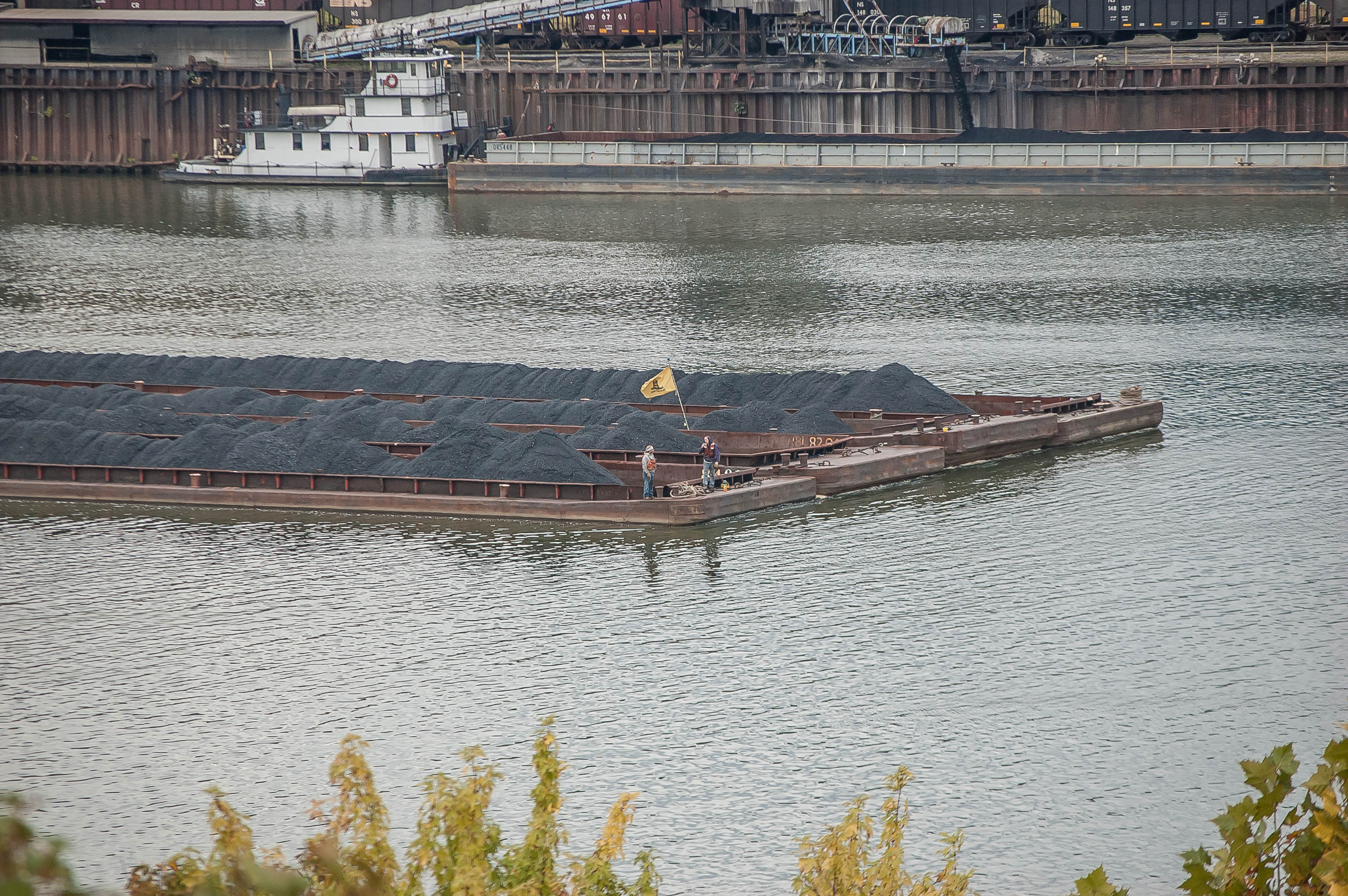
Oh, yeah. A coal barge in Ohio.

Running the Line

We're all thinking about Ohio this weekend, so why not a blues piece that starts out there? But I-75 is a long road, from Canada to the southernmost South. My grandfather ran a service station for long-haul trucks out of Knoxville, TN, right there on the line. It crosses the Appalachians near the majestic Cumberland Gap. It runs through a fair piece of the Great State of Georgia on its way to the outskirts of Miami, Florida.

"Chains of Love"

Apparently we have some brethren in the frozen north.
A couple of hours before the storm reached peak strength and before we lost power, my wife left for a business appointment, then shortly returned and reported that there was a tree down, blocking the road. She was about to call and cancel, but I said, “Not so fast there.”

My pre-storm checklist includes—along with stocking up on double-A’s and filling bathtubs—making sure there is some 50:1 premix (i.e., fuel) in the toolshed and that the chain saw will start.
I love that he thinks he needs to explain what 50:1 is.

UPDATE:

Although apparently Chuck Norris is not a fan.

Nate Silver Defends His Model

Mr. Silver has been the focus of a lot of attention lately, but mostly it has come from people who don't understand his model or probability theory. It's not outrageous that his model should show President Obama with an increasing probability of being re-elected: under a Bayesian probability theory, probability should continue to approach 1 until it reaches it. If nothing disturbs existing trends in the polls, the probability should be well above 90% by Tuesday morning.

This is because his model is a whole world to itself, and within that world the number of things that can change the probable outcome are declining every day. It is exactly like the program that calculates the odds of a Texas Hold 'Em hand winning or losing when you watch the World Series of Poker. Every time a card is turned over, if it doesn't materially affect the odds in favor of the challenger, the odds of the high-hand holder go up. This is because there are fewer cards left that might change the game for the low-hand holder.

Thus, Mr. Silver is to a large degree correct. If the state polls are correctly modeled, and if no new data out of line with the existing data is introduced, time is grinding away the opportunities for anything different to occur.

Nevertheless he makes a huge error.
But many of the pollsters are likely to make similar assumptions about how to measure the voter universe accurately. This introduces the possibility that most of the pollsters could err on one or another side — whether in Mr. Obama’s direction, or Mr. Romney’s. In a statistical sense, we would call this bias: that the polls are not taking an accurate sample of the voter population. If there is such a bias, furthermore, it is likely to be correlated across different states, especially if they are demographically similar. If either of the candidates beats his polls in Wisconsin, he is also likely to do so in Minnesota....

My argument, rather, is this: we’ve about reached the point where if Mr. Romney wins, it can only be because the polls have been biased against him. Almost all of the chance that Mr. Romney has in the FiveThirtyEight forecast, about 16 percent to win the Electoral College, reflects this possibility.
That "sixteen percent" chance that the assumptions are flawed is entirely bogus. The model can account for sampling error of the "plus or minus three percent" variety; there's no problem with that because you can give it a percentage using known methods. But there's no way to know what the odds are that a flawed assumption is making the data itself unreliable.

That's the one thing that the model can't actually measure. Any attempt to estimate it is a completely unscientific guess. Investment bankers and pollsters are each a class: they make slightly different guesses, based on their position and what they want to achieve, but they inform themselves based on talking to and watching each other. If they're wrong, it's as likely as not that they're almost all wrong.

There's simply no way of knowing what that means for the model, because the whole model is built around data shaped by their assumptions. It's like trying to guess what the odds are that Elvis is still alive in a nearby possible world: there's no way to put a number on it, because the world in which Elvis is alive is a world built out of entirely different facts.

If the pollsters are biased, the facts of the true world and the facts of Mr. Silver's world are simply not the same at all. His model won't just be wrong in some way that can be estimated and worked into the model. It'll be so wrong that it simply can't be applied to the actual world. Any resemblance between his world and ours will be accidental.

That's How We're Gonna Beat 'Em, Butch:

A German Neo-Nazi went to Afghanistan to train and fight with the Taliban. At last, he had to give it up and come home, saying he made a big mistake. Why? According to him, his wife made him do it. She was very upset by the lack of creature comforts, the bad treatment of women, and the fact that they couldn't hold hands in public.

Oh, and also:
His catalogue of complaints over his poorly thought-out decision included his fellow combatants' drug habits, a lack of hygiene, contracting hepititis A and his friends being horribly killed by Pakistani forces helicopters.
Well, yeah, that too.

Bacteria are your friend

From Rocket Science, an article about a "self-healing"concrete that uses limestone-secreting bacteria activated by water that seeps into tiny cracks.

A Constitutional Right to Hunt

Georgia did a version of this some years ago, but apparently Kentucky has come up with a twist: ordering regulatory agencies to consider hunting the preferred means of animal control.

The thing about a "personal right to hunt" is that it is one of those rights that require provision from us to you. If you have a personal right to own a firearm, if you want to go and own one you can, but you have to buy it. The state is merely forbidden from making it impossible to exercise that right.

If you have a personal right to hunt, however, that means there must be some way of exercising that right. In Georgia, for example, we have many public lands that are owned by the state and set aside for the purpose of public hunting. I imagine Kentucky has similar lands.

It's not a big deal, since the opportunity costs of such lands are often low, and as they are also useful for many other good public purposes (such as hiking and camping) outside the hunting season. The hunting area in the Dawson Forest, bordered by the Amicalola river, is a beautiful place. I've never gone hunting there, but I've hiked the river many times.

Still, it's an interesting point because it's one of the few so-called "positive rights" that conservatives generally support.

I Have Voted

Went over to the county seat today, since I was out that way on other business, and took part in early voting. The line was surprisingly long, but even more surprising was its demographic composition. This county is nearly ninety percent white and about eight-and-a-half percent black, but fully half of the folks who showed up to vote while I was in line were black.

My guess is that any slippage in Democratic voters' enthusiasm won't be coming from the black community this year. Now, of course I don't know how these ladies and gentlemen were voting, and am merely assuming based on the historic record that most of them were probably Obama voters. Still, assuming that record holds, the President can count on a surprisingly strong showing in this part of rural Georgia.

Models and their perils

A good article on RedState on polling methodology, with comparisons to modeling of climate, housing markets, and baseball:
Consider an argument Michael Lewis makes in his book The Big Short:  nearly everybody involved in the mortgage-backed securities market (buy-side, sell-side, ratings agencies, regulators) bought into mathematical models valuing MBS as low-risk based on models whose historical data didn’t go back far enough to capture a collapse in housing prices.  And it was precisely such a collapse that destroyed all the assumptions on which the models rested.  But the people who saw the collapse coming weren’t people who built better models; they were people who questioned the assumptions in the existing models and figured out how dependent they were on those unquestioned assumptions. . . .
I was mistaken in one of my comments below about the "Unskewed Poll" methodology. They do attempt to conform poll responses to a turnout model; they just use an unusual model.

Aid for the Northeast

The original headline on this piece from Staten Island was "We're going to die."

Clearly the government's efforts here are inadequate and misplaced. Given the gasoline shortage in the wake of the storm, a lot of the private options for help are limited because we can't all truck up there with food and supplies. However, if you are able and wish to help, you can donate to relief organizations already on the ground.

Catholic Charities and the Salvation Army are two that are reliable. Both take their religious obligations to help the poor and afflicted seriously, and do so without regard to the religious status of the people they are helping.

If you know of other options that you can recommend, please mention them in the comments.

Negotiations

Last week I got a letter from the bank saying that I owed them $73 for rental on a safety deposit box that my wife apparently took out while I was in Iraq. It was free at the time, but apparently there had been some unannounced change in the policy. I called them to ask that the unannounced fees be waived, and they were intransigent on the phone. "Well, I'll come in and discuss it with you when I bring in the keys," I said.

At the end of that discussion-in-person, they agreed that they would waive the whole $73 and furthermore pay me $4.60 in return for accepting my keys and canceling the contract. I'm not sure if it was my charm, courtesy, or motorcycle jacket.

Unskewed map

My husband suggests that, if this electoral map from Unskewed Polls is even close, David Axelrod will be obligated to get a full body wax.  On live TV.


Of course, I have no idea which polls are accurate.  I'm hoping that most of them are over-weighting the Democratic vote by mistakenly applying data from the 2008 rather than the 2010 races, an error that the "Unskewed" site claims to be avoiding.  We'll see soon enough.

Questions no one in the media is asking

No, not about Benghazi.  I've about given up hope on that one.  What I want to know is whether Senator Menendez (D-N.J., appointed to fill Corzine's vacated seat) is underpaying his male prostitutes as callously as he is the female ones?

Happy Halloween


Disaster prep

One of the first things the emergency response corps does here in implementing a mandatory evacuation is cut off the power, water, and gas to the most exposed shoreline areas.  I'm surprised to see reports of devastated communities (such as Seaside, NJ, in the video below) burning down and gas lines still clearly attached.  On the TV news just now, people were discussing difficulties in finding personnel to shut off the lines.

The new craftsmen

I approve the trend in pumpkin carving.

Memento Mori

Dr. Mead is moved by the storm to musings of the kind that occupy my mind so very often. He has written a good piece, just the sort of reflections that these encounters ought -- once we have done all we can do to prepare or to help -- to provoke in us.

The inimitable Ramirez