Aquinas on Anger, IV
Snowfall
1883
Passacaglia
That’s not a lute, exactly. It’s a theorbo, arguably the most beautiful musical instrument ever made by the hands of man. Almost the most beautiful instrument simpliciter, excepting only the sword.
Aquinas on Anger, III
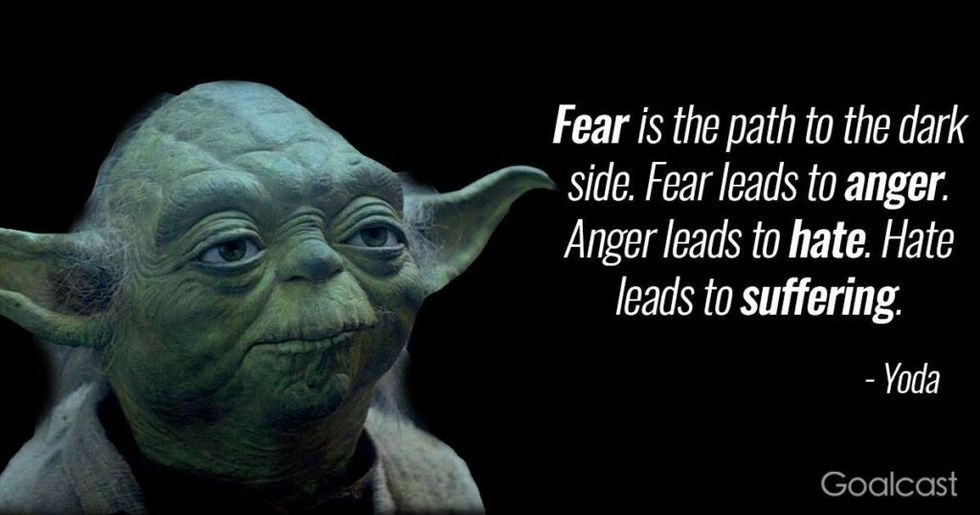
I'm going to move on to the second article: whether the object of anger is good or evil. It seems like anger is a bad thing; certainly our popular culture claims that it leads in bad directions.
Aquinas says that's wrong. The argument he give is striking: "Augustine says (Confess. ii, 6) that "anger craves for revenge." But the desire for revenge is a desire for something good: since revenge belongs to justice. Therefore the object of anger is good."
Voice of reason?
All the Small Things
This is kind of the opposite of the 'old Country sound' post. This was never a beautiful song as a punk rock bit. Put in this context, and it suddenly is.
I make no apology for linking a punk rock song to punishing questions of metaphysics. It only proves that punk rock is a real form of art; it can be, at least, even if it needs the double-blind form of a painted clown singing it to make it clear.
National Tartan Day
This is the Firefighter tartan, which I guess Tex and I can both wear. My father, were he living; my son, after me, who has also earned the right.
Aquinas on Anger, II
I answer that, The passion of anger is peculiar in this, that it cannot have a contrary, either according to approach and withdrawal, or according to the contrariety of good and evil. For anger is caused by a difficult evil already present: and when such an evil is present, the appetite must needs either succumb, so that it does not go beyond the limits of "sadness," which is a concupiscible passion; or else it has a movement of attack on the hurtful evil, which movement is that of "anger." But it cannot have a movement of withdrawal: because the evil is supposed to be already present or past. Thus no passion is contrary to anger according to contrariety of approach and withdrawal.In like manner neither can there be according to contrariety of good and evil. Because the opposite of present evil is good obtained, which can be no longer have the aspect of arduousness or difficulty. Nor, when once good is obtained, does there remain any other movement, except the appetite's repose in the good obtained; which repose belongs to joy, which is a passion of the concupiscible faculty.Accordingly no movement of the soul can be contrary to the movement of anger, and nothing else than cessation from its movement is contrary thereto; thus the Philosopher says (Rhet. ii, 3) that "calm is contrary to anger," by opposition not of contrariety but of negation or privation.
Confederate Jews
Ezekiel is a complicated historical figure who fought for the Confederacy and supported the Lost Cause, the idea that the Civil War was about the southern states defending themselves from northern aggression. A second artist whose work would have bee uh n part of the exhibition, Theodore Moise, also served in the Confederate Army. But of course, history is filled with flawed people who nevertheless made important contributions to literature, art, science, and philosophy.
Indeed there is no one else who made important contributions to literature, art, science, or philosophy. To say that any man is damnable is strictly orthodox, as Chesterton said.
Jews had good reason to embrace the Confederacy. The deep tension between the black and white population meant that all other tensions were lessened. George Washington addressed the Jewish community in Savannah, already firmly established. The Irish were welcomed in the South when they were subjected to significant prejudice in the North. Jews in the Antebellum South fought duels, which may not seem desirable until you realize that gentlemen only dueled with equals. If you’d let a Jew take a shot at you in a duel, you accepted him as just as good as you were, no better and no worse.
It’s not too surprising to find respect being returned.
Aquinas on Anger, I
This weekend I was busy with emergency vehicle qualification, so I didn't have time to respond at length to an anonymous comment* citing St. Thomas Aquinas on anger. Now Aquinas' discussion of anger is one of the least helpful, most dense things he ever wrote. It requires a Ph.D. in philosophy to understand what he's even talking about.
Fortunately for you if you were interested in the question, I happen to have a Ph.D. in philosophy. I'm going to spend a few days working through this to try to make it sensible to a contemporary audience.
First, a general comment on reading the Summa Theologiae. The ST is written in a style that was unique to its age. Every single part of it begins not with a statement of doctrine, but with objections to the doctrine. You get the actual doctrine in the middle, and then replies to the objections. People think the Middle Ages was all about stoning heretics, but in fact it gave a lot of attention to considering their objections and replying to them thoughtfully. Objections to the doctrine of faith were centered, as the philosophy kids say today.
Here we are in the second part of the first part of the ST, the first part of the first part dealing with God. Here we are dealing with God's principal creation, man. This is a proto-psychological reading of how the insides of a man work. Because it predates psychology by a long time, it may be a better or worse understanding than the ones that psychology itself has developed. I tend to be pretty suspicious of psychology as bad philosophy, but it's fair to argue either side here.
So, article one of question 46 asks "if anger is a special passion." What on earth does that mean?
It might be helpful to compare with fear, which also proves to be a "special passion." The contrast is with a "general passion," i.e., a passion that is overriding of everything else. Aquinas notes that all the passions are connected, though, through love: so you can still get an overriding special passion if it is intense enough.
Well, hold on: let's drop back. What is a passion? It is important to note the cognate between "passion" and "passive." In ancient and medieval philosophy, a passion is something that happens to you. You're not in charge of it, it acts upon you. (The Irish speak this way: "Joy was on me," "Sadness was on me," "Anger came on me.")
Anger is confusing, because it is caused by contraries. You are angry because you hoped for something better, but are confronted by something worse. The arising of contrary emotions in the soul is disruptive (cf. cognitive dissonance theory in current psychology).
Note that Aquinas is defending the prospect that anger is a "special" and not a "general" passion, but in fact isn't really able to come down solidly on the point. "But, in a third way, anger may be called a general passion, inasmuch as it is caused by a concurrence of several passions."
He was a genius and a miracle, Aquinas, but not every single thing he said is going to prove out. We're going to see some more problems as we work through it.
* Hall rules require comments to be signed; the name can be a pen name, but we need to keep track of which person is talking. Fully anonymous comments are not allowed as a consequence.
How to Get That Old Country Sound
Last we heard Buddy Brown here he didn't fare so well. He's an openly conservative country musician with a sense of humor, but he's playing contemporary country and it sounds like all the rest on the radio today.
Now he's put out an album in an early 70s style. This quick video explains all the stuff he did to try to get that sound. I'm not that familiar with everything that goes into making an album, so it was interesting for me. It explains why it's hard to put out songs like Merle's today.
Here's one of the songs from the album:
Pizzapalooza
Emergency Vehicle Driving
Garden Expansion
We’ve decided to lay in a third raised bed this year, expecting food to be somewhat expensive or even somewhat short. The older beds are turned over and ready. The new one is framed, but the hard work of breaking the earth is yet to be done.
Exposure in Maryland
Cesspool of Sellouts
The city is actually looking much less like a cesspool of any sort following a campaign to drive out the homeless and clean up the town. One of the small parks near this sign on Patton avenue was being used by families with small children instead of the usual sleeping addicts. I’m not sure what occasions this radical departure from the city’s deeply held values of tolerance and inclusion, but it was surprising. My wife had asked me to link up with her because she needed to walk by that park, and disliked the usual harassment she faces when doing so. This time, cute children instead.
We also saw a pair of immature bald eagles struggling for dominance on the east fork of the Pigeon river. This was heading back along US 276. There was massive flooding there recently, and though progress has been made there are still clear signs of the disaster. The road is no longer closed between the Parkway and Waynesville, though. And there’s a new Scottish pub in Waynesville, an ideal motorcycle destination provided virtuous moderation is practiced (or else accommodation in Waynesville is found).
* AVI and others from the real North occasionally note that their own usage of "Yankee" has a very different content than the one that Southerners intend. In this case, though, 'Yankee' is the speaker's own choice of appellation -- if you watch his channel's intro video, that's the word he chose to describe himself.