Cease-Fire in Gaza
A Barrage of Dodged Bullets
Build Back Better was a sweeping agenda of economic reform on the scale of the New Deal, meant to solidify its author as the “FDR-sized” president he wanted to be.
Dusting the text off now, you can feel that ambition. Across two bills — the American Jobs Plan and the American Families Plan — it sought to spend over $4 trillion across a decade.... an epochal expansion of government spending and ambition, on par with Franklin D. Roosevelt’s New Deal or Lyndon B. Johnson’s Great Society.
Little of this became law, of course. The bipartisan infrastructure law enacted in 2021 included $250 billion in new transportation spending, less than half of the Jobs Plans’ number; even adding the $72 billion in the Inflation Reduction Act for electric vehicles doesn’t close the gap much. While the Jobs Plan included $1.6 trillion in climate spending, the Inflation Reduction Act’s climate measures are estimated to cost less than half that much. The CHIPS and Science Act passed in 2022 appropriated all of $79 billion to support manufacturing, a far cry from Biden’s $590 billion bid, and largely didn’t appropriate money for science at all. And then there’s the American Families Plan, almost all of which fell by the wayside, not passed by Congress in any form.
Imagine the inflation associated with this titanic flood of Federal spending. What we got was bad enough. Your dollar wouldn't have been worth anything if all that planned print-money spending had been dropped into the market.
When I think of the 'Build Back Better' slogan, I always remember this video.
When reforms work the way they're supposed to
Rehabilitation through Firefighting
A Liberal Struggles
Beginning with the oil crisis of the 1970s, an abyss slowly opened up between a credentialed elite and an uncredentialed working class whose steady union jobs were stripped out and shipped overseas. Those of us who got the credentials to enter the professional classes did well, but plenty of our fellow citizens fell behind. We didn’t notice this in time, and our failure opened up a chasm between who we were, what we believed and the people we represented. We kept offering “equality of opportunity,” a chance for the credentialed few to enter the professional elite, without tackling capitalism’s remorseless distribution of economic disadvantage itself.
In the meantime, we lament the “identity politics” of our populist and authoritarian competitors, when it would be more honest to admit that identity is where all political belief actually comes from, including our own. My identity — charter member of the White professional classes of Canada — defined my liberalism. What the liberal critique of identity politics does get right, though, we owe to our much-maligned individualism. Identity is not destiny....We were naive about the nature of this problem [of increasing diversity], preferring to believe that all reasonable human beings would embrace a revolution of inclusion, when the reality was that our generation had upended the entire social order, and even our own place in it. Diversity — of gender, sexual orientation, race, religion and class — was a virtue in comparison to the dire cantonment of peoples in silos of exclusion, but liberals turned diversity into an ideology. Once an ideology, it quickly became a coercive program of invigilation of speech and behavior in the name of dignity and respect.Credentialed White people of my generation welcomed the revolution because we could invite recruits of color into our ranks without ever feeling that our own elite status was being challenged. We didn’t seem to notice that nonelite White people were threatened, even betrayed, by the new multiracial order. Faced with what we thought was White racism and sexism, when it was mostly fear, we began promulgating codes of speech and conduct to impose diversity as a new cultural norm.... Worst of all, we censored ourselves, willingly turning off our bullshit detectors and stilling the inner doubts that might have made us confront our mistakes.
Tyranny, in other words, imposed with a clean conscience because they thought it was the best thing for everybody. A tyranny gladly accepted even over one's own thoughts, even when the ideas being presented were -- as the author himself says -- fairly obvious bullshit.
We began promoting arguments as true based on the gender, race, class, origins or backstory (oppression, discrimination, history of family violence) of the person uttering them. The value that we placed on diversity and inclusion led us by stages to jettison a care for truth itself. We ended up compromising the very epistemological privilege that had provided us with such unending self-satisfaction.
Again, a fairly healthy process even if it is badly motivated. It doesn't approach the questions that are of increasing interest to me, which is whether or not power itself is the problem -- a thing never to be trusted to anyone, however grand their ideas and serious their self-reflection, but always to be distributed as widely as possible to avoid the evils of its concentration. It is better that power should be placed in the hands of the virtuous, if it must be placed in any hands at all; but it might be better still to prevent such concentrations.
Few men are good enough to rule themselves, and perhaps none fit to rule others; even this man admits to serious errors and misjudgments affecting the whole of society, which he and they carried on with until the wheels came off. Only now does he pause and reflect, and only for the purpose of getting the power back.
An Honest Piece on Alcohol
The report describes the relationship between alcohol and cancer in different ways: the number of new cases of cancer a year in the United States potentially related to alcohol consumption (roughly 100,000); the number of annual cancer deaths that might be attributed to alcohol (roughly 20,000, compared to nearly 200,000 cancer deaths attributable to smoking); the increase in absolute risk for developing alcohol-related cancers (a 2.5-percentage-point increase for women and a 1.5-percentage-point increase for men); and the relative risk for specific cancers, such as breast cancer (one study suggests that a drink a day increases a woman’s risk by 10 percent).But it’s hard for individuals to translate statistics to their own lives. A small increase in relative risk is difficult to make meaningful, even for people who understand what “relative risk” means. (It doesn’t mean a 10 percent risk of breast cancer; it means women who drink may be 10 percent more likely to get breast cancer than women who don’t.)There are many other open questions that might seem important to a person deciding whether to change her habits: Is a glass of wine as carcinogenic as a daily martini? Does it matter how old you are when you start or stop drinking? And perhaps most important, do you lower your cancer risk if you quit drinking tomorrow, regardless of your age? The answers to all of these questions are unclear.
Equal Protection
Triumphant, Broken America
Snowfall
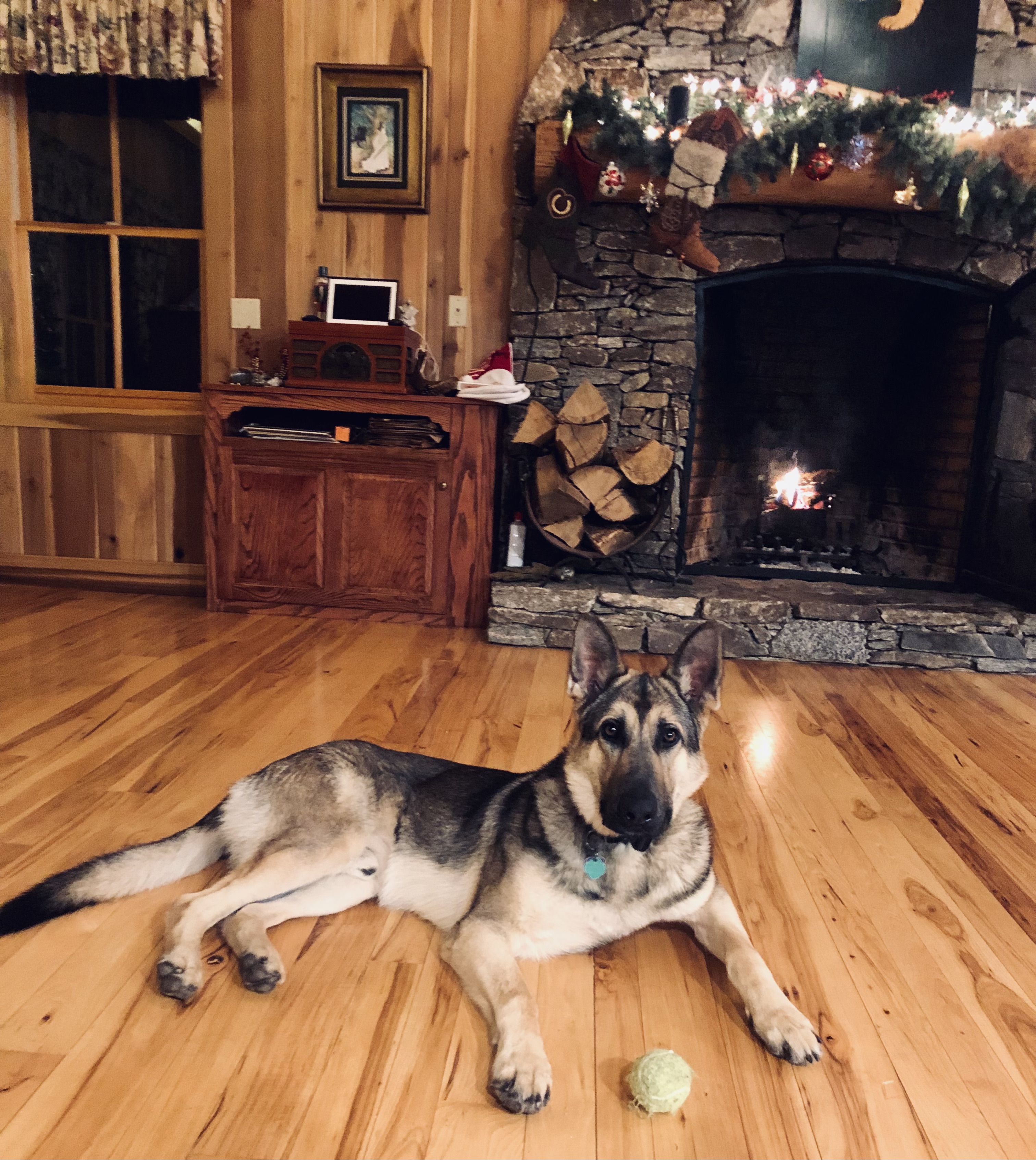
It has begun. We're expecting, according to the weather service, somewhere between 2 inches and a foot of snow. Given how unpredictable the weather is in these mountains, I believe that delta is the best they can do. I spent the morning putting chains on trucks to get ready for possible emergency operations, but I hope to spend the weekend not going anywhere. Snow is a rare treat even in the mountains of the Southern Appalachians, so I hope that we will get to enjoy it.
Peaceful Coexistence
Speaking of Horses
Magic and Chivalry
What does it take to become a reasonably mature, reasonably wise, reasonably loving person? Inescapably, a great deal of time. Not just the years of cognitive and social development from infancy through adolescence into early adulthood—roughly 25 years from birth to the maturation of the prefrontal cortex. But also years of friendship, long hours of conversation, even the pause between hearing and speaking that marks the truly personal moment of really listening. In her 2011 book Alone Together, Sherry Turkle writes of the seven-minute mark at which conversations take a turn—the point when the usual opening gambits, pleasantries about weather or sports, have run out, there is a palpable pause, and someone has to take a risk. It takes seven minutes for a conversation, a real one, to even begin.It is at the seven-minute pause, Turkle observed in her lab, that many people take out their phones, implicitly signaling to each other that the conversation need not go any further or deeper, an exit ramp before the unpredictable and vulnerable words beyond the silence. That, of course, was more than a decade ago. What are the chances that conversations last even that long these days?...[W]e have let [technology] colonize places where not only is it of no use—there is no magical way to raise a child—but where it actively displaces and undermines the essential process of personal formation. We have let the magic of technology into the formative stages of life—infancy, childhood, adolescence—so that from very early on, many if not most children experience the seductive power of instant, effortless results delivered through screens and digital devices (and many battery-powered toys as well).And while these stages of life are singular and essential, magic is equally disastrous at other formative moments. A friend of mine found himself seated on an airplane departing Los Angeles next to a couple en route to their honeymoon in Hawaii. He observed with growing horror as the newly-married young woman opened up TikTok on her phone, began scrolling and swiping through videos, and did not stop, even for a bathroom break let alone a word to her husband, until the plane landed five hours later. One can only wonder how the rest of the honeymoon unfolded.
So we want to develop virtuous people -- the author says "reasonably mature, wise, loving." Development of any sort of virtue requires time spent doing the work. As Aristotle explains, virtue is a kind of habituation to doing the right thing that is achieved by doing it, over and over, until it is what you do because it is who you are. The reason that the US Army still trains its elite soldiers as airborne units is not because it plans to drop them out of airplanes into Europe or Asia. It is because Airborne school trains the virtue of courage. It takes courage to step out of an airplane into the wild air. Habituating soldiers to do that brings about courageous soldiers.
Courage is the model virtue for Aristotle because it's one that is easy to get as an example. Habituating wisdom (or lovingness) is harder to visualize, but it works the same way. The author has a good point here: we have to do the work, because it is only by doing the work that you develop the habits. Even if a technology came into being that made it easier to connect with and understand another -- perhaps some sort of mind-meld technology that let you experience the world from their perspective, thus shortening the process to understanding -- you'd still have to spend time doing it, and then time understanding and integrating what you'd experienced. You'd have to do this because they were worth it to you, and because you decided it was worth doing.
What this reminds me of most strongly is the old writing I did back when I rode horses a lot on the virtue of chivalry. This virtue, like lovingness, is about building the kind of character in yourself that can sustain a respectful relationship. This one requires spending time with horses.
What does it take to tame a horse? It takes courage, not recklessness, but that kind of disciplined and developed courage that comes from learning to fear being thrown, and getting on horses again. It takes self-mastery, because the horse is a prey animal that will amplify your fear. You must learn to ride through it, until even you don't really feel the fear in the same way anymore.It takes gentleness. A horse responds to the slightest touch. You must be sensitive to its movements, its breathing, the language of its body.
What does it take to ride a horse to war? It takes trustworthiness. The horse must believe in you to charge into the smell of blood.
It takes honor. You can't ride alone. You must build relationships with other men like you, who know they can count on you while there is blood in your body. There is your self-sacrifice, even to death.
What does it build in you to do these things? Some of the things have been said. You get the virtues you practice, as Aristotle teaches in the Nicomachean Ethics. You must have some courage to begin, but you will build courage as you do. You must have some self-mastery, but you will become the master of yourself. You must be gentle, and able to understand another very different kind of living being through touch alone. You will become moreso.
The habit of keeping your word is like any other habit. After a while, it becomes part of you. The habit of honor likewise.
Can you do without chivalry? I don't know. Can you do without men like this?
That post closes by pointing out that the real question is not whether you can do without it, but whether you can build it without the horse. The author here is pointing to a similar question about other virtues, humane virtues like maturity and wisdom and being a loving person. It may be that you can capture these qualities in other ways. It may also simply prove to be true that you need the horse or the other people to get the virtue. If so, making a society where we spend time with people at the right stages and moments of life may be a necessary condition to building a life worth living, or people worth living with -- worth living for.
Good Luck to the Firefighters
Honors in Absence of Virtue
Magic and Alchemy
To be modern, almost by definition, is to live without putting much stock in a supernatural “beyond” to the world. And yet, nearly every time a new technology is introduced, its promoters reach back to the ancient idea of magic to capture its significance... Even more surprising is how often we still talk about a specific magical tradition: the practice of alchemy. For centuries, alchemists sought to transmute all metals into gold, to escape the conditions of mortality, and perhaps even to create new forms of life that would answer to our command—all summed up in the quest for the substance known as “the Philosopher’s Stone.”Now, if to be modern is to largely disbelieve in magic, surely to be modern is to know that the alchemists’ quest failed. If we think of alchemy at all, we think of it in contrast with a proper science like chemistry. The alchemists were wrong about the natural world—the chemists, after much trial and error, were right.** Significantly, though, the early “natural philosophers" spent at least as much of their time on what we would call alchemy as what we would now call chemistry. Indeed, many celebrated figures now remembered for their scientific contributions—like the physician Paracelsus and the mathematician Isaac Newton—spent far more of their time on alchemy (and in Newton’s case, astrology) than on anything resembling modern science, and made no clear distinctions between them. You might almost say that we now use alchemy for the approaches to the natural world that didn’t work out—while science is the name we give, in retrospect, to the approaches that did work out.
Alchemy failed as science, but it succeeded as a dream. Magic doesn’t “work,” in the sense that science works, but it does work as a dream. And technology is, after all, applied science. Applied to what? To a dream that was there long before science, the dream of magic.Think of magic, for the moment, as the quest for instant, effortless power—the ability to get things done without taking time and without requiring labor or toil. In the absence of magic (or technology), getting anything done requires some amount of time, sometimes a great deal of time. But what if you could get results without waiting?
The Breaking of a Mighty Oak
Finding Warmth in January
A Funny Story
Scottish musician KT Tunstall tells a funny story here.
She's not our usual fare here, so maybe a couple of introductory tunes are in order.
Bleak Midwinter
We are currently experiencing the first of what are said to be three Arctic blasts, accompanied by a great deal of rain locally. Snow might at least be beautiful; cold rain and attending mud are not at all. It turns to ice in the freezing nights, but the days stay just a degree or two above freezing. The air at 34 degrees with high humidity and cold wind is far worse than the air at 28 with the water frozen out of the air. The skies are grey almost every day somehow. The few hours of sunlight is veiled, the lumens lowered by the lowering clouds.
Sleep and Memory
Eighty-five healthy adults attempted to suppress unwanted memories while images of their brain were taken using functional MRI. Half of the participants enjoyed a restful night of sleep in the sleep lab before the task, whereas the other half stayed awake all night.During memory suppression, the well-rested participants showed more activation in the right dorsolateral prefrontal cortex -- a brain region that controls thoughts, actions, and emotions -- compared to those who stayed awake all night. The rested participants also showed reduced activity in the hippocampus -- a brain region involved in memory retrieval -- during attempts to suppress unwanted memories.Among the participants who slept in the lab, those who spent more time in REM sleep were better able to engage the right dorsolateral prefrontal cortex during memory suppression, pointing to a role for REM sleep in restoring prefrontal control mechanisms underpinning the ability to prevent unwanted memories from entering conscious thought.
It strikes me that REM sleep is supposed to be when dreams occur, so maybe the more natural hypothesis is (also?) correct. Dreaming may help process the memories so they aren't so upsetting; rest may help the brain deal with the need to wakefully suppress old thoughts.
“Jackery” Indeed
Beauty
Medieval Studies
Boston University is offering a graduate-level “Medieval Trans Studies” course for the upcoming spring semester that explores how “medieval texts speak to the historical, theoretical, and political concerns that animate contemporary trans studies.”The course has drawn criticism from scholars who argue that it reflects modern ideological biases rather than historical accuracy.It considers “the deep histories of transgender embodiment” through an examination of texts stemming from the Middle Ages, according to the course description.Students will read about “alchemical hermaphrodites, genderfluid angels, Ethiopian eunuchs, trans saints, sex workers, and genderqueer monks,” according to the university.Adam Kissel, a fellow with the Heritage Foundation’s Center for Education Policy [...said] it is permissible for universities to study how Medieval writers understood their fantasies regarding gender. However, BU’s course is “a distraction from better emphases.”“In the Middle Ages there was no rational doubt that humans were created only male and female. The people knew that freaks of nature were abnormal,” Kissel said.
That's stronger language than I would have used, but it is definitely true that the Medieval understanding of humanity and creation is exactly that human beings were created male and female. The most rational minds of the age were trained by the Church, for whom* it is a point of clear doctrine.
Having spent a lot of time with Medieval texts, I have to say that while there are some interesting cases, you have to go a long way to find them. There is also a lot more about cross-dressing by clear males or females than anything resembling trans-* cases. There's a certain amount of playful literature about cross-dressing, both females dressing in armor in order to pursue a knightly quest, or male knights dressing as women to humiliate each other (either by beating the other male while dressed as a woman, or by forcing the other to wear female clothes as a forfeit for losing). This wasn't aspirational, even in the literature; it was a joke, the way that in Norse mythology Thor is pictured cross-dressing in a comedy story about how he pretended to be a bride in order to recapture his hammer from a giant who had stolen it. In Malory, for example, it's usually a story involving Sir Dinadan, who is most usually a comic relief figure in the Tristan stories.
Outside literature, Joan of Arc dressed as a knight (but didn't fight as one, though she led inspirationally from the front). A Persian scholar describes female Crusaders dressing in armor but not presenting themselves as males, but it doesn't appear this really happened and the story was probably made up to make the Christians look bad. The religious ruling about this holds that such women would be 'anathema' and this scholar thinks it is unlikely women really did this, at least regularly. There were probably females in armor successfully hiding their sex in order to fight as mercenaries, I would guess, but it wasn't an ideal people were striving for -- and it was more likely, I assess, among poorer women who had relatively few options and found mercenary work palatable.
None of this really even approaches the side cases that this course will apparently take as its foci. I think the effect is likely to suggest that the Middle Ages were quite different from what they were, which could easily be a disservice to students. Only after a basic appreciation has been conveyed should such fringe elements be taught to avoid that deception. This is said to be a graduate-level course, though, so perhaps that will be the case.
* Ecclesia is a person in the Medieval Catholic understanding, indeed a female person.
The Quality of Mercy
Before Tuesday, North Carolina had 136 offenders on death row. Cooper’s office said it had received clemency petitions from 89 of them.Cooper’s office said it considered a variety of factors, such as a defendant’s conduct in prison, the adequacy of legal representation and sentences received by co-defendants.“These reviews are among the most difficult decisions a Governor can make and the death penalty is the most severe sentence that the state can impose,” Cooper said in a news release. “After thorough review, reflection, and prayer, I concluded that the death sentence imposed on these 15 people should be commuted, while ensuring they will spend the rest of their lives in prison.”
I'm inclined to accept this as a reasonable use of the power; it is not an extravagance, and the penalty that remains imposed is quite severe. (I'm not in fact sure that 'life in a state prison without the possibility of parole' is preferable to death.) The pardon power is possible to use well, and whether or not I agree with Gov. Cooper in each particular case, I am satisfied that he took his duties seriously here. That may be the best we can do as human beings.
What COVID taught us about censorship
A remarkable politician
Hogmanay Muted
Black Moon Over Hogmanay
How the Victorians Celebrated Christmas
This is part of the Victorian Farm series, featuring some of the same people as the Secrets of the Castle and the Tudor Monastery Farm. I enjoyed this series quite a bit as well.
18th Century Hot Drinks for New Years
Good news updates
The 12 days of Christmas on a Tudor Monastery Farm
This is part of the Tudor Monastery Farm series, which has the same experimental archeologists and historian who worked on Secrets of the Castle living on a recreation Tudor farm for a year. I thoroughly enjoyed it.
Newly Relevant: US Army Equine Funeral Unit Troubled
Requiescat in Pace Jimmy Carter
The Feast of Holy Innocents
A Handsome Beast
The Feast of John the Evangelist
Some Welcome Sunlight
The most astonishing thing in this congressional report on government conspiracy to censor and silence right wing media and views is that the State Department’s Global Engagement Center (GEC) was apparently an effective and enthusiastic part. As far as I know, this is the first time it’s ever been effective or enthusiastic; turns out they were really taken with silencing American citizens instead of doing their actual job.The GEC is assigned by Congress the role of aligning all American foreign communications in pursuit of national interests. This means diplomatic messaging aligns with Army psychological operations and CIA special activities of a communications sort; broadcasts of American state media align with the values and policies of the administration.Especially when Republican administrations have existed, the GEC is wholly uninterested in its mission. But even when Democratic heroes have held the reins, they’re ineffective. For one thing they’re entirely too small to actually perform the job effectively; for another, they are at State. Most of the communications infrastructure we have is military, and the military doesn’t respect the State Department. More, the State Department itself views actual diplomacy as its real job, and “public diplomacy” — that is, talking to ordinary citizens instead of other diplomats — has a lesser stature.So it’s a second-rate sinecure for bureaucrats who lack prestige, resources, or interest in doing the crucial job assigned to them. Occasionally they take meetings and accomplish nothing, which normally makes them one of the less harmful government bureaucracies.Give them a chance to play secret police and violate the constitutional rights of their own citizens, though, and apparently they were hot to trot.
Now today the Brownstone Institute has a tremendous report, summarizing 500 pages of findings, on the work of the Cybersecurity and Infrastructure Security Agency (CISA). CISA has only been mentioned here once before, quoting RFK's endorsement of Donald Trump in which RFK notes that CISA was among those brought in to spy on and disrupt his independent campaign. Federal Judge Terry Doughty called the White House's censorship project, quote, "The most egregious violation of the First Amendment in the history of the United States of America."
CISA was one of the ways that those who called themselves 'the Resistance' attempted to get the first Trump administration to give it the rope by which they would be hanged; and while their attempt to tie him to Russia failed when the Mueller investigation found no evidence of any Americans participating with Russian intelligence, at least in the 2020 election CISA largely succeeded. They were at the heart of changing the way that election was conducted by 'handling' election security in that race as well as in the surprise-victory of Democrats in 2022. The whole report merits reading.
This report should be trumpeted from the mountains and read widely. These are two government agencies that have abandoned their Constitutional mission, and become what the Declaration of Independence calls "any Form of Government becomes destructive of these ends [i.e. protecting the natural rights of the citizenry]," activating "the Right of the People to alter or to abolish it[.]"
It's time for some alterations and abolishments. CISA should follow the GEC; let them be the first of all such institutions that have betrayed their mission.
Swannanoa
Christmas Morning
I gave away the motorcycle I have ridden for about fifteen years, to the boy who grew up riding on it. I told him that it was the best gift I had to give him aside from the existence that I gave him almost 23 years ago. I hope he has the same good luck with her that I had.
Merry Christmas.
Christmas Day
Christmas joy
Your Intel Report for Christmas Eve
Official up-to-the-second NORAD reports on Santa's activities this evening. NORAD has been keeping a close watch on this fellow since 1955.
Medieval Christmas
Christmas Mead
An Appalachian Stack Cake
Green Eggs and Ham
Choose electricity or gas
“Cancel Christmas”
On Rituals
Jack Farrell was a ranch boss at Sombrero Ranches in Colorado for decades.He said there were many a wrangler that worked for him who discarded their old boots by adding to a collection of weatherworn boots already atop fence posts surrounding the ranch property.“It’s like throwing bras onstage at a Tom Jones concert. Once one does it, they all have to do it and they don’t really even know why after long,” Farrell said. “I guess it all started with a purpose, but I’ll be danged if anyone ever knew what that was.”...Most ranchers contacted for this story had either never seen it done or didn’t know the significance behind it.“Never heard of it,” said Kelly Lockhart, patriarch of a sixth-generation family cattle ranch based in Jackson, Wyoming....He assumed... coyotes would associate the smell of the boots with gun-toting ranchers and steer clear....Footwear at the end of its life simply made for a handy decoration to spruce up the property line.But the practicality of covering a fence post makes sense as some claim. A boot placed over a post would keep rain from seeping into the wood and decaying the post prematurely.Typically, it is thought boots on a fence are there as a memorial to a favorite horse, a lost member of the family or a beloved ranch worker who passed away.Some have speculated boots perched atop of fence post could also serve as communication in days before cellphones, for example. A visitor could instantly tell whether the homeowner was around or not.A boot with its toe turned toward the main house indicated the rancher or farmer was at home. A boot pointed in any other direction was to show the owner was still at work — the boot pointing to the field he was working in.
How much harder is it to understand a cultural practice from the other side of the world, or an ancient age?
Human beings don't really like admitting that they don't know something, much less that they can't know it. We like to think we have more knowledge than we do, just as we like to believe we have a lot more control than we do. It may be that there's nothing you can really do about how you're going to die except to hurry it up with very bad decisions; but endless ink is spilled on the alleged benefits of this-or-that diet, or having a glass of wine for your cholesterol, or not having a glass of wine ever at all.
What do we know that we really know? Descartes came up with one item for the list: we experience thinking, and therefore our mind must exist. Everything else is suspect to a greater or lesser degree.
Pragmatically we have to get along in the world, though. So if you see a old boot on a fencepost, I wouldn't go as far as questioning the existence of the boot or the fencepost. If you can find the guy who put it there, maybe he can even tell you why he did it. Maybe he read this blog post and thought it sounded like a fun idea.
Where does electricity come from, anyway?
“God willing, next year we will try for this not to happen.”So that's comforting. The author meanders for many more paragraphs without revealing a single clue how a country rich in natural gas can't keep the power on. Can't get it out of the ground? Can't transport it? Can't build or properly maintain power plants? No power lines to get the electricity to homes or businesses? He barely seems curious.Eventually it occurs to him how to blame it on (1) Jews, (2) stingy foreign investors, and (3) the refusal to use less energy, but that's not until paragraphs 19 and 22.Regime change is a tempting hope, if only there were some reason to believe the country contained people with a clue what to replace it with. I doubt the problem will be solved by blaiming Jews, demanding charity from foreign investors, or conservation. At some point they're going to have to grasp how non-totalitarian economies work, or just drift back into the stone age--a maddening fate for a people with a rich history and natural resources.
Reason for the Season
Opinion: Christmas season not about religion, but about pure and simple love[Really? Not at all about religion? -Grim]It is the time of the year that we are compelled to tell this wonderful story. In reality, the circumstances and conditions of this story are foreign to many of us. It is a story about poor people. It is a story about people of color. It is a story where might and wealth are on the opposite side. It is a story of Arabs. It is a story of Jews. It is a story of Phoenicians, at least that is what we are led to believe. It is a story where pieces and parts from separate Biblical writings are pulled together to give us a compelling version of what happened.Most know what story I am talking about. While it is a story that is embraced by the Christian faith, it might also be embraced by people of all faiths or people of no faith at all for it is a story of love.