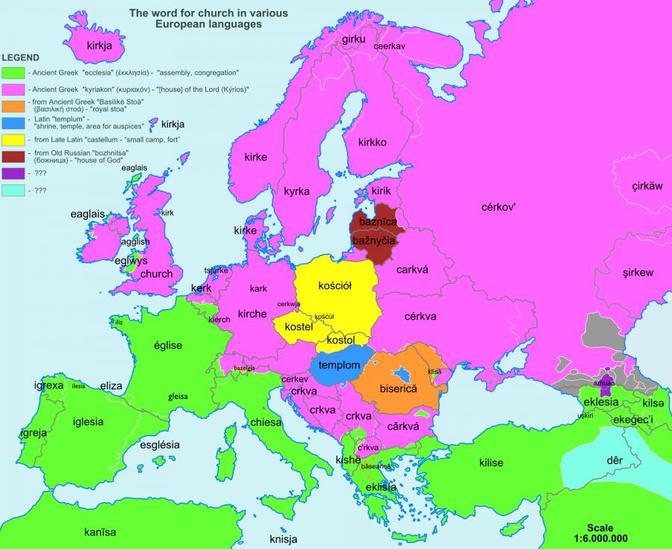
AVI reposted this regional dialect quiz.
Yeah, Obviously
AVI reposted this regional dialect quiz.
Insurrection
Bake the Gender-Affirming Abortion
Flight from Combined Arms
- Fires and sensors will take precedence over maneuver warfare.
- Defense will be favored over offense.
- Marines will not possess the type of units and equipment needed to “close with and destroy” an enemy.
- Infantry will no longer be the mainstay of the Corps; missiles and technologies are to be its strength.
- Without tanks and sufficient cannon artillery, there will be no basis for combined arms.
- Marines will not have a mobile, protected, direct-fire weapons system for the first time since 1923.
- The conviction that every tactical unit must have an integral direct and an indirect fires capability will no longer exist (Loitering precision munitions may alleviate this to some degree).
- Smaller rifle companies and infantry battalions will belie the preference for large units that can cover more ground and absorb significant casualties and continue to fight. In short, these battalions will be less resilient.
- III MEF (Marine Expeditionary Force) will no longer be a repository of capabilities used to form task-organized units for missions across the spectrum of conflict. The capabilities of I MEF and II MEF to do the same will be reduced greatly.
Lever Guns
At Least They're an American Company
Better precedent
even assuming that the CDC was substantively correct that masks, if imposed legally, would slow COVID transmission. (A big "if," but she gave it to them.) Sanitation normally refers to things like disinfection of premises or euthanizing infected herds. These are precautionary measures that must be implemented immediately if they are to have effect. They are not comparable to masking the entire human population for two years. Federal nannies typically experience difficulty understanding the difference between a long-term situation that calls for considered legal action and an emergency that allows them to throw the rule book on the fire. You need an emergency measure? OK, impose it very briefly while you run the traps on the usual legal requirements for an extension. Supposing for argument's sake that a case can be made to mask the entire human population for two years, there's a process for that, too. It includes a proposed regulation followed by a public notice and comment period. The CDC skipped this step entirely, employing the perfunctory defense that a public review would be “impracticable, unnecessary, or contrary to the public interest.” Why? Because we said so. The CDC merely recited the statutory language, except to make the extraordinary argument that public review would be futile because the CDC's mind was already made up. "Shut up, they explained." It takes chutzpah to claim that one's mind is so made up that it would be pointless to discuss the issue, while failing to articulate the reasoning when hauled into court over it. I look forward to November. May these people be banished from power for a long, long time.
The unmasking
Algorithms and Heuristics
Judging solely by the heuristic that she has dyed her hair light blue into middle age, I assume that Dr. Cathy O'Neil and I don't share many opinions in common. However, her new work on the harm caused by social media algorithms strikes me as correct and well-considered.
What, by your own understanding, constitutes shame? Is it universal?
It’s universal. But shaming always happens with respect to a norm. And those norms aren’t necessarily universal. Shame is a social thing that happens in the context of feeling like you’re unworthy and you’ll be unlovable by your community....
Do algorithms target shame, or just anything that is popular?
I think algorithms are optimised to service that which will arouse us the most. That usually means outraging us so we perform shame. In our filter bubble, our in-group, the algorithm serves to us the most outrageous thing that some other filter bubble has managed to arrive at, so we have the opportunity to be righteous and lob shame on to that other group, and to create this shame spiral.
That's a nice insight. Social media algorithms do two things, then: first, they identify by our likes and engagement how to aggregate us into online communities of norms; then, they pit those communities against each other by identifying the most egregious violations of one community's norms by another community (which is not, by its own norms, doing anything wrong).
The result is an online society that is tearing itself apart, screaming at each other all the time. If you actually go out into physical America, it's a nice place full of nice people. If they disagree with each other, they manage to live side-by-side by simply living and letting-live. Online, though, we are driven by the social media companies into intense, daily conflict that is profitable for them because it maximizes page views and advertising revenue -- and, by driving hotter and more frequent engagement, also helps them develop deeper pictures of our individual and communal likes and dislikes.
It is, in other words, a grave threat to the stability of this and any nation with a substantial online aspect.
A useful comparison and contrast is provided by the current conflict over Libs of TikTok, which is a meta social media aggregator: it lives on Twitter, but curates videos from TikTok. As Mark Hemingway points out, those doxing the curator in order to attack her don't actually grapple with the content she has been curating. They just assume it is bigoted by nature, and go after her for it.
The comparison lies in the fact that both she and Twitter are attempting to drive conflict within society by pointing out ways in which other parts of society violate the norms of her part. The contrast is that this is being done by a human being who is actually watching and considering the videos, and pushing out those that point to potentially serious issues that need addressing -- especially in terms of how children are being exposed to intense sexualities in public school, and at young ages. Living and letting-live is a good thing, but the public school aspect especially means that this is an area of common concern where commonly-acceptable standards are needed. Confer also Tex's linked powerful and disturbing essay from yesterday on the importance of protecting especially female children but also children and women in general from sexual violence: it isn't just bigotry, but a defense against predation.
Some of this stuff is necessary in a society that has very different norms embedded in its different parts, but which has to learn to live together. Yet the algorithmic violence, artificial and encouraged so that these corporations can profit off the strife they build up, is causing unnecessary and intense harm to us all.
Beauty Brings us Closer to God
...and this is particularly beautiful and of the season- I wish it were longer, but their primary job is education. Perhaps if we're lucky, they'll find a way to make some proper recordings.
The beautiful chant of the Easter Sequence, Victimae Paschali Laudes. pic.twitter.com/Y3EzGkJQXA
— Sisters of Aquinas @ QAS Online Academy (@QasOnline) April 17, 2022
All Things Censored
When we lived in China more than twenty years ago, I used to punish bad students by making them stand up and sing their national anthem. Being singled out and made a display was the punishment; I picked the anthem because I figured they couldn’t get in trouble for singing it.
Apparently that has changed.
Particularly bold students would try to defy me by singing some live song or something instead. They thought I couldn’t tell, which would have been true except for the reaction of the other students. I couldn’t have cared less, though.
Speaking the truth
Because of my experiences, and the newly fashionable denial of reality being promoted by progressives, I find myself sitting with the politically homeless. For now, we are all retreating to old-fashioned liberalism with unlikely new friends—an exodus to a land none of us can see. This divergent group of progressive dissenters won’t find a land flowing with milk and honey, but we might find a place to speak the truth, to cling to those who belong to us, and protect the vulnerable. I’m not sure there is any higher purpose to politics anyway.
Easter
Dumas the Cook
When I was a youth I loved The Three Musketeers. I eventually read all million-plus words of the full series, though none of it was as satisfying as the original. I didn’t read a work as ambitiously long until I tackled the Prose Lancelot years later.
It turns out that Dumas also wrote an ambitious cookbook. Like Chesterton he was a man who greatly appreciated the table, so it’s probably pretty good stuff.
Good Evening
Gandalf responded to “Good morning!” rather explosively in The Hobbit. I mean that it is a pleasant evening, and I hope that yours is good also. I’m not suggesting that it is an evening to be especially good upon; but it is Good Friday, so I suppose it’s good in that way too.
I’m frying chicken. There seems to be a full moon rising. I had time for a motorcycle ride late this afternoon, and for a moment all seems well.
Will no one rid us of this pestilent free-speecher?
If you are offering policies that really benefit nobody but yourself, you have to lie about them, and you must prevent anyone from complaining about it.
Do they care what they say any more?
A Beautiful Morning


A Blackfoot Looks at Conan
Imagine you’re a Blackfeet kid growing up in the windswept pastures twenty miles east of Midland, with no other Blackfeet around. Like Conan the Wanderer, -the Adventurer, -the Outcast, I was out in the trackless wastelands, far from civilization. The way I saw it, we’d come up the same. Conan’s homeland of Cimmeria was high and lonely? From our back porch in West Texas, I couldn’t see a single light. Cimmeria was packed with formative dangers? Every third step I took, I found myself entangled in barbed wire or jumping back from a rattlesnake. And when I mapped Cimmeria—the land Conan spent decades away from—onto my world, it could have been Montana, where the Blackfeet are.
For some values of "free"
Aquinas on Anger, Fin
Objection 1. It would seem that Damascene (De Fide Orth. ii, 16) unsuitably assigns three species of anger—"wrath," "ill-will" and "rancor." For no genus derives its specific differences from accidents. But these three are diversified in respect of an accident: because "the beginning of the movement of anger is called wrath cholos, if anger continue it is called ill-will menis; while rancor kotos is anger waiting for an opportunity of vengeance." Therefore these are not different species of anger.
Note that this middle species, menis, is the term Homer used for the wrath of Achilles. I suppose the Trojans should be glad they didn't see his kotos.
To say that no species derives its specific differences from accidents is to say that all species differences are substantial. Aristotle divided the world into substances and attributes. A substance, classically, is the kind of thing that can reproduce itself -- man, horse, dog, but somehow also by extension stone, Accidents are qualities these substantial things have that they might not have had: a big stone, a grey stone, a buried stone. So what this objection is saying is that it's only accidental that an anger has 'just begun,' or 'has continued a while.' We'll see how Aquinas responds.
Objection 2. Further, Cicero says (De Quaest. Tusc. iv, 9) that "excandescentia [irascibility] is what the Greeks call thymosis, and is a kind of anger that arises and subsides intermittently"; while according to Damascene thymosis, is the same as the Greek kotos [rancor]. Therefore kotos does not bide its time for taking vengeance, but in course of time spends itself.
The Greek thymos is often translated as "spiritedness." Plato gives it as one of the three parts of the soul, below reason but above the base inclinations. He assigns it as the chief attribute of the warrior "Guardian" class in his ideal city, ruling over base people but being ruled and directed by those few who are guided chiefly by reason.
The -is is similar to the -icitis that you get in a medical diagnosis. Your appendix is a good thing, or at least not a bad one; appendicitis is a diseased condition of the organ. It is proper to be spirited; but anger is a diseased form.
Objection 3. Further, Gregory (Moral. xxi, 4) gives three degrees of anger, namely, "anger without utterance, anger with utterance, and anger with perfection of speech," corresponding to the three degrees mentioned by Our Lord (Matthew 5:22): "Whosoever is angry with his brother" [thus implying "anger without utterance"], and then, "whosoever shall say to his brother, 'Raca'" [implying "anger with utterance yet without full expression"], and lastly, "whosoever shall say 'Thou fool'" [where we have "perfection of speech"]. Therefore Damascene's division is imperfect, since it takes no account of utterance.
OK. Those are the objections. What does Aquinas say about them? He says that the division is correctly given, citing Aristotle as an authority to reinforce some Christian authorities. He replies to each of the objections in technical ways.
These questions of psychology aren't very interesting: 'how is joy divided into technical parts?' I can't get very excited about it, but read it if you'd like and ask questions if you'd enjoy. The Greek, though, is pretty fun.
More wildlife
Ecclesia
Aquinas on Anger, VIII
I answer that, As stated above (Article 6), anger desires evil as being a means of just vengeance.
This is a real problem, but we'll roll with it for now. A relationship of justice between you and whatever you're angry at (or vice versa) would seem to need to exist, because if there were no justice relationship you would presumably not be angry at having justice violated. That part is straightforward.
But what is a 'justice relationship'? Aristotle and I disagree about where justice arises in human relationships. For Aristotle it appears to arise at the level of politics, not at the level of family or individual relationships as between father and son. Indeed, Aquinas quotes him saying that in this article: "Further, "there is no justice towards oneself . . . nor is there justice towards one's own" (Ethic. v, 6)."
So here's what Aristotle says at Aquinas' 'link' to the EN:
For justice exists only between men whose mutual relations are governed by law; and law exists for men between whom there is injustice; for legal justice is the discrimination of the just and the unjust. And between men between whom there is injustice there is also unjust action (though there is not injustice between all between whom there is unjust action), and this is assigning too much to oneself of things good in themselves and too little of things evil in themselves. This is why we do not allow a man to rule, but rational principle, because a man behaves thus in his own interests and becomes a tyrant. The magistrate on the other hand is the guardian of justice, and, if of justice, then of equality also. And since he is assumed to have no more than his share, if he is just (for he does not assign to himself more of what is good in itself, unless such a share is proportional to his merits-so that it is for others that he labours, and it is for this reason that men, as we stated previously, say that justice is 'another's good'), therefore a reward must be given him, and this is honour and privilege; but those for whom such things are not enough become tyrants.
The justice of a master and that of a father are not the same as the justice of citizens, though they are like it; for there can be no injustice in the unqualified sense towards thing that are one's own, but a man's chattel, and his child until it reaches a certain age and sets up for itself, are as it were part of himself, and no one chooses to hurt himself (for which reason there can be no injustice towards oneself). Therefore the justice or injustice of citizens is not manifested in these relations; for it was as we saw according to law, and between people naturally subject to law, and these as we saw' are people who have an equal share in ruling and being ruled. Hence justice can more truly be manifested towards a wife than towards children and chattels, for the former is household justice; but even this is different from political justice.
We should note immediately that most Americans -- at least -- would object to the formulation that a master cannot be unjust to his slave because the slave belongs to him. Most of us would argue that the master is already being unjust to the slave by pretending to own him. The Bible speaks of slavery a great deal, and does not categorically reject it as we; but in Aquinas' day the Church had moved to ban the practice between Christians as fundamentally unjust given the special equality Christians had as brother sons of God.
Since you were supposed to try to save souls, if you encountered non-Christians you were supposed to convert them rather than enslave them.
Also, I note that it is only at the level of politics coming to be that this kind of injustice is possible. There might be a natural capacity to enslave another, but there can't be a natural right to do it because the other has the same nature as you: a rational human being. If you have natural rights to freedom, he must as well. It is only the rise of positive law that creates this kind of injustice, and enshrines a 'right' to do this as a master and owner rather than just another free man.
Therefore, I submit that Aristotle is wrong about where the justice relationship properly arises: that it arises not at the political level, but at the level of personal relationships. These are also, sadly, often the place where we most regularly and intensely experience anger. We may be unjust to each other there, too; but at least we do not have armies and towers and systems of justice standing over us and telling us that we must submit to a law that renders us a slave.
But set that aside: would we accept that a father cannot be unjust to his children? We would not accept that. There are many duties we think a father owes to his children, and failure to provide those things is an act of injustice. If you starve your children rather than feeding them, that is unjust. If you drink up the family wealth, you have acted unjustly and deprived your young sons of the standing they had a reason to hope to have when they became adults and masters of themselves.
For the purpose of the consequences of this bad argument, it is certainly not true that you cannot be angry with your children -- which would follow if we accepted Aristotle's argument. Since you cannot have a justice relationship with them -- and cannot be unjust to 'your own' -- it would therefore be impossible to be angry with them. This is manifestly untrue. I daresay no parent has ever raised a child without being angry at them, and vice versa.
It is also not true, as Aristotle says and Aquinas endorses, that you cannot be angry with the dead.
"...according to the Philosopher (Rhet. ii, 3), 'it is impossible to be angry with insensible things, or with the dead': both because they feel no pain, which is, above all, what the angry man seeks in those with whom he is angry: and because there is no question of vengeance on them, since they can do us no harm."
This is another area disproven by human experience. Many times we are angry with the dead; although, unlike Aristotle, we are not obligated to imagine them as being free from all possibility of vengeance or pain. Yet even if we do so imagine them, often we are angry at them because of their tragic choices, and the harm and injustice they have done. This can certainly last well beyond the fact of their death.
In any case, this article strikes me as going wrong in a number of places. It relies on one of Aristotle's mistakes -- he was human, however great his mind, and made a few. That leads to bad consequences for our understanding.
Aquinas on Anger, VII
I answer that, Since goodness is that which all things desire, and since this has the aspect of an end, it is clear that goodness implies the aspect of an end.... Beauty and goodness in a thing are identical fundamentally; for they are based upon the same thing, namely, the form; and consequently goodness is praised as beauty. But they differ logically, for goodness properly relates to the appetite (goodness being what all things desire); and therefore it has the aspect of an end (the appetite being a kind of movement towards a thing).
So this is a real problem, because now evil is the object of desire -- and therefore a good to be pursued. But that can't be, Aquinas has already told us.
No being can be spoken of as evil, formally as being, but only so far as it lacks being. Thus a man is said to be evil, because he lacks some virtue; and an eye is said to be evil, because it lacks the power to see well.
This is Augustine's point, which we were just discussing recently, and a place where Aquinas and Aristotle differ. Evil properly speaking can't exist for Aquinas; it is only a privation or a lack of something desirable, something beautiful, i.e. something good. To say that anger desires the lack of something desirable does not make sense.
It especially does not make sense given that anger is associated here with justice, and has been said to be partially governed by reason and mercy. Justice is a good, not an evil. Injustice is an evil, because it is the lack of something desirable, i.e. justice.
Human will, unlike God's, can be disordered and therefore sinful. If what anger desires is evil, though, it is very basically and radically disordered -- which is the opposite of what Aquinas has been arguing heretofore.
Aquinas on Anger, VI
Article V looks very dense, but its easy to sketch. The question is whether desire or anger is more natural to man. Aquinas references Aristotle's Physics II to say that things are 'natural' to us if they are things that arise from our own nature. This is Aristotle's answer to why things move in different ways: because they have different natures. If you drop a stone, which has the nature of earth, it will move toward the earth. If you pour out a bucket of water, which has the nature of water, it will move to a middle position -- the stone would fall through the lake, but the water will join it. Air naturally sits above them, and fire rises upwards.
And if you turn loose of a bird, it will move through the air wherever it wants -- because it is free to follow its animal nature, and thus to move where it wants to move; but it will fly instead of crawling because of its specific nature, which is that of a bird rather than simply an animal generally.
Desire is more natural in the general nature of man and all animals; all things want what they desire, and they desire the goods that allow them to continue their existence and that of their species. But specific creatures have specific natures too. Man's is that of a rational animal. Thus, anger -- which responds 'somewhat' to reason -- is more natural to him than desire.
However, by the same argument reason is more proper to him yet; anger must be governed by reason to be fully in accord with his nature.
“Rich kids can always get Algebra or Calculus”
Aquinas on Anger, V
...anger is a desire for vengeance. Now vengeance implies a comparison between the punishment to be inflicted and the hurt done; wherefore the Philosopher says (Ethic. vii, 6) that "anger, as if it had drawn the inference that it ought to quarrel with such a person, is therefore immediately exasperated." Now to compare and to draw an inference is an act of reason. Therefore anger, in a fashion, requires an act of reason.
That's a funny argument for Aristotelian psychology. Romantic love, the most canonical of passions, also seems to be amenable to reason in that way. You can (and we all do) reason about people you've fallen in love with, and if it's a really bad idea, you can often decide not to pursue your love. It doesn't make as good a novel, but it happens every day.
The answer to that objection is 'reply to objection one.' Aquinas has a part of the rational soul that was absent in Aristotle. The will -- which is Biblical and Christian rather than ancient Greek -- allows human beings to subject even their passions to reason. In that way it improves and perfects even the strongest passions, by making them subject to rational thought.
This cuts against the idea that anger and vengeance are per se good, however: if God gave you the capacity to moderate these feelings with reason, and if (as Aristotle had argued, and Aquinas agrees) reason is a higher faculty than sensitive emotions, then it is only proper to be angry if and insofar as reason agrees with anger. But reason is not a passion, but an activity; and it is not irrational, but rational by nature. A human being was given the faculty for a good cause, and it isn't wrong to experience anger or even to act upon it. Yet we see here why we are morally obligated to subject any sort of anger or desire for vengeance to our rational nature.
Or, I suppose, we can go to Confession. As Captain Thomas Bartholomew Red said, "What do you think Confession's for?" That line, from a very immoral man's film about the very immoral business of piracy, always struck me as intensely pragmatically wise.
Aquinas on Anger, IV
Snowfall
1883
Passacaglia
That’s not a lute, exactly. It’s a theorbo, arguably the most beautiful musical instrument ever made by the hands of man. Almost the most beautiful instrument simpliciter, excepting only the sword.
Aquinas on Anger, III
I'm going to move on to the second article: whether the object of anger is good or evil. It seems like anger is a bad thing; certainly our popular culture claims that it leads in bad directions.
Aquinas says that's wrong. The argument he give is striking: "Augustine says (Confess. ii, 6) that "anger craves for revenge." But the desire for revenge is a desire for something good: since revenge belongs to justice. Therefore the object of anger is good."
Voice of reason?
All the Small Things
This is kind of the opposite of the 'old Country sound' post. This was never a beautiful song as a punk rock bit. Put in this context, and it suddenly is.
I make no apology for linking a punk rock song to punishing questions of metaphysics. It only proves that punk rock is a real form of art; it can be, at least, even if it needs the double-blind form of a painted clown singing it to make it clear.
National Tartan Day
This is the Firefighter tartan, which I guess Tex and I can both wear. My father, were he living; my son, after me, who has also earned the right.
Aquinas on Anger, II
I answer that, The passion of anger is peculiar in this, that it cannot have a contrary, either according to approach and withdrawal, or according to the contrariety of good and evil. For anger is caused by a difficult evil already present: and when such an evil is present, the appetite must needs either succumb, so that it does not go beyond the limits of "sadness," which is a concupiscible passion; or else it has a movement of attack on the hurtful evil, which movement is that of "anger." But it cannot have a movement of withdrawal: because the evil is supposed to be already present or past. Thus no passion is contrary to anger according to contrariety of approach and withdrawal.In like manner neither can there be according to contrariety of good and evil. Because the opposite of present evil is good obtained, which can be no longer have the aspect of arduousness or difficulty. Nor, when once good is obtained, does there remain any other movement, except the appetite's repose in the good obtained; which repose belongs to joy, which is a passion of the concupiscible faculty.Accordingly no movement of the soul can be contrary to the movement of anger, and nothing else than cessation from its movement is contrary thereto; thus the Philosopher says (Rhet. ii, 3) that "calm is contrary to anger," by opposition not of contrariety but of negation or privation.
Confederate Jews
Ezekiel is a complicated historical figure who fought for the Confederacy and supported the Lost Cause, the idea that the Civil War was about the southern states defending themselves from northern aggression. A second artist whose work would have bee uh n part of the exhibition, Theodore Moise, also served in the Confederate Army. But of course, history is filled with flawed people who nevertheless made important contributions to literature, art, science, and philosophy.
Indeed there is no one else who made important contributions to literature, art, science, or philosophy. To say that any man is damnable is strictly orthodox, as Chesterton said.
Jews had good reason to embrace the Confederacy. The deep tension between the black and white population meant that all other tensions were lessened. George Washington addressed the Jewish community in Savannah, already firmly established. The Irish were welcomed in the South when they were subjected to significant prejudice in the North. Jews in the Antebellum South fought duels, which may not seem desirable until you realize that gentlemen only dueled with equals. If you’d let a Jew take a shot at you in a duel, you accepted him as just as good as you were, no better and no worse.
It’s not too surprising to find respect being returned.
Aquinas on Anger, I
This weekend I was busy with emergency vehicle qualification, so I didn't have time to respond at length to an anonymous comment* citing St. Thomas Aquinas on anger. Now Aquinas' discussion of anger is one of the least helpful, most dense things he ever wrote. It requires a Ph.D. in philosophy to understand what he's even talking about.
Fortunately for you if you were interested in the question, I happen to have a Ph.D. in philosophy. I'm going to spend a few days working through this to try to make it sensible to a contemporary audience.
First, a general comment on reading the Summa Theologiae. The ST is written in a style that was unique to its age. Every single part of it begins not with a statement of doctrine, but with objections to the doctrine. You get the actual doctrine in the middle, and then replies to the objections. People think the Middle Ages was all about stoning heretics, but in fact it gave a lot of attention to considering their objections and replying to them thoughtfully. Objections to the doctrine of faith were centered, as the philosophy kids say today.
Here we are in the second part of the first part of the ST, the first part of the first part dealing with God. Here we are dealing with God's principal creation, man. This is a proto-psychological reading of how the insides of a man work. Because it predates psychology by a long time, it may be a better or worse understanding than the ones that psychology itself has developed. I tend to be pretty suspicious of psychology as bad philosophy, but it's fair to argue either side here.
So, article one of question 46 asks "if anger is a special passion." What on earth does that mean?
It might be helpful to compare with fear, which also proves to be a "special passion." The contrast is with a "general passion," i.e., a passion that is overriding of everything else. Aquinas notes that all the passions are connected, though, through love: so you can still get an overriding special passion if it is intense enough.
Well, hold on: let's drop back. What is a passion? It is important to note the cognate between "passion" and "passive." In ancient and medieval philosophy, a passion is something that happens to you. You're not in charge of it, it acts upon you. (The Irish speak this way: "Joy was on me," "Sadness was on me," "Anger came on me.")
Anger is confusing, because it is caused by contraries. You are angry because you hoped for something better, but are confronted by something worse. The arising of contrary emotions in the soul is disruptive (cf. cognitive dissonance theory in current psychology).
Note that Aquinas is defending the prospect that anger is a "special" and not a "general" passion, but in fact isn't really able to come down solidly on the point. "But, in a third way, anger may be called a general passion, inasmuch as it is caused by a concurrence of several passions."
He was a genius and a miracle, Aquinas, but not every single thing he said is going to prove out. We're going to see some more problems as we work through it.
* Hall rules require comments to be signed; the name can be a pen name, but we need to keep track of which person is talking. Fully anonymous comments are not allowed as a consequence.
How to Get That Old Country Sound
Last we heard Buddy Brown here he didn't fare so well. He's an openly conservative country musician with a sense of humor, but he's playing contemporary country and it sounds like all the rest on the radio today.
Now he's put out an album in an early 70s style. This quick video explains all the stuff he did to try to get that sound. I'm not that familiar with everything that goes into making an album, so it was interesting for me. It explains why it's hard to put out songs like Merle's today.
Here's one of the songs from the album:
Pizzapalooza
Emergency Vehicle Driving
Garden Expansion
We’ve decided to lay in a third raised bed this year, expecting food to be somewhat expensive or even somewhat short. The older beds are turned over and ready. The new one is framed, but the hard work of breaking the earth is yet to be done.
Exposure in Maryland
Cesspool of Sellouts
The city is actually looking much less like a cesspool of any sort following a campaign to drive out the homeless and clean up the town. One of the small parks near this sign on Patton avenue was being used by families with small children instead of the usual sleeping addicts. I’m not sure what occasions this radical departure from the city’s deeply held values of tolerance and inclusion, but it was surprising. My wife had asked me to link up with her because she needed to walk by that park, and disliked the usual harassment she faces when doing so. This time, cute children instead.
We also saw a pair of immature bald eagles struggling for dominance on the east fork of the Pigeon river. This was heading back along US 276. There was massive flooding there recently, and though progress has been made there are still clear signs of the disaster. The road is no longer closed between the Parkway and Waynesville, though. And there’s a new Scottish pub in Waynesville, an ideal motorcycle destination provided virtuous moderation is practiced (or else accommodation in Waynesville is found).
* AVI and others from the real North occasionally note that their own usage of "Yankee" has a very different content than the one that Southerners intend. In this case, though, 'Yankee' is the speaker's own choice of appellation -- if you watch his channel's intro video, that's the word he chose to describe himself.
R.I.P. Good Dog
Good for Will
Another Exciting Afternoon
Up here we’re so far from everything that whenever we call for Medivac it’s always to some totally improvised LZ.
Childhood
Over at An Eccentric Culinary History:
If you want a single dramatic example of how much America has changed in the last century or so, stop talking about trips to the moon and super computers and start talking about this: in 1910, two brothers, Temple and Louis Abernathy, saddled up a pair of ponies and rode alone from their home in Frederick, Oklahoma, to New York City, almost 2000 miles away, to see Teddy Roosevelt give a speech. At the time, Louis, called “Bud”, was 10 years old, Temp was 6.
It's a good story.
Saturday Night Firefight
Part of the Nantahala National Forest burned tonight, but not a very big part. The National Weather Service warned that the high winds would make for a fire hazard, and sure enough they blew down a power line. That caused a fire, which the high winds quickly fanned up and over the ridge and down into the next valley. We managed to contain it between the road and a nearby cold water creek, plus some artificial fire breaks created by guys with leaf blowers. That worked until the Forest Service got up there with a bulldozer to plow in a proper fire break.
This Would Be A Good Year to Plant A Garden
As Predicted
Slandering Americans Overseas
Army Approves Lower Standard for Women
Beware Fitness & Good Health
The Left has made a habit out of forbidding things that are normal or even admirable to pursue—physical excellence is just one of those things. Raise doubts about transgender pronouns or election integrity and you—moderate, well-adjusted, not-even-all-that-political you—are suddenly a potential Unabomber.If you wanted to force people into the arms of conspiracy theorists, you could hardly come up with a better strategy than to pathologize normalcy and make observing basic facts into a thought crime.
Who among us can define woman, though?