The mummy story was cool, but I regret the destruction of a semi-sacred object (it was semi-sacred, at least, to the family of the mummy!). These scrolls aren't sacred, but this new technique for reading them means we can do it without destroying them.
Pretty awesome stuff.


Realism ≠ "We Give Up"
"Washington's New Realism," however, may.
How about Boko Haram? Their economy is in tatters too, but that doesn't seem to be what they care about. Iran's nuclear program? Same deal.
Some realism. It is, at best, about imposing purely symbolic costs that don't change the injustices you supposedly care about. Better to be honest that you don't really care.
In his speech, President Obama also demonstrated how a calibrated and balanced approach has worked with Russia. “…Mr. Putin’s aggression, it was suggested, was a masterful display of strategy and strength. That’s what I heard from some folks. Well, today, it is America that stands strong and united with our allies, while Russia is isolated, with its economy in tatters. That’s how America leads: not with bluster, but with persistent, steady resolve.”Uh-huh. And who owns the Crimea? Those tanks parked in eastern Ukraine? All you're bragging about is that you've made Putin pay a cost he's completely willing to pay in exchange for the new territories. Are you being realistic about that?
How about Boko Haram? Their economy is in tatters too, but that doesn't seem to be what they care about. Iran's nuclear program? Same deal.
Some realism. It is, at best, about imposing purely symbolic costs that don't change the injustices you supposedly care about. Better to be honest that you don't really care.
Satan's kimchi
From James's "I don't know, but . . ." blog, a history of "Things I Won't Work With":
And yes, what happens next is just what you think happens: you run a mixture of oxygen and fluorine through a 700-degree-heating block. "Oh, no you don't," is the common reaction of most chemists to that proposal, ". . .not unless I'm at least a mile away, two miles if I'm downwind." This, folks, is the bracingly direct route to preparing dioxygen difluoride, often referred to in the literature by its evocative formula of FOOF.Worth reading all the way through, and I'm really sorry I can't get my hands on the obscure book "Ignition!" that James refers to ("Buy Used $7,240.84 + $3.99 shipping"--man, they can't even throw in free shipping?) (5-star review: "I've read parts of this book. I'd do obscene and disgusting things to get my hands on a copy of my own...") (but here's a free PDF version).
So does anyone use dioxygen difluoride for anything? Not as far as I can see. Most of the recent work with the stuff has come from groups at Los Alamos, where it's been used to prepare national-security substances such as plutonium and neptunium hexafluoride. But I do note that if you run the structure through SciFinder, it comes out with a most unexpected icon that indicates a commercial supplier. That would be the Hangzhou Sage Chemical Company. They offer it in 100g, 500g, and 1 kilo amounts, which is interesting, because I don't think a kilo of dioxygen difluoride has ever existed. Someone should call them on this - ask for the free shipping, and if they object, tell them Amazon offers it on this item. Serves 'em right. Morons.
Bury Me Not...
Apropos of Tex's post about mummy masks, here are some more contemporary thoughts on what to do with your body when you're done with it.
The Oppression is Endless
According to this piece from National Review, men are the worst.
It's a rare satire that manages to keep getting better once you've gotten the joke, but this is a good piece.
It's a rare satire that manages to keep getting better once you've gotten the joke, but this is a good piece.
Like a box in the attic
Someone has figured out how to pull apart glued paper used in mummification without destroying the writing on the paper. What kind of papers? Well, perhaps the earliest copy of the Gospel of Mark, for one, dating from around 90 A.D. And maybe other interesting things like stories of Homer.
When is an agreement a treaty?
A bipartisan swath of Congress is at loggerheads with the White House over Iran. Well, not just Iran, but the whole idea of our Constitutional system for foreign relations:
Even back in 2013, the White House was complaining that Congress wasn't giving negotiations enough time to work. Now the White House is complaining that a bill to trigger additional sanctions upon the failure to reach a verifiable agreement by June 30, 2015, is premature. The White House didn't have Democrats completely signed off on this foreign policy strategy even before the voters gave them a hiding in the November 2014 elections. Things aren't looking any happier now. It's not clear there are 67 Senators willing to override a veto, but when a Democrat senator gets a lot of press complaining that the White House's noises sound like "talking points right out of Tehran," things are getting ugly.
Deputy Secretary of State Antony Blinken said the White House doesn’t view an agreement with Iran as a treaty that requires Senate approval, but a matter of “executive prerogative.”How's that again? Senator Bob Corker (R-Tenn.), chairman of the Senate Foreign Relations Committee, mentioned something that may be a clue here:
Corker threatened to pull the national security waivers that Congress granted the administration in sanctions legislation, which allow the president to waive sanctions if doing so is important to national security. Such waivers are key to any deal that would involve suspending sanctions at the president’s discretion.
A 2013 article on the Foreign Policy website explained:
Does the White House agree that the only reason it might have the power to waive sanctions is that Congress granted reversible national security waivers? In a December 2014 article on the National Interest website, Navid Hassibi argued:The legislation that imposed tough sanctions on Iran’s central bank gives Obama a "national security waiver" he can use to temporarily soften or lift the measures. . . . Congress has tried to make it as hard as possible for the White House to use its waiver powers. To lift the sanctions on Iran’s central bank, for instance, the administration has to certify — in writing — that fully enforcing the measures would harm the national security interests of the U.S. The waiver, which the White House has never used, would also have to be renewed every 120 days, a measure lawmakers inserted into the bills to force the White House to face a heated political fight over the sanctions every four months.
Numerous reports indicate that a major reason the P5+1 and Iran failed to reach a nuclear agreement was because Tehran doubted that the White House’ could persuade Congress to lift the sanctions against it.
. . . [A] creative method for ensuring continued sanctions waivers in a post-Obama environment could be to codify them within a UN Security Council resolution. That is, within a larger UNSC resolution, the U.S. could assure Iran that it will honor its commitment to provide sanctions relief. Such action would mandate the United States, the other members of the so-called P5+1 and UN members at-large to repeal sanctions against Iran and refrain from adopting nuclear-related restrictive measures so long as Tehran remains in compliance with the final nuclear agreement.
Supplemented domestically by a blanket executive order by President Obama to continuously and automatically waive sanctions in accordance with the UN Security Council resolution, this will provide future U.S. presidents with the legal impetus and authority to continue waiving the sanctions.Use the UN to override a bipartisan Congressional revolt! That should play well.
Even back in 2013, the White House was complaining that Congress wasn't giving negotiations enough time to work. Now the White House is complaining that a bill to trigger additional sanctions upon the failure to reach a verifiable agreement by June 30, 2015, is premature. The White House didn't have Democrats completely signed off on this foreign policy strategy even before the voters gave them a hiding in the November 2014 elections. Things aren't looking any happier now. It's not clear there are 67 Senators willing to override a veto, but when a Democrat senator gets a lot of press complaining that the White House's noises sound like "talking points right out of Tehran," things are getting ugly.

This Guy

Those of us who grew up when Hulk Hogan was the face of professional wrestling probably still have a soft spot for the "sport," even though we recognize it for the complete fakery that it is. I haven't seen a professional wrestling 'match' in decades, but I can still remember how amusing it was to see the poses they would strike to appear evil or noble. The fans responded with hate and love, appropriately, but it always struck me that it wouldn't be very much fun to be the Roy Rogers figure. The "bad" guys were clearly having a lot more fun -- not their characters, but their actors.
Turns out, this actor is a pretty decent guy. I hope he's having lots of fun.
Advice From an Old Scotswoman
The secret to living to 109, Scotland's oldest woman wants you to know, is to avoid men entirely.
Miss Gallan, who now lives in a care home in Aberdeen, said: 'My secret to a long life has been staying away from men. They're just more trouble than they're worth. I also made sure that I got plenty of exercise, eat a nice warm bowl of porridge every morning and have never gotten married.'I imagine there's some truth to that advice. Men do get into a lot more trouble. On the other hand, some women think we're worth it.
Rhetorical extremism
Jonah Goldberg argues that sometimes refusing to talk about something only spurs more talk about it:
Think of it this way. A bird waddles into the room. It walks like a duck, it talks like a duck, it gives off every indication of duckness. If Josh Earnest says, “That’s not a mallard,” well, okay. You can have a reasonable conversation about which species the bird might be. But if Earnest says, “That is not a duck. It has no relation or similarity to anatine fowl in any way, shape or form, and any talk of ducks is illegitimate. . . . ”
Well, now we have a problem.
Such rhetorical extremism almost forces people into an argument about what a duck is. Likewise, by denying the role of radical Islam, they invite sane people everywhere to focus more, not less, on Islam.
There are, of course, many problems with this analogy. The most important one is that ducks cannot talk. They cannot say, “Look, I am a duck.”
Terrorists can talk. And they do. They also form organizations with magazines and websites and Twitter accounts. They issue manifestos. They recruit in mosques. When we capture them alive, they demand Qurans and pray five times a day, bowing toward Mecca.
You know who else can talk? Non-extremist Muslims. And millions of them routinely refer to the bad guys as radical Islamists and the like.
I could go on, but you get the point — if you don’t work at this White House.It seems hard for some of us to make the argument that certain behavior deliberated associated with a specific religion is a perversion of our idea of that religion, without resorting to the argument that it "has nothing to do with" the religion. "Has nothing to do with" is a far cry from "violates" or even "is an extreme interpretation of one aspect of the teaching of that religion that is so abhorrent it undermines the religion's core and defeats itself." But to get to those arguments you have to be willing to enter into discussions about moral beliefs that transcend ethnicity and diversity.
The Story of Your Life
A friend of mine took this quiz and proclaimed he was surprised to discover that it described his story as that of a radical. I wasn't that surprised with his result, so I took it just to see what it came up with. Tex likes quizzes, so I figured I'd put it up here. My result:
But nowadays men can not love seven night but they must have all their
desires: that love may not endure by reason; for where they be soon
accorded and hasty heat, soon it cooleth. Right so fareth love nowadays,
soon hot soon cold: this is no stability. But the old love was not so;
men and women could love together seven years, and no licours lusts were
between them, and then was love, truth, and faithfulness: and lo, in
like wise was used love in King Arthur's days. Wherefore I liken love
nowadays unto summer and winter; for like as the one is hot and the
other cold, so fareth love nowadays; therefore all ye that be lovers
call unto your remembrance the month of May, like as did Queen Guenever,
for whom I make here a little mention, that while she lived she was a
true lover, and therefore she had a good end.
True LoverNow that's a good story.
To you, nothing in this world means more than your loved ones. Seeing their faces and smiles always brightens your day. Your relationship with them is fueled by pure, unfiltered love. Whether they're quirky, weird, or different you love them unconditionally. You love them so much that you'd even be willing to take the ultimate sacrifice for them.
But nowadays men can not love seven night but they must have all their
desires: that love may not endure by reason; for where they be soon
accorded and hasty heat, soon it cooleth. Right so fareth love nowadays,
soon hot soon cold: this is no stability. But the old love was not so;
men and women could love together seven years, and no licours lusts were
between them, and then was love, truth, and faithfulness: and lo, in
like wise was used love in King Arthur's days. Wherefore I liken love
nowadays unto summer and winter; for like as the one is hot and the
other cold, so fareth love nowadays; therefore all ye that be lovers
call unto your remembrance the month of May, like as did Queen Guenever,
for whom I make here a little mention, that while she lived she was a
true lover, and therefore she had a good end.
Violations of the Neutrality Act
Americans aren't supposed to wage war on sovereign nations unless we are at war with them. There is nevertheless a pretty proud tradition of us doing so anyway. Obviously the most famous and successful case is the support to Texas revolutionaries during its war of liberation. Men such as Davy Crockett and Jim Bowie were neither the first nor the last: the word "filibuster" originated with bands of private armies that raided into Latin America in those days.
My favorite example of this trend happened in 1865, right after the end of the Civil War. Thousands of the millions of Irishmen who'd emigrated following the famines that began in the late 1840s, or their sons, were veterans of the Union Army. When the war was over in the South, they formed a private army and invaded Canada.
The reason I mention all of this was that I read this morning that there has been another such violation. Like the Fenian raids, it was led by immigrants to the United States who were veterans of our wars. This time it happened in Gambia, and it sounds as if it would have worked if the members of the government who'd promised to defect to support the insurrection had followed through.
My favorite example of this trend happened in 1865, right after the end of the Civil War. Thousands of the millions of Irishmen who'd emigrated following the famines that began in the late 1840s, or their sons, were veterans of the Union Army. When the war was over in the South, they formed a private army and invaded Canada.
We are the Fenian Brotherhood, skilled in the arts of war,This story rarely gets taught in school, but it's an interesting one -- part of a bigger story of Irish resistance to British authority, as the main impetus for the raid was to force the British to devote armed forces and mental energy away from the planned revolt in Ireland. The British defended their interests in the traditional way -- with spies -- and thus were entirely too prepared for the planned Irish revolt. The Canadian invasion... well, read for yourselves.
And we’re going to fight for Ireland, the land we adore,
Many battles we have won, along with the boys in blue,
And we’ll go and capture Canada,
for we’ve nothing else to do.
The reason I mention all of this was that I read this morning that there has been another such violation. Like the Fenian raids, it was led by immigrants to the United States who were veterans of our wars. This time it happened in Gambia, and it sounds as if it would have worked if the members of the government who'd promised to defect to support the insurrection had followed through.
Sigga Jagne believes her brother died in a heroic struggle against tyranny and that Jammeh's regime is weaker than it appears. "His legacy is that he stood up for people who had nobody to stand up for them," she said. "People who were daily being abused and tortured and abducted and killed. It was worth it for him."It's an interesting story, which happened just before the new year.
Congratulations!
Now get back on the thing, and you're a horseman.
"While on vacation with his family in Africa, Governor McAuliffe was thrown from a horse, which resulted in seven broken ribs," Coy said in a statement. "While the injury did not impair his ability to do his job and his doctors expected the injury to heal on its own, today they identified increased fluid around his lungs that will require a procedure to remove."Until you've broken some ribs, it doesn't count. Also, you don't need the doctors to 'remove fluid from' etc. Tape it up, drive on like a man.
'Allow Me To Revise & Extend My Remarks'
"Lots of talk about snipers this weekend (the holiday weekend of a great man, killed by a sniper), so I thought I'd weigh in with what I was raised to believe about snipers," Moore wrote in his post. "My dad was in the First Marine Division in the South Pacific in World War II. His brother, my uncle, Lawrence Moore, was an Army paratrooper and was killed by a Japanese sniper 70 years ago next month."Uh-huh. And that part about how the Iraqis shooting Americans from rooftops were to be praised for resisting "invaders"?
He explained that his views were passed down to him by his father.
"My dad always said, 'Snipers are cowards. They don't believe in a fair fight. Like someone coming up from behind you and coldcocking you. Just isn't right. It's cowardly to shoot a person in the back. Only a coward will shoot someone who can't shoot back.' "
"I don't think most Americans think of snipers as heroes," he added.
You picked your side. Your father and uncle, were they here today, would kick your ass through your teeth.
Sashimi, Anyone?
"Sashimi (Japanese: 刺身, pronounced [saɕimiꜜ]; /səˈʃiːmiː/) is a Japanese delicacy consisting of very fresh raw meat or fish sliced into thin pieces."
Very fresh.
Very fresh.
Search engines
A friend asked for help in creating something I didn't have a word for: those things where you stick your head in a hole and someone takes a picture of you with another body. These would be used in our annual LaMardi Gras festival benefiting the Lamar VFD. I felt confident of my ability to paint a suitable body and background, but I'm not good at dreaming up amusing images, normally preferring to surf until I find an image to copy. Here's the problem: what term to search by on the Internet? In desperation, I tried "things where you stick your head in the hole and someone takes a picture of you." To my surprise, it worked.
It turns out I'm not alone in lacking a term for this tradition:


It turns out I'm not alone in lacking a term for this tradition:
These photographic ‘foregrounds’ are known by many names. Recently Michael Quinion of World Wide Words, [2] noted quite a few awkward but descriptive phrases: ‘end-of-the-pier painted boards into which you stick your head to get photographed’, ‘head through the hole’, ‘things you stick your head in’, faces in holes, face cut-outs, ‘head through the hole photo booths’, photo cutout boards, comic foreground, carnival cutouts, lookie-loo, mug boards, faceless cutouts -- and even had a new suggestion from a reader – ‘Headleys’ for the surname of the person who first asked Michael about this topic!
Vivian Marr of Chambers Dictionaries gave Michael the French name – “‘passe-têtes’, essentially places to put one’s head through” which is the one I’ve adopted now. Very clear, I think and quite Canadian sounding, but I’ve seen other terms on-line now too – arcade photograph and ‘people posing in wood cut out bodies’.
There is some question about who ‘invented’ these ‘head in the hole’ photographic props, but it seems accepted that Cassius Marcellus Coolidge (1844-1934) popularized them, if he didn’t think them up all by himself. [3] (He’s the fellow who painted those ‘dogs playing poker’.) I’d be interested to hear of any contemporary references to his prop work or to his company.Now my task is to find some good examples, armed with a search term, especially for amusing foreground with a Mardi Gras theme. Starting with "comic foregrounds" and following up with "head in a hole," I find:
Good news on the Ebola front
No one is sure why, but the Ebola epidemic in West Africa may have peaked. Liberia in particular seems to be generating few new cases. It doesn't seem to be a case of success by the American military and financial effort, whose clinics are going surprisingly unused. (Which is not to say that they were misguided; we still don't know why the disease peaked and declined, and we certainly didn't know it would happen when the aid resources were committed.) It's less clear that the other West African countries are out of the woods, but even there the signs are encouraging.
What's Up With That Incest Taboo?
So I always thought it was just because incest is obviously gross to almost everyone. Turns out, that's not true.
So what's the basis for the ban? New Jersey is apparently over banning father/daughter incest. Do we have any standing, should we let go of our traditional moral standards per se, for banning it? Sure, it can lead to bad results if it happens over several generations, but in just one pairing it's of no special concern. She's obviously willing, as is he.
In the late '80s, the founder of a support group for adopted children who had recently reconnected with their biological relatives coined the term “Genetic Sexual Attraction” (GSA) to describe the intense romantic and sexual feelings that she observed occurring in many of these reunions. According to an article in The Guardian, experts estimate that these taboo feelings occur in about 50 percent of cases where estranged relatives are reunited as adults[.]Emphasis added. Fifty percent is pretty substantial. It's apparently, we might say, normal.
So what's the basis for the ban? New Jersey is apparently over banning father/daughter incest. Do we have any standing, should we let go of our traditional moral standards per se, for banning it? Sure, it can lead to bad results if it happens over several generations, but in just one pairing it's of no special concern. She's obviously willing, as is he.
Did You People See "Unforgiven"?
"The Good, The Bad, and the Ugly"? "For a Few Dollars More?"
Headline: ‘American Sniper’ Complaints Grow in Hollywood: Should Clint Eastwood Be Celebrating a ‘Killer’?Michael Moore, by the way, can stuff his head.
A Lesson from Dalton, Georgia
Reading a larger trend from the story of one little town, Reuters posts a story about the declining middle class:
The effect is that families -- not poor, but solidly middle class families who were doing well a few years ago -- are rapidly falling towards bankruptcy.
Even then, when their living standards are low enough that they can live on third-world pay, we may just not need them.
The trend is in plain sight in Dalton, Georgia, a manufacturing hub 90 miles (145 km)north of Atlanta. Massive factories that made it "the carpet capital of the world," were slammed by the collapse of the housing bubble. During the recession, with machines idle, they began investing heavily in new technology and are now laying plans to restore some lost jobs.No reason to think this isn't the wave of the future. No reason to say that employers ought to be compelled to hire people instead of buying lower-cost capital improvements that automate the process. As the economy advances in automation and robotics, though, we just don't need as many people.
But the new positions are more skewed to the high and low end, and there will be fewer of them per dollar of output than before the recession, said Brian Anderson, president of the Greater Dalton Chamber of Commerce.
"We can produce a whole lot of new carpet with not a lot more people," Anderson said. Companies have spent between $1.5 and $2 billion on retooling and innovation, reducing demand for labor, while higher than average regional unemployment continued to hold down wages, he said.
The effect is that families -- not poor, but solidly middle class families who were doing well a few years ago -- are rapidly falling towards bankruptcy.
Between 2010 and 2013, as recovery took hold and stock markets soared, the average net worth of families in the top 40 percent of income earners grew. For all others average net worth shrank, declining 19 percent for the middle fifth.I don't think that's going to turn around, not in the next two years and not even after. It's a structural problem, though government has certainly made it worse by forcing industries to shift to part-time work to avoid the impossible obligations of Obamacare. Work is no longer going to be a reliable way to wealth, because work isn't going to be available for everyone. Everybody will be working part-time, and nobody will be making a living, until globalization levels the playing field and American workers' living standards are on par with Bangladesh or China.
Similarly, the average earnings for families in the top 10 percent grew more than 9 percent from 2010 through 2013, while those at other levels stagnated or shrank. For the middle fifth, average earnings fell 4.6 percent.
Over the six years through 2013, the middle fifth's average annual family earnings fell to $47,243 from $53,008 while their average net worth dropped to $170,066 from $236,525.
Even then, when their living standards are low enough that they can live on third-world pay, we may just not need them.
Rich man, poor man
From Maggie's Farm, a sociologist who suspects her colleagues don't live up to their ideals of listening to the people they study instead of imposing their own elite preconceptions. She quotes sociologist Annette Lareau, who contrasts elite-vs.-non-elite parenting styles and scarcely attempts to conceal her preference for the former:
I'm all for "encouraging independent acting and thinking," but I have great difficulty detecting the connection between this useful skill and the ideal elite upbringing described by Ms. Lareau.
The middle-class [parenting] style of cultivation entailed verbal reasoning and negotiation between parents and children; organizing out-of-school activities and transporting children to and from them; and intervening in schools to ensure that their children were treated well. The “natural growth” style [of working-class parents], on the other hand, entailed verbal directives issues to children without much questioning or negotiation; unorganized, free-flowing out-of-school time; and reluctance to confront and question authorities such as teachers. The result was that middle-class children developed an “emerging sense of entitlement” which we might view as encouraging independent acting and thinking—just the kinds of skills that can be used to obtain and succeed at a high-paying job.First of all, of course, one wants to chuckle at the idea that the approved elite parenting style makes kids ready for success and high pay by inculcating a sense of entitlement. (Just what those bosses are looking for. "Send me some more kids with a strong sense of entitlement!") But the author's more serious objection is that Lareau lacks the self-knowledge to notice that she's trying to impose her elite mores on poor families who have their own way of doing things--ways that, frankly, have a lot to be said for them. I suspect kids raised in this non-elite way will have a decent shot at upward mobility; I'm not optimistic about the kids raised with a sense of entitlement while being shuttled from activity to activity and never allowed to play outside. Come to think of it, my own parents must have been distinctly non-elite. They managed to adopt a "natural growth" style that inculcated both self-sufficiency and ambition. Bonus: I've managed to avoid a life of either crime or sociology!
I'm all for "encouraging independent acting and thinking," but I have great difficulty detecting the connection between this useful skill and the ideal elite upbringing described by Ms. Lareau.
Cleansing
Bookworm Room quotes a German journalist who embedded with ISIL and cannot come to grips with what he learned there:
Something that I don’t understand at all is the enthusiasm in their plan of religious cleansing, planning to kill the non-believers…. They also will kill Muslim democrats because they believe that non-ISIL-Muslims put the laws of human beings above the commandments of God.
These were very difficult discussions, especially when they were talking about the number of people who they are willing to kill. They were talking about hundreds of millions. They were enthusiastic about it, and I just cannot understand that.Bookworm Room responds:
I don’t believe in any of that “peaceful solution” talk. I believe that, when people have imbibed with their mother’s milk a toxic ideology dedicated to murdering and enslaving all but a select few, they don’t just walk away from it or wear themselves out in a few months or years. Instead, if unchecked, they spread a wide swath of death and destruction. Look at how the Soviets managed to kill endlessly for seventy years while the Chinese communists kept the bodies piling up for forty years. Between the two of them, guesstimates as to the violent and vile deaths they cause[d] run between 70,000,000 and 100,000,000 children, women, and men.
The reason that the German Nazi and Japanese Bushido culture didn’t achieve the decades’-long “success” that the Soviets and ChiCom did (although not for want of trying) is because the Allies — inspired by Churchill and powered by America — destroyed them. We didn’t do targeted strikes. We didn’t engage in endless rounds of peace talks. We didn’t diddle away time with partially enforced sanctions. We didn’t back down when they threatened us.Huffington Post mused on Japan:
Much of Japan lay in ruins after the war, devastated by air raids and the atomic bombs on Hiroshima and Nagasaki. Yet the country’s economy grew so fast that by 1964, Tokyo hosted the Olympic Games. Japan adopted a new, progressive constitution, allied with the United States and enshrined limits on the use of military force.In 50 years, what will ISIL's territory look like?
The passenger liner and the psychopath
From Maggie's Farm, an astounding account of a fire aboard a huge ship in 1934, which turns out to be almost a minor element in a much longer story.
It's Pretty Clear They Don't Keep Kosher
Do dogs go to heaven?
In teaching children that animals go to heaven, it only makes sense that we would want to given pets a good send-off when they die.... Of course, the burial of animals, like that of humans, raises another question: What if your dog is of a different faith than you? No word yet on whether Jewish cemeteries are allowing burial for Christian collies.I mention this story mostly to tell another story, this one from William Buckley, Jr. It is from his book Nearer, My God: An Autobiography of Faith, page 14.
[Father Sharkey] had been approached some weeks earlier, he told us, by a devout elderly woman who asked him whether dogs would be admitted into Heaven. No, he had replied, there was no scriptural authority for animals getting into Heaven. "In that case," the lady had said to him, "I can never be happy in Heaven. I can only be happy if Brownie is also there."That's pretty solid logic.
"I told her" -- Fr. Sharkey spoke with mesmerizing authority -- "that if that were the case -- that she could not be happy without Brownie -- why then Brownie would in fact go to Heaven. Because what is absolutely certain is that, in Heaven, you will be happy."
Fibonacci
"John Edmark designed the sculptures using the Fibonacci sequence — the same found in most spiral shapes in nature — and then synchronized their rotation speed with a camera's shutter."
An anthropologist on Mars
I can't add a word to this anthropologist's description of the difficulties in examining terrorism.
Assimilation and free speech
Christopher Caldwell argues that squelching free speech is one of the things that has interfered in France's ability to assimilate immigrants from North and West Africa. Another, as usual, is welfare.
Just why Europe has had such trouble can be partially understood by contrasting it with the U.S. Europe’s welfare states are more developed and, until recently, more open to noncitizens, so illegal or “underground” immigration has been low. But employment rates have been low, too. If Americans have traditionally considered immigrants the hardest-working segment of their population, Europeans have had the opposite stereotype. In the early 1970s, 2 million of the 3 million foreigners in Germany were in the labor force; by the turn of this century, 2 million of 7.5 million were.
Europe was not just disoriented by the trauma of World War II. It was also demoralized and paralyzed by the memory of Nazism and the continuing dismantling of colonialism. Leaders felt that they lacked the moral standing to address problems that were as plain as the noses on their faces—just as U.S. leaders ducked certain racial issues in the wake of desegregation.
Europeans drew the wrong lessons from the American civil-rights movement. In the U.S., there was race and there was immigration. They were separate matters that could (at least until recently) be disentangled by people of good faith. In Europe, the two problems have long been inseparable. Voters who worried about immigration were widely accused of racism, or later of “Islamophobia.”
In France, antiracism set itself squarely against freedom of speech. The passage of the 1990 Gayssot Law, which punished denial of the Holocaust, was a watershed. Activist lobbies sought to expand such protections by limiting discussion of a variety of historical events—the slave trade, colonialism, foreign genocides. This was backed up by institutional muscle. In the 1980s, President François Mitterrand’s Socialist party created a nongovernmental organization called SOS Racisme to rally minority voters and to hound those who worked against their interests.
Older bodies such as the communist-inspired Movement against Racism and for Friendship Among the Peoples made a specialty of threatening (and sometimes carrying out) lawsuits against European intellectuals for the slightest trespasses against political correctness: the late Italian journalist Oriana Fallaci for her post-9/11 lament “The Rage and the Pride,” the philosopher Alain Finkielkraut for doubting that the 2005 riots in France’s suburban ghettos were due to unemployment, the Russia scholar Hélène Carrère d’Encausse for speculating about the role of polygamy in the problems of West African immigrants.
Speech codes have done little to facilitate entry into the workforce for immigrants and their children or to reduce crime. But they have intimidated European voting publics, insulated politicians from criticism and turned certain crucial matters into taboos. Immigrant and ethnic issues have become tightly bound to the issue of building the multinational European Union, which has removed vast areas of policy from voter accountability. “Anti-European” sentiments continue to rise.
So impressed were the Europeans with their own generosity that they failed to notice that the population of second- and third-generation immigrants was growing bigger, stronger, more unified and less inclined to take moral instruction. . . .
No más
A California high school basketball coach has been suspended for winning a game too decisively.
"The game just got away from me," Anderson told the San Bernardino Sun Friday. "I didn't play any starters in the second half. I didn't expect them to be that bad. I'm not trying to embarrass anybody."Maybe some of the players should have switched sides at halftime?
Don't Know What You've Got Until It's (Almost) Gone
On a recent Sunday, my family and I only showed up 10 minutes early for Mass. That meant we had to sit in fold-out chairs in the spillover room, where the Mass is relayed on a large TV screen. During the service, my toddler had to go to the bathroom. To get there, we had to step over a dozen people sitting in hallways and corners. This is business as usual for my church in Paris, France.Magic 8 Ball says:
I point this out because one of the most familiar tropes in social commentary today is the loss of Christian faith in Europe in general, and France in particular. The Wall Street Journal recently fretted about the sale of "Europe's empty churches."
Could it be, instead, that France is in the early stages of a Christian revival?

Cursed -1 Phillips Head

I've seen that one before.
On the upside, my motorcycle is currently running very nicely in spite of the cold and the rain. If you were curious.
Eric Holder, Hero of the Republic
I know. I'm stunned too.
State and local police in the United States will no longer be able to use federal laws to justify seizing property without evidence of a crime, U.S. Attorney General Eric Holder said on Friday.Now if we can just repeal the state laws that justify the same thing, we'll have made a real stride forward in protecting the people from the predatory aspects of the state.
I'll come runnin'
Not to worry. The State Department professionals have a firm grip on protocol, and this should smooth over any minor little hiccups.
As they say over at Ace, oh, sweet meteor of death, smite me now. I'm begging you. Also, I would like to buy you a Coke.
You think I'm making this part up?
As they say over at Ace, oh, sweet meteor of death, smite me now. I'm begging you. Also, I would like to buy you a Coke.
You think I'm making this part up?
Transphobia
This requires no comment, other than to wonder if the deliquescence of thought processes can proceed any further, or if we have reached the molecular stage.
Preach It, Father
I feel pretty justified today. It sounds like the Pope and I are on the same page.
He said:
The important part for me is this endorsement from the Holy Father of a reasonable amount of violence in response to intentional provocation as a natural, normal part of human morality. We talked about this in the comments to this post.
The very idea is upsetting to some at Hot Air, who have bought into the line that all violence is wicked and children should be taught never to hit.
This is a very old position, by the way: here's St. Thomas Aquinas on the subject. Should anyone ignore the Pope's introductory remarks and take to killing people, the Church also endorses the right of self-defense.
He said:
“One cannot offend, make war, kill in the name of one’s own religion — that is, in the name of God,” Francis said. “To kill in the name of God is an aberration.”Now bear in mind that the Pope's "cannot" here is not a legal cannot, but a moral one aimed at Catholics who take his authority seriously. You have the legal freedom, but a good Christian -- the Pope is telling his flock -- wouldn't do these things. In another context, that would be a noncontroversial thing coming from a Pope, a bishop, a priest, or a nun.
But then the pope began to outline what he sees as important limits on free expression. Francis began by joking that if someone were to swear against his mother, “a punch awaits him.”
Continuing more seriously, the pope said: “One cannot provoke, one cannot insult other people’s faith, one cannot make fun of faith.”
“There is a limit,” he said. “Every religion has its dignity.”
The important part for me is this endorsement from the Holy Father of a reasonable amount of violence in response to intentional provocation as a natural, normal part of human morality. We talked about this in the comments to this post.
I am not sure I condemn violence against people who are doing their best to provoke it. I condemn murder, of course, but I often think we go too far in condemning all violence. If the father of a soldier forced to endure a Westboro protest at his son's funeral were to punch one of them in the nose, I'd think we should do nothing whatsoever to punish him for the action. If Westboro seeks to press charges against him, as they always do, I would think the proper response would be, "What did you expect to happen?"We agreed, after discussion, that just when such violence is justified is a judgment call that is going to need to be subject to reasonable standards and social/legal controls. But that's true of the more serious violence we justify too: the 'stand your ground' laws justify lethal violence, subject to a whole series of legal controls and reviews by members of the community -- the police, prosecutors, juries, etc. Even where we want to craft a positive law creating a specific authorization to use force, all those modes of review are necessary to ensure it isn't misused or unreasonably applied.
This attack violates a number of my principles -- against murder, against using firearms against unarmed and weak persons, against ganging up on people, and so forth. There's plenty to condemn.
But I think maybe there is a point at which we should say, "Of course you have the right to say it, and nobody will stop you, but don't come crying to us if you get bopped in the nose for it." If we drew the line there, maybe there'd be more nose-bopping and fewer gratuitously offensive cartoons, and we'd reach a place where we were both less violent (no mass murder, and probably pretty quickly no need to nose-bop) and less indecent (fewer ugly public statements meant to insult).
The very idea is upsetting to some at Hot Air, who have bought into the line that all violence is wicked and children should be taught never to hit.
“In freedom of expression, there are limits, like in regard to my mom,” Francis continued. “If he says a swear word against my mother, he’s going to get a punch in the nose. That’s normal.”You're missing the Pope's point, I think. First, he specifically sets aside lethal force in these cases. His chosen example is very close to mine, actually: a punch in the nose. But he isn't advocating punching people in the nose so much as he's advocating not being an ass. If everyone follows his advice, nobody will get punched in the nose. It's only when people don't follow the advice that we get to nose-bopping. But the nose-bopping is itself a natural feedback mechanism, especially if society endorses its reasonable application. It's just by endorsing standing up to people like Westboro that you get fewer of them. It's by protecting them from natural feedback that you get more.
No, it’s not “normal.” The individual moved to violence over an insult has lost control, and that’s unacceptable. It is unequivocally wrong to hit someone in the face regardless of the circumstances that led to that outburst, which is a lesson that parents around the world teach their children every day. Good luck now, mom and dad. When even the Pope says it’s “normal” to go on a violent rampage because your feelings were hurt, those opposed to this uncivilized behavior have lost the ability to appeal to moral authority.
This is a very old position, by the way: here's St. Thomas Aquinas on the subject. Should anyone ignore the Pope's introductory remarks and take to killing people, the Church also endorses the right of self-defense.
Migration, Multiculturalism and Ghettoization
From Maggie's Farm, an article by George Friedman, author of Flashpoints: The Emerging Crisis in Europe:
The current crisis has its origins in the collapse of European hegemony over North Africa after World War II and the Europeans' need for cheap labor. As a result of the way in which they ended their imperial relations, they were bound to allow the migration of Muslims into Europe, and the permeable borders of the European Union enabled them to settle where they chose. The Muslims, for their part, did not come to join in a cultural transformation. They came for work, and money, and for the simplest reasons. The Europeans' appetite for cheap labor and the Muslims' appetite for work combined to generate a massive movement of populations.
The matter was complicated by the fact that Europe was no longer simply Christian. Christianity had lost its hegemonic control over European culture over the previous centuries and had been joined, if not replaced, by a new doctrine of secularism. Secularism drew a radical distinction between public and private life, in which religion, in any traditional sense, was relegated to the private sphere with no hold over public life. There are many charms in secularism, in particular the freedom to believe what you will in private. But secularism also poses a public problem. There are those whose beliefs are so different from others' beliefs that finding common ground in the public space is impossible. And then there are those for whom the very distinction between private and public is either meaningless or unacceptable. The complex contrivances of secularism have their charm, but not everyone is charmed.
Europe solved the problem with the weakening of Christianity that made the ancient battles between Christian factions meaningless. But they had invited in people who not only did not share the core doctrines of secularism, they rejected them. What Christianity had come to see as progress away from sectarian conflict, Muslims (and some Christians) may see as simply decadence, a weakening of faith and the loss of conviction.
. . .
. . . Newly arrived immigrants are always poor. That's why they immigrate. And until they learn the language and customs of their new homes, they are always ghettoized and alien. It is the next generation that flows into the dominant culture. But the dirty secret of multiculturalism was that its consequence was to perpetuate Muslim isolation. And it was not the intention of Muslims to become Europeans, even if they could. They came to make money, not become French. The shallowness of the European postwar values system thereby becomes the horror show that occurred in Paris last week.Friedman has no solution to suggest. I take him to be implying that we've got a fight coming, whether we like it or not. He won't claim a moral justification for the fight, but he also declines to be slaughtered.
An Alternative View on Blasphemy
So, Tex had a good post on the subject with which I think few of us will be much inclined to disagree. Here's an alternative idea of the importance of restricting free speech when it comes into conflict with "hate speech," of which blasphemy might often be considered a subset.
My opposition to the view is easy enough to explain, so since she asks why Americans oppose her, I'll give it briefly. It starts with her idea that you have a right to honor. I suspect she really means that you have a right to receive honors. You do not. Honor is sacrifice. It is by showing honor, at significant personal cost, that you become deserving of receiving honors. It's not a right.
Neither is respect. Respect must be earned.
Neither is dignity. Dignity can be thrown away, and if you throw it away, you have no right to insist on being given more.
Non-discrimination is a trickier case, but I think that if you strip it down to a generalized claim that no one should discriminate against anyone, it's unworkable and foolish. There are some specific things -- especially race -- that we should not allow to be causes of discrimination. There are lots of other things (for example, a history of felonious behavior) that are perfectly valid causes for discrimination.
So, we can begin our disagreement by simply noting that I dispute that anyone has rights to any of the things you list as rights. Even if we agree that freedom of speech has to deal with conflicting rights, I dispute that any of these are examples of rights. Freedom of speech sometimes conflicts with real rights, in which case we have to work out compromises. We don't have to compromise with rights that don't, and many of which can't, exist.
Also, perhaps you should re-read Orwell.
Relying on the authority of these organizations to redefine the terms of the discussion is what your opponents are referring to when they say you sound like Orwell. You do.
There are other problems with the article, such as likening freedom to hold opinions you find bigoted to 'a right to murder,' which shows a hugely tendentious understanding of the harm principle. But we'll leave those for now.
Anyone with any kind of basic, entry-level knowledge of human rights will tell you that the human right to freedom of speech always has to be balanced against other human rights, such as the human rights to dignity, respect, honor, and non-discrimination. A human rights-based approach to freedom of speech (such as the one found here) emphasizes that speech has to be restricted when it comes into conflict with other human rights. Human rights activists – including the United Nations and human rights groups all over the world – not only believe that hate speech should be outlawed, but that so should cultural appropriation and other forms of speech which violate basic human rights (in the case of cultural appropriation, the right of cultures to retain ownership of their culture and to ensure that their culture is not misused).This is reported to be the "whole world's view," with America as a kind of weird outlier. Of course, 'the whole world' doesn't end up including very much of the world -- not Russia, not China, not Africa, not the Islamic world, and not large parts even of India. I suspect that, if you move away from the question of formalities (e.g., UN treaties or unenforced legislation) and to the realm of lived experience, the number of people who believe this is actually very small.
My opposition to the view is easy enough to explain, so since she asks why Americans oppose her, I'll give it briefly. It starts with her idea that you have a right to honor. I suspect she really means that you have a right to receive honors. You do not. Honor is sacrifice. It is by showing honor, at significant personal cost, that you become deserving of receiving honors. It's not a right.
Neither is respect. Respect must be earned.
Neither is dignity. Dignity can be thrown away, and if you throw it away, you have no right to insist on being given more.
Non-discrimination is a trickier case, but I think that if you strip it down to a generalized claim that no one should discriminate against anyone, it's unworkable and foolish. There are some specific things -- especially race -- that we should not allow to be causes of discrimination. There are lots of other things (for example, a history of felonious behavior) that are perfectly valid causes for discrimination.
So, we can begin our disagreement by simply noting that I dispute that anyone has rights to any of the things you list as rights. Even if we agree that freedom of speech has to deal with conflicting rights, I dispute that any of these are examples of rights. Freedom of speech sometimes conflicts with real rights, in which case we have to work out compromises. We don't have to compromise with rights that don't, and many of which can't, exist.
Also, perhaps you should re-read Orwell.
All human rights groups understand that all governments have an obligation to punish hate speech, and that outlawing hate speech does not interfere with freedom of speech in any way (if anything, it is necessary to outlaw hate speech in order to protect freedom of speech). Amnesty International, for example, has emphasized many, MANY times throughout its long history that hate speech MUST always be outlawed. Here, you can find an explanation from Amnesty International about what freedom of speech REALLY is. Freedom of speech is NOT the right to say whatever you want about whatever you want whenever you want. Freedom of speech – like all freedoms – comes with responsibility. Words have consequences, and your freedom ends when it starts to intefere with the freedoms of others – such as their freedom to live without hatred and oppression....What was going on in Orwell was that words were getting redefined by authority. The Ministry of Truth told lies, but the lies they told were declared to be true by authority, so they were "true" in the new sense of the term. You say that freedom of speech can't conflict with a ban on hate speech, because freedom of speech has been defined by your organizations to exclude hate speech. The reason this strikes your opponents as similar to Orwell is that you are conducting your argument by redefining the terms to mean what you'd like them to mean. Freedom of speech does mean, to many people, freedom to say what you want. You would like to use authority to redefine the terms to exclude what you want excluded, and to use authority to ban your opponents from organizing politically as "far-right parties that pose a threat to freedom and democracy." Do you see what you did there? You endorsed a plan to have government redefine "democracy" as something that would be threatened by allowing people who disagree to organize politically and have their message voted on by the people. That is, "democracy" would be redefined to mean the opposite of what the word means now.
Many have compared my proposals to Nineteen Eighty-Four by George Orwell. These people do not seem to understand that human rights policies exist to prevent something like what’s described in Orwell’s dystopian world from happening, as they prevent people from advocating totalitarianism and other human rights violations.... Right now, hundreds of human rights groups are leading the charge to enact strong domestic hate speech legislation in Japan, while human rights groups in Europe are working to ban far-right parties that pose a threat to freedom and democracy.
Relying on the authority of these organizations to redefine the terms of the discussion is what your opponents are referring to when they say you sound like Orwell. You do.
There are other problems with the article, such as likening freedom to hold opinions you find bigoted to 'a right to murder,' which shows a hugely tendentious understanding of the harm principle. But we'll leave those for now.
Blasphemy
Heather Wilhelm argues that Christians should get comfortable with blasphemy. Allahpundit reports with some alarm that a majority of Americans don't think they have the "right" to blaspheme. It's a ticklish subject, even when no one is threatening to shoot up the place. Where it most often goes off the rails is in the muddiness surrounding the word "right."
I'm sure I have, and should have, the legal right to blaspheme. No matter who thinks I'm blaspheming, I don't want him to have recourse to the government to come and shut me up by force, nor do I want him to get a free pass for killing me to stop my intolerable threat to his peace of mind. I should think we'd had enough centuries of bloodshed to settle that question of policy by now. Nevertheless, I don't think I have the moral right to be intentionally offensive about someone's religion for no better purpose than to put a stick in his eye. If I hold an opinion of some aspects of his religion that strike him as less than flattering or orthodox, I expect him either to get over it, or at least confine himself to nonviolent retaliation--preferably in the form of reasoned discourse, though he's free to snub me socially and professional as well. Good manners and charity should lead me to express my disagreement as tactfully and unhatefully as I know how. But if the problem is that no doubt or contradiction can be brooked, I can't help the guy. He may not be capable of living in a free society.
So I decline to participate in campaigns to keep pigs and sausage out of children's books, while upholding the right of anyone who doesn't like them to decline reading them, even to the point of taking their kids out of school if it comes to that. Although I wouldn't dream of drawing a race-baiting caricature of a Semite, whether Arab or Jew, or of a black man, I also wouldn't lift a finger to prevent someone else from doing so, beyond refusing to support his effort with either my own patronage or tax revenues. Nor will I accept "religious rage" as a defense to murder any more than I've ever been impressed with defenses like "homosexual panic." Maintaining a free society means expecting grownups to control their emotional impulses, not parade them.
I'm sure I have, and should have, the legal right to blaspheme. No matter who thinks I'm blaspheming, I don't want him to have recourse to the government to come and shut me up by force, nor do I want him to get a free pass for killing me to stop my intolerable threat to his peace of mind. I should think we'd had enough centuries of bloodshed to settle that question of policy by now. Nevertheless, I don't think I have the moral right to be intentionally offensive about someone's religion for no better purpose than to put a stick in his eye. If I hold an opinion of some aspects of his religion that strike him as less than flattering or orthodox, I expect him either to get over it, or at least confine himself to nonviolent retaliation--preferably in the form of reasoned discourse, though he's free to snub me socially and professional as well. Good manners and charity should lead me to express my disagreement as tactfully and unhatefully as I know how. But if the problem is that no doubt or contradiction can be brooked, I can't help the guy. He may not be capable of living in a free society.
So I decline to participate in campaigns to keep pigs and sausage out of children's books, while upholding the right of anyone who doesn't like them to decline reading them, even to the point of taking their kids out of school if it comes to that. Although I wouldn't dream of drawing a race-baiting caricature of a Semite, whether Arab or Jew, or of a black man, I also wouldn't lift a finger to prevent someone else from doing so, beyond refusing to support his effort with either my own patronage or tax revenues. Nor will I accept "religious rage" as a defense to murder any more than I've ever been impressed with defenses like "homosexual panic." Maintaining a free society means expecting grownups to control their emotional impulses, not parade them.
British Satire
SUPPORT for far-right politics in Britain is at a 20-year low if you do not include things like beliefs and ideas, researchers have found.Good to know.
UPDATE: Heh. Here's what they're responding to, which is not satire.
East Jerusalem
One of the people I met in Jerusalem was Yishai Fleisher, a paratrooper (and rabbi) who appears in this video. Actually, I also went out to his home, which appears here: he invited me to lunch because his wife is from Texas and she really looked forward to a chance to talk with someone from back home.
He sent this video with a note that says, "While Vice let me have my say, they colored the atmosphere of the video with frightening music and, of course, frightening footage to match. Vice, and their ilk, are happy to highlight the conflict, the violence, the discord, and the seemingly never ending hate, but they are unwilling to show the decent lives that both Arabs and Jews have in Jerusalem, far superior to the other regional capitals of Baghdad, Cairo, and Damascus. They cut my description of a hopeful future because they are not interested. Vice were searching for facts to match their thesis and not the other way around."
For what it's worth, I walked through all this area by myself, and nobody gave me a minute's trouble. One Arab shopkeeper went out of his way to tell me that Americans were very welcome in his neighborhood. I'd have to say, based on my couple of weeks exploring Jerusalem, that Yishai is probably right that a lot of the tension in the video was added for dramatic effect. That's not to say there isn't any tension. I just think he's right that it's a whole lot nicer than Baghdad.
He sent this video with a note that says, "While Vice let me have my say, they colored the atmosphere of the video with frightening music and, of course, frightening footage to match. Vice, and their ilk, are happy to highlight the conflict, the violence, the discord, and the seemingly never ending hate, but they are unwilling to show the decent lives that both Arabs and Jews have in Jerusalem, far superior to the other regional capitals of Baghdad, Cairo, and Damascus. They cut my description of a hopeful future because they are not interested. Vice were searching for facts to match their thesis and not the other way around."
For what it's worth, I walked through all this area by myself, and nobody gave me a minute's trouble. One Arab shopkeeper went out of his way to tell me that Americans were very welcome in his neighborhood. I'd have to say, based on my couple of weeks exploring Jerusalem, that Yishai is probably right that a lot of the tension in the video was added for dramatic effect. That's not to say there isn't any tension. I just think he's right that it's a whole lot nicer than Baghdad.
A Fuller View of Charlie Hebdo
Daily KOS would like you to understand Charlie Hebdo in a more complete fashion, so they've published cartoons that they think will make you approve of them much more. And you will, if you like Daily KOS.
It turns out, unsurprisingly really, that they're a completely conventional leftist outfit: we already knew that the anti-Islam cartoons were just a symptom of the kind of severe hatred for organized religion that is common on the French Left (and has been since the Revolution). Now we see them endorsing all the other ordinary opinions of leftist thought: they are against patriotism, against the military, against oil, against the police, against the right-wing, and sure that all expressions of nationalism are merely about murder or theft.
Instead of a revolutionary magazine, its expressed opinions are so ideologically commonplace as to be boring. The only difference is that Islam is more important in France; here we only get this kind of bitter hatred aimed at Christianity.
It turns out, unsurprisingly really, that they're a completely conventional leftist outfit: we already knew that the anti-Islam cartoons were just a symptom of the kind of severe hatred for organized religion that is common on the French Left (and has been since the Revolution). Now we see them endorsing all the other ordinary opinions of leftist thought: they are against patriotism, against the military, against oil, against the police, against the right-wing, and sure that all expressions of nationalism are merely about murder or theft.
Instead of a revolutionary magazine, its expressed opinions are so ideologically commonplace as to be boring. The only difference is that Islam is more important in France; here we only get this kind of bitter hatred aimed at Christianity.

Look out
What were we saying about scratching that veneer? When angry, grieving people start spontaneously singing patriotic songs, you're seeing bonding of a sort that may turn out very dangerous for the people who have angered and grieved them.
So, Why Wasn't There Top-Level Representation?
So, whether you agree that it's a good answer or a bad answer, you all know that there's an answer to this question: for two hundred years this year, the standards set by the Congress of Vienna make the Ambassador the personal representative of the chief executive and entitled to represent him and meet with his equals in his place. Therefore, there was top level representation in accordance with the accepted standards of international law in the modern era. "And so absolutely no slight should be read into this. The Ambassador is exactly the right person to attend in the absence of the head of state."
Why can't this woman give that answer?
Does she not know? I'm willing to excuse John Kerry for his ignorance, which is only to be expected. But if there's one person in the world who should be expected to know how to explain this, it's the spokeswoman for the US Department of State.
I'm done defending the administration here. Some foreign service officers in Paris got it right, and they apparently deserve a massive debt of their countrymen's gratitude, because they are the only ones in the entire government who seem to have known what the United States was supposed to do if the President decided not to come.
Why can't this woman give that answer?
Does she not know? I'm willing to excuse John Kerry for his ignorance, which is only to be expected. But if there's one person in the world who should be expected to know how to explain this, it's the spokeswoman for the US Department of State.
I'm done defending the administration here. Some foreign service officers in Paris got it right, and they apparently deserve a massive debt of their countrymen's gratitude, because they are the only ones in the entire government who seem to have known what the United States was supposed to do if the President decided not to come.
Two from Douglas
Tex was just saying she wanted to hear more from him on all subjects, and today he has sent me a couple of items for your consideration.
The first is an article on the differences between cops and soldiers, focusing especially on why it's OK for cops to engage in political processes like the mockery of the mayor. He invokes the Weberian point, which we have discussed here many times, that the state has 'a monopoly on violence.' I stand by my eternal rejection of that position, unless it is formulated in the specific way I just offered Tex in the comments to a recent post:
The second thing Douglas sent was the following poster he made for us:

I like it.
The first is an article on the differences between cops and soldiers, focusing especially on why it's OK for cops to engage in political processes like the mockery of the mayor. He invokes the Weberian point, which we have discussed here many times, that the state has 'a monopoly on violence.' I stand by my eternal rejection of that position, unless it is formulated in the specific way I just offered Tex in the comments to a recent post:
[I]t's not problematic if we say that citizens acting qua citizens can exercise that power. For example, citizens defending themselves from terrorist attacks! Or citizens acting in defense of the common peace and lawful order by using violence to stop crimes in progress, for that matter. And, of course, the militias of the several states, which can be called into Federal service.That to the side, I see the point he's making. The police are civilians, and citizens, and should be free to behave in political ways within limits. My concern is that the NYPD may be more powerful than the mayor, so that they couldn't really be fired if they refuse to do their duty (just as they are plainly beyond his capacity to force to do their duty). On the other hand, the quasi-strike has actually improved things in New York without any increase in crime, at least so far. The mayor's office has found a way to retaliate, by denying leave requests until revenue collection returns to normal.
Since the People are also sovereign, then, what we end up saying is just that the citizenry is sovereign over the monopoly on warfare. The state may be tasked to lead the effort, but that delegation can be withdrawn and the People resume their sovereignty should the state become tyrannical or nonfunctional[.]
“Everyone here is under orders — no time off,” said one officer at the 105th Precinct in Queens. “And the majority of [new] summonses written aren’t protecting the public in any way. But now they’re realizing how much revenue the city is losing and they’re enforcing their will upon us.”So it's proceeding less like a coup, and more like a labor dispute. That's not out of order.
In once case, no police officer on duty was allowed to return to the precinct or even take a break until two summonses were logged, according to one source....
The station house has memos posted that notifies officers that no new vacation days would be approved beyond those which have already been approved. There would also be no sick days without a doctor’s note.
The second thing Douglas sent was the following poster he made for us:

I like it.
She may get woolly
Young girls they do get woollyBut law schools are on the job with therapy dogs. Also with programs to avoiding triggering stress by forcing students to confront issues of law enforcement that might involve unpleasant behavior.
Because they're under stress . . . yes . . . .
Actually, I like the dog idea, in this and just about every other situation.
Let's Play A Game
In the post about Twain and Austen, Tex wrote:
If you would find a list of major authors helpful, here's a good one (though it has a strange date for the beginning of the Renaissance -- usually the English Renaissance is said to begin in the 16th century, but for some reason they locate it sometime after Chaucer's death in 1400 and before Malory in the mid-1400s).
If Twain were a character in an Austen novel, she'd like him grudgingly but put him through the wringer for being such a juvenile, then marry him off to a lesser heroine after he'd been shaped up a bit. If Austen were a character in one of Twain's novels, he'd never "get" her, so he'd completely fail to provide a believable characterization.This sounds like a fun game to me. Take any two well-known authors, and describe how they would write each other if they attempted to include the other as a character in one of their stories.
If you would find a list of major authors helpful, here's a good one (though it has a strange date for the beginning of the Renaissance -- usually the English Renaissance is said to begin in the 16th century, but for some reason they locate it sometime after Chaucer's death in 1400 and before Malory in the mid-1400s).
Why We Don't Drink Pig's Milk
A thorough response from an intern at the Illinois Pork Producers Association.
How About Some Incitement to Terrorism?
Our commitment to free speech seems to embrace it, as long as it is phrased just the right way.
You allow the Americans, who are the biggest butchers in the world, to stop at Shannon Airport to refuel and go on to kill people in Muslim countries. If you believe the Americans are terrorists, the Irish government is colluding with them and aiding and abetting terrorism,” he said....Now, he didn't actually say, "Go blow up some Irishmen." He just said that Ireland is "a legitimate target."
“You know it’s not just now that it’s become a legitimate target - I believe for a long time that in the eyes of al-Qaeda and others, [Ireland] is a place which is being used to aid and abet the war. The Irish claim that it is neutral is not something which has been bought by Muslims around the world,” he said.
Daesh
The French and the Aussies have hit upon a way to annoy ISIS: refer to them instead as "Daesh."
So what does “Daesh” mean? According to France24, it is a loose acronym of the Arabic for “Islamic State of Iraq and the Levant” (al-Dawla al-Islamiya al-Iraq al-Sham). However, the term is also one of defiance and disrespect.So now you know.
It is also considered insulting, and the IS (Islamic State) itself doesn’t like the name Daesh one bit.
Beyond the acronym, “Daesh” sounds lie the Arabic “Daes”, meaning “one who crushes something underfoot” as well as “Dahes”, which means “one who sows discord”.
Dahes is also a reference to the Dahes wal Ghabra period of chaos and warfare between Arab tribes which is famous in the Arab world as one of the precursors of the Muslim age.
“Daesh” therefore has considerably negative undertones. There can be little political ambiguity behind the French government’s decision to deploy Daesh as a linguistic weapon.
Meanwhile, in Nigeria...
While the world's leadership focused on the attacks in Paris, Boko Haram killed two thousand people in a massacre designed to enforce their vision of Islam.
As Islamic terrorists continue to spread, more nations are in danger of simply collapsing as their citizens lose faith in their ability to keep them safe. We’re in serious danger of having an increasing pile of failed states which will serve as a breeding ground for more of the same. Unfortunately, as bad as Boko Haram is, attacks like this are never going to capture the media’s attention the way an attack in France (or America) will.
So what can we do about Boko Haram realistically? I have absolutely no idea. Launching a major military offensive against them (given how much else we have on our plate) seems unlikely in the extreme, even if the will existed in the White House to do so. And I doubt we have any allies left who have the resources and the interest to do it in our stead.
Stimulating D.C.
From a Michael Barone piece on U.S. population-movement patterns since 2010:
The rest of the article is interesting, too, on the subject of which states get or lose international or domestic net immigration, and why.
The 2013-14 numbers just released, for example, show interesting contrasts with those of 2010-11, when the economy was flagging and stimulus money disbursed. Back then the Washington metropolitan area — Virginia, Maryland, D.C. — was growing well above the national average. Now, with the sequester cuts, growth in the region is below average.Is that what Keynesian stimulus amounts to? Congress authorizes a bunch of spending, but little of it makes it more than a few miles from D.C.?
The rest of the article is interesting, too, on the subject of which states get or lose international or domestic net immigration, and why.
It Does Work
Al-Qaeda in Yemen didn’t attack Charlie Hebdo because we are all Charlie Hebdo.What we do in the contemporary West is we protect groups like the Westboro Baptist Church, who malign everything we really believe, so they can make the funerals of our soldiers more painful for the parents of our beloved dead. We protect them, but fuck them. Their heads are the ones that belong on spikes; we are just too nice to post them.
The opposite. It sent in the brothers Cherif and Said Kouachi because Charlie Hebdo was almost alone.
Yes, that’s right, almost alone, despite the hundreds of thousands marching with their “Je Suis Charlie” placards.... Even the Jyllands-Posten, the Danish paper that originally publish the cartoons that provided Muslims with a pretext for mayhem and murder, even that paper has declined to republish anything that might be “offensive” to Muslims because, they said, “violence works.”
Well, "we" are.
Anyway, this business about being 'almost alone' is more complicated than it looks. Mostly I think outfits like Charlie deserve protection as a kind of limit case. They aren't the core of what we're about, as a decent people. They're about our tolerance for liberty, even when it descends into garbage. We believe in liberty, so we tolerate -- we defend, we protect -- the garbage.
That doesn't mean it isn't still garbage. And maybe we haven't found the right point of balance yet: Maybe there's still a better solution for groups like Westboro, wherein they can be made to accept responsibility for the garbage they bring into the public space.
Another Pleasant Quiz
Which Ancient or Medieval Warrior Are You?
No one will be surprised by my results.
No one will be surprised by my results.
William Wallace
A valiant freedom fighter, you are the Scotsman William Wallace! You strongly believe in the individual freedoms of every man and woman, regardless of background - and are willing to fight 'til the end for it. Close-minded individuals are perhaps your biggest pet-peeve. "This great warrior was a fiercely loyal Scottish landowner who willingly defied the bullying of the English nobles on behalf of his countrymen. He later led a wildly outnumbered and unprofessional army against well-trained advancing English forces in the Battle of Stirling Bridge, turning contemporary rules of engagement on their heads and earning a Scottish knighthood in the process."
No Future
I promptly asked, “What’s the situation?” Our shared patrimony obviated any need for further elaboration; as a European Jew addressing an American one, he knew exactly at what I was aiming. “There is no future for Jews in France,” he said.
As you know, I recently returned from Jerusalem. While I was there, I had many opportunities to talk with thoughtful Israelis on the subject of their country and its mission -- no subject seemed more dear to them. Some of them were not only thoughtful but professional historians and philosophers, who discussed Zionism from a position of personal conviction. Some were immigrants, Jews born elsewhere but who had taken advantage of Israel's open offer to all Jews everywhere to 'come home' -- the term in Hebrew means 'to go up.'
Right now the figures are tiny. 7,000 Jews out of a population of a half a million might not even interfere much with natural replacement. But I heard Natan Sharansky -- a genuine hero of anti-Communism, a man who stood firm in the prisons of the KGB on charges of being an American agent -- say that immigration from the First World was, for the first time in Israel's history, the leading source of immigration.
The people I spoke to clearly believe, and I see why they think they are right, that Israel is the only home for the world's Jewish population. They clearly believe, and I think they really are right, that having the option to resort to Israel is key to the safety of Jews everywhere.
Now, I'm not a Jew, but as long as I live I can say that Jews will be safe within the realm of my right arm. I suspect many Americans would say the same, and so perhaps this place may long be a place where they can linger, if they wish.
In another way, I'm sorry we do not have what they have: a Númenor to their Undying Lands, our ancient home now sunk in the sea, a place to which we as they might withdraw if our values came under a similar assault.
There is no such place for us. We have only the sword.
Conrad Black on the Defense of the Christian West
His introduction is an amusing transgression of the social restraints on married couples seeming too interested in each other, but he goes on to a high note.
As I was sitting down to write about the atrocity in France, my wife Barbara hove into view, always a delicious sight, and announced that she was writing elsewhere on the same subject and that I could not do it. So I will not, other than to say that France.. has been comparatively indulgent of Muslims... but this incident... will motivate France to lead the Western counter-attack against militant Islam that should have been launched by our united civilization many years ago.... [W]hen French possession and enjoyment of their country is threatened, the national faith in liberty, equality and fraternity will give way to more systematic repression of violent Islamists than would be acceptable in an Anglo-Saxon democracy.The related subject is more interesting.
...[I]n France there will be none of the faddish and abusive meddling of human rights commissions such as persecuted Mark Steyn and Ezra Levant in this country. Since the barbarians comingled with the Romanized Gauls 1,500 years ago, no one has displaced the French from their complete cultural occupation of la douce France. Those who have tried, including the Moors, the Plantagenet kings of England, and the German Empire and Third Reich, were a great deal more formidable and comparatively numerous than the venomous rag-tag of contemporary Islamist terrorists. Vive la France, which now awaits the continuator of Charles Martel, Joan of Arc, and Charles de Gaulle; a relatively easy victory awaits him or her.
Since I have been cyber-gagged from pursuing this subject further, I will retreat to a related one.
An Article in the NYT I'm Glad To See
It's been the case since the beginning of the nation that the North has told itself a story of racism in which it was the hero and the South was the bad guy. We hear about slavery, but not about how the slave ships that fueled the Middle Passage sailed so often out of Boston and New York. We hear about how the cotton economy was built on slave labor, but not about how the North's industry was built from the proceeds of the Triangular Trade. The Civil War is the reflex point, in which whatever marginal guilt the North admits for having 'compromised' with the South on slavery is washed clean in blood. Subsequent history is virtuous Northerners periodically forcing vicious Southerners to amend their Jim Crow ways, until at last LBJ came down to help MLK and victory was achieved.
So it's not merely a timely but an evergreen question that the Times is asking today: "When Will The North Face Its Racism?"
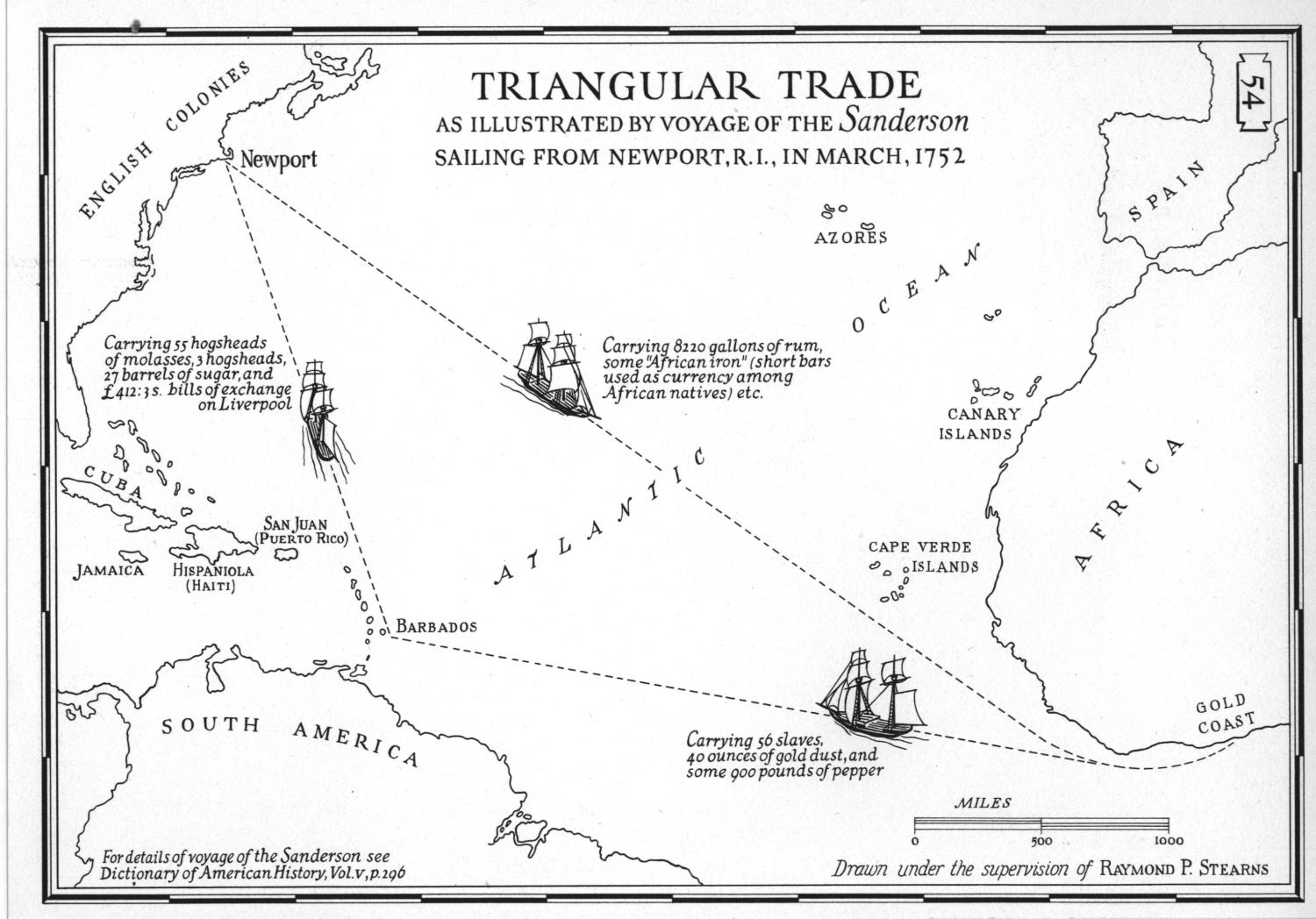
So it's not merely a timely but an evergreen question that the Times is asking today: "When Will The North Face Its Racism?"
In matters of racial injustice, the South has been the center of attention since before the time of the Civil War. But the North, with its shorter history of a mass black population, has only more recently dealt with the paradox of an enlightened ideal coexisting with racial disparity. The protests have become a referendum on the black condition since the Great Migration. “The protests are beginning to wake people up to the idea that the problems are not only there but have been obvious all along,” the historian Taylor Branch told me. “It feels like the South in the 1950s.”Yet the parallels drawn aren't to the South in the 1950s, but to the South at the height of lynching. The parallel between lynchings and police killings of blacks is overblown, as we've discussed before, because even if the rate at which such killing occur is about the same, the population growth means that the rate per black citizen is a fraction of what it was. Still, "it feels like" doesn't require much substantiation: the feeling may not be purely rational, but feelings are often not. Grappling with the problem means both that many in the North may have to acknowledge a greater degree of structural racism than they want to admit to or recognize; it may also mean that some in the black community may have to admit to a kind of objective improvement in the facts, even if there are times when they still feel strongly the sense of oppression.
Shooting the unarmed
A Phoenix anti-cop activist shows surprising flexibility of thought after completing a shoot/don't-shoot training course. It obviously made him rethink what should happen when an unarmed man walks right up into an officer's face.
Photo anti-op
Cut Eric Holder some slack. He was in Paris as the sole representative of the U.S. government in the current crisis, but he had to meet with some senior people. In the meantime a bunch of senior people were marching arm in arm:

Left to right: Greek Prime Minister Antonis Samaras, Spanish Prime Minister Mariano Rajoy, British Prime Minister David Cameron, Danish Prime Minister Helle Thorning-Schmidt, European Union foreign policy chief Federica Mogherini, Paris Mayor Anne Hidalgo, European Commission President Jean-Claude Juncker, Israeli Prime Minister Benjamin Netanyahu, Malian President Ibrahim Boubacar Keita, French President Francois Hollande, German Chancellor Angela Merkel, European Union President Donald Tusk, Palestinian president Mahmud Abbas, Jordan’s Queen Rania, Jordan’s King Abdullah II, Italian Prime Minister Matteo Renzi, Turkish Prime Minister Ahmet Davutoglu, Ukrainian President Petro Poroshenko and other guests.Holder wasn't meeting any of them.
Is this sorry enough?
It's not clear to me from this report that the newspaper used the "s" word, but I'd say this was pretty thoroughly abject: no weaseling.
Magna Carta
A free online course by the University of London will explore the history of Magna Carta, and how the ideas expressed in it -- little things like "no taxation without representation" and trial by jury -- have influenced the world.
I think it sounds like fun. If you want to do it too, you can sign up here.
I think it sounds like fun. If you want to do it too, you can sign up here.
Subscribe to:
Posts (Atom)