Poetry and its Criticism

I was headed towards the Joyce Kilmer Forest yesterday in part because I was reflecting on a discussion with family of his most famous poem, "Trees." I assume you are all familiar with it, likely well enough that you can repeat at least the first line without looking. 

A photo of Kilmer's memorial plaque at his forest, which I took on an earlier visit.

Kilmer died heroically at age 31, killed by a German sniper while scouting enemy lines in World War I. He was a devout Catholic, and died young enough that he still felt his faith in the firm certainty of youth. The moment seems to have been central to both his own fame and popularity in his lifetime, and the disdain directed at his work by critics in more recent years. 

The critic John Derbyshire included "Trees" in an audiobook he recorded of great American poems (it doesn't still seem to be available). In his commentary, I recall that he remarked that Kilmer had written the poem as a joke, to mock the overly sincere mode that was popular in much poetry in the age, and found that it became his own most popular work. I don't know what Derbyshire's source is for that claim; the poem seems to me to be quite representative of Kilmer's work. 

Indeed, what people tend to criticize about Kilmer is just those very qualities. His own society, the Philolexian, holds an annual "Bad Poetry" event in his name. The head of that ceremony wrote in 2013 about his mixed feelings on the subject.
Central to both Kilmer’s work and the prevailing disdain of it is his deep Catholicism, to which he converted after his daughter Rose contracted infantile paralysis. Most of his efforts fairly drip with piety... Every year it falls to me as “Avatar” of Philolexian to kick off the Kilmer event by presenting a biographical sketch of the man. By now, I have my routine down pat. After outlining Kilmer’s life and enumerating his poetic sins, I ask, “But was he really bad?” Invariably the audience shouts, “Yes!” And I roar back, “You’re wrong!”

Kilmer, I inform the snarky undergrads, is what George Orwell in his essay on Kipling called a “good bad poet.” After dismissing most of Kipling’s verse as “horribly vulgar,” Orwell concedes it nonetheless is “capable of giving pleasure to people who know what poetry means.” Admit it, Orwell says. Unless you’re “merely a snob and a liar,” you get at least some enjoyment out of something like “Mandalay.” That’s because it’s a good bad poem, which Orwell defines as “a graceful monument to the obvious....

That’s a fair take on much of Kilmer. Yes, he was proof of Oscar Wilde’s pronouncement that “all bad poetry springs from genuine feeling.” But he could still touch certain chords with crude, shameless offerings like “The House With Nobody in It”:

I never have seen a haunted house, but I hear there are such things;
That they hold the talk of spirits, their mirth and sorrowings.
I know this house isn’t haunted, and I wish it were, I do;
For it wouldn’t be so lonely if it had a ghost or two.

If you insist on rejecting this admittedly hokey notion utterly, never musing that “only God can make a tree” upon beholding a particularly soaring oak . . . well, take your pick. Are you an Orwellian snob or an Orwellian liar?

I am reminded of our longtime companion Eric Blair (how strange to need to mention him so close to the invocation of Orwell) and his position on the First World War. Namely, he holds that war killed Western Civilization -- that it was a mortal wound to its soul, to which it is still slowly succumbing. 

His position is plausible. You can see in the poetry of the era before the war a great civilizational confidence. All sides rode to war on horseback, with at least some of their more famous units dressed gaily in ancestral armor or bright uniforms that recalled the Napoleonic era. Four years later, the aristocracy of all their nations was broken and destroyed; we recall Tolkien, who fought at the Somme, noting that all of the friends of his youth were dead.

Another position on Kilmer is possible: that his poetry is simply good precisely because it manages to bring all things under the eye of the sacred and divine. If a young woman were writing poetry today under the influence of some Guru, it would be thought a mark of her talents if she could find the sacred in ordinary things -- so long as she did so in the light of an Eastern religion, perhaps after her daily yoga flow session. Given that limited change of context, I can imagine such a poet enjoying real popularity among LitCrit circles, perhaps appearing on Oprah or being invited to Goop

It may be that Kilmer seems naive to those born after the great wound of World War I. Yet he was writing after suffering his own great wound, the paralysis and slow death of his beloved daughter. It was that context that brought him to devotion and daily prayer, to the determination to see all things -- yes, even New Jersey transit -- through eyes that reflected on their sacred nature. 

We have discussed here in other contexts the argument from Augustine and Avicenna and Aquinas that, indeed, all things that exist must be at least somewhat good because their existence is sustained by a God who is perfectly so. They were greater thinkers than most, drawing on arguments from ancient thinkers at least as great as themselves, Plato and Aristotle and Plotinus. The position isn't obviously wrong: far from it. It is defended by rank upon rank of reason and argument marshalled by the finest minds in human history.

The disdain and mockery strike me, at last, as a septic corruption likely arising from the great psychic wound. They consider themselves to be sophisticated and not naive, because they can entertain the bitter fruits of despair. It may be the greater art to retain instead the awe, to remain capable of seeing the sacred, the true, and the beautiful. 

Elfdalian

What has been considered a dialect in central Sweden, the form “Elfdalian” is now recognized as a distinct Nordic language. 
Elfdalian is traditionally spoken in a small part of the region of Dalarna, known as Älvdalen in Swedish and Övdaln in Elfdalian. But using linguistic and archeological data, including runes, Elfdalian experts have tracked the language back to the last phase of ancient Nordic – spoken across Scandinavia between the sixth and eighth centuries...

While runes had became obsolete in most of Sweden as early as the 14th century, there is evidence of runes being used in Älvdalen as late as 1909, making it the last place in the world where they were used.

A Lucky Day

I saw two bears today from the back of my motorcycle, and by sunset two bull elk fighting and wrestling with their antlers. I didn’t get pictures because I was riding at both times, but it was lucky even to see them. 

Today I rode out intending to go to the Joyce Kilmer forest in the Slickrock Wilderness, but true to name it was occluded with rain clouds as I approached the Nantahala gorge. So instead I turned West and crossed into Tennessee by Deal’s Gap, more famously known as the Tail of the Dragon. It was a good test for the new bike. I’m sure it is capable of even more, once I have had time to get used to it. 

On the Tennessee side it was warm and still much in autumn color. 

By the Little Tennessee River.

From Foothills Parkway in the west section of the Great Smoky Mountains National Park.

More from the parkway.

Gatlinburg, to fuel myself and the bike.

Above Newfound Gap. 

A good day in the saddle. 

Remember...

SLM

Haywood Heroes

The Borrowed Band singing a Haggard tune. The big flag is hanging off a fire pike run through the ladder of Waynesville Tower 1. 


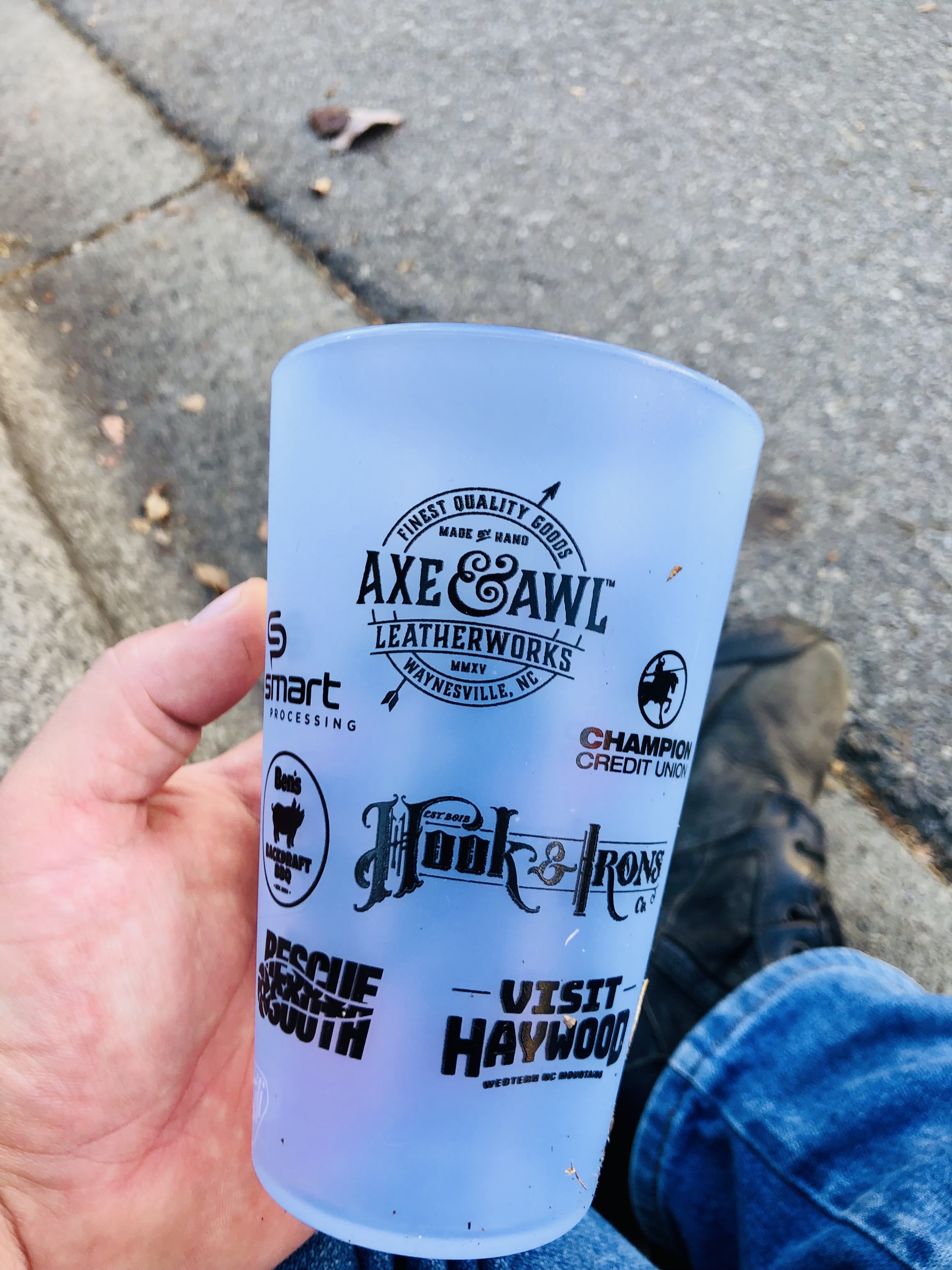
It is a free concert, but they’re selling stuff to benefit the local fire/rescue service. I bought this silicone pint mug.

Several fire-themed businesses are supporting the event.

It turned into a pretty afternoon for the event, November notwithstanding. There are a bunch of benefit concerts around this Saturday. I came to this one, but several other ones sounded good as well. 

My November Guest

A poem by Robert Frost.  
My sorrow, when she’s here with me, 
     Thinks these dark days of autumn rain 
Are beautiful as days can be; 
She loves the bare, the withered tree; 
     She walks the sodden pasture lane. 

Her pleasure will not let me stay. 
     She talks and I am fain to list: 
She’s glad the birds are gone away, 
She’s glad her simple worsted grey 
     Is silver now with clinging mist. 

The desolate, deserted trees, 
     The faded earth, the heavy sky, 
The beauties she so truly sees, 
She thinks I have no eye for these, 
     And vexes me for reason why. 

Not yesterday I learned to know 
     The love of bare November days 
Before the coming of the snow, 
But it were vain to tell her so, 
     And they are better for her praise.

Cold November Rain

Two rock ballads, unusual fare for the Hall, both employing grey November skies and rains to talk about death. The first one was about a woman who killed herself because she contracted HIV, which these days is treatable and may soon be preventable. In her day it was a death sentence. AVI was just talking about that. She was a real woman; her rage at God and suicide both are terrible to remark on these feast days pointed at the dead. 


The second one, also from the early 90s, is a power ballad by Guns & Roses with a murky plot in which a young woman marries, dies, and is mourned over the course of a lengthy guitar piece.


It is chilly today, and grey, and rainy. November came in true to form. 

The Feast of All Saints

The first of November has been the date for this feast since Pope Gregory III, though the feast itself is older than that. The National World War I Museum notes the significance of both this feast day and tomorrow's, the Feast of All Souls, especially in those areas of Europe where that war was fought. Ironically the armistice ending that war did not come until the 11th of November, which here is now Veteran's Day; those wishing to honor the departed had to wait a little longer to enjoy the safety and peace that would enable them to build monuments to the dead.

Holding Breath

The stock market is way up, but hiring is way down. One supposes that is because investors believe things are going to get better, but they're waiting to be sure of it before taking on the significant costs entailed by hiring employees.

Richard Fernandez helpfully recasts the current moment in mythic terms.
They say there are only two kinds of stories: ones that begin with a man leaving on a journey and ones that start with a stranger riding into town. But there is a third type: one about a man who goes on a journey and returns four years later with a bunch of formidable-looking strangers.

In that genre, the townsfolk know the significance of these arrivals and understand the meaning of the sudden burst of activity down at the Hall, the heightened vigilance, the preparations for defense. They cast anxious glances at the calendar, reckoning the time 'til Nov. 5, when they expect things to come to a head. Instinctively they gather into groups, the loners staring out of windows, wondering....

The people of the town doubted that the newly arrived strangers fully comprehended the power of the Hall and understood its monstrous strength and resilience. Could they know that it could be razed to the ground yet recover the instant they left? Did they suspect that many a man who believed himself the site’s new master would awake at night to find themselves covered with vines sprung overnight from the ground and borne whence they were never seen again? November 5 would be their doom.

But that is the appeal of stories involving men who leave on journeys and return as strangers with mysterious companions. They have been somewhere and perhaps returned with knowledge that the townsfolk and maybe even people in the Hall do not know. Or else why would they have returned?

Much of what he says in the full piece explains why it's almost impossible to believe that the system will accept a defeat; all of its powers will be used in the interest of self-preservation. It is vast, it is rich, it is powerful, and it has deep roots among power structures themselves old. These include the governments of most of the major cities, where voting has been corrupt at least since Tammany Hall, and probably since voting started.

The power structure's only weakness is that part of its self-preservation entails maintaining the illusion among its supporters that it has been freely chosen. That illusion remains in effect. The Washington Post this week did a survey of supporters from both sides, and finds that it is the Democrats who would be troubled more if they lost, but also the Democrats who believe the result will be fair. 

Trump supporters don't expect the election to be fair, so they won't be as surprised -- or as hurt -- if the result allows their opponents to remain in power. They'll know they've been cheated, not rejected. Because the illusion of consent has been retained among the supporters of the power structure, losing would create a psychic effect of rejection of their model by America itself.

The system could defend itself more powerfully by discarding the illusion, and like Egypt just openly stating that only certain candidates will be allowed to win. That would do away with the challenge, but also a major source of the system's power -- somewhat like destroying the Ring unmade Sauron and his challenge to the freedom of the age, but also destroyed the work of the Three and the ability of the world to sustain magical things like elves. The system seems to think of its challenger as being Sauron-like in evil, given their choices of analogies for him. Will they destroy the Ring to stop him? The loss of this illusion would protect the powerful, but they would retain only a shadow of their power, only what they could hold onto by naked force and coercion.

Can the system be defeated? Is the need to retain the illusion strong enough to limit the amount of cheating to an amount that can be overcome? We will find out in a week or so.

Do bots program her teleprompter?

It's bad enough that she doesn't seem to have a thought in her head, but what about her puppetmasters? "Let's move forward and find out where we are" ranks with "we have to pass the bill to find out what's in it." Sensing that she might be losing the crowd, Harris reverted to her reliable applause line, "You know, like abortion!"

Look Thy Last Upon October

Always my favorite month, October this year was beautiful and exciting. I’m grateful to have lived through it. 

All-Hallows Eve pumpkin, carved by my wife.

My mother’s little dog, Tubby.

UPDATE: 
The pumpkin seizes control of a fire truck.

Headed for the Harbor


Newspaper of Record

Headline: “Biden Calls On Deplorable Garbage Nazis To Tone Down The Rhetoric."

That ship has sailed, I believe. 

More on Communication in an Emergency

A couple of weeks ago I posted my thoughts about various means of communication in an emergency. Before that, I had posted about Thomas Witherspoon, a ham radio operator in Swannanoa, NC, whose mountain community was caught in Hurricane Helene.

Witherspoon has a new post up where he discusses his own community's plan to prepare for communication in future emergencies. He discusses some options I did not, including Meshtastic and PLMRS, and explains why his community settled on GMRS. He explains it all better than I can, so check it out over there if you're interested.

He has also continued posting on the recovery there and has one link that will take you to all of his recovery posts.

In the comments in my original post, Janet (who knows a lot more about this than I do) said in the next few years our normal cell phones will be capable of satellite communication, so all of this will be easier when that rolls out. Until then, I still think satellite communications are best if you can afford it, and GMRS is probably the best cheap radio option when the cell phones are down, unless you want to study for and take the ham test, and maybe even then depending on where you live. For comparison, the Garmin InReach is about $400 with a $15 / month subscription. Residential Starlink is $349 for the equipment and $120 / month subscription. GMRS handheld radios start at $15-20 each and require a $35 license (but do not require a test) renewable every 10 years.

If you want to look for GMRS repeaters to see what's around you, you can go to https://mygmrs.com/.

If you want to look for ham radio repeaters, check out https://repeaterbook.com/.

All of that said, the ham radio technician license is pretty easy. If you are at all interested, it's worth getting the license and trying it out. If you would like recommendations about how to study for it or have questions about it, feel free to ask in the comments.

Outlawed Tunes on Outlawed Pipes

I’m happy with my birthday present. Today I mounted Cobra pipes on it. 

These pipes are illegal except for racetrack use in California, but here in the mountains of Western North Carolina the opinions of California legislators are a source of great humor. 


A Brutal Ad

This ad is oddly framed, because it's mostly a return to Tulsi Gabbard's initial criticism of Harris: that she was evil as proven by her actions as a prosecutor. That's what most of the ad is about, and most of the voices you hear are female: her own, or those of a woman whose life she ruined or a daughter of a mother whose life she ruined. 

Why, then, does the ad begin and end framed as a masculine complaint against Harris? It's a three minute ad, but only the first 15 seconds and the last seventeen seconds are about the frame. Discarding the frame entirely, the ad remains devastating and compelling -- in her own words she tells you what her intentions are, and her victims spell out what it meant to them that she behaved as a prosecutor exactly the way she says she did. 

"As men and protectors of women and children," it closes, "you are simply a risk we are not willing to take." 

Sisters

The work continues.
When Father Richard Sutter, a former U.S. Army Airborne Ranger Infantry Officer, summoned a handful of his strong-backed St. Gabriel Catholic Church parishioners for what he called a recon mission to Swannanoa, North Carolina, a community devastated by Hurricane Helene, we did not hesitate.

Once there, we were surprised to learn that the earlier-arriving boots on the ground were not boots at all, but sandals, and small ones at that. Sisters of the Missionaries of Charity were already at St. Margaret Mary Catholic Church, our designated rally point, by the time we gents had arrived in town.

I was aware of the Missionaries of Charity and their service to the poorest of the poor. But I’d never seen them in action, and certainly never expected to do so two hours from my home. The strength of the hurricane notwithstanding, theirs was a masterclass display of the most powerful force in the universe: love.

The author doesn’t intend this as a comment on gender or gender roles, but it’s interesting to see that come out in a natural way. The important thing, though, is the work of helping people.

UPDATE: A video from the NC DOT showing work they're doing to 'put the river back so we'll have a place to rebuild the road.'

Satire/serious?

Powerline's Week in Pictures featured this headline, which I assumed was a joke: "New Study Reveals That People Who Make Good Decisions Have an Unfair Advantage." No, it's a real article title, but I will say that the point is not necessarily that making good decisions is itself an unfair advantage. The authors appear to be arguing that white supremacy unfairly endows the wrong kind of people with a magical power of making good decisions, and in that sense the healthy results of the good decisions are an unearned benefit. The argument still gets a high Lame-O-Meter rating from yours truly, but it's not quite as absurd as the headline implied.

Here's the crux:
[T]hose who make good decisions tend to enter a virtuous cycle: good decisions lead to better outcomes, which in turn provide more opportunities and resources to make even better decisions in the future. This compounding effect also leverages white supremacy to result in an ever widening gap between those who make consistently good choices and those who do not.
The idea is that people make bad decisions because they lack the opportunities and resources to make good ones. One example might be starting a savings account early in life and benefiting from the power of compound interest.

I'm afraid the argument leaves me unmoved. Granted, the more money you have in youth, the easier it would seem to be to set some of it aside as savings. Honestly, though, it's not a pattern I've ever detected in real life. Whether people live within their income appears to be remarkably untethered to whatever their income happens to be. Some people are dirt poor and manage to make ends meet and set aside money for a rainy day; my Depression-Era parents were a good example. Others are rich as Croesus and consistently overspend. It's not a question of how much you earn but of your ability to see reality clearly and control your own impulses: if you can't afford it, you can't afford it, no matter what you think you deserve to be able to afford.

World War... VII?

Since people stopped keeping track after II, it's hard to say how many more such conflicts have occurred; the GWOT was supposed to have been IV, as I recall from twenty years ago. The current conflict is at least six.

That the current conflict is a world war became crystal clear this week when the WSJ printed proof that Russia has been providing targeting solutions to the Houthis. Such solutions have been used for attacks on shipping, allowing the almost-closing of the Red Sea global supply route. The Houthis have been presented as chiefly an Iranian proxy, and indeed they are also that; but they have also been carrying on a Russian effort to punish the rest of the world for supporting the war in Ukraine. 

And indeed, such a move by Russia is entirely fair play within the rules (such as they are) of warfighting. It isn't even aggression, but reprisal: the United States has been providing targeting solutions to Ukraine that have allowed damaging attacks on ships offshore (and many other targets). The United States and NATO countries have also been providing weapons to Ukraine, though these come with restrictions on just how far the strikes with those weapons are allowed to penetrate. 

We could see an end to this war starting this week, if everything goes right. As this podcast linked by AVI notes, the Iranian ballistic missile attacks on Israel demonstrated a capacity to cause damage that Israel cannot prevent even with US efforts. Last night's strikes by Israeli F-35s demonstrated a parallel capacity that Iran cannot stop. Both parties stopped short of damaging their opponents' energy sector -- Israel has only a handful of major power plants; Iran's oil and gas fields, its shipping ports, and also its nuclear technology facilities are likewise vulnerable. Both sides now know their opponent can hurt them fatally if it decides to do so; both sides also know that doing so will not disable the enemy's reprisal blow, as the time delay between suffering the damage and dying will not prevent the counterstrike from occurring. They are both heavily incentivized to stop fighting, according to the once-doubtful logic of Mutually Assured Destruction. 

Especially if the election here brings about a regime that will seek peace in Ukraine on terms at least minimally acceptable to Russia, the closing of that theater will also reduce pressure on the Middle East. The Houthi could lose their capability to effectively close the Red Sea; weapons shipments to Hamas and Hezbollah could be reduced; the proxies themselves are badly degraded already. The war could close with minimal Russian gains in Ukraine balanced by massive strategic losses in manpower and equipment, with Iran's proxy war network exhausted for years, and Israel relatively secure but newly chastened about its ability to escalate without consequences. 

Peace is at hand. Maybe; bad decisions by anyone could tip the scales towards another round of escalation instead. That could be ruinous as only World Wars can be, especially since the China/Taiwan theater hasn't tipped into action yet. One cannot hope in the wisdom of elected officials, nor in the unelected ones; but perhaps we might hope, at least, that their sensitivity to pain will suffice. 

Voices of sanity

Mark Halperin has been getting good press today. I found this YouTube broadcast featuring Mr. Halperin and a campaign pro from each party, with time set aside for viewers' questions. There are annoying signal glitches with one of the pros, but the information that gets through is interesting and delivered civilly. Around the 29:00 mark, the public comments give some excellent insight into what motivates people to choose a candidate. The first speaker is a libertarian who is disenchanted with the Democratic party, sat out the last two presidential elections, and now has concluded she must vote for Trump. The next speaker is a strident Harris supporter who can't articulate what's good about Harris and is obsessed with outrage over Trump. Halperin works hard to keep the discussions on track, very gently attempting to steer the conversation back to particulars rather than extended venting.

The dominant concern is that Harris will not reveal her policy.

I'm seeing a lot of commentators begin to emphasize the need to prepare for one's candidate to lose next month, no matter which candidate each of us supports.

Levers of power

I probably was drawn to this Zachary Faria piece because I am angry with Biden and the party that propped him up before they ditched him in order to position his even worse VP for success. But it's also interesting as an illustration of the sources of true power. No doubt the office of the President is a formidable tool, but the human being parked there still has to be able to use the tool in order to get any sizeable fraction of his country, or the wider world, to jump when he says "frog." Devastating tyrants like Hitler, Stalin, or Pol Pot can't do spectacular damage without plugging into a widespread and elaborate social system that contains many individuals who are willing, for whatever reasons and to various degrees, to go along.
“No one is listening to [Biden] anymore, and his words have little power and less reach.” It was clear since he dropped out of the race that Biden was going to be an absentee president, but to have people who work for him admit that now “no one is listening to him” is a damning indictment of Biden when he is still the one ostensibly in charge of the executive branch for another three months.
This is what will cement Biden’s legacy as a failure. Biden spent three years ruining everything he touched: making inflation worse, botching the withdrawal from Afghanistan, watching wars break out in Ukraine and Gaza when he inherited a peaceful global situation, and running moral interference for terrorists while antisemites swarmed college campuses. There is not one aspect of Biden’s presidency that could be described as successful.
Meanwhile, the candidate I hope is going to blow him out of the water in a few days is literally Hitler, according to an unimpeachable source who discovered this five years, kept working for him afterwards until he was fired, then stayed quiet until a couple of weeks before the election. So we're definitely not to conclude that we're simply being lied to 24/7 and should decline to be alarmed or even interested in the next piece of garbage that is served up breathlessly to us.

On a lighter note,
When he left McDonald’s, [Trump] promised, if elected, to fix the ice cream machine and make Taco Bell pay for it.

Curses Foiled Again

Red State reports on Reddit witches:

In the subreddit "r/WitchesVsPatriarchy," user "feelmycocobeats" claims that witches have been mentioning that doing spells "directly against tRump are not as effective as we might hope as he seems to have some kind of protection around him." 

The user then begins to strategize about spell casting, saying a "freezer spell against Project 2025 would likely be useful," but even if what she was suggesting was actually based in reality, it wouldn't matter because Project 2025 isn't Trump's, it's the Heritage Foundation's plan. Trump's plan is Agenda 47. 

The user then suggested "uplifting" spells to help Kamala Harris and the Democrats.

This is apparently an ongoing thing. There are news articles at least from 2017 and 2020 about this. 

Hanging in there

My friend's grandson, the micro-preemie born at something like 23 weeks, is still doing pretty well for a micro-preemie. His weight gain stalled, but now he's begun to gain again. Although he's still tiny, not quite 2 pounds, we try to remember that he wasn't due to be born until December. His lung function has been surprisingly good from the start.

'The Remarkable Redneck Airforce of Asheville'

Run out of the Harley-Davidson shop, no less.
The relief effort after Hurricane Helene is powered by private citizens, and volunteers have discovered that it's better to ask forgiveness than permission.

At a Harley-Davidson dealership in Appalachia, one expects to encounter the occasional roar of some serious horsepower. 

Less expected is the sight that has accompanied that sound in Swannanoa, North Carolina, for the past three weeks: helicopters, many of them privately owned and operated, launching and landing from a makeshift helipad in the backyard of the local hog shop. According to the men who organized this private relief effort in the wake of devastating floods unleashed by the remnants of Hurricane Helene, more than a million pounds of goods—food, heavy equipment to clear roads, medical gear, blankets, heaters, tents, you name it—have been flown from here to dots all over the map of western North Carolina.

"We're not the government, and we're here to help," says one of the two men standing by the makeshift gate—a pair of orange traffic drums—that controls access to and from the Harley-Davidson dealership's parking lot and the piles of donated items neatly organized within it. "We can do it quicker, we can do it efficiently, and we genuinely just want to help our neighbors." He identifies himself only by his first name and later asks that I don't use even that. It's an understandable request, as what he's doing is probably not, strictly speaking, totally legal. 
From Reason magazine, the story of bikers and helicopter pilots and former Green Berets, churchgoers and the 101st Airborne falling in on and taking orders from civilian volunteers who know better where they're needed. 

It's everything you ever wanted to believe about America, and it's really true. Read the whole thing.

Cave Emptori

Long-time Milblogger CDR Salamander has a reminder for anyone who might think about bothering now-balding Generation X gentlemen shopping at Home Depot.

Addendum on Eating

Not only do you need to eat living things, it turns out that your brain needs you to eat meat. Refusing to do so is possible, just as refusing to eat at all is possible; but either entails harm to one's self instead, on a greater or lesser basis. 

The Big Leak

Probably the biggest surprise in the story about the US intelligence community leaking classified data on Israel's attack plans is how non-surprising it is. Look at the classification markings on the document:


Those of you with the right kind of experience will know what that means; those of you with very good memories will remember "TK" from Hillary Clinton's classified email scandal. In fact I'll reproduce that post's bit on classification markings because almost all of them appear here as well.
TOP SECRET is information whose release could cause "exceptionally grave damage to the national security." No one may access this information who has not been through the very thorough background investigation, and even then you must demonstrate need to know.

SI means "Special Intelligence," and is a subset of SCI, or "Sensitive Compartmentalized Information." This information is tightly controlled, so that not only do you need to have need to know, you must have been properly read into the specific program from which the information comes.

TK is "Talent Keyhole," which governs our best aerial and satellite reconnaissance. It is always SCI information, and is extremely sensitive because it gives enemies a sense of exactly how good our reconnaissance technology has become.

NOFORN means "not releasable to foreign nationals." This caveat is discouraged because "NOFORN" means not the British, not the Canadians, not the Australians, not New Zealand. You can mark the data to be shared with the other Anglosphere powers, our very closest allies, with the caveat "FIVE EYES," or "FVEY". We have a treaty with them that governs the controls of sensitive signals intelligence. If the Inspector General has determined this item was properly marked NOFORN, it means that the information was so sensitive that we shouldn't share it with the British or the Australians in spite of that treaty.
RSEN means information that is restricted due to special sensitivity, requiring specialized handling methods (which, needless to say, do not include dumping it into social media). FG ISR means 'foreign government intelligence/surveillance/reconnaissance,' which is mostly a warning that some of the data is coming from allies sharing things with us rather than something we produced ourselves.

Note that the overall report is classified NOFORN even though most of the quotes are releasable FVEY, but if you look through the document you can see that some of it is only releasable to Great Britain (GBR), and a couple of paragraphs are not releasable even to them (NF). There is likely some collection method for that paragraph that we aren't comfortable even letting Great Britain know that we have; also, one kind of missile being discussed isn't even in the open sources as a thing that exists ("Golden Horizon"). The media reports about this are only guessing what is being discussed -- that's how secret these documents are meant to be. 

Yet who can be surprised that there are people within the US government, including the intelligence community, who would leak such information if they thought it might hamper Israel? Clearly the ruling party includes many who are outright opposed to Israel, not just to Israel's war; some of their electoral difficulties arise from an internal dispute over what should be done about all this. 

By the way, note well Mr. Schindler's explanation of who is responsible for investigating this leak:
Whether the Biden-Harris administration possesses the political will to let the counterspies do their job is another matter. In normal times, such a high-profile investigation, touching multiple agencies, would be coordinated by the National Security Council, specifically by the NSC’s director for intelligence programs. That big job is currently held by Maher Bitar, who in his position has access to every IC secret. He is no hardliner towards Tehran. When he was a student at Georgetown University, Bitar held a leadership position with Students for Justice in Palestine, a radical group that’s an apologist for HAMAS (itself an Iranian proxy) which has coordinated anti-Israeli protests at campuses nationwide during the Gaza War.
Emphasis added. 

One can be opposed to Israel without being in any way disloyal to the United States, of course; one might even be a former leader of a Hamas-aligned student group without being a traitor to the United States (although there are limits on how far one can go with such alignment without breaking criminal laws, since Hamas is a designated foreign terrorist organization). 

Leaking American secrets, however, is inherently disloyal unless the secrets themselves show the government betraying its duty to the American people -- in that case only, good citizenship could include leaking secrets so that the public can know and take action to repair the matter, as the citizens and not the government are the proper sovereigns of the United States. Here, where the leak endangers American collection methods that were merely being used to inform ourselves internally about what Israel is up to, there's no such excuse. 

Yet one has to wonder, as Mr. Schindler puts it, whether there will be 'the will' to prosecute this matter as it deserves. 

Abortion as The Fundamental Freedom

What constitutes a 'fundamental freedom'? That question struck me when reading this account of a query about whether or not to provide a religious exemption in abortion laws, e.g. one that would allow a surgeon to refuse to perform one for religious reasons. (Hat tip: D29)
NBC News Senior Washington Correspondent Hallie Jackson asked, “So, is a question of pragmatism then, what concessions would be on the table, religious exemptions, for example, is that something that you would consider if the Republicans control Congress?”

Harris answered, “I don’t think we should be making concessions when we’re talking about a fundamental freedom to make decisions about your own body.”
I think we may be approaching the point at which abortion is the only 'fundamental freedom' recognized by the one side of the debate: freedom of religion, for example, isn't 'fundamental' if it always and everywhere must give way to this other freedom. 

Yet if one of the things that one might make decisions about doing with one's own body is having an abortion, another such thing is performing an abortion. Surely if the fundamental freedom is the right to make decisions about one's own body, it is just as fundamental to will -- for any reason -- that your body not be involved in killing* (whether a fetus, a child, or anyone at all).

Another candidate for 'fundamental freedom' might be the freedom not to be forced to do such things against one's will and/or conscience. That seems inadmissable even if it's not religious, here: this sort of thing is why I say that the only 'fundamental' freedom must be abortion, because it not only mustn't be restricted by law, it mustn't admit of (say) some physician having the freedom not to participate. 

(Or else our physician must exercise that freedom very early, as for example by not choosing to become a physician but pursuing a different line of work. This is similar to how women's 'freedom of choice' here entails unrestricted abortion rights, but men's 'freedom of choice' entails only the right to choose not to have sex that might lead to a pregnancy in the first place -- and this from the party of equality.)

It is striking that this 'fundamental freedom' actually entails a power to compel others to be unfree in exactly the same way. That kind of logical contradiction in the will would offend Kant; if 'the maxim that could be willed as a universal law' is 'everyone should be free to make decisions about his/her own body' then the maxim entails a contradiction, and is thus fundamentally immoral on his model of ethics. Of course, Kant was already against abortion, so perhaps that's not very telling.**

Still, it is noteworthy that the 'fundamental' freedom they have adopted is one that requires other people to be unfree. But perhaps that too is nothing new: after all, abortion necessarily entails removing the child's freedom to make any decisions about what to do with his or her body.


* In fact this turns out to be physically impossible to universalize. One cannot avoid killing something with one's body: one has to eat, for example, and only living things can provide the advanced carbon chains like proteins that we need to survive. One could choose not to eat, but then one is still using one's body to kill something, i.e., one's self. A fact of the reality we inhabit is that killing is unavoidable, and one is simply making decisions about what to kill rather than whether to do so. You can certainly choose not to kill other human beings, but you cannot choose not to kill.

To continue with Kant, for example, he treats ethical maxims that cannot be universalized as inherently immoral because they are out of order with reason: this would be one of the lesser immoralities, one that cannot be universalized because of a practical fact rather than because logic itself entails a contradiction. Still, taken seriously this fact makes pacifism immoral on Kantian terms (and indeed Kant is pretty heavily in favor of killing, as long as the state does it according to its laws, as he explores at length in the Doctrine of Right of his Metaphysics of Morals).

On a natural theological approach, since God made the world and its fundamental laws, a religious reading of this problem strongly suggests that God wants us to kill -- and indeed, this is also supported in scripture in all the major monotheistic religions, which give instructions about how and what to kill and eat. Christianity has the scripture in which those sorts of rules are set aside as a dispensation, but that doesn't lead to a more general pacifism from the Prince of Peace, but a wider permission to kill and to eat. 

This is probably a bigger and more interesting problem than the one that was actually today's topic.

** Abortion and infanticide he condemns outright and absolutely, but he does suggest that in the case of the unborn child it is an immoral act that no one has a right to punish: the child was not yet a member of any legal community, on his conception, so no legal community could punish its murder. That is not obviously logical to me, but he clearly thought that whether 'personhood' or 'humanity' started at conception, 'membership in a polity' began at birth. 

Hay for My Horses

Smoky Mountain News reports on another massive volunteer effort to help with hurricane relief. An underappreciated aspect of the storm is that it upset the food crops of livestock, and not just in the short term: the disruptions will be felt for at least a year. A livestock yard in Haywood has become another aid distribution center, this time for the beasts. 
Although the pens normally used to hold animals awaiting their run in the sales arena haven’t held much livestock in the weeks following the flood, they are packed with tons upon tons of all kinds of feed. And that’s in addition to the dozens of round bales and hundreds of square bales of hay at the south side of the building.

The whole thing morphed several times as it grew, and what started as an effort to provide for people who couldn’t provide for their livestock in the wake of the storm now coordinated deliveries of medication and oxygen, tents and sleeping bags, clothes and food.... In this case, because of the magnitude of the disaster and the large area affected, nonprofits such as Fleet of Angels and The Sanctuary at Red Bull Run took note of the operation at the WNC Regional Livestock center and started routing donations there.
Read the full report for more, including interviews with additional American volunteer aid groups, donors, and workers at the livestock center. If you're in a position to assist, you could contact those groups: there's a list in the article of the most current needs as of time of print. You can also follow this link if you want to try to help online.

I've mentioned before that Smoky Mountain News is a good outfit as journalism goes, and this article shows what I like about them. It's workmanlike reporting, getting out information that is informative and also useful to those who want to help. To paraphrase Beorn, if all journalists could tell as good a tale, they would find me more welcoming. 

The Redcoats are Coming

Foreign election interference “for many years” confirmed, on behalf of the Democratic Party. 

Assisted Suicide #5 Canadian Death Cause

This study doesn't capture the whole truth, because it doesn't consider abortion. In the United States, abortion is the leading cause of death of Americans assuming that unborn Americans count as Americans.  It kills more Americans than cancer or heart disease; some years, more than both together. I'll bet that's true in Canada, too.

It's amazing how slippery this slope is: allowing people to kill other people they find problematic is always hugely popular.

Democracy in Action in Georgia

In my old 11th Congressional District, where I lived for several years, the Democratic Party elected a candidate in a democratic primary who has some conservative values. They are now running a write-in campaign against their own candidate in response.

The thing is, you couldn't possibly win the 11th District without some conservative values. It includes some of the wealthy northern suburbs of Atlanta, where all the conservatives moved in the 70s-90s, and stretched well up into the north Georgia mountains (the part I have lived in being there). No candidate without such values stands a chance. So the small-d democratic primary process worked: it identified the Democratic candidate most likely to win in a very conservative district. 

There's very little evidence of faith in small-d democracy left in the Democratic Party, I fear.

Old Fort

Report from Old Fort is that it’s not doing well. If any of you are still looking for places to help, they seem to need it. We’ve begun gathering supplies for them, but there may be better ways of reaching them from where you are. 

Blowing Rock

Up on the north end of the state, my favorite little mountain town of Blowing Rock is having trouble drawing visitors. October is normally one of their best months, with all the leaf traffic; this month, it's pretty bare. 

I go up there when I go to the Grandfather Mountain Highland Games, as it's just a few miles from the mountain. When riding the line up to DC, I always try to stop over there. I imagine it's quite gorgeous right now. If you're up on that end of things, try to stop by. Be sure to eat at Hobbit Mellow Mushroom pizzeria. 

Old Glory

Amused by the Althouse/WaPo/Atlantic fray over the semiquincentennial (yes, really), I went to look for the 1939 classic cartoon about the Pledge of Allegiance. The Pledge itself was controversial, being authored by a Socialist and having in it a dedication to the union being "indivisible," at one time a very controversial point (as, indeed, it deserves to be separate from the older issues around why it once was: a union that you cannot leave is a prison, not an exercise in free association but a sort of domination by whomever comes to control it).

Ironically, the only full version I saw on  YouTube is dubbed into Ukrainian (and even that version seems to hang up after a while). I suppose Ukraine has more reason than many Americans to feel patriotic about us and our traditions just now.


I wanted to watch it again because the 1939 version of the story -- drawn up amid other American disputes in the run-up to World War II -- might be worth considering. This was the part they thought was uncontroversial, after all: Paul Revere's ride, the Revolution, the Westward Expansion and Manifest Destiny. If I recall correctly, it elided the Civil War into a dispute not much explored, but that was presented as having been resolved by the Gettysburg Address (another uncontroversial as a popular American moment).

To do something similar today, you'd have to cut out everything after the Revolution; and even before then, you'd have to already be addressing the controversies over the Western Expansion, which after all began with General Lachlan McIntosh's efforts in the Ohio River Valley during the Revolution (or even earlier, with British colonialism).

On the other hand, the exercise does show that the nation's history has always been more controversial than we like to remember. Just the other day I mentioned Thomas' Legion of Indians and Highlanders, which is a good example of how much more complex the history is than fits either narrative: 
  • The simplified 1939 version of history had the British as the Bad Guys in the Revolution, Westward Pioneers as the Good Guys and Indians as the bad guys, the Union as the Good Guys and the Confederates as Misguided Sons and Daughters; 
  • The revisited ~1969 version has the British as the Bad Guys for being Settler Colonists, but the American Revolutionaries as also Bad Guys for the same reason; Native Americans as the Good Guys; the Union still as the Good Guys while fighting against slavery, but the Bad Guys while fighting against the Native Americans. 
  • Yet the Cherokee were on the British side of the Revolutionary War (Bad!) and then the Confederate side of the Civil War (Bad!). Nevertheless, they have to be shoehorned into the Good Guys side because they were Natives (Good!).
None of those unified views of American History really works out. Literally the same people who won the war against slavery, Sherman and Sheridan and Custer and their troops, are the ones who fought the war that the later movement wants to call a "genocide" against Native Americans. The same people are the heroes and the villains. In the Revolution sometimes too: Thomas Jefferson is at once the author of the Declaration of Independence, and a slaver who forced Sally Jennings into a secret adulterous affair that lasted for many years. 

Also other American conflicts: Jim Bowie, hero of the Texas revolution and martyr of the Alamo, smuggled slaves into the United States and ran a land fraud operation; his sometime partner in slave-smuggling, the pirate Lafitte, was a hero of the War of 1812. That whole business was so confused that when John Wayne wanted to do the Alamo, he adopted in the Iliad as his model instead of using the real historical figures at all.

We could do the same thing, reaching for mythology since the history is too complicated. Fighting over who wore the white hats in American history is otherwise not going to be a clean exercise. The truth is more interesting, but there's a lot of accepting one ends up having to do about how flawed even the best of humanity can be.

Life in a comedy sketch

From a Twitter report on remarks Elon Musk is giving today:
"I got a bunch of nutty stories. SpaceX had to do this study to see if Starship would hit a shark. And I'm like... it's a big ocean. There are a lot of sharks! It’s not impossible, but it’s very unlikely. So we said, 'Fine, we’ll do the analysis. Can you give us the shark data?' They were like, 'No, we can’t give you the shark data.'
Well, then, okay, we’re in a bit of a quandary. How do we solve this shark probability issue? They said, 'Well, we could give it to our western division, but we don’t trust them.' I’m like, 'Am I in a comedy sketch here?!'
Eventually, we got the data and could run the analysis to say, 'Yeah, the sharks are going to be fine.' But they wouldn’t let us proceed with the launch until we did this crazy shark analysis.
Then we thought, 'Okay, now we’re done.' But then they said, 'What about whales?'
When you look at a picture of the Pacific, what percent of the surface area do you see as whale? If Starship did hit a whale, honestly, it’s like the whale had it coming, cause the odds are... so low. It’s like Final Destination: Whale Edition.
And then they said, 'What if the rocket goes underwater, then explodes, and the whales have hearing damage?' This is real!

US 276 & NC 215

In an update to a post a few below, I mentioned that I was surprised by the Haywood County statement that a couple of our high mountain highways were back open. I decided to scout them this afternoon on the bike, and can report on the veracity of that claim.

I decided to ride over to Brevard, and then to scale US 276 from that side to Wagon Road Gap, where I entered Haywood County. First of course, I had to get to Brevard.

Entry to Wolf Gorge, off NC 281.

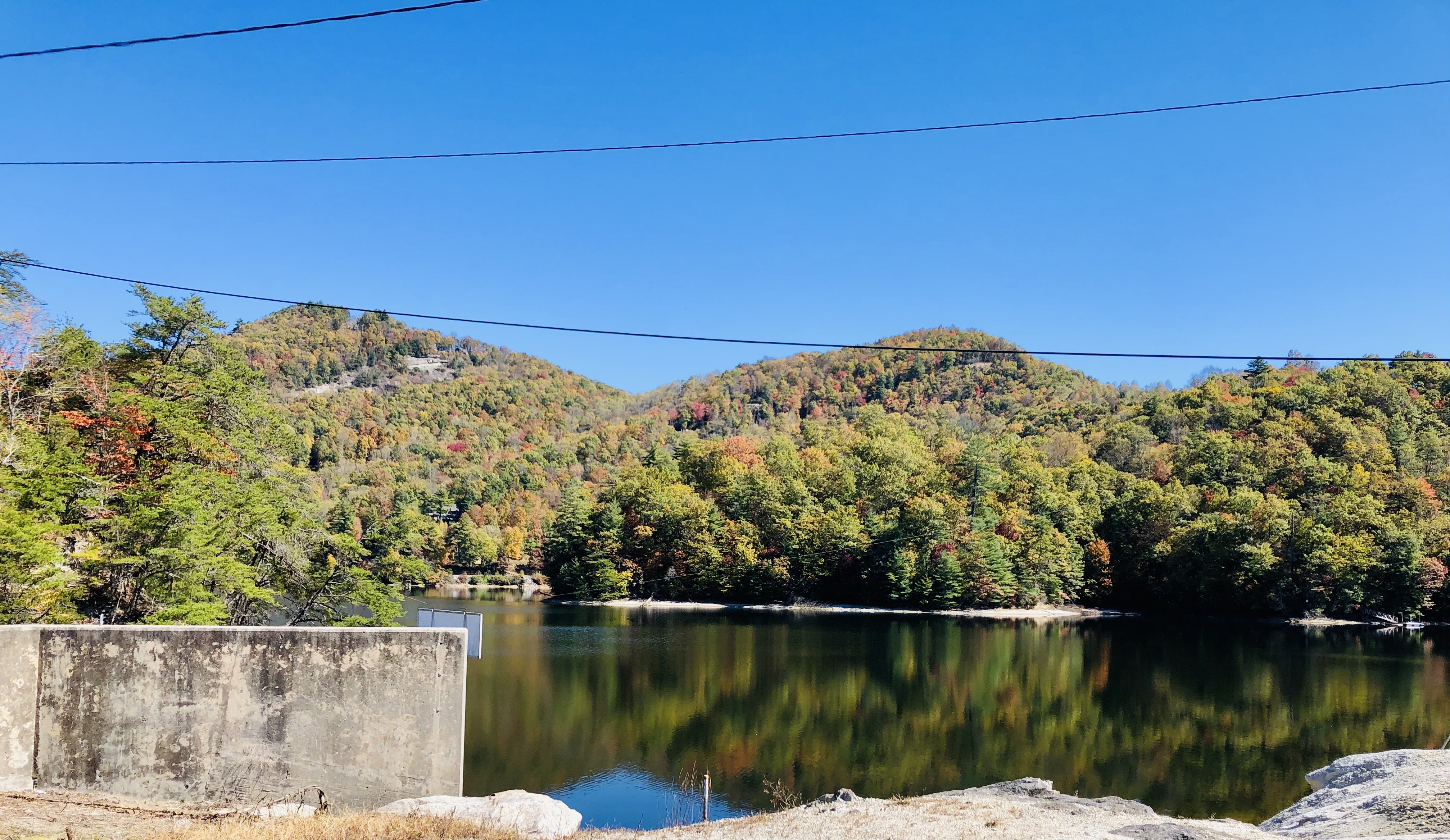
Wolf Lake, right by the powerhouse (which is why there are so many electrical wires).

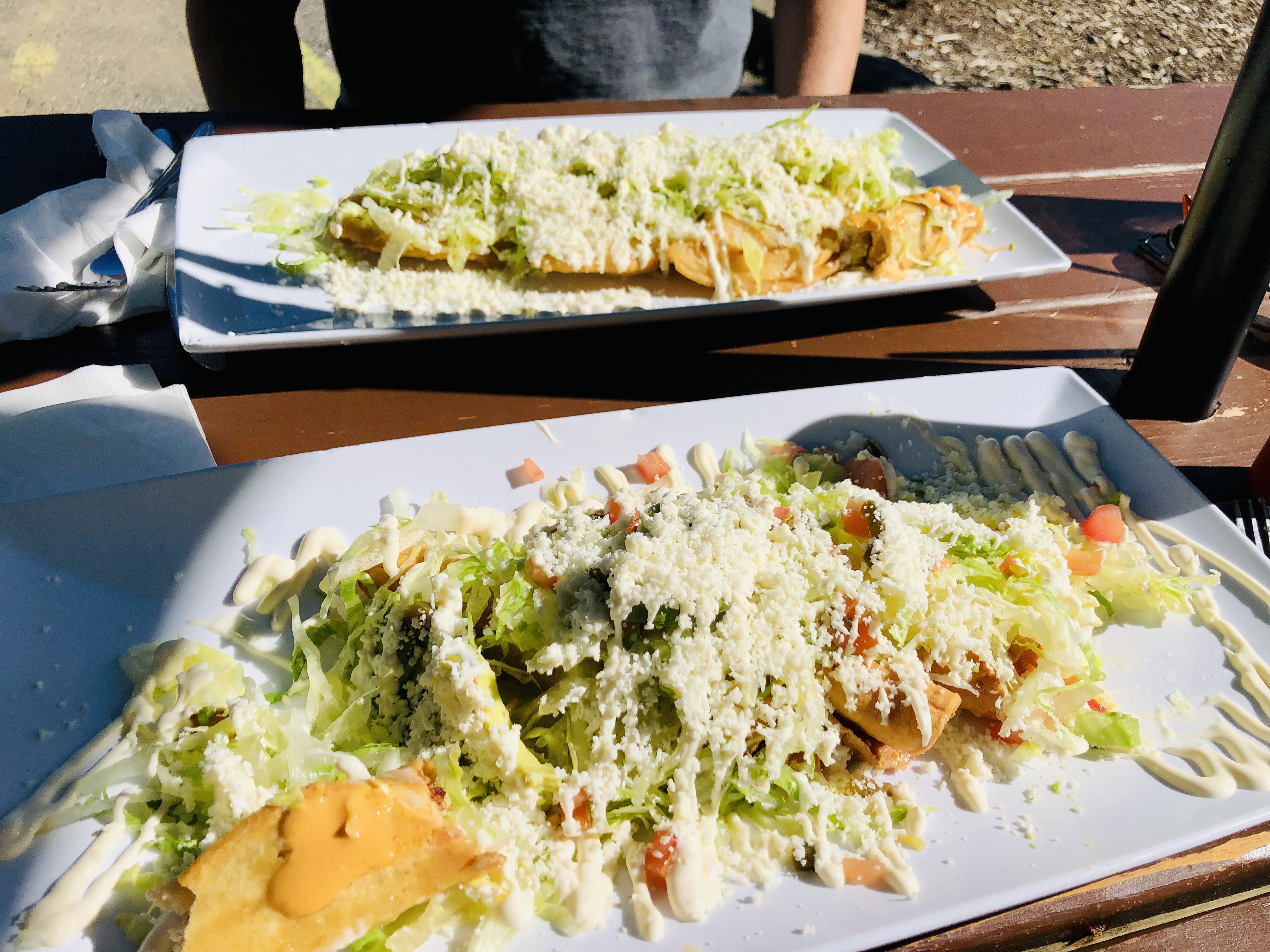
Lunch in Brevard at the Casa Mexicana taqueria, empenadas and flautas.

The ascent on 276 in Transylvania County showed significant sign of the hurricane, but the road is quite open and clear for travel. 

Wagon Road Gap atop the Pisgah Ridge, viewing one of at least two "Cold Mountain"s in North Carolina.

The Haywood side is much less clear for travel. It's technically open as advertised -- I got the bike all the way across it to the junction to NC 215, and then all the way back over Pisgah Ridge at Beech Gap. However, the road is in much worse condition. Pavement is broken at many places, so the highway suddenly becomes a gravel road, especially at stream crossings where the highway itself is washed away. In at least one place, only one lane is traversable so the road becomes single-lane. 

Both highways are in that condition in Haywood County, but you can make the journey if you are patient and careful. It's very pretty right now.

Lake Logan showing some wear and tear, but also beautiful foliage.

The Devil's Courthouse, viewed from the Jackson County side of Beech Gap.

Altogether a pleasant way to spend the afternoon. The roads are more or less open, as advertised. I don't think they're ready for heavy traffic yet, but the random adventurer will find them welcoming enough.

Two Songs of Ancestral Labor

Here is a pair of songs that are both about men who inherited their father’s line of manual labor. One is very sad; the other is not. 

The sad one has the upbeat banjo. 


Ghost Gun

A religious tune in the manner of Johnny Cash. 


Cash himself spent a lot of his career in gospel, especially following his salvation from Nickajack Cave. It wasn’t his most popular work, but his heart was in it. 

Future Planning

If any of you are considering a trip, the Borrowed Band is pretty good. 


The Apple Harvest Festival

Waynesville celebrated its annual festival as scheduled this week, although it was still canceling events as recently as last weekend. I went with my wife, and we found a very heavy crowd for the occasion. This may be partly because not everywhere is open, including the much-larger Asheville still being mostly in recovery.

One of the groups present was a small collection of Protestants singing hymns a cappella and occasionally preaching their faith in the truth of the Bible. Nobody told them they were at the wrong party, though if you preferred beer or marijuana oil to biblical exegesis both were also available. So was barbecue, mashed potatoes, apples (of course!), baked goods, and many kinds of art. Pretty much something for everyone, including the many dogs in attendance, for whom there were drinks for free and costumes for sale. 

Waynesville's going to have a hard time rebuilding its lower section, called "Frog Level," which was badly flooded by the nearby stream during the hurricane. Its main street is on a fairly high bluff, however, and survived mostly intact. 

The town is named after Founding Father "Mad Anthony" Wayne, having been established by one of the soldiers who fought under him during the Revolution. It's also where the last battle in the Civil War was fought, at least in the eastern United States, when Thomas' Legion of Indians and Highlanders surrounded and obtained agreement to surrender from the last active Union detachment in the region, only to have the Legion surrender themselves instead when word of Lee's surrender arrived in town.

Good to see them at least getting a start on a return to normal. It's a pretty little town, and home to my favorite pub in the Carolinas.

UPDATE: An official statement by Haywood County, the local government, about what is and isn’t open. 


I’m surprised that 215 is back open so quickly. Both that and 276 are high mountain roads with exposure to wind and flood. 

UPDATE: See new post above for a fuller description of the conditions of these roads.

Racism in Politics

A hundred years ago, politics in the South were explicitly racist. At some point that stopped; one might argue about when, but for a long time explicitly racial appeals have been off the menu. Almost everyone regards that as an advance, including myself. 


Here’s an ad that showed up in the mail. It doesn’t mention the word ’race’ nor the name of any race; it depends for its effect on you knowing that things like quotas and hiring are targeted that way. I’ve been turned down for Federal jobs because I don’t have the right demographic background; they didn’t even ask about my qualifications before telling me I was disqualified. 

So, fair play, because it’s true? Or out of bounds, because it is racist/sexist?

Engineering Contest

Knowing when you need advice is a good thing. 

The road through the Pigeon River Gorge is indeed in a challenging place. There will definitely be future floods with the power to destroy it. A contest to come up with the best approach is a great idea, and shows a willingness by the government to be informed by private thinking that is encouraging.

Well, When You Put it That Way...


I might actually get enthusiastic about my vote.  More than a little truth in it, I suppose.

From Twitter.

Communication in an Emergency

Earlier this year I got my ham radio license and so during the recent hurricanes I paid attention to emergency communications. Then I did some research to sort out what I think would be the best way to handle communications if the cell network and electric grid were down. Here are the useful bits of what I learned for anyone interested in preparing for the next disaster. 

By way of caveat, I'm new to ham radio, not any kind of expert, and obviously you should assess your own situation and come to your own conclusions for emergency preparedness. I do hope for those not familiar with the topic that the following provides some good starting points for your research, and I would be very interested in your thoughts and knowledge.

As you can guess, probably the best individual emergency communication technology is satellite. There are satellite phones, but a quick look shows them to be $800 or more and require a subscription. A common option used by hikers, etc., is the Garmin InReach Mini 2, which is $400 for the item plus a $15 per month subscription for GPS tracking and satellite texting. There is also satellite internet, like Starlink, but that requires electricity. These really aren't too bad, but there are much cheaper, if less reliable, options.

The Ion

A very short dialogue, the Ion by Plato has Socrates discussing artistic interpretation with a rhapsode, whose job was to perform Homer to the delight of audiences and the award of prizes. The argument is straightforward; you can read it in just a few minutes if you wish, and you won't have trouble following the argument without much commentary (but here is some anyway, if you like).

It is an early salvo in Plato's war against poets and similar figures (Ion is not quite a poet, just a reciter of poetry who can also expound his thoughts on its meaning). This war is carried on at much greater length in the Republic and Laws. There, however, Plato is especially concerned with poets who assign to the divine beings immoral acts and motivations; here, Plato has Socrates question whether Ion is really capable of understanding well enough to do any of the things he claims to do. We might analogize to our own culture's desire to imbue pop culture icons with moral clarity as well as whatever physical beauty or talent they may have; why else care what actors or singers endorse politically?

Socrates here does something that the later dialogues avoid, which is to endorse (perhaps ironically) the idea that the rhapsode is in fact inspired by the divine directly. He makes an analogy of his own, to a magnet:
The gift which you possess of speaking excellently about Homer is not an art, but, as I was just saying, an inspiration; there is a divinity moving you, like that contained in the stone which Euripides calls a magnet, but which is commonly known as the stone of Heraclea. This stone not only attracts iron rings, but also imparts to them a similar power of attracting other rings; and sometimes you may see a number of pieces of iron and rings suspended from one another so as to form quite a long chain: and all of them derive their power of suspension from the original stone.... For the poet is a light and winged and holy thing, and there is no invention in him until he has been inspired and is out of his senses, and the mind is no longer in him: when he has not attained to this state, he is powerless and is unable to utter his oracles.

Many are the noble words in which poets speak concerning the actions of men; but like yourself when speaking about Homer, they do not speak of them by any rules of art... and he who is good at one is not good any other kind of verse: for not by art does the poet sing, but by power divine. 

Now if that is true then the poets who are inspired to ascribe to the divine beings various immoral acts or impulses do know what they're talking about because they are directly informed by the divine. That would greatly complicate the later Plato's arguments against poets who write such things; it is the philosopher that has the problem, because the poet is channeling divine energy and inspiration into their work.

The commentary I linked warns of the danger of hubris to the poet or rhapsode in making the claim, and suggests that they are required then to engage philosophy on its own terms in order to justify their positions. Yet the philosopher has no divine inspiration to compare with this; logic and analysis, like mathematics, model the world as well as the human mind can do it, but the poet has direct inspiration from beyond the veil. Or so they claim, and so Socrates here appears (ironically?) to grant. 

It seems reasonable to say that Ion doesn't really have that kind of direct connection to the divine, no more than our own celebrities; but what about Homer or Shakespeare? Or, as you might prefer, what about the Biblical poets and prophets? Inspired perhaps by the divine, they have composed works of art that have moved the hearts and minds of generations of humanity, though translated into many different languages and taught to people who have very different cultural assumptions and practices. Many today still strive to structure their lives according to the words of such poets and prophets; and very few are inclined to reject them in favor of philosophy, but rather tend to try to find a way to accommodate their philosophy to their faith in such poets and prophets. 

As usual, and following Plato's example, I leave the matter open. What I first and always liked about Plato was the invitation he offered to all of us to try to understand and participate in these ancient discussions. 

Safe Passage

Following the rapid deaths of the leaders of Hezbollah and Hamas, Israel has made a peace proposal:
Netanyahu offers a deal: those who hand over hostages will receive permission to leave Gaza (granted immunity and safe passage).

.. Netanyahu: Hamas will no longer rule Gaza, this is the beginning of the day after. To the Hamas terrorists - whoever holds the hostages and lays down his weapon, we will allow him to live and whoever harms them - blood on his head

Knesset Speaker Amir Ohana posted a message in Arabic on X: "A year ago he was a hero, now he is annihilated. Where will you be in a year? Return the kidnapped, lay down your weapons, save your souls." - to the people of Gaza.
That's the best offer they're likely to hear today. 


There could be peace by tomorrow if they were as rational about the situation they have made for themselves. 

Asheville Resumes Normal Search and Rescue

One of the hardest-hit areas has decided to end emergency search and rescue operations, returning to normal procedures. 
Thousands of volunteers checked and re-checked at least 15,982 households, helping worried loved ones find reassurance that their friends, family and neighbors were safe.

The scale and success of these volunteer efforts in the emergency should be encouraging to all.