So, whether you agree that it's a good answer or a bad answer, you all know that there's an answer to this question: for two hundred years this year, the standards set by the Congress of Vienna make the Ambassador the personal representative of the chief executive and entitled to represent him and meet with his equals in his place. Therefore, there was top level representation in accordance with the accepted standards of international law in the modern era. "And so absolutely no slight should be read into this. The Ambassador is exactly the right person to attend in the absence of the head of state."
Why can't this woman give that answer?
Does she not know? I'm willing to excuse John Kerry for his ignorance, which is only to be expected. But if there's one person in the world who should be expected to know how to explain this, it's the spokeswoman for the US Department of State.
I'm done defending the administration here. Some foreign service officers in Paris got it right, and they apparently deserve a massive debt of their countrymen's gratitude, because they are the only ones in the entire government who seem to have known what the United States was supposed to do if the President decided not to come.


Two from Douglas
Tex was just saying she wanted to hear more from him on all subjects, and today he has sent me a couple of items for your consideration.
The first is an article on the differences between cops and soldiers, focusing especially on why it's OK for cops to engage in political processes like the mockery of the mayor. He invokes the Weberian point, which we have discussed here many times, that the state has 'a monopoly on violence.' I stand by my eternal rejection of that position, unless it is formulated in the specific way I just offered Tex in the comments to a recent post:
The second thing Douglas sent was the following poster he made for us:

I like it.
The first is an article on the differences between cops and soldiers, focusing especially on why it's OK for cops to engage in political processes like the mockery of the mayor. He invokes the Weberian point, which we have discussed here many times, that the state has 'a monopoly on violence.' I stand by my eternal rejection of that position, unless it is formulated in the specific way I just offered Tex in the comments to a recent post:
[I]t's not problematic if we say that citizens acting qua citizens can exercise that power. For example, citizens defending themselves from terrorist attacks! Or citizens acting in defense of the common peace and lawful order by using violence to stop crimes in progress, for that matter. And, of course, the militias of the several states, which can be called into Federal service.That to the side, I see the point he's making. The police are civilians, and citizens, and should be free to behave in political ways within limits. My concern is that the NYPD may be more powerful than the mayor, so that they couldn't really be fired if they refuse to do their duty (just as they are plainly beyond his capacity to force to do their duty). On the other hand, the quasi-strike has actually improved things in New York without any increase in crime, at least so far. The mayor's office has found a way to retaliate, by denying leave requests until revenue collection returns to normal.
Since the People are also sovereign, then, what we end up saying is just that the citizenry is sovereign over the monopoly on warfare. The state may be tasked to lead the effort, but that delegation can be withdrawn and the People resume their sovereignty should the state become tyrannical or nonfunctional[.]
“Everyone here is under orders — no time off,” said one officer at the 105th Precinct in Queens. “And the majority of [new] summonses written aren’t protecting the public in any way. But now they’re realizing how much revenue the city is losing and they’re enforcing their will upon us.”So it's proceeding less like a coup, and more like a labor dispute. That's not out of order.
In once case, no police officer on duty was allowed to return to the precinct or even take a break until two summonses were logged, according to one source....
The station house has memos posted that notifies officers that no new vacation days would be approved beyond those which have already been approved. There would also be no sick days without a doctor’s note.
The second thing Douglas sent was the following poster he made for us:

I like it.
She may get woolly
Young girls they do get woollyBut law schools are on the job with therapy dogs. Also with programs to avoiding triggering stress by forcing students to confront issues of law enforcement that might involve unpleasant behavior.
Because they're under stress . . . yes . . . .
Actually, I like the dog idea, in this and just about every other situation.
Let's Play A Game
In the post about Twain and Austen, Tex wrote:
If you would find a list of major authors helpful, here's a good one (though it has a strange date for the beginning of the Renaissance -- usually the English Renaissance is said to begin in the 16th century, but for some reason they locate it sometime after Chaucer's death in 1400 and before Malory in the mid-1400s).
If Twain were a character in an Austen novel, she'd like him grudgingly but put him through the wringer for being such a juvenile, then marry him off to a lesser heroine after he'd been shaped up a bit. If Austen were a character in one of Twain's novels, he'd never "get" her, so he'd completely fail to provide a believable characterization.This sounds like a fun game to me. Take any two well-known authors, and describe how they would write each other if they attempted to include the other as a character in one of their stories.
If you would find a list of major authors helpful, here's a good one (though it has a strange date for the beginning of the Renaissance -- usually the English Renaissance is said to begin in the 16th century, but for some reason they locate it sometime after Chaucer's death in 1400 and before Malory in the mid-1400s).
Why We Don't Drink Pig's Milk
A thorough response from an intern at the Illinois Pork Producers Association.
How About Some Incitement to Terrorism?
Our commitment to free speech seems to embrace it, as long as it is phrased just the right way.
You allow the Americans, who are the biggest butchers in the world, to stop at Shannon Airport to refuel and go on to kill people in Muslim countries. If you believe the Americans are terrorists, the Irish government is colluding with them and aiding and abetting terrorism,” he said....Now, he didn't actually say, "Go blow up some Irishmen." He just said that Ireland is "a legitimate target."
“You know it’s not just now that it’s become a legitimate target - I believe for a long time that in the eyes of al-Qaeda and others, [Ireland] is a place which is being used to aid and abet the war. The Irish claim that it is neutral is not something which has been bought by Muslims around the world,” he said.
Daesh
The French and the Aussies have hit upon a way to annoy ISIS: refer to them instead as "Daesh."
So what does “Daesh” mean? According to France24, it is a loose acronym of the Arabic for “Islamic State of Iraq and the Levant” (al-Dawla al-Islamiya al-Iraq al-Sham). However, the term is also one of defiance and disrespect.So now you know.
It is also considered insulting, and the IS (Islamic State) itself doesn’t like the name Daesh one bit.
Beyond the acronym, “Daesh” sounds lie the Arabic “Daes”, meaning “one who crushes something underfoot” as well as “Dahes”, which means “one who sows discord”.
Dahes is also a reference to the Dahes wal Ghabra period of chaos and warfare between Arab tribes which is famous in the Arab world as one of the precursors of the Muslim age.
“Daesh” therefore has considerably negative undertones. There can be little political ambiguity behind the French government’s decision to deploy Daesh as a linguistic weapon.
Meanwhile, in Nigeria...
While the world's leadership focused on the attacks in Paris, Boko Haram killed two thousand people in a massacre designed to enforce their vision of Islam.
As Islamic terrorists continue to spread, more nations are in danger of simply collapsing as their citizens lose faith in their ability to keep them safe. We’re in serious danger of having an increasing pile of failed states which will serve as a breeding ground for more of the same. Unfortunately, as bad as Boko Haram is, attacks like this are never going to capture the media’s attention the way an attack in France (or America) will.
So what can we do about Boko Haram realistically? I have absolutely no idea. Launching a major military offensive against them (given how much else we have on our plate) seems unlikely in the extreme, even if the will existed in the White House to do so. And I doubt we have any allies left who have the resources and the interest to do it in our stead.
Stimulating D.C.
From a Michael Barone piece on U.S. population-movement patterns since 2010:
The rest of the article is interesting, too, on the subject of which states get or lose international or domestic net immigration, and why.
The 2013-14 numbers just released, for example, show interesting contrasts with those of 2010-11, when the economy was flagging and stimulus money disbursed. Back then the Washington metropolitan area — Virginia, Maryland, D.C. — was growing well above the national average. Now, with the sequester cuts, growth in the region is below average.Is that what Keynesian stimulus amounts to? Congress authorizes a bunch of spending, but little of it makes it more than a few miles from D.C.?
The rest of the article is interesting, too, on the subject of which states get or lose international or domestic net immigration, and why.
It Does Work
Al-Qaeda in Yemen didn’t attack Charlie Hebdo because we are all Charlie Hebdo.What we do in the contemporary West is we protect groups like the Westboro Baptist Church, who malign everything we really believe, so they can make the funerals of our soldiers more painful for the parents of our beloved dead. We protect them, but fuck them. Their heads are the ones that belong on spikes; we are just too nice to post them.
The opposite. It sent in the brothers Cherif and Said Kouachi because Charlie Hebdo was almost alone.
Yes, that’s right, almost alone, despite the hundreds of thousands marching with their “Je Suis Charlie” placards.... Even the Jyllands-Posten, the Danish paper that originally publish the cartoons that provided Muslims with a pretext for mayhem and murder, even that paper has declined to republish anything that might be “offensive” to Muslims because, they said, “violence works.”
Well, "we" are.
Anyway, this business about being 'almost alone' is more complicated than it looks. Mostly I think outfits like Charlie deserve protection as a kind of limit case. They aren't the core of what we're about, as a decent people. They're about our tolerance for liberty, even when it descends into garbage. We believe in liberty, so we tolerate -- we defend, we protect -- the garbage.
That doesn't mean it isn't still garbage. And maybe we haven't found the right point of balance yet: Maybe there's still a better solution for groups like Westboro, wherein they can be made to accept responsibility for the garbage they bring into the public space.
Another Pleasant Quiz
Which Ancient or Medieval Warrior Are You?
No one will be surprised by my results.
No one will be surprised by my results.
William Wallace
A valiant freedom fighter, you are the Scotsman William Wallace! You strongly believe in the individual freedoms of every man and woman, regardless of background - and are willing to fight 'til the end for it. Close-minded individuals are perhaps your biggest pet-peeve. "This great warrior was a fiercely loyal Scottish landowner who willingly defied the bullying of the English nobles on behalf of his countrymen. He later led a wildly outnumbered and unprofessional army against well-trained advancing English forces in the Battle of Stirling Bridge, turning contemporary rules of engagement on their heads and earning a Scottish knighthood in the process."
No Future
I promptly asked, “What’s the situation?” Our shared patrimony obviated any need for further elaboration; as a European Jew addressing an American one, he knew exactly at what I was aiming. “There is no future for Jews in France,” he said.
As you know, I recently returned from Jerusalem. While I was there, I had many opportunities to talk with thoughtful Israelis on the subject of their country and its mission -- no subject seemed more dear to them. Some of them were not only thoughtful but professional historians and philosophers, who discussed Zionism from a position of personal conviction. Some were immigrants, Jews born elsewhere but who had taken advantage of Israel's open offer to all Jews everywhere to 'come home' -- the term in Hebrew means 'to go up.'
Right now the figures are tiny. 7,000 Jews out of a population of a half a million might not even interfere much with natural replacement. But I heard Natan Sharansky -- a genuine hero of anti-Communism, a man who stood firm in the prisons of the KGB on charges of being an American agent -- say that immigration from the First World was, for the first time in Israel's history, the leading source of immigration.
The people I spoke to clearly believe, and I see why they think they are right, that Israel is the only home for the world's Jewish population. They clearly believe, and I think they really are right, that having the option to resort to Israel is key to the safety of Jews everywhere.
Now, I'm not a Jew, but as long as I live I can say that Jews will be safe within the realm of my right arm. I suspect many Americans would say the same, and so perhaps this place may long be a place where they can linger, if they wish.
In another way, I'm sorry we do not have what they have: a Númenor to their Undying Lands, our ancient home now sunk in the sea, a place to which we as they might withdraw if our values came under a similar assault.
There is no such place for us. We have only the sword.
Conrad Black on the Defense of the Christian West
His introduction is an amusing transgression of the social restraints on married couples seeming too interested in each other, but he goes on to a high note.
As I was sitting down to write about the atrocity in France, my wife Barbara hove into view, always a delicious sight, and announced that she was writing elsewhere on the same subject and that I could not do it. So I will not, other than to say that France.. has been comparatively indulgent of Muslims... but this incident... will motivate France to lead the Western counter-attack against militant Islam that should have been launched by our united civilization many years ago.... [W]hen French possession and enjoyment of their country is threatened, the national faith in liberty, equality and fraternity will give way to more systematic repression of violent Islamists than would be acceptable in an Anglo-Saxon democracy.The related subject is more interesting.
...[I]n France there will be none of the faddish and abusive meddling of human rights commissions such as persecuted Mark Steyn and Ezra Levant in this country. Since the barbarians comingled with the Romanized Gauls 1,500 years ago, no one has displaced the French from their complete cultural occupation of la douce France. Those who have tried, including the Moors, the Plantagenet kings of England, and the German Empire and Third Reich, were a great deal more formidable and comparatively numerous than the venomous rag-tag of contemporary Islamist terrorists. Vive la France, which now awaits the continuator of Charles Martel, Joan of Arc, and Charles de Gaulle; a relatively easy victory awaits him or her.
Since I have been cyber-gagged from pursuing this subject further, I will retreat to a related one.
An Article in the NYT I'm Glad To See
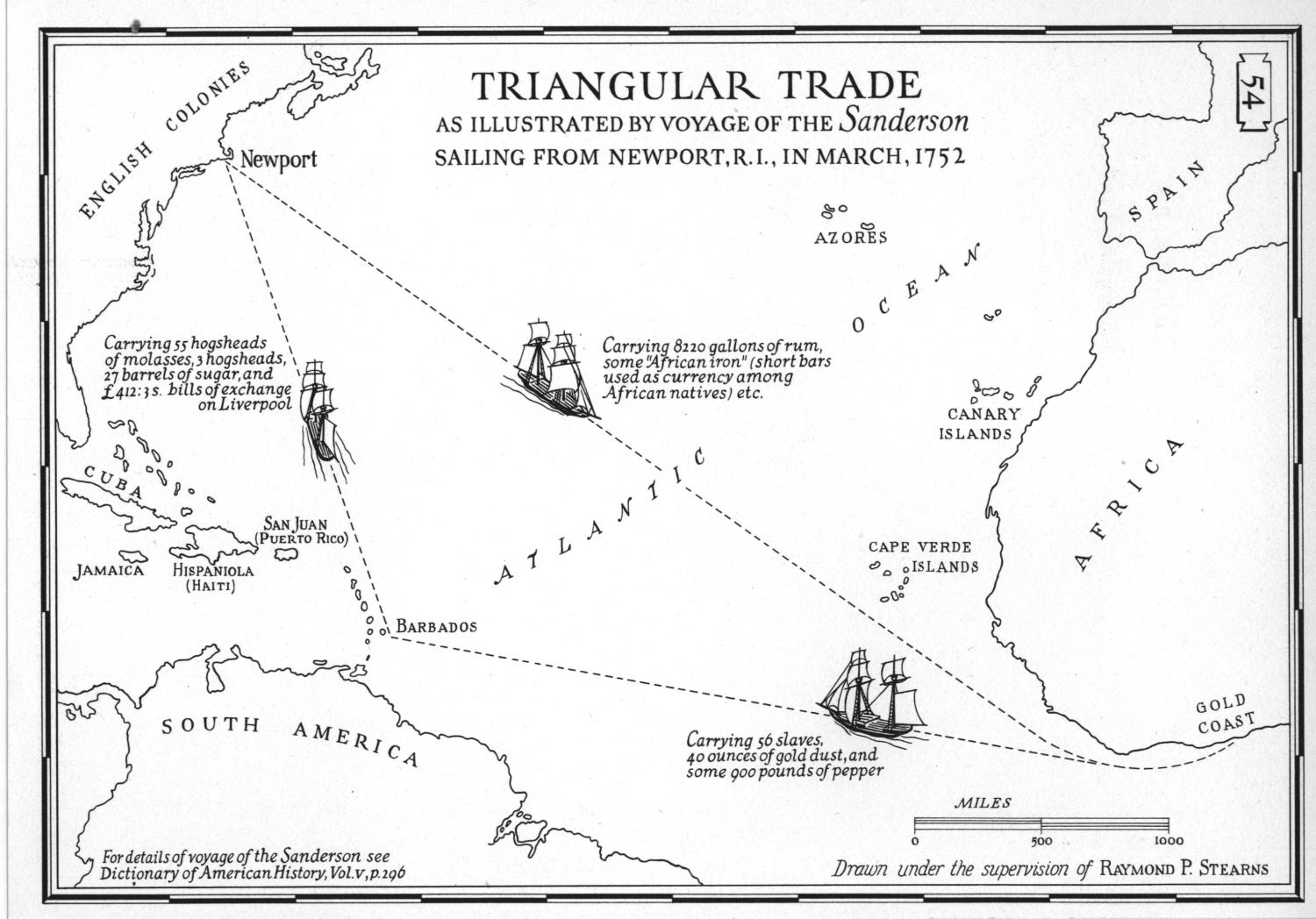
It's been the case since the beginning of the nation that the North has told itself a story of racism in which it was the hero and the South was the bad guy. We hear about slavery, but not about how the slave ships that fueled the Middle Passage sailed so often out of Boston and New York. We hear about how the cotton economy was built on slave labor, but not about how the North's industry was built from the proceeds of the Triangular Trade. The Civil War is the reflex point, in which whatever marginal guilt the North admits for having 'compromised' with the South on slavery is washed clean in blood. Subsequent history is virtuous Northerners periodically forcing vicious Southerners to amend their Jim Crow ways, until at last LBJ came down to help MLK and victory was achieved.
So it's not merely a timely but an evergreen question that the Times is asking today: "When Will The North Face Its Racism?"
So it's not merely a timely but an evergreen question that the Times is asking today: "When Will The North Face Its Racism?"
In matters of racial injustice, the South has been the center of attention since before the time of the Civil War. But the North, with its shorter history of a mass black population, has only more recently dealt with the paradox of an enlightened ideal coexisting with racial disparity. The protests have become a referendum on the black condition since the Great Migration. “The protests are beginning to wake people up to the idea that the problems are not only there but have been obvious all along,” the historian Taylor Branch told me. “It feels like the South in the 1950s.”Yet the parallels drawn aren't to the South in the 1950s, but to the South at the height of lynching. The parallel between lynchings and police killings of blacks is overblown, as we've discussed before, because even if the rate at which such killing occur is about the same, the population growth means that the rate per black citizen is a fraction of what it was. Still, "it feels like" doesn't require much substantiation: the feeling may not be purely rational, but feelings are often not. Grappling with the problem means both that many in the North may have to acknowledge a greater degree of structural racism than they want to admit to or recognize; it may also mean that some in the black community may have to admit to a kind of objective improvement in the facts, even if there are times when they still feel strongly the sense of oppression.
Shooting the unarmed
A Phoenix anti-cop activist shows surprising flexibility of thought after completing a shoot/don't-shoot training course. It obviously made him rethink what should happen when an unarmed man walks right up into an officer's face.
Photo anti-op
Cut Eric Holder some slack. He was in Paris as the sole representative of the U.S. government in the current crisis, but he had to meet with some senior people. In the meantime a bunch of senior people were marching arm in arm:

Left to right: Greek Prime Minister Antonis Samaras, Spanish Prime Minister Mariano Rajoy, British Prime Minister David Cameron, Danish Prime Minister Helle Thorning-Schmidt, European Union foreign policy chief Federica Mogherini, Paris Mayor Anne Hidalgo, European Commission President Jean-Claude Juncker, Israeli Prime Minister Benjamin Netanyahu, Malian President Ibrahim Boubacar Keita, French President Francois Hollande, German Chancellor Angela Merkel, European Union President Donald Tusk, Palestinian president Mahmud Abbas, Jordan’s Queen Rania, Jordan’s King Abdullah II, Italian Prime Minister Matteo Renzi, Turkish Prime Minister Ahmet Davutoglu, Ukrainian President Petro Poroshenko and other guests.Holder wasn't meeting any of them.
Is this sorry enough?
It's not clear to me from this report that the newspaper used the "s" word, but I'd say this was pretty thoroughly abject: no weaseling.
Magna Carta
A free online course by the University of London will explore the history of Magna Carta, and how the ideas expressed in it -- little things like "no taxation without representation" and trial by jury -- have influenced the world.
I think it sounds like fun. If you want to do it too, you can sign up here.
I think it sounds like fun. If you want to do it too, you can sign up here.
More unclear motives
A German tabloid that reprinted the Mohammed cartoons has been firebombed. Police say it's too soon to ascribe motives to the attack.
A couple of comments from David Foster's place, ChicagoBoyz:
A couple of comments from David Foster's place, ChicagoBoyz:
There is an interesting piece today in the Wall Street Journal about historian Tom Holland and the writing of his "In the Shadow of the Sword, the Rise of Islam," which is about the origins of Islam and Muhammed, which do not agree with the Quran or the Hadiths. He was OK until the BBC made a documentary about the book then he started getting lots of death threats. He said he never thought that a historian would be at such risk since all he wanted to do was tell a true story.
I’m ordering all three of his books about the Middle East. Apparently Muslims do not read much but do watch TV. Maybe they read cartoons, as well.and
#JESUISCHARLIE is one thing.
I think that we are more in need of #JESUISCHARLIEMARTEL.
His motives remain obscure
Don't call him an Islamist. It might stir up anti-Islamist sentiment. Who can really say why he acted as he did? Well, other than himself, of course.
A brief stint as Oskar Schindler
A nice vignette from the troubles in France: a black guy amusingly described as "African-American" by a CNN news anchor used quick thinking to shove about 30 Jewish customers of a kosher store into a basement freezer to protect them from the Islamist hostage-takers. They all survived; the hostage-taker is now at room temperature.
The British Press Has A Banner Week
The British press has never seemed as out of touch as it is today. All our broadsheet papers are packed with pleas to the people of France, and other European populations, not to turn into Muslim-killing nutjobs in response to the Charlie Hebdo massacre. The Guardian frets over “Islamophobes seizing this atrocity to advance their hatred.” The Financial Times is in a spin about “Islamophobic extremists” using the massacre to “[challenge] the tolerance on which Europe has built its peace.” One British hack says we should all “fear the coming Islamophobic backlash.” And what actually happened in France as these dead-tree pieces about a possible Islamophobic backlash made their appearance? Jews were assaulted. And killed.It's been a great week at the Guardian particularly. Regarding the new Clint Eastwood movie about former Navy SEAL Chris Kyle, they published an article titled, "The real American Sniper was a hate-filled killer. Why are simplistic patriots treating him as a hero?"
Don't get your hopes up -- she didn't actually try to understand the answer to the question of why people think of him as a hero.
Snapshots from Hubble
The newest pictures from the Hubble orbiting telescope of our nearest large galactic neighbor, Andromeda, are sharp enough to show 100 million individual stars. This link has images that are sharp enough to admire, but not big enough to take a long time to download. A link within the link will take you to a 200MB image.

Andromeda, a spiral galaxy, is only 12.5 times as far away as it is wide (2.5MM to 200,000 light-years), so it shows up relatively well in our sky. It's on a collision course with the Milky way--ETA is about 3.75 billion years--which makes it one of the few elements of the universe that isn't rushing away from us. Andromeda is just barely visible to the naked eye in good conditions. Human beings have been recording their observations of it since the 10th century, but only in the 19th century did its spectral lines suggest that it was not a gaseous nebula but had some kind of stellar nature. Believing it to be a relatively close object, astronomer first guessed that it was some kind of nova. In 1925 Edwin Hubble demonstrated that it was a separate galaxy similar to our own.
Even the old-fashioned pictures are pretty spectacular.
Men are from Dune, women are from Pemberley
Grim's link took me to other articles by Examiner writer Michelle Kerns, including her "Men are from Dune, women are from Pemberley" lists of 75 Books Every Man or Every Woman Must Read. I'm afraid I haven't read very many of them, but I've read 16 from the men's list and only 11 from the women's.
Both lists pick a single book by a famous writer and let it go at that. I don't read that way; I'm more likely to read all of the works of an author that suits me and never quite get through even the first book of an author that doesn't. What's more, almost none of the books I've read from either of these lists is on my "desert island" list of the few books I'd want to have on hand to read repeatedly for the rest of my life, in a pinch. "Lolita" isn't on either list, for instance. But "War and Peace" is on one and "Middlemarch" on the other, so there's that. And yet no C.S. Lewis! I don't know what I'd do with myself if I couldn't read and re-read his works. Not to mention Robert Heinlein, John Varley, Frederick Pohl, Larry Niven/Jerry Pournelle, and a handful of other science-fiction writers I depend on year after year--science fiction and fantasy being my true lifelong literary enthusiasms.
But as for Twain, Dickens, Joyce, Rushdie, Hemingway, Henry James, Maya Angelou, J. K. Rowling, and other high- and low-brow favorites, I just can't read them at all.
Both lists pick a single book by a famous writer and let it go at that. I don't read that way; I'm more likely to read all of the works of an author that suits me and never quite get through even the first book of an author that doesn't. What's more, almost none of the books I've read from either of these lists is on my "desert island" list of the few books I'd want to have on hand to read repeatedly for the rest of my life, in a pinch. "Lolita" isn't on either list, for instance. But "War and Peace" is on one and "Middlemarch" on the other, so there's that. And yet no C.S. Lewis! I don't know what I'd do with myself if I couldn't read and re-read his works. Not to mention Robert Heinlein, John Varley, Frederick Pohl, Larry Niven/Jerry Pournelle, and a handful of other science-fiction writers I depend on year after year--science fiction and fantasy being my true lifelong literary enthusiasms.
But as for Twain, Dickens, Joyce, Rushdie, Hemingway, Henry James, Maya Angelou, J. K. Rowling, and other high- and low-brow favorites, I just can't read them at all.
Is that why the buildings are ugly?
It's an enduring question: is it just me, or are most of the buildings ugly? In The New Urbanism, William Lind argues that some high-style architecture is deliberately ugly, on the theory that the essence of a capitalist system is alienation, and therefore all true art must alienate in order to be authentic. He attributes this idea to Theodor Adorno. I don't know about that, but here is a summary of what's supposed to be Adorno's thinking:
The Lind article has defensible ideas about the use of conservative ideas in urban architecture, including the superior market appeal of mixed-use developments and therefore the absence of a need for government regulation to improve neighborhoods; the market will do that for us if we prevent the zoners from requiring undue separation between residential and commercial functions. I'm not sure he's really nailed the ugly-architecture problem, though. Why is our new fire station an eyesore, for instance? No high-concept architect set out to mirror the incurable alienation of the local population. No architect had much input at all, except in the sense that someone with minimal training did a bit of work making sure the hallways all led to rooms and some of the exterior walls had windows in them. Otherwise it's a metal shell with a shallow roof in random colors, and a bunch of rooms jammed inside. It was cheap, it was fairly easy to build, and it made no concessions to aesthetic experience.

The ancient Welsh-style cottage pictured below was cheap and fairly easy to build, but it's not ugly. What are we missing? Why should economy of construction be ugly?

It actually looks quite a lot like my cistern, which I love, and would love even more if the cylinder were shorter and the witch's hat bigger:

Lind has other ideas about making cities livable, his main thrust being that conservatives should be able to find common ground with the largely liberal urbanist crowd. One of his most valuable insights is that beautiful public spaces rely on money and security:
The unavoidable conclusion is that if I didn't want the fire station to be ugly by my standards, I should have found a way to fund its construction myself. After all, I don't find my house ugly! Of course, I didn't expect it to express the simultaneous necessity and illusoriness of art, or to serve as the antithesis of society. I just wanted it to function properly and delight me.

Adorno's claims about art in general stem from his reconstruction of the modern art movement. So a summary of his philosophy of art sometimes needs to signal this by putting “modern” in parentheses. The book begins and ends with reflections on the social character of (modern) art. Two themes stand out in these reflections. One is an updated Hegelian question whether art can survive in a late capitalist world. The other is an updated Marxian question whether art can contribute to the transformation of this world. When addressing both questions, Adorno retains from Kant the notion that art proper (“fine art” or “beautiful art”—schöne Kunst—in Kant's vocabulary) is characterized by formal autonomy. But Adorno combines this Kantian emphasis on form with Hegel's emphasis on intellectual import (geistiger Gehalt) and Marx's emphasis on art's embeddedness in society as a whole. The result is a complex account of the simultaneous necessity and illusoriness of the artwork's autonomy. The artwork's necessary and illusory autonomy, in turn, is the key to (modern) art's social character, namely, to be “the social antithesis of society”.It does sound as though the idea were to make us unhappy for the sake of raising our consciousness. When someone starts talking about simultaneous necessity and illusoriness, I suspect him of being in a serious sulk.
The Lind article has defensible ideas about the use of conservative ideas in urban architecture, including the superior market appeal of mixed-use developments and therefore the absence of a need for government regulation to improve neighborhoods; the market will do that for us if we prevent the zoners from requiring undue separation between residential and commercial functions. I'm not sure he's really nailed the ugly-architecture problem, though. Why is our new fire station an eyesore, for instance? No high-concept architect set out to mirror the incurable alienation of the local population. No architect had much input at all, except in the sense that someone with minimal training did a bit of work making sure the hallways all led to rooms and some of the exterior walls had windows in them. Otherwise it's a metal shell with a shallow roof in random colors, and a bunch of rooms jammed inside. It was cheap, it was fairly easy to build, and it made no concessions to aesthetic experience.
The ancient Welsh-style cottage pictured below was cheap and fairly easy to build, but it's not ugly. What are we missing? Why should economy of construction be ugly?
Lind has other ideas about making cities livable, his main thrust being that conservatives should be able to find common ground with the largely liberal urbanist crowd. One of his most valuable insights is that beautiful public spaces rely on money and security:
We offer the understanding that traditional middle-class values work. Without them, no city, neighborhood, or town, however well designed, is likely to function. We point out the reality that order, safety of persons and property, is the first essential. [Celebrated urbanist Andres] Duany said to me at a recent CNU [Congress for the New Urbanism] meeting, “I’m beginning to understand that we design beautiful public spaces to which no one dares come.” Indeed. Conservatives understand that for New Urbanism to succeed, it must create an arena where businessmen can make money. Urban areas that are not market-friendly will remain poor.We could blame that problem on capitalism--guys like Adorno certainly made a career of it--but it's possible that the real problem is designers who aren't interested in making forms nearby which people want to sleep, work, shop, recreate, or reflect. Capitalism gets a bad rap for reducing "value" to "money," but I suspect what's really irritating about it is that ordinary people get to vote on whether they find something valuable. Their betters don't always get to prescribe it for them, or force them to feed and house artists and other intellectuals who want to be the antithesis of society. If they don't like it, they just won't buy it.
The unavoidable conclusion is that if I didn't want the fire station to be ugly by my standards, I should have found a way to fund its construction myself. After all, I don't find my house ugly! Of course, I didn't expect it to express the simultaneous necessity and illusoriness of art, or to serve as the antithesis of society. I just wanted it to function properly and delight me.
Mark Twain on Jane Austen
I've occasionally mentioned Mark Twain's brutal, and completely accurate, review of Cooper's 'Leatherstocking' tales. I also knew that Jane Austen was not universally loved by American authors -- Emerson didn't care for her ("Suicide is more respectable," he wrote of her work), but who cares what Emerson thinks? Still, I hadn't realized until this morning that Twain had written occasionally about his dislike for her work.
"Jane Austen? Why I go so far as to say that any library is a good library that does not contain a volume by Jane Austen. Even if it contains no other book."There are a host of great author-on-author put downs here. If any of you are Austen fans horrified to find that Twain held her in such low regard, there's an essay here that examines his comments in greater detail from a pro-Austen perspective.
"I haven't any right to criticise books, and I don't do it except when I hate them. I often want to criticise Jane Austen, but her books madden me so that I can't conceal my frenzy from the reader; and therefore I have to stop every time I begin. Every time I read 'Pride and Prejudice' I want to dig her up and beat her over the skull with her own shin-bone."
"All the great critics praise her art generously. To start with, they say she draws her characters with sharp distinction and a sure touch. I believe that this is true, as long as the characters she is drawing are odious."
Chanticleer
For when I see the beauty of your face,The FBI and Justice Department prosecutors recommend felony charges for General Petraeus.
The scarlet red you have about your eyes,
It makes my dread all wither and it dies,
As certainly as In principio,
Mulier est hominis confusio--
Madam, the meaning of this Latin is
'A woman is man's joy and all his bliss.'
Why Not Free? Well, "Free."
ThinkProgress proposes that the President's free lunch 'free two years of community college' plan is taking the wrong way 'round. We could just as readily make college free for the whole four years, at all public colleges, without spending more than we're already spending:
Thus, our options as a country are:
1) Allow our fellow citizens to fall out of the productive/employable classes, which means that they will not be providing tax revenues (and, most probably, will be consuming expensive public welfare programs -- but even if we were to manage to restrain those, they still will not be adding to the common fund),
2) Spend some of our public stores to help make sure people can retrain in productive ways.
The best way to do this would be to establish some right/left limits on what kinds of programs we consider productive enough to merit public funding, probably based on some rolling estimate of which industries are coming-to-be or passing-away due to current changes in technology. We would need to make sure money didn't go to waste, but was directed at programs designed to help people retrain for current careers. This is something that we're just going to have to expect people to do more and more as time goes along, and the poorest most often, so we probably need to think about a solution that doesn't require them to have either money or credit if we want them to succeed. We should want them to succeed, if only for selfish reasons of keeping them off welfare rolls and helping with the taxpaying duties for a larger percentage of their lives.
Public colleges are a good start, but we should really expand especially to vocational schools. A travel agent put out of work by Expedia may not have the chops for a degree in engineering, but might benefit from getting a CDL so she could move to Texas and drive trucks to and from the oil fields. That's something we could do pretty cheaply and relatively quickly, compared to 99 weeks of unemployment benefits, and it would get her back on her feet and into the taxpaying class as quickly as possible. We'd save money, even if it is not in any sense "free," and it would be good for the moral health of our citizenry as a whole if more of them were able to work and fewer were on welfare of any kind.
If President Obama truly wants to transform the cost of higher education, however, he could make college free for all students without having to lay out more money to pay for it. That’s because the federal government could take the $69 billion it currently spends to subsidize the cost of college through grants, tax breaks, and work-study funds and instead cover tuition at all public colleges, which came to $62.6 billion in 2012, the most recent data. (The government spends another $197.4 billion on student loans.) That would give all students who want to get a college degree a free option to do so. It could also put pressure on private universities to compete with the free option by reducing their costs, which have risen 13 percent over the last five years.I have a sense that we're going to have to extend the "free" (meaning publicly subsidized) education we pay for in this country. We already provide publicly-funded education through high school. The expansion will need to come because the continual transformation of the economy by technology means that (a) whole industries are dying -- see travel agencies, secretarial pools -- and (b) the only thing like an answer to that problem is to retrain people for whatever new sectors of work are emerging from the constant technological change. But the people being forced out of dying industries are low on the list of those likely to be able to afford the cost of advanced education.
Thus, our options as a country are:
1) Allow our fellow citizens to fall out of the productive/employable classes, which means that they will not be providing tax revenues (and, most probably, will be consuming expensive public welfare programs -- but even if we were to manage to restrain those, they still will not be adding to the common fund),
2) Spend some of our public stores to help make sure people can retrain in productive ways.
The best way to do this would be to establish some right/left limits on what kinds of programs we consider productive enough to merit public funding, probably based on some rolling estimate of which industries are coming-to-be or passing-away due to current changes in technology. We would need to make sure money didn't go to waste, but was directed at programs designed to help people retrain for current careers. This is something that we're just going to have to expect people to do more and more as time goes along, and the poorest most often, so we probably need to think about a solution that doesn't require them to have either money or credit if we want them to succeed. We should want them to succeed, if only for selfish reasons of keeping them off welfare rolls and helping with the taxpaying duties for a larger percentage of their lives.
Public colleges are a good start, but we should really expand especially to vocational schools. A travel agent put out of work by Expedia may not have the chops for a degree in engineering, but might benefit from getting a CDL so she could move to Texas and drive trucks to and from the oil fields. That's something we could do pretty cheaply and relatively quickly, compared to 99 weeks of unemployment benefits, and it would get her back on her feet and into the taxpaying class as quickly as possible. We'd save money, even if it is not in any sense "free," and it would be good for the moral health of our citizenry as a whole if more of them were able to work and fewer were on welfare of any kind.
Risk and blame
Examples in another context of the confusion between ignoring risk and excusing wrongdoing: there's a new book out, drawing attention once again to the government policies that contributed to the 2008 housing crisis. The book is drawing the predictable criticism that it's a mistake to attribute the housing crisis to government regulatory initiatives, when it's so obvious that many bankers were greedy and incompetent. That's a confusing criticism, considering that we're not likely to start inhabiting a world in which bankers are drawn exclusively from the ranks of the saintly and skilled. We have systems for restraining the more unpleasant results of bankers who go wild. They start with making it highly likely that the bankers will lose money if they keep it up, and go on to criminal penalties if, in addition to responding to a natural impulse to make money, they drift into outright fraud. But none of that explains very well what went so dramatically wrong with our housing market in 2008.
What does explain it quite handily is a look at the impact of a government-sponsored entity that sends out a strong signal, "We'll buy the craziest mortgages you can sign up. Lend money to people with bad credit. Not only will you get credit of various sorts from people (on both sides of the political aisle) who want to see homeownership expand in our society, but you won't even pay a financial price for writing loans you ought to know perfectly well are going to default in above-average numbers. We'll subsidize your losses." What exactly did we expect to happen, especially considering that banks make money on processing fees and therefore are highly motivated, all other factors being equal, to maximize loan volume? The force that normally puts a brake on this motivation is fear of failure. We took fear of failure almost completely away.
Does that mean no banks behaved badly? Obviously not. But, as voters, we're not in control of bankers' consciences. We are in control of the laws we pass. We don't have to pass laws that fuel the very behavior we claim to be outraged by. I don't know why we can't learn the lesson that you get more of whatever you subsidize.
As usual, I think the basic underlying mistake here is to imagine we can escape the price tag of a charitable impulse. Both Democrats and Republicans had a natural, even laudable, goal to improve the lives of Americans by extending the benefits of home ownership to greater numbers of people. We went wrong by fantasizing about a world in which such a thing would not have a cost, a real cost that real people would have to pay. We're like people who want to feed the homeless, and place an order for restaurants to deliver hot meals to 10,000 people, then settle back in our armchairs feeling compassionate. But when the bill comes in the mail, we throw up our hands and refuse to pay it. "I thought it wouldn't cost anything! I thought someone else was going to pay it! If you don't keep delivering the hot meals without waiting for my check, you're just mean! You must be in favor of hunger! Restaurant owners are greedy!"
What does explain it quite handily is a look at the impact of a government-sponsored entity that sends out a strong signal, "We'll buy the craziest mortgages you can sign up. Lend money to people with bad credit. Not only will you get credit of various sorts from people (on both sides of the political aisle) who want to see homeownership expand in our society, but you won't even pay a financial price for writing loans you ought to know perfectly well are going to default in above-average numbers. We'll subsidize your losses." What exactly did we expect to happen, especially considering that banks make money on processing fees and therefore are highly motivated, all other factors being equal, to maximize loan volume? The force that normally puts a brake on this motivation is fear of failure. We took fear of failure almost completely away.
Does that mean no banks behaved badly? Obviously not. But, as voters, we're not in control of bankers' consciences. We are in control of the laws we pass. We don't have to pass laws that fuel the very behavior we claim to be outraged by. I don't know why we can't learn the lesson that you get more of whatever you subsidize.
As usual, I think the basic underlying mistake here is to imagine we can escape the price tag of a charitable impulse. Both Democrats and Republicans had a natural, even laudable, goal to improve the lives of Americans by extending the benefits of home ownership to greater numbers of people. We went wrong by fantasizing about a world in which such a thing would not have a cost, a real cost that real people would have to pay. We're like people who want to feed the homeless, and place an order for restaurants to deliver hot meals to 10,000 people, then settle back in our armchairs feeling compassionate. But when the bill comes in the mail, we throw up our hands and refuse to pay it. "I thought it wouldn't cost anything! I thought someone else was going to pay it! If you don't keep delivering the hot meals without waiting for my check, you're just mean! You must be in favor of hunger! Restaurant owners are greedy!"
I Think It's The Other Way Around
InstaPundit:
LIVE BLOG — PARIS UNDER SIEGE: Charlie Hebdo Attackers Cornered, Hostage Situation in Kosher Store in East Paris.
The right way to apologize
The humiliated Maryland city council member noted by Grim earlier this week has thought it over and decided he was completely wrong in his eccentric view that newspapers needed his permission to use his name. Not that some people might have thought he was wrong and been inexplicably offended, but just that he thoughtlessly blew it, plain and simple. His apology is completely appropriate, a refreshing example of the genre:
"Of course, as I am an elected official, the Frederick News-Post has the right to use my name in any article related to the running of the county — that comes with the job," he said. "So yes, my statement to the Frederick News-Post regarding the use of my name was wrong and inappropriate. I'm not afraid to admit when I'm wrong."I liked Volokh's take:
Uh, Council Member: In our country, newspapers are actually allowed to write about elected officials (and others) without their permission. It’s an avantgarde experiment, to be sure, but we’ve had some success with it.
Speaking of Questionable Judgment in Public Office...
A gift from Lindsey Graham to incoming Senator Joni Ernst.
A Fair Point
Also in September 2012, as the Federalist’s Mollie Hemingway recalls, the president of the United States addressed the United Nations General Assembly. He declared (in a speech that, as she puts it, “includes some good commentary and more indefensible commentary”): “The future must not belong to those who slander the prophet of Islam.”Ouch.
"People Know The Consequences"
And if they don't, they should by now.
This in a culture that produces regular, ongoing mockery and testing of its own core belief system. We invented Heavy Metal music, which was little more than an exercise in blasphemy. We make movies and television shows that mock the religion shared by the vast majority of Americans both living today and historically. So this sensitivity isn't part of a general commitment to anti-blasphemy, it's part of a general commitment to be sensitive to the feelings of Muslims.
Apparently this is not enough, however. And you know the consequences for not submitting.
Muslims do not believe in the concept of freedom of expression, as their speech and actions are determined by divine revelation and not based on people's desires.Normally I would argue that we don't need a law, since the mores are so strong: although the quantity of mockery is not none, in America it's really very close to none without the bother and expense of legal actions.
Although Muslims may not agree about the idea of freedom of expression, even non-Muslims who espouse it say it comes with responsibilities. In an increasingly unstable and insecure world, the potential consequences of insulting the Messenger Muhammad are known to Muslims and non-Muslims alike....
Within liberal democracies, freedom of expression has curtailments, such as laws against incitement and hatred.
The truth is that Western governments are content to sacrifice liberties and freedoms when being complicit to torture and rendition — or when restricting the freedom of movement of Muslims, under the guise of protecting national security.
So why in this case did the French government allow the magazine Charlie Hebdo to continue to provoke Muslims, thereby placing the sanctity of its citizens at risk?
It is time that the sanctity of a Prophet revered by up to one-quarter of the world's population was protected.
This in a culture that produces regular, ongoing mockery and testing of its own core belief system. We invented Heavy Metal music, which was little more than an exercise in blasphemy. We make movies and television shows that mock the religion shared by the vast majority of Americans both living today and historically. So this sensitivity isn't part of a general commitment to anti-blasphemy, it's part of a general commitment to be sensitive to the feelings of Muslims.
Apparently this is not enough, however. And you know the consequences for not submitting.
Inside the Minds of the Shooters' Supporters
The Counter Extremism Project collects supporters' statements from today's Paris attack.
One Came Calling

I don't really find the form of humor especially enlightening, but that's the point of free expression. We protect the bad ideas, too.
Of course, "protect" in this case would have better been done by having a couple of rifles in the office and some guys who knew how to use them. If I were running a satirical magazine -- or a think tank -- I'd look into making sure that there was a weapons locker and some training days on the corporate calendar.
Climb To Glory, Commando
WTF Army Moments reported this, but I checked it myself and it's for real.
Well, we rode on Black roads in Iraq. There it meant probable IEDs. What's a little snow?

'A Sufficient Number of Psychologists'
I don't have a problem with this idea, as long as we can agree that the sufficient number of psychologists in a riot is always zero.
Not being allowed to "verbally degrade or make derogatory comments" sounds silly to me, though. I assume most departments have standards governing that anyway, so perhaps there's no harm in it, but still.
But 'social workers, counselors, and psychologists'? We'd be well off without them.
The Missouri Democrat who told MSNBC the riots of Ferguson and the tremors of racial outrage that spread nationwide from the Missouri community were “our race war” unleashed a Twitter tirade Jan. 3 that foreshadowed a stormy legislative session ahead for her white colleagues in the Missouri Legislature....Most of these sound like sensible ideas. "Use of deadly force" laws in Georgia hold the police to the same standard as anyone else -- only to stop an immediate threat of death or grievous bodily harm -- which is a pretty reasonable standard. A special prosecutor standard may well be warranted in cases of unarmed persons being killed by police, at least for a while given the serious degradation in public trust in the system's ability to hold the police to account. The use of third party validators is not a bad idea in such an environment either: the US military used embedded media to great effect in tamping down the worst of the irresponsible accusations of excessive force. (In fairness, the embeds sometimes caught some actual excessive force on camera -- but that can be valuable too, especially in a policing environment where the goal really is to train so that excessive force will not be used.) Visible identification aids public accountability too, especially in an age of easy access to cameras and video recording equipment.
Her legislation also includes what Chappelle-Nadal described as citizen protections and officer professional standards:
• The bill scales back the current “use of deadly force” laws in Missouri, allowing officers to use deadly force only in instances where a suspect poses a clear danger to the officer or the public.
• If a police officer shoots an unarmed citizen, or a police officer kills an unarmed citizen by any other means, a special prosecutor will automatically be appointed.
• When law enforcement is deployed to a protest situation or a scene of civil unrest, all officers will be required to wear accurate and visible identification with their full names clearly displayed.
• Law enforcement officers shall not be allowed to “hog-tie” citizens or verbally degrade or make derogatory comments toward any peaceful protestors.
• If the governor declares a state of emergency due to civil unrest, the governor shall immediately reassign and mobilize a sufficient number of state social workers, counselors, and psychologists to the area.
• The deployment of tear gas shall not be allowed unless the governor has declared a state of emergency and a neutral third-party agency (such as Amnesty International) is on the scene to certify that the tear gas will be deployed in a humanitarian manner.
• If the governor declares a state of emergency due to civil unrest, the governor shall concurrently contract with a neutral third-party agency (such as Amnesty International) to immediately report any abuses of human, civil, and constitutional rights to the Missouri and United States attorney generals.
• All law enforcement agencies in Missouri must be accredited by July 1, 2016.
Not being allowed to "verbally degrade or make derogatory comments" sounds silly to me, though. I assume most departments have standards governing that anyway, so perhaps there's no harm in it, but still.
But 'social workers, counselors, and psychologists'? We'd be well off without them.
Symmetry
Another snowflake, next to the last one. Funny, I was trying to do something similar.
Update: on top, a third variation on a theme, more what I was aiming at. I'm on the last round of this iteration; the completed part is on the bottom left. You can see how big it is by the fact that it's sitting within the earpieces of the glasses I have to use when I'm working with thread this fine.


Update: on top, a third variation on a theme, more what I was aiming at. I'm on the last round of this iteration; the completed part is on the bottom left. You can see how big it is by the fact that it's sitting within the earpieces of the glasses I have to use when I'm working with thread this fine.
The Black Church Loses... in Atlanta
It's one thing when this happens in California, but to lose one in Atlanta has to hurt.
The mayor says the real reason he's firing the Fire Chief is that he questions his judgment, and had told him not to speak to the matter in public while a national controversy raged about his good name. The Chief says that isn't what happened, and that part is one of those 'he/she said' controversies.
But the mayor gives the game away when he says that "he believes Cochran opened up the city to the potential for litigation over future discrimination claims," and that "such writings were inconsistent with the city's employment policies[.]" What that means is that he believes that it is against the law for a government official in Atlanta to publish a book making these kinds of claims, both in the sense that it would constitute a tort and that it is a violation of the laws governing employment policy.
If true, that would mean that the religious views of the Chief's church are illegal for a public official in Atlanta to profess. That sounds suspiciously like a religious test for public office -- a kind of negative test, so to speak.
Fire Chief Kelvin Cochran — the subject of recent controversy over remarks made in a self-published religious book — has been terminated from the Atlanta Fire Rescue Department, Mayor Kasim Reed announced today.Of course you can have private religious views. In private. They're certainly not to be published in a book, even a religious book for religious audiences -- not if you want to hold a job.
Cochran returned to work today following a month-long suspension for comments in his 2013 book “Who Told You That You Are Naked?” Many criticized the book as promoting discriminatory and anti-gay views, while Cochran’s suspension — and now termination — has since become the focus of a fight over “religious liberty.”...
Among what city leaders said were troubling remarks in the fire chief’s book was a description of homosexuality as a “perversion” akin to bestiality and pederasty. Reed said in November that such writings were inconsistent with the city’s employment policies and opened an investigation into potential discrimination within the fire department. The findings of that investigation have not yet been released.
The mayor says the real reason he's firing the Fire Chief is that he questions his judgment, and had told him not to speak to the matter in public while a national controversy raged about his good name. The Chief says that isn't what happened, and that part is one of those 'he/she said' controversies.
But the mayor gives the game away when he says that "he believes Cochran opened up the city to the potential for litigation over future discrimination claims," and that "such writings were inconsistent with the city's employment policies[.]" What that means is that he believes that it is against the law for a government official in Atlanta to publish a book making these kinds of claims, both in the sense that it would constitute a tort and that it is a violation of the laws governing employment policy.
If true, that would mean that the religious views of the Chief's church are illegal for a public official in Atlanta to profess. That sounds suspiciously like a religious test for public office -- a kind of negative test, so to speak.

Red Phone
You can secure calls from your cell phone by encrypting them, which you might consider since the FBI apparently thinks they have free reign to listen to you talk without a warrant.
Writing in Ars Technica, David Kravets is unimpressed with the FBI’s regard for Americans’ expectation of privacy.Of course, there's always a chance that the tech firms offering the encryption have partnerships with the government. That's certainly been the pattern in the past.
The bureau’s position on Americans’ privacy isn’t surprising. The Obama Administration has repeatedly maintained that the public has no privacy in public places. It began making that argument as early as 2010...
Al Sisi's Speech
The man seems to be showing some spine.
Now President Sisi is in a position similar to ours in Iraq after the defeat of Al Qaeda and Iran. He has defeated the Muslim Brotherhood, and he is pressing his advantage, liquidating the leaders the Brothers had elevated over the course of eighty-odd years, and in the last week he delivered the blockbuster speech and became the first president in Egyptian history to attend Coptic Christmas celebrations in Cairo.
It’s a very big deal.
Kings of England
If you're interested in this playful quiz matching you with one of the kings of England, have a go. I got "Henry V."
Artistic License
Trolls are variously depicted in the literature. Some of them are very small, and some of them are very tall...
They are generally all ugly, however.
They are generally all ugly, however.
Wassailing
Apparently a revival of the old tradition is happening in parts of Britain.
Although the etymology caught my eye:
Yet of course the story might be wrong -- much else is in Geoffrey's history. On the other hand, Geoffrey got the phrase from somewhere. He wasn't living in the Old Danelaw, but in Wales. He claimed his sources were originally from the Welsh language, and probably some of them were. So perhaps this part of his history is right, and the OED is wrong: perhaps the phrase is original Old English, and not a Danish addition to the language.
The fire is lit, then they sing and dance in the frosty night, offering good wishes to a fruit tree and slurping from a bowl of carefully brewed spiced alcohol. This is wassailing, a pagan ceremony to bring on the spring. Once an ancient Twelfth Night ritual on the wane, wassailing is increasingly being appropriated by modern food-and-drink folk.Why not? It's fun, and it's Twelfth Night -- approximately, since traditions differ slightly on just which night is the twelfth.
Although the etymology caught my eye:
Sounds like a quaint Nordic custom, doesn't it?I would have told you it was Old English rather than Danish, although it's hard to argue with the OED. My reasons for doing so are that it is a term that was put into the mouth of the Anglo-Saxons by none other than Geoffrey of Monmouth.
Well, actually, you might be on to something. The term "wassail" comes from the Old Norse "ves heill", meaning "be healthy", and was probably introduced by Danish-speaking inhabitants of England, according to the Oxford English Dictionary.
In the meantime, the messengers returned from Germany, with eighteen ships full of the best soldiers they could get. They also brought along with them Rowen, the daughter of Hengist, one of the most accomplished beauties of that age. After their arrival, Hengist invited the king to his house, to view his new buildings, and the new soldiers that were come over. The king readily accepted of his invitation, but privately, and having highly commended the magnificence of the structure, enlisted the men into his service. Here he was entertained at a royal banquet; and when that was over, the young lady came out of her chamber bearing a golden cup full of wine, with which she approached the king, and making a low courtesy, said to him, "Lauerd king wacht heil!" The king, at the sight of the lady's face, was on a sudden both surprised and inflamed with her beauty; and calling to his interpreter, asked him what she said, and what answer he should make her. "She called you, 'Lord king,'" said the interpreter, "and offered to drink your health. Your answer to her must be, 'Drinc heil!'" Vortigern accordingly answered, "Drinc heil!" and bade her drink; after which he took the cup from her hand, kissed her, and drank himself. From that time to this, it has been the custom in Britain, that he who drinks to any one says, "Wacht heil!" and he that pledges him, answers "Drinc heil!"Sir Walter Scott follows this usage in Ivanhoe, where he uses knowledge of the proper response to the call to establish Richard the Lionheart's familiarity with the Saxon traditions of the country over which he, as a Norman, rules. Scott's suggestion that Richard might have known the story is well-founded. Geoffrey was Welsh, but his history was written in large part to benefit Norman claims to the English throne. He wrote it around 1136; it was translated into Norman verse in 1155, two years before Richard was born. It's highly likely that Richard would have known the story.
Yet of course the story might be wrong -- much else is in Geoffrey's history. On the other hand, Geoffrey got the phrase from somewhere. He wasn't living in the Old Danelaw, but in Wales. He claimed his sources were originally from the Welsh language, and probably some of them were. So perhaps this part of his history is right, and the OED is wrong: perhaps the phrase is original Old English, and not a Danish addition to the language.
I'm Not Sure I Got My Point Across About Mazzy Star
If you don't know them, you should listen to a bit of their work.
They once wrote a piece that got my attention, given my love for highways and speed and the death that attends them.
This one was their famous piece:
But really in the end, I liked everything they did.
They once wrote a piece that got my attention, given my love for highways and speed and the death that attends them.
This one was their famous piece:
But really in the end, I liked everything they did.
Free Expression
My guess is that banning hoodies won't work in the United States, though I gather something similar was passed in the UK. Oddly enough, UK opponents referred to this law (which also banned owning bicycles for gang members) as an "American-style" system. But of course that's nonsense: no American jurisdiction could make sense of a law banning bicycles for some citizens and not others, and probably couldn't digest any ban on bicycles at all.
If you get to the point that you're banning bicycles, any American would say, you've lost the ball.
If you get to the point that you're banning bicycles, any American would say, you've lost the ball.
"Hello, 911? Could You Send A Deputy To Supervise My Parenthood?"
Is it worse that our culture's faith in parental authority has become so weak that this seemed plausible to someone, or that our faith in governmental authority has become so strong?
Sounds like the deputies wish you'd just take care of it on your own. That's easy to understand: "Watch me spank my daughter" is the sort of request that could only make one uncomfortable.
Sounds like the deputies wish you'd just take care of it on your own. That's easy to understand: "Watch me spank my daughter" is the sort of request that could only make one uncomfortable.
"Comrade 'Skynet,' You Say?"
Moscow tests battlefield robots, armed with machine guns.
Now all they need is a device to permit automated nuclear... oh, right. They've had one all along.
Well, we'll just wait for AI, then. I'm sure it'll go fine.
Now all they need is a device to permit automated nuclear... oh, right. They've had one all along.
Well, we'll just wait for AI, then. I'm sure it'll go fine.
Aye, And If You Can't Do That...
...here's Mazzy Star, who can stand good for you no matter what you can do.
Time To Steal His Song
If you can. Kris Kristofferson shows the way, following Johnny Cash: but that doesn't mean you can do the same.
Devils are hard to beat. But if you can't, shout out. It may be there are some gathered here who can help you.
Devils are hard to beat. But if you can't, shout out. It may be there are some gathered here who can help you.
Won't lovers revolt now?
In struggling to transliterate some ancient Greek inscriptions, I spent some time today looking for internet explanations of what looks like an upside-down "M." Not much luck, beyond something called an "Old Northern" rune that surely isn't to the point, but I stumbled on several interesting if frivolous sites.
Here is a nice summary of the Greek alphabet, its origins, its pronunciation, and its traces in modern European languages. It's interesting to see the first letters of the Greek alphabet as successors to older Semitic letters meaning ox, house, camel, and door: all the basic stuff right up front. Also, I never noticed before that omicron (ordinary o, as in "doll") and omega (o with a circumflex over it, as in "toad") came from o-micro (o-minor) and o-mega (o-major). Apparently "psilo" was another word for small, and formed part of epsilon (e-minor, short e, as opposed to eta or e with a circumflex, which was a long e or "ay" sound) and upsilon (u-minor, as in "duh," as opposed to double-u, too complicated to go into).
This site collects palindromes, more than I've ever seen in one place before. It got snagged, I guess, because of the idea of inverting strings of characters and still being able to read sense into them. Not interested? Yawn a more Roman way!
The search term "upside-down character" also led to this amusing discussion of linguists' struggles to transliterate the Greek "iota," also known variously as a jot, yot, or yod, sometimes rendered by adding an upside-down "breve" (little sideways parenthesis thing) to an "i":
Not sure if you'll be able to see this small attachment, but try Eric's right-click trick. The character appears where we'd apparently expect an ordinary M; the Greek gurus at Project Gutenberg are drawing a blank on why they'd have been inverted.

SEPTI[M]ION OUORODÊN TON KRATISTON
EPITROPON SEBASTOU DOUKÊNARION
KAI AR ... APÊTÊN IOULIOS AURÊLIOS SAN[M]ÊS
[M]ASSIANOU TOU [M] ... LENAIOU HIPPEUS
RHOU[M]AÔN TON PHILON KAI PROSTATÊN
ETOUS Ê O PH[**numerals; date] MÊNEIXANDIKÔ.
The image cut off the last line, but it's not important. The ellipses correspond to areas where the original inscription was worn away and illegible.
Here is a nice summary of the Greek alphabet, its origins, its pronunciation, and its traces in modern European languages. It's interesting to see the first letters of the Greek alphabet as successors to older Semitic letters meaning ox, house, camel, and door: all the basic stuff right up front. Also, I never noticed before that omicron (ordinary o, as in "doll") and omega (o with a circumflex over it, as in "toad") came from o-micro (o-minor) and o-mega (o-major). Apparently "psilo" was another word for small, and formed part of epsilon (e-minor, short e, as opposed to eta or e with a circumflex, which was a long e or "ay" sound) and upsilon (u-minor, as in "duh," as opposed to double-u, too complicated to go into).
This site collects palindromes, more than I've ever seen in one place before. It got snagged, I guess, because of the idea of inverting strings of characters and still being able to read sense into them. Not interested? Yawn a more Roman way!
The search term "upside-down character" also led to this amusing discussion of linguists' struggles to transliterate the Greek "iota," also known variously as a jot, yot, or yod, sometimes rendered by adding an upside-down "breve" (little sideways parenthesis thing) to an "i":
So the 19th century philologists needed a symbol for [j]. When they were doing their work, the IPA wasn't around, so they couldn't have used that. In fact, even when the IPA was invented, historical linguists studiously ignored it anyway: they have never been interested in consistency with other subdisciplines, with the exasperating result that each proto-language has its own transcription conventions. (That's what we can blame the Uralic Phonetic Alphabet on.) Moreover, it would be unthinkable for philologists to explicate Greek forms using the Latin script: Greeks were the foundation of Western civilisation—so any historical linguistics to be done with Greek would keep the Greek script: any [j]'s would just have to be tacked on to it. (Of course, the same philologists didn't have compunctions about transliterating Sanskrit; it was not European, after all. Not sure what the excuse was for transliterating Old Church Slavonic, but I'm sure they could come up with something.) To this day, IPA is unknown territory for Ancient Greek historical linguistics.
So if you wanted a character for [j], you searched close to home. As Haralambous documents [§1.2.2], if you were working in the German tradition, you used j, which happens to be the German grapheme for [j] (and which also ended up the IPA's choice, much to the chagrin of Americanists). If you were working in the French tradition, you used y, because it wasn't German. Haralambous observes that more recently French scholars have switched to j, because it's in the IPA; given the year I'm writing this in, I suspect it has the added advantage for the French that even if it is German, at least it isn't American.Finally, this site lets you type upside-down, a useful bookmark if ever there was one. But I still don't know how to transliterate my upside-down Greek M's.
Not sure if you'll be able to see this small attachment, but try Eric's right-click trick. The character appears where we'd apparently expect an ordinary M; the Greek gurus at Project Gutenberg are drawing a blank on why they'd have been inverted.
SEPTI[M]ION OUORODÊN TON KRATISTON
EPITROPON SEBASTOU DOUKÊNARION
KAI AR ... APÊTÊN IOULIOS AURÊLIOS SAN[M]ÊS
[M]ASSIANOU TOU [M] ... LENAIOU HIPPEUS
RHOU[M]AÔN TON PHILON KAI PROSTATÊN
ETOUS Ê O PH[**numerals; date] MÊNEIXANDIKÔ.
The image cut off the last line, but it's not important. The ellipses correspond to areas where the original inscription was worn away and illegible.
Don't Get Worked Up About White Supremacists
Some advice from a Southerner to all those in the press and various interest groups who are fulminating about white supremacist groups right now: if you're really concerned about these groups, your attention is counterproductive.
The main beneficiary of this whole set of stories about Rep. Scalise was David Duke. While it doesn't help the Republican brand to be mentioned in a dozen stories alongside "former KKK leader David Duke," ultimately even the worst stories made it clear that the group had an unlikely name for a hard-right white supremacist group ("EURO"), and the best stories make clear that the original tale was probably untrue. It's unlikely you convinced anyone that establishment Republicans were closet racists who didn't already believe it, and if you bought the story whole hog you did it at some damage to your brand's credibility.
On the other hand, for David Duke it was great. It's been years since he got any significant press. The Washington Post argument for worrying about white supremacist groups should make that clear even on its own terms.
Furthermore, the whole episode gave Duke and his cohort a chance to do their favorite dance on a national stage for a good part of a week. "Why would you ever be offended by a group celebrating European heritage and traditional Western notions of political rights?" they got to ask in the national press. "You wouldn't treat Black or Latino groups that way."
Great job, all around.
Reading further into that Post piece, you see that the real story of white supremacism in America is one we counterinsurgents would call "disaggregation." That's a good thing, if you've forgotten: it means the insurgent groups are falling apart.
The story you want to tell is of how white supremacism and racism are flourishing among Republican America in response to a black President and a rapidly growing illegal immigrant population that is depressing labor participation and compensation in a long-slog recession. I can see why that story would sound plausible! One might easily imagine that this would be the case.
It just happens not to be. The facts don't support it. Middle America has rejected racism root and branch, and is not making any move to return to its embrace in spite of what might seem to be likely factors to spur a growth in racism. It just isn't happening.
The main beneficiary of this whole set of stories about Rep. Scalise was David Duke. While it doesn't help the Republican brand to be mentioned in a dozen stories alongside "former KKK leader David Duke," ultimately even the worst stories made it clear that the group had an unlikely name for a hard-right white supremacist group ("EURO"), and the best stories make clear that the original tale was probably untrue. It's unlikely you convinced anyone that establishment Republicans were closet racists who didn't already believe it, and if you bought the story whole hog you did it at some damage to your brand's credibility.
On the other hand, for David Duke it was great. It's been years since he got any significant press. The Washington Post argument for worrying about white supremacist groups should make that clear even on its own terms.
What is the group that Scalise addressed?So, his 'latest effort' started a decade and a half ago, and it has been largely inactive for years! Wonderful way to give revitalizing attention to a withered field.
It is called the European-American Unity and Rights Organization, or EURO. It was founded in 2000 (under a different name) by David Duke, the former Ku Klux Klan leader. This group is best known for being Duke’s “latest vehicle,” Potok says, and has not been particularly active in recent years.
Furthermore, the whole episode gave Duke and his cohort a chance to do their favorite dance on a national stage for a good part of a week. "Why would you ever be offended by a group celebrating European heritage and traditional Western notions of political rights?" they got to ask in the national press. "You wouldn't treat Black or Latino groups that way."
Great job, all around.
Reading further into that Post piece, you see that the real story of white supremacism in America is one we counterinsurgents would call "disaggregation." That's a good thing, if you've forgotten: it means the insurgent groups are falling apart.
How many white supremacist groups are there right now?So this "growth," in other words, is made up chiefly of larger, better-organized groups falling apart and fighting among themselves.
The Southern Poverty Law Center, which tracks hate groups in the United States, estimates that there are a little more than 930 such groups in the country right now. Most of these are white supremacist groups or white nationalist groups, according to Potok, a senior fellow at the SPLC.
Is that more groups than there were recently? Fewer groups? Give me some context.
That number is up from 602 hate groups in 2000, according to the SPLC. That is “steady, significant growth,” Potok said Tuesday, but it pales in comparison to the growth among other groups the SPLC tracks....
How have these white supremacist groups changed since 2000?
If anything, the groups “were much better organized” in 2000, when there were several major groups, Potok said. Even as their numbers have grown, these groups are “constantly at each other’s throats,” which means they are not tremendously well-organized, he added.
The story you want to tell is of how white supremacism and racism are flourishing among Republican America in response to a black President and a rapidly growing illegal immigrant population that is depressing labor participation and compensation in a long-slog recession. I can see why that story would sound plausible! One might easily imagine that this would be the case.
It just happens not to be. The facts don't support it. Middle America has rejected racism root and branch, and is not making any move to return to its embrace in spite of what might seem to be likely factors to spur a growth in racism. It just isn't happening.
In defense of John Boehner
From Andrew Klavan, who draws my grudging attention to the accomplishments of this unappealing statesman:
You can’t get more anti-government than Ayn Rand, so here’s Jack Wakeland writing from an Objectivist perspective on the sequester Boehner stuffed down the president’s throat: “The sequester is the only policy that has reduced spending by the federal government. In fiscal year 2013, total federal spending decreased 1.5% to 2.0% in real, inflation-adjusted dollars. And it promises to do so again in 2014. The FY 2013 sequester is the first time in my lifetime that federal spending shrank in absolute terms. After the ramp-down from WWII, the only decreases in federal spending were decreases as a percentage of GDP, e.g., during the Clinton-Gingrich term in 1995-96. These occurred only because GDP expanded more quickly than spending.”
...
Now, okay, Boehner may not believe everything hardcore conservatives believe… or in fact, he may and may simply find it useful not to say so. But his job is not to lead the nation. His job is not to inspire the base. His job is not to stand as a beacon for our ideals. His job is to organize and mobilize an enormous collection of scorched cats (aka Republican congressmen) into a political guerilla army so that they can blow up the tracks beneath what once looked like a Progressive juggernaut — and is now beginning to look kind of like smoking wreckage. If the speaker equivocates, if he deals, if he horse trades, compromises, accepts losses where losses are inevitable and makes a virtue out of necessity where virtue itself is not available — well, yeah, it can make a true believer crazy, but it may actually get a lot of practical and important stuff done, too.
When trade was more exciting
From an account of a late 17th-century side trip by some English merchants to the ruins of Palmyra (with some paragraph breaks added; they didn't use them much!):
July 23. we rose by One in the Morning, and Travelling most East, we came to a large Plain, where we saw before us, on a high Mountain, a great Castle, call'd by the Arabs Anture. When we had travelled two or three Hours in this Plain, we espied an Arab driving towards us a Camel, with his Launce, so fast, that he came on a round Gallop, and we supposed him sent as a Spy: being come up to us, he told us he was of Tadmor [Palmyra], and that his Prince, the Emir Melkam, had that Day made Friendship with Hamet Shideed another Prince, and that together they had four hundred Men; so he kept us Company an Hour or two, and enquired of our Muletters if we were not Turks disguised, with intent to seize on Melkam; for we travelled with a Bandiero, the Impress being a Hanjarr or Turkish Dagger, and a Half-Moon. We told him we were Franks, which he could hardly believe, wondering that we travelled thus in the Desart, only out of Curiosity.
Being come near to Tadmor, he went a little before us, and on a sudden run full speed towards the Ruins, we not endeavouring to hinder him. Our Guide told us he was gone to acquaint the Arabs who we were, and that we ought to suspect and prepare for the worst; so we dismounted twenty of our Servants, each having a long Gun, and Pistols at his Girdle, and placed them abreast before us: we following at a little distance behind, on Horse-back, with Carbines and Pistols. In this order we proceeded, and came to a most stately Aqueduct, which runs under Ground in a direct passage five Miles, and is covered with an Arch of Bastard Marble all the Way, and a Path on both sides the Channel for two Persons to walk abreast; the Channel it self being about an English Yard in breadth, and 3/4 of a Yard in depth. At 20 Yards distance all the way are Ventiducts for the Air to pass, and the holes are surrounded with small Mounts of Earth to keep the Sand and Dust from falling down. We marched close by these Mounts, which might serve us for Defence, expecting every moment that the Arabs would come to Assail us, having the disadvantage of Sun and Wind in our Faces: wherefore we Traveled hard to gain an Eminence where we might Post our selves advantagiously, and stop and repose a little, to consider what we had to do.
The Arabs finding us to come on with this Order and Resolution, thought not fit to adventure on us, so we gained the Hill, from whence we might discern these vast and noble Ruins, having a Plain like a Sea for greatness to the Southwards of it. Here having refresh'd our Men, we fetch'd a little Compass and descended by the foot of a Mountain, on which stands a great Castle, but uninhabited. Here two Arabs came to us with Lances, one being Chiah to Melkam, and we sent two to meet them; they gave the Salam alika, and ours returned the Alica salam, and advancing to our Company, told us the Emir had understood of our coming, and had sent them to acquaint us that he was our Friend, and that all the Country was ours. We sent back with them our Janizary and a Servant to visit the Prince in his Tents, which were in a Garden.
In the mean time we dismounted at a watering Place amidst the Ruins, but did not unload till our Janizary and Servant returned with the Emir's Tescarr, assuring us of Friendship and Protection, a Writing which the Arabs were never known to violate before. With them came also one that belonged to the Sheck, of the Town, for whom we had Letters from Useffe Aga the [Emeer] of Aleppo. He desired us for greater Security to pitch our Tents under the Town Walls, which is in the Ruins of a great Palace, the Wall yet standing very high, the Town within but small, and the Houses excepting two or three no better than Hog-sties. So we pitched in a deep Sandy Ground where we found it exceeding hot. Here we waited till three of the Clock without eating any thing, expecting the Sheck should have presented us according to the usual Custom of the Turks to their Friends, and have given some answer to the Letters we brought him; but on the contrary we found by the gesture of the People, that we had Reason to suspect them.
Hereupon two of our Company believing that the want of a present to the Emir was the cause thereof resolved to adventure to give him a Visit, and taking the Janizary and one Servant, they carried him a Present of two pieces of Red Cloath, and four of Green, and several other things: Being come he welcomed them into his Tent, and placed the one on his right Hand and the other on his left. Melkam was a young Man, not above Five and Twenty, and well Featur'd, and a most Excellent Horse-man; Hamet Shideed, the other Prince, was more elderly, as about forty Years of Age, and was not in the Tent, but sat under a Palm-Tree near it. He treated them with Coffee, Camel's-flesh and Dates, and enquired of their Journey, and the Cause of their coming: They told him 'twas only Curiosity to see those Ruins; he said that formerly Solomon Ibnel Doud Built a City in that Place, which being destroyed, was Built again by a strange People, and he believed, that we understanding the Writing on the Pillars, came to seek after Treasure, he having but six Moons before found a Pot of Corra Crusses.
After this he went out of the Tent, leaving them smoaking Tobacco, to the Janizary and Servant, and told them, that never till that Day any Franks had been at that Place, and that now we knew the way through the Desert, we might inform the Turks to their Ruin and Destruction, so that 'twould be convenient for them to destroy us all: But that we coming as Friends, he would only have 4000 Dollars as a Present, else he would hang them and the two Franks up, and go fight the rest. This Message being brought them, they wish'd they had excus'd themselves from this Embassy, and answered, they could say nothing to that Demand, not knowing our Minds, but if he would permit them to go and speak with the rest, they would return an Answer. Hearing this, he threatned present Death, but at length gave leave to our Janizary to carry us a Letter from them, wherein they shewed the danger they were in, and earnestly entreated us to redeem them, the Price set on them being 2000 Dollars, one half in Mony, the other half in Goods, as Swords, Cloaths, Tents, &c. which the Emir promised to estimate at their Worth.
This Letter amazed us mightily, and a little before it arrived, we understanding a little, and fearing more ill Treatment to our Friends, were getting ready to free them or die with them. The Garden where Melkam lay, was about half a Mile from the Tents, full of Palm-Trees, and had no Walls, but loose Stones piled up Breast high about them, so we designed to have gone suddenly and given two or three Volleys on them, e'er they could get to Horse; and the Arab know not how to Fight on Foot. And though they bragg'd they had 400 Men, we supposed 200 might be the most, and they not all Lances. But on receipt of this Letter, and the Servants telling us that they would certainly be cut off, if we endeavoured their Rescue, we began to examin what Moneys we had, Cloaths and other Trade, and found we could not near make up that Sum. In this Confusion came two Arabs to receive the things, and immediately Word was brought that the Emir would come and Visit us; we sent him Word, that if he came with more than two followers, we would not admit him: so he came with 2 Servants only; and in conclusion, we made him up in Money and Goods to the Value of 1500 Dollars. He valuing our Things as we pleased; his Design being not so much to compleat the Sum, as to take from us all we had.
After this, about Sun Set, he returned us our two Friends, when the Sheck of the Town invited us to Lodge within the Town; which we found afterwards was with a design to have forced something from us: But we giving him to understand that the Emir had taken all already, and had left us only our Arms and the Cloaths on our Backs; which if they would have, they must Fight for: That Resolution daunted them, and away they went, promising us Barley for our Horses in the Morning. We kept good watch in the Night, and when Day broke, we began to consider how to clear our selves; we expected the Barly till Nine in the Morning, when it came, and the Emir himself came and gave us the good Morrow: We feared least they should pretend to stop some of us in the Gate-way, so we placed six of our Company to secure the Passage, 'till all the rest were got out, under pretence of taking an Inscription that was over the Gate. Being all got clear, we returned by the same way we came and arrived at Aleppo July 29. in the Morning.
This Melkam told us, That if we had not submitted our selves to his Demands, he was resolved to Fight us after this Method: Loading 50 Camels with Baggs of Sand, and making small holes in the Baggs for the Sand to drop out, he would drive these Camels abreast upon us before the Wind, that the Sand might blow in our Eyes, and we spending our Bullets on the Camels, might so be easily overthrown; we answered, that we believed he would not venture his Camels and Horses to such a Combat. He wondered extreamly when we talk'd of Shooting Birds flying, and Hares running.
This and other the like Violences used by this Arab Prince, made the Bassa of Aleppo resolve to destroy him; and not long after he cajolled him with the Hopes of being made King of the Arabs, and to draw him near the City, he veiled and caressed some of his Followers: Which having its effect; the Bassa surprized him in his Tents by Night, and soon after he was put to Death: This those People were willing to believe the effect of their so abusing the English, and might much contribute to the Security and good Usage they found, that went the second time on this Expedition.
Happy New Year
I've been seeing a lot of Back to the Future fans posting silly fashions from the sequel movie, which was set in 2015. Have faith, you Sci-Fi believers. It's only a phase. In 2019, the restoration comes.

Subscribe to:
Posts (Atom)