Herschel Walker Loses in Georgia
Pearl Harbor Day
The Evil State
In the discussion to the Riddle of Steel post below, a matter has come up that deserves its own discussion.
Blogger jabrwok said...
The State is just a way of organizing human beings. It's neither intrinsically good or evil, any more than a gun or automobile or whatever.
A definition of "evil" would be useful here. I'd say "evil" is any action which undermines social trust (some actions do so more than others, hence greater and lesser evils). States can certainly *engage* in evil, and have a lot more power to do so than individuals, but I wouldn't say that a State is *inherently* evil.
E Hines said...
States can certainly *engage* in evil....
This is another misapprehension. States do nothing at all; they're merely, as noted, a means of organizing. That organization, though, is populated by particular men and women. It is those men and women who engage (no quote marks needed) in any action, and those men and women can use or abuse that organization's power to more or less good (however defined) or more or less evil (however defined).
It's important, too, to keep in mind that those definitions of good and evil, while perhaps originally the definitions of the population who created their State organization, quickly become the changing definitions of the changing men and women who populate the organization.
Grim said...
St Augustine says that evil is, purely, a privation from the good intended by God in creation. I think the administrative nation state we have today is an evil in that pure sense. Humanity organizes naturally into families; Aristotle claims that it organizes even more naturally into polities, because (he claims) that is the only place where humanity's full range can be realized. In a polity, one can be free of oppression by other families or clans or bandits; one can enjoy a sort of equality with others that is not found in nature; one can take actions as a member of that polity to govern one's self and to express one's virtues through practical action. One can help others in the community express their own virtues by electing them to other offices to which they are well-suited.
Weber's criticism of the administrative state -- you can read my notes on it by following the links at the sidebar -- shows clear privation from these goods. The need of the elected officials to constantly run for office means that they have to defer their powers to administrators who aren't elected; this means that the good of self-governance is lost, because the people we elected don't end up being the ones with power over our lives.
The need for money for those campaigns means that the elected officials also end up chasing donations instead of doing good to deserve election; that means they don't actually end up doing even their limited duties, or exercising their limited virtues.
The need to use power to perform favors for donations is inherently corrupt. It also draws into the political class not the virtuous, but the most successful at corruption.
It also creates an administrative class that is both unelected and really powerful, thus eliminating the sort-of equality that free citizens had with each other.
Thus, all the goods intended by human nature -- according to Aristotle -- end up being achieved either not at all or only privatively. Thus, per Augustine, the state is evil: and really evil, not just rhetorically evil.
E Hines said...
Except it's not the State doing any of that. It's the men and women populating the State. The State is just a tool.
Grim said...
Yes, but at the same time also no. It's true that only living beings, and not formal organizations, can act -- yes, in that sense. But it's also true that the form of organization creates effects, even they aren't willed actions. One form of organization has a structure that does the one thing; the modern administrative state's structure does the other. It's not that the right people, choosing the right things, could fix it. The right people won't be successful in obtaining offices under this structure; should they by accident, they couldn't keep them over successive cycles without becoming corrupt; the elected offices don't end up having the power to fix the problems anyway because it gets delegated to administrators; and the administrators interests are necessarily separated from those of the governed so they are sorted into separate classes.
It's similar to the materialist/immaterial issue. One can say that 'only material things exist,' and in a way that seems true: everything we can observe is composed of material parts. But it really matters how those parts are organized. The same parts can be organized into a table, and it will function as a table and provide the goods for which a table was wanted. Or they can be organized into a loose heap on the floor, in which case it's all and only the same parts -- but the form of organization prevents them from attaining any of the goods that they might have if they'd been organized into a table instead of a heap.
My sense is that the Conan-style band of adventurers is a kind of political organization, non-family members choosing a leader and striving towards a common goal, each contributing according to their own virtues and by voluntary participation. That's an ideal, more Homeric than Aristotelian as it does not attempt (nor really contemplate) the sort of organization that would entail all of the human goods that Aristotle wants from the polis.
Dying in a flood
Medical Research and Safer Motorcycle Rallies
The research, which appears Nov. 28 in JAMA Internal Medicine, shows that in the regions where the seven largest motorcycle rallies were held throughout the United States between 2005 and 2021, there were 21 percent more organ donors per day, on average, and 26 percent more transplant recipients per day, on average, during these events, compared with days just before and after the rallies....Bike rallies are generally large, crowded events that take place in rural areas or small towns with traffic infrastructure intended for much smaller populations and far less traffic, the researchers noted.This means that to increase overall safety for all motorists and pedestrians, event organizers should pay close attention to overall traffic management in addition to encouraging wearing of helmets and safe motorcycle operation.
Von Mises Learns the Secret of Steel
It was not until many years later, while studying Ludwig von Mises’ text Human Action, that Thulsa Doom’s answer made complete sense to me. Mises, like Thulsa Doom, understood that power comes from action, and ideas are what drive human action.“Ideologies have might over men,” Mises wrote. “Might is the faculty or power of directing actions.”When Thulsa Doom, with a mere word, beckens a beautiful young woman to throw herself from a cliff, he’s showing Conan his power, or what Mises called “might.”“Might is the power to direct,” Mises wrote. That power, Mises understood, stems not from swords or “steel,” but ideas.“He who is mighty, owes his might to an ideology. Only ideologies can convey to a man the power to influence other people's choices and conduct. One can become a leader only if one is supported by an ideology which makes other people tractable and accommodating. Might is thus not a physical and tangible thing, but a moral and spiritual phenomenon.”This is what Thulsa Doom meant when he says it’s not steel that’s strong, but flesh. The person who can use ideas to command people is a person who has true power, true might.Unlike Thulsa Doom, Mises of course saw power as a dangerous and corrupting force, which is why he opposed concentrating might in the most powerful, and deadly institution in modern history: the state.
Doom too, in fairness: he was intending, at the time of his death, to sweep away all the governments of the world in an epic of murderous assassination. There is no reason to think he meant to replace them, as their continuing absence would eliminate any institution with the ability to oppose him and his cult.
Ironically that is the only defense for the existence of any state: such things are inherently evil, but they are effective forms of organization for opposing other organizations that are also evil. You end up having to set the evils against each other: the state against the corporation, the cartel, the mafia, the murderous cult.
The question is whether there is a way to organize along voluntary lines, as Conan's band of adventurers, to hold back the other evils without needing courts and police, law and taxation, prisons and gallows.
Alternative Eugenics
There was more than one cause of this depopulation and degeneration, but the greatest cause was removal of virile males from the breeding population so they could fight and die in distant lands. As the great classical historian (and eugenicist) Otto Seeck explained,“Only cowards remained, and from their brood came forward the new generation. Cowardice showed itself in lack of originality and in slavish following of masters and traditions.”***Imperialism is profoundly dysgenic because when you “send forth the best ye breed,” you can no longer breed the best. The American sage Benjamin Franklin saw the dysgenic effect of mass conscription and believed it must invariably undermine a militaristic people with depopulation, degeneration and collapse. While he was ambassador to France, Franklin observed:“A standing army not only diminishes the population of a country, but even the size and breed of the human species. For an army is the flower of the nation. All the most vigorous, stout, and well-made men in a kingdom are to be found in the army, and these men in general cannot marry.”†
This differs of course from our own standing army, in which one of the first things young soldiers tend to do is marry in order to get out of the barracks. Still, they do have a point to make about our own society as well as ancient Rome: the fact that we are putting off marriage and childbirth for the most intelligent and successful of our young men and women may well be having a negative effect on the quality of the population overall.
Eugenics in terms of selective breeding is discredited in politics, but widely practiced in animal husbandry. Setting aside silly notions like race, different people like different animals are differently able and intelligent, and we know that these qualities are heritable to a degree. If the less able and intelligent are breeding early and often, and the moreso later and less, over time it will tend to result in a population that is weakened.
It's a challenging idea, one that I advance for discussion with caution given the evils plainly associated with human eugenics. Regular readers of the Hall are a good group, though, and can be trusted to handle such ideas with due care.
A Fearsome Prediction for Taiwan
Speaking at the Richard Nixon Foundation’s Grand Strategy Summit on 10 November, former US National Security Advisor Ambassador Robert O’Brien appeared to lend credence to reports the US will disable Taiwan’s semi-conductor chip manufacturing capabilities if China attempts to reunify the island with the mainland.“If China takes Taiwan and takes those factories intact – which I don’t think we would ever allow – they have a monopoly over chips the way OPEC has a monopoly, or even more than the way OPEC has a monopoly over oil,” said O’Brien.The US Army War College Press published a paper in November 2021 recommending that the US make credible threats to destroy Taiwan Semiconductor Manufacturing Company (TSMC) facilities, eliminating the most important supplier of micro-processing chips to China and the World.The paper by Jared McKinley and Peter Harris, Broken Nest: Deterring China from Invading Taiwan, became the most highly downloaded paper from the US Army War College of 2021, and suggested that the US lay plans in Taiwan for a targeted scorched-earth strategy that would render the island “not just unattractive if ever seized by force, but positively costly to maintain.”
Of course it is the job of the Army War College to consider what might eventuate in war, and how to deter a war. This is strikingly similar to the road that Russia has been forced down with Ukraine, though: increasingly they are facing a scenario in which even managing to attain their goals will only saddle them with a costly new stronghold, with only destroyed infrastructure, and likely to harbor insurgency.
Plonkerdump
I propose that points be awarded on a scale of how many vehicles are able to pass relative to how many stupid climate protesters have been removed.Video of competitive performances at the link.
The Feast of St. Andrew, 'LÃ Naomh Anndrais'
Emergency!
Shattering lies
The sense of personal responsibility—together with the refusal to accept the ideology’s lies— provides many small opportunities to begin to live authentically, honouring one’s own and other people’s better nature. The rulers cannot tolerate this honesty; their system is built on falsehoods, so any truth proclaimed anywhere is a danger. The proclamations may be small; for example, someone says that the state-run brewery produces terrible beer; or that the concerts organised by authorities are tedious compared to amateur music nights; or that elections are farcical. These truths are prosaic—beginning to live in truth usually is—but they signify a shift. And they have an odd, disproportionate potential because any system founded on falsehoods will always be subject to recurrent social, cultural, economic or legal crises barely restrained by the crust of lies. A small truth enacted “in the ‘hidden sphere’, in the semi-darkness where things are difficult to chart or analyse” may have huge effects with surprising speed. This hidden sphere—of real human vocation involving communication, trust, choice and freedom—is obscure but omnipresent; it’s the everyday sphere where the genuine aims of life burst beyond the aims set by the system. It’s the powerful ally of truth.From the book itself:
What is this independent life of a society? The spectrum of its expressions and activities is naturally very wide. It includes everything from self-education and thinking about the world, through free creative activity and its communication to others, to the most varied, free, civic attitudes, including instances of independent social self-organisation. In short, it is an area in which living within the truth becomes articulate and materialises in a visible way.The strongest thread in my personal political philosophy is the primal importance of voluntary human institutions: "independent social self-organisation." Government can facilitate them by imposing a certain amount of order and coordination, but it can't replace them and must never crowd them out. No system of external order can make up for the chaos and violence that emanages from empty people with empty lives. We have to be responsible for ourselves and deal with each other on the ground of "communication, trust, choice and freedom." This is why I trust a free market over any other economic system: it requires people to bargain and persuade rather than dictate. It can't relieve us of our duty of generosity and disinterested mutual support, but then neither can a supposedly compassionate socialist safety net.
Electric Vehicle Revolution
It's probably less significant than you think, even if you're a skeptic.
A Knoxville Girl
My mother was one, more or less. Technically she was from Bearden -- "Bear den" -- which is a bit south of the city limits. If you know the Ballad of Thunder Road, the closing action happens there: down Kingston Pike, at Bearden is where the Federal police 'made the fatal strike.'
The family history around moonshining is simple: none of my kin made moonshine, but my father's father was a welder who spent Prohibition welding stills. Given the overlap with the Depression, it was the only paying work.
Early Decorations
I had wanted to locate the tree more centrally, but a certain fuzzy grey bandit requires that I keep it lashed to the wall if I don’t want to clean it up every morning.
He’s not even sorry, the scoundrel.
Advent Begins
Hard on Equipment
Go to the threat
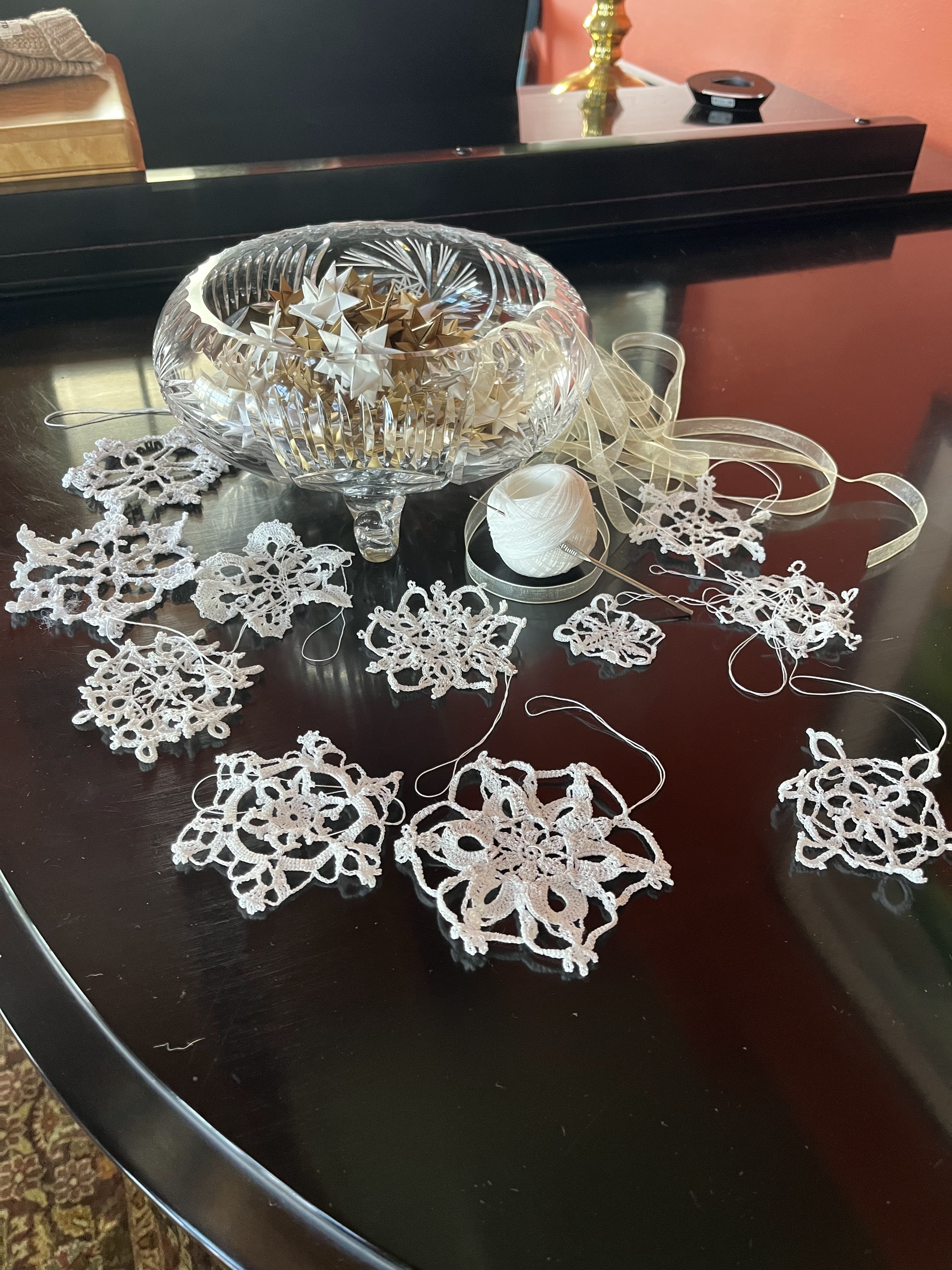
“It’s the reflex. Go! Go to the fire. Stop the action. Stop the activity. Don’t let no one get hurt. I tried to bring everybody back,” he said Monday outside his home in Colorado Springs, where an American flag hung from the porch.Funny how I see this story as about an eelbrain who was kicked back on the street last year for no good reason but finally stopped in his tracks by a random good citizen trained to use violence quickly and decisively for the public good. The press sees it as about the victimization of an imperiled voting bloc by a guy they'd love to portray as a member of the alt-right. Happy Thanksgiving to all. As we often do, we're having a three-household gathering with our nextdoor neighbors, potluck. Greg is roasting a second turkey today. He wants to try a new recipe but felt I would object to abandoning the traditional one, which is fair. He's been brining and spice-curing a turkey for decades, now, and it's inimitable, but I'm looking forward to seeing how a John Besh recipe turns out. We'll bring over Spinach Madeleine and Presbyterian Green Beans. I made a little cranberry relish the way I like it, though probably no one else will eat it: fresh cranberries and a whole orange in the blender, with some sugar, crystallized ginger, and something for heat--in this case a dash of sambal manis. No need to cook it. So far November has looked more like February: gray, drizzly, and rather cold. The winter vegetable crops are loving it. We may even get a crop of fall tomatoes. Today the sun has come out, so now it does look like November in South Texas. After a fresh wreath arrived in the mail this week, I scoured the yard for interesting berries and husks to add to it. One last picture: my production so far this season of Froebel stars and crocheted snowflakes:
Actual "Journalistic Integrity"
Never Try to Intimidate a Man in a Tam O'Shanter
Mac Isaac described one of his first interactions with an FBI agent as "chilling." He said he was "overjoyed" when the agents handed him a subpoena, and he made a comment that he would change their names when he eventually wrote his book."That's when Agent Mike turned around and told me that, in their experience, nothing ever happens to people that don't talk about these things[.]" ... The comment, Mac Isaac suggested, was a warning against speaking out about what was going on.And while Mac Isaac has said that Americans should be able to go to authorities without fear of retribution, he has experienced otherwise."I have been dealing with retaliation from multiple fronts for the past two years when what I did was leaked to the country."
I don't know if he was wearing that hat when the FBI talked to him, but if he was they were fools to try to threaten him. You don't tug on a man's kilt for much the same reason.
Notes from Gutenberg
"... Rossetti saw the Blessed Damosel leaning from the gold bar of Heaven with eyes farPainting and poem here.Deeper than the depth Of waters stilled at even; She had three lilies in her hand, And the stars in her hair were seven."
“We Are All Different…”
Two Views of Winter Trenches
I have no idea of how typical these two videos of the Ukrainian and Russian armies winter diggings-in are, but to the extent they are at least a little representative (I suspect they're actually extremes but that they do indicate essential differences), they indicate why a Ukrainian winter offensive would be highly successful, whereas a Russian offensive would...not be.
A Ukrainian trench: https://twitter.com/DefenceU/status/1593929751693258753?s=20&t=7kAnEz4gmLqqWZ8iqzIBMg
From a Russian surface camp: https://twitter.com/BorlandTrubo/status/1593931319427440641
The Russian text claims that, at the time the video was taken, it was -25 outside. Omsk is about 65 mi from Kazakhstan, so it's not an entirely fair comparison, but if this is typical of the preparation the Russian soldiers are getting enroute to the Ukrainian cauldron, I don't see how they can be effective.
Hence the barbaric assault on the Ukrainian civilian infrastructure, in an attempt to deny Ukrainians the fuel, power, and food necessary for winter survival.
Eric Hines
Drunken Poet's Dream
It takes some courage, as a poet, to substitute for a rhyme what is really an identity (as it does to substitute a near-rhyme, or a not-very-near one). I love that he acknowledges it in the text of the poem.
Agency and Determination
We theists recognize two general categories of causation: mechanistic (i.e., “cause-and-effect”) and agency (“ground-and-consequent”). Most people, including most God-deniers, will initially agree that these two categories are real, and distinct, and unbridgeable … until they see where the argument is going.From recognition of the unbridgeable distinction between mechanism and agency, I argue that agency cannot “arise” from mechanism – this is what the God-deniers who haven’t denied agency from the start will then deny and this denial can then be shown absurd and thus false – and thus that agency is, and must be, fundamental to [the] nature of reality.
The important step is the proof that agency cannot arise from mechanism (as he puts it); it is not obvious that this is true, and the fact that people might 'initially agree' to it doesn't establish it as more than an unchallenged assumption.
(By the way this frame is older than monotheism in the West: Aristotle explains causality in just this way in the second book of the Physics.)
Consider that, as far as we can tell, atoms have no agency. An atom of carbon or of hydrogen or oxygen seems to decide on nothing; it joins into bonds, such as hydrogen and oxygen forming water, for purely chemical and physical reasons. This is 'mechanistic' determination on the Orthosphere's model.
Yet water has properties that its components, hydrogen and oxygen, did not. Both of these are gaseous at room temperature, for example; water is liquid at the same range of temperatures. Water has the property of 'wetness,' then, which has somehow arisen from the bond between the things that both lack that property. We can say some things about how and why this happens, but that it happens is clear enough. New properties emerge from combinations that happen mechanistically.
Why, then, should not agency be a property that emerges from things that happen mechanistically? Other properties, even complex ones, seem to do this. The carbon joins into long protein chains, the water is joined with it, and (skipping a long discussion) eventually you have DNA. This has a new property -- the capacity to order things it encounters mechanistically into a design that is not random but follows a kind of 'intention.' This ability to take from the world and put things into the order that is also 'you' is called life (as explained by philosopher Hans Jonas).
If this kind of proto-intention can arise from what appear to be mechanistic actions, why not a real intention? Why shouldn't it be true that living beings of certain kinds have the property of agency, even though none of their components had it before they were joined and ordered into that form?
This is, by the way, a good reason to reject materialism: it is not merely the material that matters. All the same material -- all the same atoms of oxygen and hydrogen and carbon, etc -- if not ordered in this way lack the properties of life and agency. These only seem to arise when the right order is brought to them. Thus, the form -- which is not material, but the way in which the material is ordered -- exists and is causally important, and not only the material. Reality is not materialistic but hylomorphic as the ancients said.
This is not an anti-theistic argument or a theistic one; you can make both arguments from this ground. Perhaps a God is then unnecessary, and being unnecessary should be excluded according to Occam's Razor. Yet what explanation is there for reality having this strange quality, such that thinking agents can and do apparently automatically arise from deterministic material processes? Why should reason and decision be inherent in a material that does not need them, existing whether or not agents do? Occam's Razor is only a tool for gamblers, not a proof; and here it seems clear that unnecessary things do exist, because we experience being one of those things all the time.
Perhaps, then, reality has this order because the order was wanted; and if it was wanted, there must have been someone who wanted it. Someone who had the power to set this basic structure of reality, either through design or through will, or possibly merely through longing.
The AARP on Pineapple Express
On Football Celebrations
From the Past
A Blind Gift to Republicans
A Strange and Striking Logic
Judge Robert McBurney of the Superior Court of Fulton County said the law was void at the time it was passed in 2019 under the U.S. Supreme Court's Roe v. Wade ruling, which established a federal right to abortion in 1973.McBurney said the state would have to pass the law again now that the Supreme Court has overturned Roe for the ban to be valid. The 2019 law was "plainly unconstitutional when drafted, voted upon, and enacted," McBurney wrote in his opinion.
Now I would think this logic was correct if the reason for the change in what 'was' constitutional had been a constitutional amendment. Let us say that you passed a law that said that no one could vote until age 28, as apparently some particularly ignorant journalists think is being discussed somewhere. That's clearly unconstitutional: the Federal Constitution determines that the voting age is 18. Such a law would be unconstitutional and therefore void, and like all unconstitutional laws it would have no legitimate force from the moment it was enacted. You'd have to amend the Constitution first, and then pass the law later.
A Supreme Court ruling is not like that. The Supreme Court did not change the Constitution; it only stated that earlier courts had misunderstood it when they said it meant X, and that the correct interpretation is Y instead. The Constitution was therefore the same all the time; our judges just didn't understand it correctly for a while.
Too, the whole reason the Supreme Court was asked to rule on this was that there was a controversy about what the right meaning really was. It was not 'plain' what the constitutional stance was; lots of people disagreed, for decades, and eventually the court came to see it their way.
Thus, I think the logical position is that the constitution never barred this law, and that it is valid as enacted. Nobody changed the Constitution. The Supreme Court does not have that power.
Railroad Nation
The Violent Gods
Via Arts & Letters Daily, a review of a new translation of Ovid.
One day in the thirteenth century, James I of Aragon, not only a great conqueror but a king famous for his powers of memory, made a revealing slip: "We got to our feet and we began with an authority from the Sacred Scripture that says: Non minor est virtus quam quaerere parta tueri."
“It takes no less talent to keep what you’ve got than to acquire it”: for a crusading medieval monarch, what more convenient justification for territorial consolidation could there be than “Sacred Scripture”?
The problem is that that line of Latin doesn’t appear anywhere in the Bible. It comes, rather, from a notoriously risqué book of poems, published during the reign of the Emperor Augustus, whose narrator doles out advice on how to seduce women—preferably married ones.... That these lines of Roman erotic verse had become indistinguishable from Scripture by the Middle Ages isn’t really all that surprising. More than those of any other poet of ancient Rome, the works of Publius Ovidius Naso—we know him as Ovid—have insinuated themselves into the mind of Europe, influencing its literature, art, and music.
The translation is of the Metamorphoses, a long poem that introduces new twists to what were already old stories. For example, the story of Medusa was ancient even then; Ovid's new variation turns the goddess Athena ("Minerva" to the Romans) into a bad actor, who executes the transformation of a beautiful young woman into a monster in order to punish the woman for having resisted a divine rape by Poseidon ("Neptune," of course, for the Romans; (or, given that Athena was a virgin goddess, it may have been that Medusa failed to resist the rape; there is some scholarly debate about exactly what it was that offended Athena, the sex or the mortal defiance of a divine will).
That doesn't turn up in the review, but a lot of similar stories made the book.
Above all, Ovid’s presentation of Jove—the king of the gods and the obvious counterpart of Augustus himself—is almost uniformly disparaging in its contempt for the god’s use of his power. The Metamorphoses often reads like a catalogue of Jove’s violent offenses: Jove transforming himself into a bull in order to abduct Europa, Jove becoming a swan to get at Leda, Jove taking the form of an eagle in order to snatch up Ganymede....
In the Arachne episode, Minerva weaves a tapestry that celebrates her victory over Neptune, her uncle, in a long-ago contest for possession of Athens—an egotistical bit of divine P.R. Arachne’s weaving, by contrast, depicts nine rapes committed by Jove, six by Neptune, a few by Apollo and Bacchus, and one by Saturn, Jove’s father.
The new translation abandons 19th and 20th century habits of euphemizing what exactly these gods were doing. Numerous chapters are, the reviewer notes, titled in the form "X Rapes Y." The translator, Stephanie McCarter, writes:
The inclusion of so many stories of rape in the epic suggests, in fact, that Ovid felt such violence was worthy of critical interrogation. . . . To read Ovid with an eye toward his full complexity—his beauty and his brutality—allows us to scrutinize our own thorny relationship with the past and with the ambivalent inheritance we have received from it. To wrestle with the unsavory aspects of ancient literature is to do the hard work of self-examination.
A fair point. Ovid arguably used this not merely to play with violence, but to criticize his (very dangerous) political overlords. Who could object to being likened to a god, and the highest of gods in your pantheon, no less than Jove himself? When Ovid celebrates Augustus as being like Jove, he is not -- or not merely -- paying a compliment.
That’s a Bold Move, Cotton
You Don’t Say
Elections officials held a meeting this morning to clear the air about a sudden increase in ballots favoring Democrats.
Happy Veterans Day
My best to all of you who have earned the distinction of calling yourselves Veterans. Have a glorious day, and a wonderful weekend.
Child ballads
Captain Blood
Aristotle's Ethics in One Brief Lesson
A Good Night Locally
Shenanigans
In North Carolina, cyber units have trained state entities and officials in most counties, according to Maj. Gen. Marvin Hunt, adjutant general for that state’s Guard. He said the work of his cyber team will “surge during the election to ensure that we have 24-hour coverage throughout this whole process.”“We’re really that third party that comes in—it’s just assisting them—to give them a different look, so that on election day, we can all have confidence in our election systems,” Hunt said.Neely told Defense One that few states are strong enough in the cyber arena, and the need is only growing.Security professionals hired by states often face “military-grade adversaries” they aren’t equipped to counter, said Brig. Gen. Gent Welsh, assistant adjutant general and commander of the Washington Air National Guard.
Keep your eyes open, and take special care in case your local 911 service goes down. In the event of an emergency and the service isn't working, go to your local fire department, police station, or emergency medical service facility and report the emergency in person. Go to whichever one is closest. They'll have radios that work even if the phones are out.
It's not a bad idea to have the local phone number written down somewhere in case the phone lines work but the 911 services don't. People call the station here all the time rather than dialing 911, and for many purposes that works very well. In an emergency 911 is usually a better option because it allows the dispatcher to contact everyone who needs to respond at once, but it is good to have options.
More Songs of Dying on the Highway
Justice on the Gridiron
Don't Mind Dying on the Highway
By Their Fruits
How can we distinguish between the different types of Black Republicans? Johnson contends, “we can judge them by their words and deeds.”What type of Black Republican is Stuber? He was recruited by White Republican leadership to run against Ammons, the only African American clerk in Champaign County history. Like Deering, “the hard, overt and aggressive” White supremacist, Stuber is an election denier.And like the incompetent, subliterate and coonish Herschel Walker, Stuber reiterates “massa” Trump’s talking points. Intimating fraud, he cast aspersions on the 2020 elections. Stuber alleged votes were not counted in Georgia and Arizona, and further declared, “Champaign County may have stopped counting. I don’t know.” But during a late August interview with The News-Gazette’s Tom Kacich, he dissembled when asked if Trump had won. Again, disingenuously claiming uncertainty, he stated, “I don’t know if he truly was the winner.”About a month later, similar to Walker and nearly all election deniers, Stuber miraculously backtracked. Without explanation, he affirmed, “Joe Biden was legally elected president of the United States.” I find his reversal unbelievable. Indeed, I believe it’s a tactical move to deceive the electorate.
Normality
It's hard to realize how bad things have gotten outside of the wilderness in which I have fastened myself. I used to go to this part of Union Station on a regular basis, and it was as advertised a thriving shopping district. Here, where we have happy children and dogs, hikers and backpackers, picnics and boat trips, everything seems like America hasn't changed all that much. I have to look at the news to remember that Washington, D.C. has turned itself into a post-apocalyptic nightmare -- as has San Francisco and many other cities.
Probably a lot more Americans live in the parts of the nation that have horrified themselves than elsewhere, though. The country has been badly hurt even if there remain oases beyond the concrete.
Search & Rescue in Panthertown
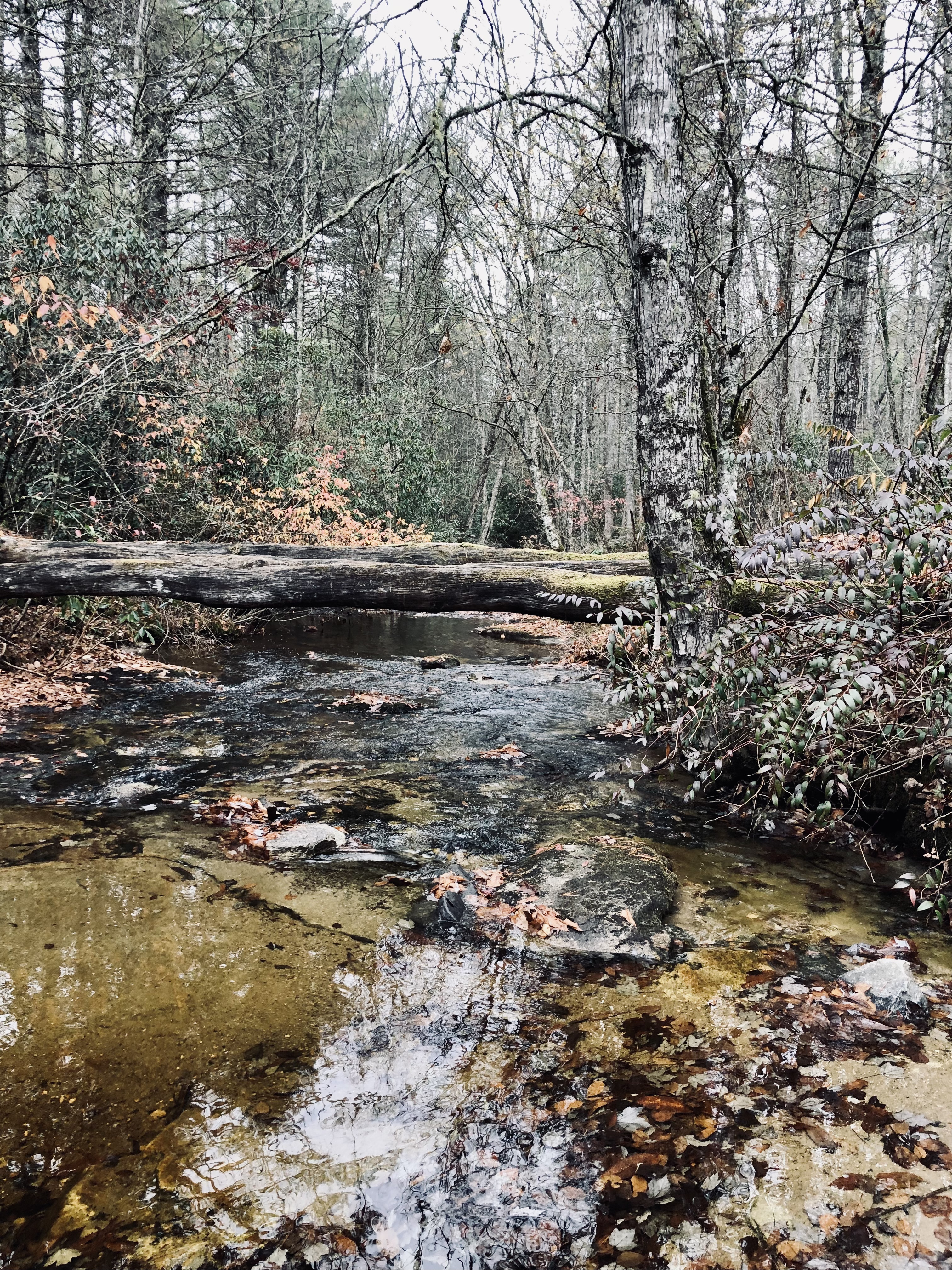
Aside from taking a while, this rescue went as well as you could want. The hikers had a chilly night. One of them had fallen into a creek during the previous day, so her clothes were wet. They were from Colorado, so they weren't used to land navigation in heavily forested country where even clear landmarks can be obscured by trees and ridges. Making a fire in an alpine rainforest like this is not like making a fire out West, either: it takes a special skillset to know how to obtain sufficiently dry wood and get it going in this environment.
R.I.P. Southern Icons
The National Defense Strategy
President Biden has stated that we are living in a “decisive decade,” one stamped by dramatic changes in geopolitics, technology, economics, and our environment. The defense strategy that the United States pursues will set the Department’s course for decades to come. The Department of Defense owes it to our All-Volunteer Force and the American people to provide a clear picture of the challenges we expect to face in the crucial years ahead...
Magic Drinks and Poisons
Psychology of Woke
Definitely a confirmation bias issue here, but this does fit my experience of the people I have personally known who partake in this stuff.