“I’m a mom of three kids. I never thought anyone would pay to see me naked,” said Ms. Hall, 27. “It’s been a confidence boost.”She has made about $700 so far — not enough to change her life, but enough to make the holidays special.
Competition Means Lower Revenue
Plato's Laws VII, 4
If you thought we were surely done with restatements of the importance of women sharing equally in military service, we're not: it comes up again towards the end of the book. I'm not going to quote the argument at length this time, but if you're interested in reading every version of this argument, it's there.
The ending section of Book VII contains an array of subjects: how to judge good poetry from bad, and therefore which to teach to students; dancing and wrestling; the correct playing and therefore teaching of a particular musical instrument; and how much a good person should sleep (not much).
There is also a particularly important question raised by the Athenian: what exactly are we leaving these people to do, given that we will have provided for all their needs including cooking for them at a public mess? I'll get to the answer in a moment, but notice first that this approximately equal "second best" society contains a huge masked inequality: the citizens are being cared for by a large mass of servants, who are barely mentioned.
Ath. What manner of life would men live, supposing that they possessed a moderate supply of all the necessaries, and that they had entrusted all the crafts to other hands, and that their farms were hired out to slaves, and yielded them produce enough for their modest needs? Let us further suppose that they had public mess-rooms—separate rooms for men, and others close by for their households, including the girls and their mothers—and that each of these rooms was in charge of a master or mistress, to dismiss the company and to watch over their behavior daily; and, at the close of the meal, that the master and all the company poured a libation in honor of those gods to whom that night and day were dedicated, and so finally retired home. Supposing them to be thus organized, is there no necessary work, of a really appropriate kind, left for them, but must every one of them continue fattening himself like a beast?
So the citizens of this noble republic aren't working their equally-divided farms; they have slaves for that. (Hamilton translates this as 'viliens,' preserving the sense of a city dweller who is of both lower class and presumptively lower character than a noble.) They aren't cooking their own food, or cleaning up after the meals. (This alone is reason to doubt the Athenian's assertion that women would reject public messes; I do most of the cooking around here, and quite a bit of the cleaning up, and while I enjoy cooking I certainly don't mind to pass it off once in a while.)
In fact, so much of the actual labor of life is being done by others that the Athenian wonders what they would pass their time doing. Well, it's not hard to guess the answer: the answer is to pursue virtue.
That, we assert, is neither right nor good; nor is it possible for one who lives thus to miss his due reward; and the due reward of an idle beast, fattened in sloth, is, as a rule, to fall a prey to another beast—one of those which are worn to skin and bone through toil hardily endured. Now it is probable that if we look to find this state of leisure fully realized exactly as described, we shall be disappointed, so long as women and children and houses remain private, and all these things are established as the private property of individuals; but if the second-best State, as now described, could exist, we might be well content with it. And, we assert, there does remain for men living this life a task that is by no means small or trivial, but rather one that a just law imposes upon them as the weightiest task of all. For as compared with the life that aims at a Pythian or Olympian victory and is wholly lacking in leisure for other tasks, that life we speak of—which most truly deserves the name of “life”—is doubly (nay, far more than doubly) lacking in leisure, seeing that it is occupied with the care of bodily and spiritual excellence in general.
Note the slipping-back-in of the idea that giving up families in return for a full communal living is really best, and our unwillingness to do it is likely to lead to problems sooner or later. But this 'second best' society will nevertheless produce an opportunity for us to pursue excellence: we shall all be Olympic athletes and/or poets, prophets, and sages of one sort or another.
This is an idea that our Marxists recovered in the 19th century, when they likewise imagined their ideal society -- one that somehow did away with the mass servant class, and attained luxurious communism.
And finally, the division of labour offers us the first example of how, as long as man remains in natural society, that is, as long as a cleavage exists between the particular and the common interest, as long, therefore, as activity is not voluntarily, but naturally, divided, man’s own deed becomes an alien power opposed to him, which enslaves him instead of being controlled by him. For as soon as the distribution of labour comes into being, each man has a particular, exclusive sphere of activity, which is forced upon him and from which he cannot escape. He is a hunter, a fisherman, a herdsman, or a critical critic, and must remain so if he does not want to lose his means of livelihood; while in communist society, where nobody has one exclusive sphere of activity but each can become accomplished in any branch he wishes, society regulates the general production and thus makes it possible for me to do one thing today and another tomorrow, to hunt in the morning, fish in the afternoon, rear cattle in the evening, criticise after dinner, just as I have a mind, without ever becoming hunter, fisherman, herdsman or critic.
Speaking of hunting and fishing, Book VII closes with a treatment of that, too. This book is focused on education, both physical and intellectual, and hunting is supposed (by Plato as the medievals) to be especially good for one's moral education. Plato's treatment of it is similar to medieval takes in that it privileges the chase, which he sees as especially worthy of noble men. In general hunting is praiseworthy or blameworthy depending on how hard it is to accomplish (e.g., fishing with stupefying chemicals is to be forbidden; fishing with net traps is merely discouraged).
If you are curious about the answer to the question of how to best judge poetry, by the way, it is that you should study philosophy. The Athenian asserts that this whole discussion has a kind of poetry to it, and those who learn it best will be the best judges. So congratulations; you're on your way to being a prime literary critic.
On Parler and Masterpiece Cakes
Over on Ricochet, SkipSul takes exception to conservative's objections to AWS refusing to host Parler by comparing AWS to Masterpiece Cakes.
But then again, wasn’t Masterpiece Cakes engaged in a different sort of “censorship”? Wasn’t Masterpiece Cakes honored for exercising their right not to serve clientele in ways found unconscionable? The persistent lunatic who kept suing Masterpiece at one time demanded a satanic cake with protruding sex toys. If we honor Masterpiece Cakes for refusing such clientele, why are Amazon, Apple, and Google condemned for refusing Parler’s business? For that is what they have done.
I don't think this analogy works very well due to the tech oligarch's selective enforcement. They had no problem serving those on the left planning and conducting violent rioting last summer, all in violation of their terms of service. It is only now when some on the right do it that they have decided to deny service. Masterpiece Cakes was consistent in their decisions; Amazon, Apple and Google have not been.
In addition, according to Parler, Amazon seems to have violated their own policy, which stipulates that they will give 30 days notice before shutting off service, and they only gave Parler one week's notice.
That said, the normal position on the right is that people and businesses have the right to deny service if they want to. If you are denied service, well, "Bake your own cake!"
I'm not sure this applies with the tech oligarchs. I'm not sure at this point that it is possible to build your own Google, Amazon, or Apple. But who knows?
Whether it's right or wrong, I find the power of the tech oligarchs to shut companies and individuals down frightening. Nothing else in my life has been so close to Orwell's 1984.
Plato's Laws VII, 3
I'm switching to a different source for the later parts of this book, as the online version of the one I was using is cut off for some reason. This occasions also a change in translators from the English Anglican clergyman Benjamin Jowett to the Irish Anglican clergyman Robert Gregg Bury. I'm also using Edith Hamilton's print translation as a third way of looking at the text in English. There are minor but occasionally significant differences between translations, but when we encounter a place where the three diverge, we can check the original Greek (which I am definitely not facile enough with to do for just every word, nor can I offer a translation of my own as I might in a language I know better).
Just to give an instructive example, there's a part of today's passage where the Athenian argues that it is necessary -- he never says why -- to distinguish between masculine and feminine music. The adjectives describing feminine music are given quite differently in these translations. Hamilton (the only female among our translators) gives them as "order and purity." Bury gives them as "decorum and sedateness," which is quite a difference!
The word being translated as "decorum" or "order" seems to be σώφρων, which you can see in the handy Greek Word Study Tool. The other adjective I believe is κόσμιον, which is here. Both words turn out to be reasonably good synonyms for "temperance," which (as Hamilton suggests) implies correct ordering of passion to reason. One might get the impression that the Athenian is suggesting that masculine music is 'noble and manly' (well, of course it's the latter!) whereas feminine music is more discrete or sedate, but that is likely not quite what is meant. Recall that the Athenian has spoken throughout of the importance of temperance as his foundational virtue, and the need to regulate even appropriate and noble emotions according to reason.
He seems to be suggesting that masculine musicians will be bold and inspiring, but that it is the feminine music that will teach proper order: or, even the right pleasure of preferring careful order to intensity of experience. (Or possibly a better translator might say otherwise; there may be nuances that come from the surrounding words that I would miss, being a very poor scholar of Greek.)
At any rate, this aside has already gone on for quite a while, so perhaps I will end today by noting that this section contains yet another restatement of the idea that men and women should be trained alike and equally for war, and indeed in everything.
Ath. [F]emales, too, my law will lay down the same regulations as for men, and training of an identical kind. I will unhesitatingly affirm that neither riding nor gymnastics, which are proper for men, are improper for women. I believe the old tales I have heard, and I know now of my own observation, that there are practically countless myriads of women called Sauromatides, in the district of Pontus, upon whom equally with men is imposed the duty of handling bows and other weapons, as well as horses, and who practice it equally. In addition to this I allege the following argument. Since this state of things can exist, I affirm that the practice which at present prevails in our districts is a most irrational one—namely, that men and women should not all follow the same pursuits with one accord and with all their might. For thus from the same taxation and trouble there arises and exists half a State only instead of a whole one, in nearly every instance; yet surely this would be a surprising blunder for a lawgiver to commit....
What seems good to me, Clinias, as I said before, is this,—that if the possibility of such a state of things taking place had not been sufficiently proved by facts, then it might have been possible to gainsay our statement; but as it is, the man who rejects our law must try some other method, nor shall we be hereby precluded from asserting in our doctrine that the female sex must share with the male, to the greatest extent possible, both in education and in all else.
This line of inquiry nearly occasions a fight a few lines down, when the Athenian criticizes the Spartan approach to women.
Ath. Must the girls share in gymnastics and music, and the women abstain from wool-work, but weave themselves instead a life that is not trivial at all nor useless, but arduous, advancing as it were halfway in the path of domestic tendance and management and child-nurture, but taking no share in military service; so that, even if it should chance to be necessary for them to fight in defence of their city and their children, they will be unable to handle with skill either a bow (like the Amazons) or any other missile, nor could they take spear and shield, after the fashion of the Goddess, so as to be able nobly to resist the wasting of their native land, and to strike terror—if nothing more—into the enemy at the sight of them marshalled in battle-array? If they lived in this manner, they certainly would not dare to adopt the fashion of the Sauromatides, whose women would seem like men beside them. So in regard to this matter, let who will commend your Laconian lawgivers: as to my view, it must stand as it is. The lawgiver ought to be whole-hearted, not half-hearted,—letting the female sex indulge in luxury and expense and disorderly ways of life, while supervising the male sex; for thus he is actually bequeathing to the State the half only, instead of the whole, of a life of complete prosperity.
Meg. What are we to do, Clinias? Shall we allow the Stranger to run down our Sparta in this fashion?
Cli. Yes: now that we have granted him free speech we must let him be, until we have discussed the laws fully.
We have stories of the Sauromatides from both Herodotus and Hippocrates, though like the Amazons from whom they are said to be partly descended they may be mythological; or not, since the Scythians who provided the other part of their claimed descent were certainly real.
Our Altamont
Andrew Bacevich is generally presented as a conservative, but he is more a pessimist than anything else. I can't remember having read him say nice things about anything at all. Here he is not saying nice things once again.
The insurrection of January 6 was this generation’s Altamont Moment. As did Altamont, it shattered delusions that never deserved to be taken seriously in the first place.
An infamous December 1969 rock concert in southern California that descended into mindless violence, Altamont demolished fantasies of the Sixties as an Age of Aquarius. Occurring just months after Woodstock had seemingly affirmed illusions of peace, love, and good dope giving birth to a new and more enlightened society, Altamont exposed the dark underside of such expectations. A post-mortem published in Rolling Stone accurately characterized Altamont as “the product of diabolical egotism, hype, ineptitude,” and sheer greed.
I'll let that pass, in the spirit of trying to let political commentary go. Only one thing: remember who the good guys were at Altamont.
Eudaimonia
Against the pursuit of happiness, in the Guardian.
Look, the problem is not that you want to be happy. The problem is that you have been lied to about what happiness entails.
Happiness is not a feeling. It's not a passion. It's not a thing that you experience, or that happens to you.
Happiness is an activity, as we know from Aristotle: and the particular activity it is, is the pursuit of excellence.
Go do that and you'll be happy in a new and better way. And you'll live a better life too.
Plato's Laws VII, 2
From the education of the young we turn to the need to regulate the rules of games, so that all children shall learn to play the same games in the same way (and thus ensure the development of the same, good, qualities). There is an invocation of the dangers of change of any kind whatsoever (with the sole exception of 'change from the bad') and a general curse on the character of the kind of people who love innovation.
One wonders how much of this is Plato being old, rather than Plato being philosophical. But then he turns from games to festivals, and extracts from the Egyptians a system that looks almost like the system the Catholic Church actually achieved through the Middle Ages -- a system that is responsible for all the delightful folk festivals we admire from a distance, folk customs of unknown antiquity that have been turned to sacred purposes and the good of the community.
Ath. Can any of us imagine a better mode of effecting this object than that of the Egyptians?
Cle. What is their method?
Ath. To consecrate every sort of dance or melody. First we should ordain festivals-calculating for the year what they ought to be, and at what time, and in honour of what Gods, sons of Gods, and heroes they ought to be celebrated; and, in the next place, what hymns ought to be sung at the several sacrifices, and with what dances the particular festival is to be honoured. This has to be arranged at first by certain persons, and, when arranged, the whole assembly of the citizens are to offer sacrifices and libations to the Fates and all the other Gods, and to consecrate the several odes to gods and heroes: and if any one offers any other hymns or dances to any one of the Gods, the priests and priestesses, acting in concert with the guardians of the law, shall, with the sanction of religion and the law, exclude him, and he who is excluded, if he do not submit, shall be liable all his life long to have a suit of impiety brought against him by any one who likes.
Were these happy outcomes? We have the testimony of J.R.R. Tolkien and others that they were much to be envied, and their wearing away due to the Modern period much to be regretted. There is some danger, as AVI has been reminding us, that this is merely nostalgia; on the other hand, Tolkien seems to have maintained this opinion throughout his life, and not merely when he was as old as Plato was when the Laws were composed.
Now in earlier books we heard that the old men should be the proper judges anyway of what was right and best, but here is an alternative: what seems right through all ages might have a claim to be better yet than that which seems right at any single age only. Yet then we have to ask whether it is not a particular character that is able to value these things in youth as well as age; I know old men who celebrate novelty, and bemoan how slow our society is to change. Whom shall judge continues to be a problem.
There is the usual argument about non-sacred songs at Christmas... er, sacred festivals.
Ath. If when a sacrifice is going on, and the victims are being burnt according to law-if, I say, any one who may be a son or brother, standing by another at the altar and over the victims, horribly blasphemes, will not his words inspire despondency and evil omens and forebodings in the mind of his father and of his other kinsmen?
Cle. Of course.
Ath. And this is just what takes place in almost all our cities. A magistrate offers a public sacrifice, and there come in not one but many choruses, who take up a position a little way from the altar, and from time to time pour forth all sorts of horrible blasphemies on the sacred rites, exciting the souls of the audience with words and rhythms and melodies... Now, ought we not to forbid such strains as these?... [W]e should avoid every word of evil omen; let that kind of song which is of good omen be heard everywhere and always in our state. I need hardly ask again, but shall assume that you agree with me.
A Gentleman
...or not. One thing drew my eye from the video in this tweet:
The gentleman isn't, really, but for a second reason in my peabrain.
The apparently routinely philandering wife might have little value in some circles, but she's still a woman and a human being. When the cop-husband let the man drive off, he did so without so much as a glance back. He had not a care in the world for leaving a woman alone, in a relatively isolated area, in the hands of an angry, armed man, even if he was a cop. No suggestion that he might take the woman to a place of safety and drop her off, no stopping a short distance later to check on her.
Nothing.
Eric Hines
Gutenberg
Yankee Loggers
Raven dropped an excellent documentary about the practice of logging, up on the border, as it was done during the 1930s.
Plato's Laws VII
First, we must allow the child from his earliest childhood perfect liberty in every respect (except on those occasions when he might. hurt himself-as, for instance, when he clutches must be at a knife), provided that in acting so he does the liberty not interfere with the liberty of others.
The Athenian gives it this way:
Ath. [A]t [ages] three, four, five, and even six years the childish nature will require sports; now is the time to get rid of self-will in him, punishing him, but not so as to disgrace him. We were saying about slaves, that we ought neither to add insult to punishment so as to anger them, nor yet to leave them unpunished lest they become self-willed; and a like rule is to be observed in the case of the free-born.... The nurses are to see that the children behave properly and orderly-they themselves and all their companies are to be under the control of twelve matrons... annually selected... whom the guardians of the law appoint. These matrons shall be chosen by the women who have authority over marriage,... if any citizen disputes the punishment, let her bring him before the wardens of the city; or, if there be no dispute, let her punish him herself.
Perfect liberty in every respect is definitely not what the Athenian has in mind, but rather careful training in the customs and culture of the city. Plato's work endorses the very thing that Kant hoped to throw out, that is, the authority of customs and traditions that are merely inherited. Kant would argue that such things are accidents of a sort, rather than rationally derived; Plato's Athenian argues that we can see the rationality of them in the fact that cities survive or perish based on how strongly the old customs are held.
Ath. That all the matters which we are now describing are commonly called by the general name of unwritten customs, and what are termed the laws of our ancestors are all of similar nature. And the reflection which lately arose in our minds, that we can neither call these things laws, nor yet leave them unmentioned, is justified; for they are the bonds of the whole state, and come in between the written laws which are or are hereafter to be laid down; they are just ancestral customs of great antiquity, which, if they are rightly ordered and made habitual, shield and preserve the previously existing written law; but if they depart from right and fall into disorder, then they are like the props of builders which slip away out of their Place and cause a universal ruin-one part drags another down, and the fair super-structure falls because the old foundations are undermined. Reflecting upon this, Cleinias, you ought to bind together the new state in every possible way, omitting nothing, whether great or small, of what are called laws or manners or pursuits, for by these means a city is bound together, and all these things are only lasting when they depend upon one another; and, therefore, we must not wonder if we find that many apparently trifling customs or usages come pouring in and lengthening out our laws.
There follows a section on the importance of martial training, both for boys and for girls (if, the Athenian says, the girl does not object to being exposed to it -- a liberty the boys are not granted, but similar to his concern from book six that women will probably protest being subjected to eating at the public mess so strongly that they probably can't be forced to do it).
He has a proposal in case they do object, though, which is that the girls should be taught to dance in armor -- in honor of Athena, I believe, the virgin warrior-goddess. The boys likewise will engage in warlike parades and such, clad in armor throughout the exercises in order to develop their ability to work in armor for long periods of time.
Ath. After the age of six years the time has arrived for the separation of the sexes-let boys live with boys, and girls in like manner with girls. Now they must begin to learn-the boys going to teachers of horsemanship and the use of the bow, the javelin, and sling, and the girls too, if they do not object, at any rate until they know how to manage these weapons, and especially how to handle heavy arms...
Ath. The custom of the Scythians proves [that we should teach fighting equally with both right and left hands]; for they not only hold the bow from them with the left hand and draw the arrow to them with their right, but use either hand for both purposes.... [this] may be of very great importance to the warrior who has to use iron weapons, bows and javelins, and the like; above all, when in heavy armour, he has to fight against heavy armour. And there is a very great difference between one who has learnt and one who has not, and between one who has been trained in gymnastic exercises and one who has not been. For as he who is perfectly skilled in the Pancratium or boxing or wrestling, is not unable to fight from his left side, and does not limp and draggle in confusion when his opponent makes him change his position, so in heavy-armed fighting...
Education has two branches-one of gymnastic, which is concerned with the body, and the other of music, which is designed for the improvement of the soul. And gymnastic has also two branches-dancing and wrestling; and one sort of dancing imitates musical recitation, and aims at preserving dignity and freedom,... Nor, again, must we omit suitable imitations of war in our choruses; here in Crete you have the armed dances if the Curetes, and the Lacedaemonians have those of the Dioscuri. And our virgin lady, delighting in the amusement of the dance, thought it not fit to amuse herself with empty hands; she must be clothed in a complete suit of armour, and in this attire go through the dance; and youths and maidens should in every respect imitate her, esteeming highly the favour of the Goddess, both with a view to the necessities of war, and to festive occasions: it will be right also for the boys, until such time as they go out to war, to make processions and supplications to all the Gods in goodly array, armed and on horseback, in dances, and marches, fast or slow, offering up prayers to the Gods and to the sons of Gods[.]
Now this is a point of agreement between Plato and Kant, the latter of whom also is very interested in the physical education of the youth as well as their moral and intellectual education. It is a point on which our own systems fall down: whereas Kant proposes mountain climbing as a regular part of education, and Plato has warlike exercises, we sit our kids in desks for hours every day, perhaps with a few minutes of recess or supervised games. Far better would their lives be, and perhaps their educations, if their physical nature was engaged as much as we hope to engage their mental capacities.
Honne and Tatemae
The more formal the meeting or the more public the situation, the more codified it will be and the more the tatemae will be displayed and the honne pushed down and repressed. Public and private are separated so ruthlessly in Japanese society that one rarely mixes with the other: sharing your recent family issues with your colleagues is as unthinkable as your wife coming to visit you at work. Should you decide to burden everyone with your worries and negative emotions, you would drop in the esteem of all Japanese around you for disturbing the positive effects of the tatemae.For although it may take a hard toll on the individual, forbidden from speaking out his distress for fear of troubling his listener, it does create a harmonious atmosphere as all do their best to be cordial and outwardly friendly.
"Chinese Vision of Freedom" Redux
State propaganda outlet China Daily assures you that the rapid decline in Uighur birthrates is not at all due to forced sterilization, international studies notwithstanding. No, it's due to 'liberation of women'!
Yes, of course. Also, it's hard to get pregnant while you and your husband are in separate re-education camps.Decreases in the birthrate and natural population growth rate in the Xinjiang Uygur autonomous region in 2018 resulted from the eradication of religious extremism, [an official PRC] report released on Thursday said....
The changes were not caused by "forced sterilization" of the Uygur population, as repeatedly claimed by some Western scholars and politicians, it said.
In a research report released last year, Adrian Zenz, a German scholar, said there had been a significant drop in the natural population growth rate in southern Xinjiang in 2018 and claimed that proved China was trying to control the size of the Uygur population....
In the process of eradicating extremism, the minds of Uygur women were emancipated and gender equality and reproductive health were promoted, making them no long baby-making machines, it said. Women have since been striving to become healthy, confident and independent.
Coors Beer and Bootlegging
It occurred to me, in a discussion of nostalgia and freedom at AVI's place, that I couldn't think of any reason why it should have been a Federal crime to move Coors Beer east of the Mississippi. It turns out the reason was that the beer wasn't pasteurized.
It also turns out that bootlegging Coors was not just the business of truckers, but of Presidents and celebrities. There's an interesting story, as often there is with bootlegging.
Laws VI, 4
On Violence and Today
Donald Trump, a buffoon who stumbled into the Presidency and nevertheless did much more good there than I might have expected, was unwise to call for today's march. Having tens of thousands -- hundreds of thousands -- of angry people outside Congress while they counted the Electoral College votes was bound to result in an attempted incursion. The failure of the police and the military to take this seriously is almost unaccountable, but the President should have known it would happen too. It was wrong to call for such a thing unless he was intending to lead it in an actual revolutionary attempt to overthrow and replace the government.
This is a moral claim presented as a material conditional. I believe that no true son of the American revolution can ever reject political violence per se. How could you vote for a successor of George Washington, who crossed the Delaware and killed sleeping soldiers on Christmas morning? How could you honor the Founders at all, or what they built? Revolutionary violence is at least sometimes called for in human history, and when it is, it is.
What is never called for is endangering lives when you don't mean to follow-through. Trump was just attempting some political theater, the obvious consequences of which he didn't bother to understand. The military I criticize in the post below for failing to do the obvious thing too. The DC police apparently opened the barricades and let the mob though.
After a year of watching mobs storm police stations and Federal buildings, or attempt to set them on fire (often with police inside!), it should have been obvious that this was going to happen. Apparently almost no steps were taken to prevent it.
Now we will be told, in the interest of unity and calming the waters, that we should give up all our grievances and admit that there was no truth in them. There was, though.
The elections really were illegitimate and stolen, and it really has been proven: Pennsylvania blatantly violated its state constitution. Wisconsin violated its laws. Georgia violated its laws both in the 3 November election and again in the run up to yesterday's. For example, Georgia allowed Stacey Abrams to continue to register new voters even though Georgia law specifically forbids voting in a runoff if you didn't vote in the general.
There still remain important matters that haven't been proven in court, such as the ballots-in-suitcases that were pulled out in Fulton County after the poll watchers and media were dismissed from the building, then counted for hours. Even if every one of those turned out to have an innocent explanation, though, it's clear that this election was illegally conducted in ways designed to give Democrats an advantage.
That being true, it is right and proper to say that it is true. The fact that there are weak-minded people out there who might engage in bad actions if they get excited doesn't excuse us from the duty to speak the truth. This is especially binding when we are speaking a truth that those in power would very much like suppressed. Right now the whole of the media and the Democratic party -- which is about to assume all three elected parts of the government, having promised to pack the fourth one to their satisfaction -- wants you to quietly pretend that they won fair and square.
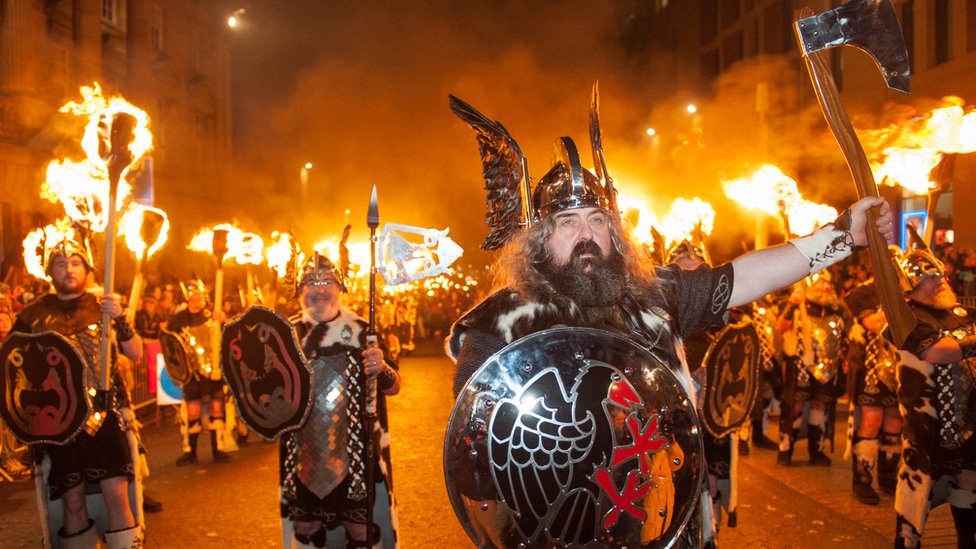
They would also like you to be ashamed to have been associated with any of this, so you won't push back on what they do with their newfound power. 'Wouldn't that be giving encouragement to crazies, like your friend in the buffalo hat and Viking tattoos? You shouldn't encourage them. We won fair and square. Say it again. Everything we're doing is legitimate and justified, because we won fairly and you are bad people.'
We do have to decide on basic question of what is to be done. Elise asks, in one of the Plato posts below, what we do if the government falls into wickedness and also there is nowhere else to go. That's a good question. There's nowhere else to go.
Does that justify revolution? Maybe. At this point, I'm inclined to be stoic in the literal sense -- to return to philosophy, accept what can't be changed, and to hope that the Biden crew of Establishmentarians won't get too crazy. I'm going to try, in other words, to obey the constitutional order and do what a citizen ought to do.
That said, I absolutely do embrace political violence on those occasions in human history when it is truly called for and necessary. I do not reject it as an option. I just intend to try to live peacefully, and see if that works. Even the mighty Declaration of Independence says:
"Prudence, indeed, will dictate that governments long established should not be changed for light and transient causes; and, accordingly, all experience has shown, that mankind are more disposed to suffer, while evils are sufferable, than to right themselves by abolishing the forms to which they are accustomed."
So we'll try that first.
"The Chinese Vision of Freedom"
The Blue Flu
Military more than political, really.
I had read that the DC guard was going to be deployed today. If I were handling the deployment, I would have put them around the Capitol as the OBVIOUS place that would be in danger, since that's where the Electoral College votes were being counted today. The only way even a very large protest could have disrupted that would be to penetrate the building; so, job one would be to prevent that from happening.
Turns out the Pentagon "rejected the request" from the civilian government to secure their own national capitol against an obvious risk at a critical moment. Just like the police who have been letting rioters carry on nationwide, the military decided it didn't want the bad press of having to enforce order against political protests that spin into violence.
National Guard units are activating now, at the President's order, to enforce the mayor's 6 PM curfew which could have been avoided if everyone had done their job in the first place. The Capitol should never have been left unsecured today.
This failure of professionalism and discipline by our officers' corps will have profound and negative consequences.
A Brief Political Post
Vice President Mike Pence, ex officio President of the Senate, has decided not to use any powers to choose alternative slates of electors. As the link notes, Pence is wrong about the history here; both John Adams and especially Thomas Jefferson used exactly the power he is disavowing.
Nevertheless, the matter is decided. Even under the understanding that the President of the Senate could choose which slate to prefer, Mike Pence has made his choice. He is the constitutional officer assigned with the duty, and he has decided what that duty entails. No one else has the right to gainsay this decision, including any of us.
As such, the electoral college results will -- after some Congressional theater -- produce a Biden presidency. Regardless of whether the popular elections that selected the electors were constitutional, legal, or fraudulent, the electors have sent their votes and the President of the Senate will accept them. Congress will count them, and Biden will win. There will be no legally legitimate grounds for further contests.
Vice President Pence has acted according to his own best judgment, in the most consequential decision of his tenure. He has the right and power to make this decision, and so the matter is settled.
Plato's Laws VI, 3
Of the modification of the laws over time, the Athenian admits its necessity but is clearly greatly bothered by it. In fact, he can barely bring himself to speak of it; almost the whole section that is supposed to be about letting future generations alter the laws turns out to be a long discourse on the importance of good courtship and marriage rituals.
The initial argument for accepting that modification should be permitted is a metaphor, or analogy, to a painter who wishes not just to perfect a painting but to keep it looking good through the ages.
Ath. Suppose that some one had a mind to paint a figure in the most beautiful manner, in the hope that his work instead of losing would always improve as time went on-do you not see that being a mortal, unless he leaves some one to succeed him who will correct the flaws which time may introduce, and be able to add what is left imperfect through the defect of the artist, and who will further brighten up and improve the picture, all his great labour will last but a short time?
Cle. True.
Ath. And is not the aim of the legislator similar? First, he desires that his laws should be written down with all possible exactness; in the second place, as time goes on and he has made an actual trial of his decrees, will he not find omissions? Do you imagine that there ever was a legislator so foolish as not to know that many things are necessarily omitted, which some one coming after him must correct, if the constitution and the order of government is not to deteriorate, but to improve in the state which he has established?
Cle. Assuredly, that is the sort of thing which every one would desire...
Ath. As we are about to legislate and have chosen our guardians of the law, and are ourselves in the evening of life, and they as compared with us are young men, we ought not only to legislate for them, but to endeavour to make them not only guardians of the law but legislators themselves, as far as this is possible.
Presumably this is of the utmost importance in the Athenian's mind toward ensuring that there is a well-settled, disciplined population into which the adjustment of the laws might be trusted. The segue is not clearly justified, so it must be a thought that follows so naturally in the Athenian's mind -- and perhaps in Plato's, though it is important to keep their identities separate given Plato's love of irony -- that he doesn't see why anyone would need a justification for what seems to me like a significant departure. Indeed, he not only does not justify the departure, he returns to the subject for a single (rather lengthy) sentence, and then immediately dives back into marriage.
In any case, right in the middle of this discussion of marriage he does eventually tell us what he thinks the process for amending the laws should be. It should be a ten year apprenticeship, with the original legislator working with a younger man to adjust the laws of the colony as they find the need. Once that ten years is past, the laws should be fixed in a permanent form. No adjustments should be possible except with the unanimous consent of many different people:
Ath. A ten years experience of sacrifices and dances, if extending to all particulars, will be quite sufficient; and if the legislator be alive they shall communicate with him, but if he be dead then the several officers shall refer the omissions which come under their notice to the guardians of the law, and correct them, until all is perfect; and from that time there shall be no more change, and they shall establish and use the new laws with the others which the legislator originally gave them, and of which they are never, if they can help, to change aught; or, if some necessity overtakes them, the magistrates must be called into counsel, and the whole people, and they must go to all the oracles of the Gods; and if they are all agreed, in that case they may make the change, but if they are not agreed, by no manner of means, and any one who dissents shall prevail, as the law ordains.
Justice
Flyboys, 2006, after a pilot complains about a German pilot who killed a bailed-out pilot unlawfully:
Captain Thenault: "Reports can be filed. But you want "justice"? *You're* the man in the air. *You're* the man with the *gun*!"
Apropos of nothing. Just an old movie quote that happened to come to mind.
Cool if it works
Plato's Laws VI, 2
These next two days are potentially momentous, politically; but few of us are in a position to have even an indirect effect on the outcome. Thus, I shall try to studiously ignore the matters of the moment in favor of the more important matters of the eternal. Let's return to Plato's Laws, Book VI.
While I am going to continue to ignore the discussion of particular offices, e.g. how judges and magistrates should be distinguished, I do want to note in passing the truth of something Plato has to say about the officer in charge of education.
Ath. There remains the minister of the education of youth, male and female; he too will rule according to law; one such minister will be sufficient, and he must be fifty years old, and have children lawfully begotten, both boys and girls by preference, at any rate, one or the other. He who is elected, and he who is the elector, should consider that of all the great offices of state, this is the greatest; for the first shoot of any plant, if it makes a good start towards the attainment of its natural excellence, has the greatest effect on its maturity; and this is not only true of plants, but of animals wild and tame, and also of men. Man, as we say, is a tame or civilized animal; nevertheless, he requires proper instruction and a fortunate nature, and then of all animals he becomes the most divine and most civilized; but if he be insufficiently or ill educated he is the most savage of earthly creatures. Wherefore the legislator ought not to allow the education of children to become a secondary or accidental matter.
The idea that children must be properly trained less the advantages of civilization be lost to the worst kinds of savagery is an important one. This is, as he says, in some ways the first business of a society. If it fails in this, as we appear to be doing in spite of sending more children to more years of education than ever before, there is a great peril of failing in everything.
That dire point aside, note Plato's interest in ensuring that the girls and boys are both considered in education. It's not just that he mentions "youth male and female," but that his ideal officer will be someone who has successfully raised both sons and daughters. (I would not qualify, both because I'm not quite old enough and because I've only raised a son.)
Plato has the Athenian restate this view of equality in his discussion of the final purpose of life and of the state:
Ath. There was one main point about which we were agreed-that a man's whole energies throughout life should be devoted to the acquisition of the virtue proper to a man, whether this was to be gained by study, or habit, or some mode of acquisition, or desire, or opinion, or knowledge-and this applies equally to men and women, old and young-the aim of all should always be such as I have described; anything which may be an impediment, the good man ought to show that he utterly disregards.
It is not merely that women are capable of some virtues, and should be encouraged to develop the ones that they can; but that, exactly like men, the whole business of their lives should be the inculcation of virtue. Courage, temperance, justice, all these things are just as important for women as men.
This is familiar ground for readers of the Republic, but it's even more strongly stated in the Laws. In the Republic, Socrates defends merely the proposition that highly capable women should be admitted to the Guardian or Auxiliary classes, 'though it is hardly to be expected that they are going to be the equals of the men in those classes.' The view of the Republic is eugenic, in that the hope is that the classes will breed true, although some measures are taken to push failures back into the lower classes. The Laws view is not: all citizens, male and female, are to be educated and taught to strive for virtue to the best of their ability.
This last passage is immediately followed by a remark, perhaps important to us today, about what is to be done if the civilization ultimately fails and falls into vice.
Ath. And if at last necessity plainly compels him to be an outlaw from his native land, rather than bow his neck to the yoke of slavery and be ruled by inferiors, and he has to fly, an exile he must be and endure all such trials, rather than accept another form of government, which is likely to make men worse.
Death before dishonor; become an outlaw before submitting to tyranny. This much I wholly endorse.
There are two more matters in this book before we finish with it that each deserve their own section. The first is the matter of leaving the legislative power to future generations, so they may correct flaws while hopefully not undermining the original project. The second is a discussion of slavery, which even this idealized ancient society did not imagine it could avoid.
A Band Like This
It's been a tough year, but this guy's was at least as bad as yours.
I hope so, anyway.
Tempora, Mores
This is quite a development.
This means that in my lifetime we will have gone from a nation that could be scandalized by a President giving an interview to Playboy to a nation incapable of being scandalized by a President plagiarizing from Playboy.
Authority and Legitimacy
D29 links an essay with an interesting conception of what the terms "authority" and "legitimacy" mean. It's a little idiosyncratic, but it's a plausible frame for thinking about the problems Plato's Athenian has been encountering. (The essay, and its predecessor, are also worth reading in their own right; at least for those who accept that the recent election, characterized by outright violations of law and state constitutions, which were then blessed by all the courts, represents an effective end to constitutional government. However, I am here interested in the philosophy, not the politics.)
So here is how he defines his concepts:
I'll try to be more explicit about what I mean by the terms 'authority' and 'legitimacy'. Authority derives from the degree that a regime reflects the truth of human nature. Legitimacy refers to the degree that a regime reflects the views of the population it purports to represent. A bit of reflection will suggest that a given regime may be legitimate, yet lack authority--and vice versa, unfortunately. In an imperfect world, authority and legitimacy will normally be imperfect, as well. However, I take it as given that the regime established by our written Constitution had sufficient authority and legitimacy to command the consent of the population.
Arguably those are exactly the problems the Athenian is wrestling with in the last two books of the Laws. On the one hand, he needs a state that has legitimacy in this sense: the people who live under it will continue to consent to be governed by it. He takes it as read that some sort of equality is necessary to maintaining this legitimacy. So, in Book V, he proposes several approaches to ensuring this legitimacy, e.g., the complete equality of common ownership of everything, or the proportionate equality of his more complex system of tiered wealth.
Book V falters on the ground of human nature, though: the first approach is one no one will endure, anywhere at any time. The second is also one that is going to break up on the rocks of human nature, including the ordinary human activities of reproduction, economic activity, etc. These states can't exercise authority on these terms, which means that whatever legitimacy is gained is insufficient.
Book VI has the Athenian turn to an important point of human nature, which is inequality: specifically the inequality of virtue, which enables only some to be trustworthy with powerful political offices. He has an elaborate system, again, designed to try to ensure that only the best people gain power and exercise it well: that is, a system of authority that one could trust.
The problem here proves then to be legitimacy: human beings will not accept that they are unworthy of equality of power, and will revolt against a scheme that sets out to rule them without giving them a share. The Athenian proposes accepting some schema that will allow the less-worthy to participate in government offices, but proposes that it needs to be minimized because it's terribly dangerous and destructive to give power to the vicious.
So whether or not you think these essays describe our current conditions well, I think it's very helpful for trying to see the problems Plato is teasing out. Feel free to reference it in our discussions of the Laws.
“Awomen”
It’s more rhetoric than prayer, I guess.
UPDATE:
Some clever rejoinders:
"How will the churches know which are the hymns and which are the hers?"
"Joe Biden to call for national mask mandate and womandate."
Add any more you find in the comments.
Venison Mince Pies
I forgot to take a picture, but the venison pies were great. I took AVI’s advice and omitted ingredients I wasn’t sure about, but left in Christmas spices that sounded plausible with game. Highly recommended.
Plato's Laws VI
A Short Delay
I was planning to get to Laws VI today, but we have lost power. I could try reading by candlelight, and perhaps I shall when the meager sunlight is gone. I won’t be able to write much today, though: just picking on my phone while it has power.
So you are excused from your philosophy lecture for today. Do catch Elise’s explanation in the last section about how she had a similar approach in mind, distinct from both Plato’s and UBI in interesting ways.