Lois Lerner, the director of the I.R.S. division that oversees tax-exempt groups, acknowledged that the agency had singled out nonprofit applicants with the terms “Tea Party” or “patriots” in their titles in an effort to respond to a surge in applications for tax-exempt status between 2010 and 2012. She insisted that the move was not driven by politics, but she added, “We made some mistakes; some people didn’t use good judgment. . . . For that we’re apologetic,” she told reporters on a conference call. . . . But Ms. Lerner said the examinations of the Tea Party groups were not a response to [campaign watchdog activist] pressure. She portrayed it more as a bureaucratic mix-up. . . . Staff members at that office singled out the terms “Tea Party” and “patriot,” she said, but not out of political bias; it was “just their shortcut.”

IRS apologizes for not politicizing tax-exempt org applications
On the plus side, the New York Times is actually covering this story. On the other hand, is anybody really buying this explanation?

That's All Right, We Find It Comforting To Be Proven Correct About You
The IRS issues an apology.
UPDATE: Powerline says of the story:
We all always knew it was true.
UPDATE: Powerline says of the story:
This is a shocking news story–one that would be a major scandal in a Republican administration–but...Come off it. The "but..." gives it away. None of us are shocked by this. This is exactly what we expect from our government. That's why the President made his famous joke about it. It's funny because it's true, right?
We all always knew it was true.
It's Not Just The Gas Can
In an essay called "How Government Wrecked the Gas Can," writer Jeffrey Tucker describes the frustration of just trying to pour gasoline into a car. It's hard to do, not because we don't understand how to do it better, but because we aren't allowed to: gas cans are no longer permitted to have vents.
More than that, it enabled us to be free in the literal sense. We could go where we wanted to go. We could do many things, as individuals, that we could not have done by ourselves before. With a chainsaw I can, by myself, fell a great oak and buck it into logs in part of an afternoon. There's enough stored energy in that tree to heat my home for a good part of a winter, but the only reason I can access it is the stored energy in the gasoline. The ability to bring that to bear on the work I need to do is what enables me to live as a free individual, outside of a city and in no larger a community than I want.
It used to be that gasoline was a kind of energy you could store. When I was a boy, we would have a gas can -- with a vent -- that had a few gallons inside of it in case we needed it around the place. It might be used for a lawnmower, or the tiller for our garden that excused us from owning a mule, or to mix up with fuel oil for a chainsaw.
These days you can't store gasoline for very long. Even with fuel stabilizers, the stuff will go start to go bad after about thirty days. It's not that we don't know how to make it better, so that we could store it up and use it when we liked. It's that we aren't allowed to do it.
The new stuff rots, partially turns into varnish. It'll burn so hot it will score your pistons, destroying the engine it was supposed to serve. Why? Because we said so.
That sound of frustration in this guy’s voice was strangely familiar, the grumble that comes when something that used to work but doesn’t work anymore, for some odd reason we can’t identify.Let's talk not just about the gas can, but about the gasoline itself. The ability to store energy is at the basis of all our advances in civilization. The ability to produce more food than we could use and store it up was one of the things that enabled cities, with all the advances of philosophy and its products, mathematics and the early sciences. The ability to bring the energy stored in a rushing river to work brought us the mills that were such an amazing technical advance at their time. The ability to bring the energy stored in wood and coal to work in the steam engine enabled us to cross mountains and vast distances at speeds as fast as a horse could run, and faster, without tiring. And the internal combustion engine, and the gasoline that powers it, enabled us to fly.
I’m pretty alert to such problems these days. Soap doesn’t work. Toilets don’t flush. Clothes washers don’t clean. Light bulbs don’t illuminate. Refrigerators break too soon. Paint discolors. Lawnmowers have to be hacked. It’s all caused by idiotic government regulations that are wrecking our lives one consumer product at a time, all in ways we hardly notice.
It’s like the barbarian invasions that wrecked Rome, taking away the gains we’ve made in bettering our lives. It’s the bureaucrats’ way of reminding market producers and consumers who is in charge.
More than that, it enabled us to be free in the literal sense. We could go where we wanted to go. We could do many things, as individuals, that we could not have done by ourselves before. With a chainsaw I can, by myself, fell a great oak and buck it into logs in part of an afternoon. There's enough stored energy in that tree to heat my home for a good part of a winter, but the only reason I can access it is the stored energy in the gasoline. The ability to bring that to bear on the work I need to do is what enables me to live as a free individual, outside of a city and in no larger a community than I want.
It used to be that gasoline was a kind of energy you could store. When I was a boy, we would have a gas can -- with a vent -- that had a few gallons inside of it in case we needed it around the place. It might be used for a lawnmower, or the tiller for our garden that excused us from owning a mule, or to mix up with fuel oil for a chainsaw.
These days you can't store gasoline for very long. Even with fuel stabilizers, the stuff will go start to go bad after about thirty days. It's not that we don't know how to make it better, so that we could store it up and use it when we liked. It's that we aren't allowed to do it.
The new stuff rots, partially turns into varnish. It'll burn so hot it will score your pistons, destroying the engine it was supposed to serve. Why? Because we said so.
Unnatural
One of those things that gets passed around:

Ought nature to be illegal? It might be a reasonable argument against the illegal status of cannabis, as opposed to (say) manufactured drugs such as methamphetamine or cocaine. On the other hand cyanide is all natural, and it's still good policy to at least advise people about the effects of its consumption.
Still, perhaps there ought to be a presumption of legality in the natural. Else we depend on masters, where once we could grow our own food.

Ought nature to be illegal? It might be a reasonable argument against the illegal status of cannabis, as opposed to (say) manufactured drugs such as methamphetamine or cocaine. On the other hand cyanide is all natural, and it's still good policy to at least advise people about the effects of its consumption.
Still, perhaps there ought to be a presumption of legality in the natural. Else we depend on masters, where once we could grow our own food.
The politics of the cheerful
Apropos of recent discussions about both the NRA and state nullification, the Texas legislature is considering the following bill:
It's nice to get cheerful political news now and then. If you'll excuse me, I've got to go pop some corn in preparation for the kick-off of the Benghazi hearings. To my amazement, the subject is finally getting coverage on CBS, PBS, and CNN. Even more shocking: on NBC and in the Washington Post. The NewYork Times has gone so far as to publish comments from its Public Editor about whether the New York Times should be covering the story. Much of the coverage naturally focuses on attempts by unscrupulous Republicans to politicize a story about the Obama administration's presidential campaign strategy to leave Americans to die without help overseas and then lie about it.
____________________________________________________________________
*I got the House bill information from an NRA email update, but the website is here.
House Bill 1076 by state Representative Steve Toth (R-The Woodlands) would prohibit any state agency or agency employee from enforcing a federal statute or regulation on firearms or firearm accessories that does not exist under Texas state law. Any agency that violated this prohibition would not be allowed to receive state grant funds for the fiscal year in which a violation occurred.This is only one of a raft of bills* that recently passed significant legislative hurdles in the same week when the NRA held a big rally in Houston, including proposals to eliminate criminal penalties for inadvertent display of a concealed weapon, to streamline the CHL license procedure, to penalize state agencies that post erroneous notices prohibiting the carrying of weapons, to limit the ability of private college campuses to restrict the transport of licensed firearms in students' cars, and to allow police to auction seized firearms rather than destroy them, if they can't be returned to their rightful owners.
It's nice to get cheerful political news now and then. If you'll excuse me, I've got to go pop some corn in preparation for the kick-off of the Benghazi hearings. To my amazement, the subject is finally getting coverage on CBS, PBS, and CNN. Even more shocking: on NBC and in the Washington Post. The NewYork Times has gone so far as to publish comments from its Public Editor about whether the New York Times should be covering the story. Much of the coverage naturally focuses on attempts by unscrupulous Republicans to politicize a story about the Obama administration's presidential campaign strategy to leave Americans to die without help overseas and then lie about it.
____________________________________________________________________
*I got the House bill information from an NRA email update, but the website is here.
Not doing nothing
The president has been doing some repair work on the fuzzy pink boundary-like area that his political enemies have unfairly read into his off-script remarks on Syria:
[I]f we say we’re taking a position, I would think at this point, the international community has a pretty good sense that we typically follow through on our commitments. . . . I think there’d be severe costs in doing nothing. That’s why we’re not doing nothing.”So our credibility is undiminished. I'm glad he cleared that up. I had been worrying that he might have been indulging himself in a little preening trash-talk that he didn't expect to be taken seriously.
NRA = IRA
Apparently some of our own fellow citizens are not as taken with the NRA.
On the upside, it's better than the proposal to kill NRA members we heard earlier. At least this one does something to provide jobs! Our liberal friends have finally found an idea capable of achieving full employment: guards to watch over a vast number of political prisoners.
I have seen the light. After all these years, I now agree that it’s fruitless to give the benefit of the doubt to people who are so obviously corrupt, so clearly malevolent, so bent on hurting innocent people for their own sick gain. No more due process in the clear-cut case of insidious terrorism. When the facts are so clearly before all Americans, for the whole world to see, why bother with this country’s odious and cumbersome system of justice? Send the guilty monsters directly to Guantanamo Bay for all eternity and let them rot in their own mental squalor.Are we sure Guantanamo Bay will hold another five million prisoners?
No, no, no. Not the wannabe sick kid who blew up the Boston marathon or the freak that’s mailing ricin-laced letters to the president. I’m talking about the real terrorist threat here in America: the National Rifle Association.
I’m not laughing. What the NRA did last week was no laughing matter.
On the upside, it's better than the proposal to kill NRA members we heard earlier. At least this one does something to provide jobs! Our liberal friends have finally found an idea capable of achieving full employment: guards to watch over a vast number of political prisoners.
UKIP = NRA?
For a long time we've heard it said that the Tory party in the UK is just the Labor party in slow motion. That is, there's been a consensus about how to govern: taxes go up, freedom goes down, government grows, union with Europe proceeds. All you get to vote for is whether it happens more or less quickly.
Sounds like that consensus may be breaking up a bit.
Good for them.
Sounds like that consensus may be breaking up a bit.
Good for them.
This Should Be Interesting
The state legislature has passed a bill that would make it a crime for any person to attempt to implement the PP-ACA -- which is to say that, if Gov. Haley signs the bill, it will be against state law to implement Federal law. She may or may not sign it, but she's on the record as being totally opposed to implementation:
Today we have both aggravating conditions as well as a law that is likely to meet nullification efforts elsewhere as well as in South Carolina. Its implementation may well prove incredibly unpopular given the vast increases in cost and taxes, and the damage it will do to people's ability to find work adequate to making a living. Congress can take no effective action to fix the problems with the law until 2015 at the earliest, and it will be 2017 before there is a chance of repeal. The Supreme Court has upheld the law, twisting themselves in a knot in attempt to find it constitutional. So the states have to be the field of action for the necessary resistance: there's no getting around that.
Well, it'll be an exciting time to be alive, anyway.
South Carolina does not want, and cannot afford, the president’s health care plan. Not now, and not ever. To that end, we will not pursue the type of government-run health exchanges being forced on us by Washington. Despite the rose-colored rhetoric coming out of D.C., these exchanges are nothing more than a way to make the state do the federal government’s bidding in spending massive amounts of taxpayer dollars on insurance subsidies that we can’t afford.The article portrays this attempt at nullification as a "viable alternative to secession," but seeing organized resistance to the Federal government at the state level does not make secession less likely. Nullification crises also preceded the Civil War, after all, as well as other very tense moments in early American history that led to the several great compromises of the early 19th century. Another compromise might have put off, or avoided, the Civil War -- but there were some set on having their way, including not just the hot-tempered folks from South Carolina but a president, Lincoln, who was utterly sure of the rightness of his position.
Today we have both aggravating conditions as well as a law that is likely to meet nullification efforts elsewhere as well as in South Carolina. Its implementation may well prove incredibly unpopular given the vast increases in cost and taxes, and the damage it will do to people's ability to find work adequate to making a living. Congress can take no effective action to fix the problems with the law until 2015 at the earliest, and it will be 2017 before there is a chance of repeal. The Supreme Court has upheld the law, twisting themselves in a knot in attempt to find it constitutional. So the states have to be the field of action for the necessary resistance: there's no getting around that.
Well, it'll be an exciting time to be alive, anyway.
Mitt Romney Gives Democratic Advice
Mother Jones is subtly mocking him for his suggestion to new college graduates that they should begin having children as soon as is feasible, but it's the progressives who need to be rethinking their opposition to young marriage and child-rearing. More than they have yet realized, their beloved social insurance programs depend on solid families. For one thing, a married couple raising their own children is the one group least likely to drain the coffers of such programs. For another, a married couple is statistically likely to be far richer, and thus capable of paying higher taxes to support such programs. Finally, large families provide the seeds for more such families in the future -- more taxpayers, and taxpayers whose upbringing in successful marriages mean they are more likely to sustain successful marriages themselves.
The day is coming when they will no longer be able to pretend that is not so. The loudest calls for family and children will be coming from the Left: before you know it, now that the Baby Boomers have begun to retire, the young will be hearing that this is their patriotic duty.
The day is coming when they will no longer be able to pretend that is not so. The loudest calls for family and children will be coming from the Left: before you know it, now that the Baby Boomers have begun to retire, the young will be hearing that this is their patriotic duty.
Prison Couldn't Happen To A More Deserving Couple
It's rare to see our justice system produce so poetic a result.
If the result were fully poetic, of course, they would not have been offered a plea deal. They'd be railroaded into prison for an excessive period of time, having been kept away from legal representation. They benefit from the prosaic concerns of justice that they so often denied to others, in order to enrich themselves.“Your statement that I have disgraced my judgeship is true. My actions have destroyed everything I worked to accomplish and I have only myself to blame.”The two judges face up to seven years in prison under a plea agreement made with the state.
Democracy May Have Had Its Day
So argues a hero of the academy, in his final hour.
What I've realized very recently is that the Founders took some pains to give us all three forms of government. It isn't just that the branches of government have checks and balances. It is that they are different forms of government, on just Aristotle's terms. The Congress is a polity (or democracy). It is popularly elected, and enacts decisions by majority rule. It is susceptible to both the goods and the harms of rule-by-many.
The judiciary is an aristocracy (or oligarchy). It is built around an elite class with barriers to entry. It has the strengths and the weaknesses of rule-by-few.
The executive is essentially a monarchy (or tyranny). One man dominates it, selects its leaders, and orders its functions. It has all the potential benefits and hazards of rule-by-one.
What the Founders did was to give us a system that not only checked three branches with three separate functions against one another. They also provided us with a system in which the three basic kinds of government were all present, and counterbalanced. We could get every good Aristotle saw in every system; and when one branch went bad, there was the hope that the competing interests of the other forms of government might right it.
It was a good idea. There is only one problem, and it is one Aristotle did not consider: the problem of scale. More and more, I think a government must adhere to a human scale in order to be just. I mean by "a human scale" that maximum set of people such that the members can all know one another, and care about one another. At levels beyond this, a fundamental aspect of humanity is lost: we don't love each other any more, and are content to treat the unloved members as less than the beloved ones.
Whether such a government can practically exist on earth, I do not know: much of that depends on the difficulty of being able to defend yourself against the other humans outside the order, who do not love you in any case. Unless we find a way to achieve it, though, I cannot imagine a society that will escape Jefferson's requirement: that of periodic overthrow and replacement, in order to keep the tree of liberty hale.
Democracy, wrote Mr. Kagan in "Pericles of Athens" (1991), is "one of the rarest, most delicate and fragile flowers in the jungle of human experience." It relies on "free, autonomous and self-reliant" citizens and "extraordinary leadership" to flourish, even survive.In just the last few weeks I have come to a realization about the way the Founders structured our system of government. As we have discussed here many times, Aristotle argued that there were three basic forms of government, each of which could become perverted by self-interest among the ruling class. Each of the three had characteristic strengths and weaknesses. The three forms of government are rule-by-one, rule-by-few, and rule-by-many: you can call them monarchy, aristocracy, and polity. If the monarch comes only to care about his own thoughts and interests, he becomes a tyrant; the aristocracy, an oligarchy; and the polity, on Aristotle's terms, a democracy.
These kinds of citizens aren't born—they need to be educated. "The essence of liberty, which is at the root of a liberal education, is that meaningful freedom means that you have choices to make," Mr. Kagan says. "At the university, there must be intellectual variety. If you don't have [that], it's not only that you are deprived of knowing some of the things you might know. It's that you are deprived of testing the things that you do know or do think you know or believe in, so that your knowledge is superficial."
As dean, Mr. Kagan championed hard sciences, rigorous hiring standards for faculty, and the protection of free speech. Those who see liberal education in crisis return to those ideas. "Crisis suggests it might recover," Mr. Kagan shoots back. "Maybe it's had its day. Democracy may have had its day. Concerns about the decline of liberty in our whole polity is what threatens all of the aspects of it, including democracy."
Taking a grim view of the Periclean era in Athens, Plato and Aristotle believed that democracy inevitably led to tyranny. The Founding Fathers took on their criticism and strove to balance liberty with equality under the law.
What I've realized very recently is that the Founders took some pains to give us all three forms of government. It isn't just that the branches of government have checks and balances. It is that they are different forms of government, on just Aristotle's terms. The Congress is a polity (or democracy). It is popularly elected, and enacts decisions by majority rule. It is susceptible to both the goods and the harms of rule-by-many.
The judiciary is an aristocracy (or oligarchy). It is built around an elite class with barriers to entry. It has the strengths and the weaknesses of rule-by-few.
The executive is essentially a monarchy (or tyranny). One man dominates it, selects its leaders, and orders its functions. It has all the potential benefits and hazards of rule-by-one.
What the Founders did was to give us a system that not only checked three branches with three separate functions against one another. They also provided us with a system in which the three basic kinds of government were all present, and counterbalanced. We could get every good Aristotle saw in every system; and when one branch went bad, there was the hope that the competing interests of the other forms of government might right it.
It was a good idea. There is only one problem, and it is one Aristotle did not consider: the problem of scale. More and more, I think a government must adhere to a human scale in order to be just. I mean by "a human scale" that maximum set of people such that the members can all know one another, and care about one another. At levels beyond this, a fundamental aspect of humanity is lost: we don't love each other any more, and are content to treat the unloved members as less than the beloved ones.
Whether such a government can practically exist on earth, I do not know: much of that depends on the difficulty of being able to defend yourself against the other humans outside the order, who do not love you in any case. Unless we find a way to achieve it, though, I cannot imagine a society that will escape Jefferson's requirement: that of periodic overthrow and replacement, in order to keep the tree of liberty hale.
The worldwideweb
We lost our internet connection briefly this morning, which deprived me of access to essential information like this:
Update: I guess that first link was broken. This one is from YouTube, and should inspire you to check out the other offerings from these total nutcases.
Update: I guess that first link was broken. This one is from YouTube, and should inspire you to check out the other offerings from these total nutcases.
Long 'Ere We Came to the Streets of Aberdeen
In the comments to one of Tex's posts, I mentioned having dinner last night with an older gentleman who had been in Iraq as a British soldier just about fifty years before I was there. He is of English origin, but at one point he had spent significant time teaching in Aberdeen. The Scots of Aberdeen, he said, feel about the same way about their English visitors as Southerners do about Yankees.
He told a story to illustrate the point. An Englishman is driving north from Edinburgh toward Aberdeen, when he comes to a fork in the road. The signpost pointing to the left fork reads "Aberdeen, 30 miles," and the sign on the right fork reads the same thing. Puzzled, he pulls off to ponder the situation until he sees an old Scot working his field.
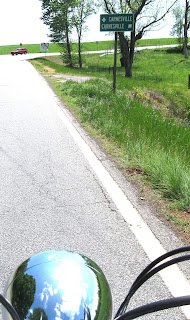
Grim faces a similar dilemma.
The Englishman gets out of the car and steps over to where the Scot is laboring, and calls down to him from the road. "Excuse me, good man," he says, "but does it make any difference which road I take to Aberdeen?"
The Scot ponders the question in a dark silence for a moment. Then he replies, "Nae ta me!"
He told a story to illustrate the point. An Englishman is driving north from Edinburgh toward Aberdeen, when he comes to a fork in the road. The signpost pointing to the left fork reads "Aberdeen, 30 miles," and the sign on the right fork reads the same thing. Puzzled, he pulls off to ponder the situation until he sees an old Scot working his field.

Grim faces a similar dilemma.
The Englishman gets out of the car and steps over to where the Scot is laboring, and calls down to him from the road. "Excuse me, good man," he says, "but does it make any difference which road I take to Aberdeen?"
The Scot ponders the question in a dark silence for a moment. Then he replies, "Nae ta me!"
Kicking the anthill
Minor excitement in my neighborhood this morning as a fellow who was either off the right meds or on the wrong ones gave several people the alarmed creeps over the course of the morning. He ultimately followed my next-door neighbor right up to her house, making inappropriate conversation, and increasing the "eww" factor by choosing to take off his shirt as they approached the door. She went inside, locked the door, armed herself, and called for help. Presently her husband and his co-worker arrived (armed) to block off our "loop" on both ends, while various other neighbors ventured out (armed) to see what was up, the phone tree having reached most nearby households by that time. Two sheriff's deputies arrived to take him into custody at about the time more distant neighbors started driving up (armed) to look into something they'd heard on the scanner.
Once he'd been hauled off, my neighbor's husband came home to hear the details from her. When she got to the part about the guy taking off his shirt, her husband's face assumed a dead-eyed expression I'd never seen on it before. He's normally the most amiable of fellows. His face made me want to back up a step.
We get the occasional passers-through who irritate us mildly by loitering on our loop for the apparent purpose of drinking a six-pack and dumping the cans before driving home, or perhaps waiting for a chance to ditch an old appliance rather than spend the time or money necessary to leave it at the dump. We invite them to clear out, but we don't go ape. This guy didn't do or say anything overtly threatening. Nevertheless, he punched every button we own, inducing that atavistic reaction of "snake. Kill it." The sheriff's deputies were giving his truck and his person a thorough searching the last I saw. If he was carrying, he picked the wrong way to call attention to himself.
Once he'd been hauled off, my neighbor's husband came home to hear the details from her. When she got to the part about the guy taking off his shirt, her husband's face assumed a dead-eyed expression I'd never seen on it before. He's normally the most amiable of fellows. His face made me want to back up a step.
We get the occasional passers-through who irritate us mildly by loitering on our loop for the apparent purpose of drinking a six-pack and dumping the cans before driving home, or perhaps waiting for a chance to ditch an old appliance rather than spend the time or money necessary to leave it at the dump. We invite them to clear out, but we don't go ape. This guy didn't do or say anything overtly threatening. Nevertheless, he punched every button we own, inducing that atavistic reaction of "snake. Kill it." The sheriff's deputies were giving his truck and his person a thorough searching the last I saw. If he was carrying, he picked the wrong way to call attention to himself.
More rituals that bind
A friend's father died a few days ago. It was not a tragic death; he was very old, had been miserably ill for years, and badly missed his wife of 57 years, who died a couple of years back. He got a proper send-off yesterday. A preacher spoke briefly and to the point. We sang hymns. The Masons conducted their elaborate, touching ceremony, then an honor guard of Marines from Corpus Christi delivered a 21-gun salute, folded the flag properly for delivery to our friend, and finished up with a very fine "Taps." The Masons put on a lunch for the visiting family.
Ray Brashears joined the Navy in 1944, then again in 1945, having been ousted the first time when they discovered he was only 17 years old. He served in the Bikini Islands during the atomic testing there and was one of the few surviving members of that cohort. He settled in our neighborhood in 1974, which by local standards made him quite the old timer. He left nine great-grandchildren.
Ray Brashears joined the Navy in 1944, then again in 1945, having been ousted the first time when they discovered he was only 17 years old. He served in the Bikini Islands during the atomic testing there and was one of the few surviving members of that cohort. He settled in our neighborhood in 1974, which by local standards made him quite the old timer. He left nine great-grandchildren.
Television News
As most of you know, Grim's Hall has been without television since 2006 -- originally as a cost-saving measure, and later because we found we didn't miss it. I didn't have a lot of time for television before that, and one reason it made so little impact on us was that we were always too busy to watch it anyway. I mostly used it to watch old movies that happened to be on late in the evening as I was winding down for bed, but that can be done more cheaply in many ways. In addition I've often been out of the country, in places where television wasn't necessarily available or in English.
For these reasons I've been largely immune to many of the worst trends afflicting society these last twenty years: reality television, the general decline of standards of obscenity, the general rise of libertine standards on displays of sexuality. But I had thought I was more or less engaged with the news, because I keep up with the news carefully as a citizen ought to do.
These last few days have disabused me of that notion. Visiting a relative in the hospital, I've been exposed to television news as it is now done on both local and cable networks. I am appalled.
We used to watch the news at home when I was a boy, and I remember that it was nearly always bad. But I don't remember the obsessive focus on getting and displaying footage of those whom the overwhelming force of tragedy has momentarily turned to screaming, crying, emotional wrecks. At some point the news has become genuinely wicked, preying on disaster for the pure voyeuristic pleasure of seeing a human being reduced to an animal.
This is horrifying and shameful. I dread to consider what it says about our culture.
For these reasons I've been largely immune to many of the worst trends afflicting society these last twenty years: reality television, the general decline of standards of obscenity, the general rise of libertine standards on displays of sexuality. But I had thought I was more or less engaged with the news, because I keep up with the news carefully as a citizen ought to do.
These last few days have disabused me of that notion. Visiting a relative in the hospital, I've been exposed to television news as it is now done on both local and cable networks. I am appalled.
We used to watch the news at home when I was a boy, and I remember that it was nearly always bad. But I don't remember the obsessive focus on getting and displaying footage of those whom the overwhelming force of tragedy has momentarily turned to screaming, crying, emotional wrecks. At some point the news has become genuinely wicked, preying on disaster for the pure voyeuristic pleasure of seeing a human being reduced to an animal.
This is horrifying and shameful. I dread to consider what it says about our culture.
Subscribe to:
Posts (Atom)