A Strange and Striking Logic

My original home state was Georgia, though both of my parents were from mountainous East Tennessee, and I grew up with Georgia's particular take on the American political system. Today a judge overturned (at least pending appeal) a six-week abortion ban that was passed by the legislature and signed into law by the governor, arguing that the law was unconstitutional -- "was" as in "not now, but at the time it passed."
Judge Robert McBurney of the Superior Court of Fulton County said the law was void at the time it was passed in 2019 under the U.S. Supreme Court's Roe v. Wade ruling, which established a federal right to abortion in 1973.

McBurney said the state would have to pass the law again now that the Supreme Court has overturned Roe for the ban to be valid. The 2019 law was "plainly unconstitutional when drafted, voted upon, and enacted," McBurney wrote in his opinion.

Now I would think this logic was correct if the reason for the change in what 'was' constitutional had been a constitutional amendment. Let us say that you passed a law that said that no one could vote until age 28, as apparently some particularly ignorant journalists think is being discussed somewhere. That's clearly unconstitutional: the Federal Constitution determines that the voting age is 18. Such a law would be unconstitutional and therefore void, and like all unconstitutional laws it would have no legitimate force from the moment it was enacted. You'd have to amend the Constitution first, and then pass the law later.

A Supreme Court ruling is not like that. The Supreme Court did not change the Constitution; it only stated that earlier courts had misunderstood it when they said it meant X, and that the correct interpretation is Y instead. The Constitution was therefore the same all the time; our judges just didn't understand it correctly for a while. 

Too, the whole reason the Supreme Court was asked to rule on this was that there was a controversy about what the right meaning really was. It was not 'plain' what the constitutional stance was; lots of people disagreed, for decades, and eventually the court came to see it their way.

Thus, I think the logical position is that the constitution never barred this law, and that it is valid as enacted. Nobody changed the Constitution. The Supreme Court does not have that power.

Railroad Nation

Partly because the Russians were never able to establish air superiority, Ukraine's on-time railroads remain the backbone of the nation and its war effort. Trains running on-time would normally make easy targets for bombing runs, but Russia's military strategy did not prize air superiority the way the American way of war has done. As a result, the Russians are unable to cut these flourishing supply lines; for the same reason, they are vulnerable to the artillery we have been supplying to their foes. 

The war entered a new phase last week, between the retreat in the south, the advance in the center covered by a wave of missile strikes, and the big diplomatic push that is being made to end the war. The later is a good cop - bad cop approach, I think, with Ukraine in the role of bad cop. They can't continue the war without external support, however, both in funding and weapons; so the West can pretend that the bad cop holds the reins, but in the end Russia knows that the 'good cop' can cut them a deal.

The Violent Gods

Via Arts & Letters Daily, a review of a new translation of Ovid.

One day in the thirteenth century, James I of Aragon, not only a great conqueror but a king famous for his powers of memory, made a revealing slip: "We got to our feet and we began with an authority from the Sacred Scripture that says: Non minor est virtus quam quaerere parta tueri."

“It takes no less talent to keep what you’ve got than to acquire it”: for a crusading medieval monarch, what more convenient justification for territorial consolidation could there be than “Sacred Scripture”?

The problem is that that line of Latin doesn’t appear anywhere in the Bible. It comes, rather, from a notoriously risqué book of poems, published during the reign of the Emperor Augustus, whose narrator doles out advice on how to seduce women—preferably married ones.... That these lines of Roman erotic verse had become indistinguishable from Scripture by the Middle Ages isn’t really all that surprising. More than those of any other poet of ancient Rome, the works of Publius Ovidius Naso—we know him as Ovid—have insinuated themselves into the mind of Europe, influencing its literature, art, and music.

The translation is of the Metamorphoses, a long poem that introduces new twists to what were already old stories. For example, the story of Medusa was ancient even then; Ovid's new variation turns the goddess Athena ("Minerva" to the Romans) into a bad actor, who executes the transformation of a beautiful young woman into a monster in order to punish the woman for having resisted a divine rape by Poseidon ("Neptune," of course, for the Romans; (or, given that Athena was a virgin goddess, it may have been that Medusa failed to resist the rape; there is some scholarly debate about exactly what it was that offended Athena, the sex or the mortal defiance of a divine will).

That doesn't turn up in the review, but a lot of similar stories made the book.

Above all, Ovid’s presentation of Jove—the king of the gods and the obvious counterpart of Augustus himself—is almost uniformly disparaging in its contempt for the god’s use of his power. The Metamorphoses often reads like a catalogue of Jove’s violent offenses: Jove transforming himself into a bull in order to abduct Europa, Jove becoming a swan to get at Leda, Jove taking the form of an eagle in order to snatch up Ganymede....

In the Arachne episode, Minerva weaves a tapestry that celebrates her victory over Neptune, her uncle, in a long-ago contest for possession of Athens—an egotistical bit of divine P.R. Arachne’s weaving, by contrast, depicts nine rapes committed by Jove, six by Neptune, a few by Apollo and Bacchus, and one by Saturn, Jove’s father. 

The new translation abandons 19th and 20th century habits of euphemizing what exactly these gods were doing.  Numerous chapters are, the reviewer notes, titled in the form "X Rapes Y." The translator, Stephanie McCarter, writes:

The inclusion of so many stories of rape in the epic suggests, in fact, that Ovid felt such violence was worthy of critical interrogation. . . . To read Ovid with an eye toward his full complexity—his beauty and his brutality—allows us to scrutinize our own thorny relationship with the past and with the ambivalent inheritance we have received from it. To wrestle with the unsavory aspects of ancient literature is to do the hard work of self-examination.

A fair point. Ovid arguably used this not merely to play with violence, but to criticize his (very dangerous) political overlords. Who could object to being likened to a god, and the highest of gods in your pantheon, no less than Jove himself? When Ovid celebrates Augustus as being like Jove, he is not -- or not merely -- paying a compliment. 

That’s a Bold Move, Cotton


As a love song strategy, I’ve heard plenty of “hey pretty lady you’d better be sure, because I am dangerous.” I don’t think I’ve heard anyone put the case against themselves quite so front-and-center. Points for honest communication in a relationship!

You Don’t Say

In the local paper today:
Elections officials held a meeting this morning to clear the air about a sudden increase in ballots favoring Democrats.
Democrats got smashed locally, but with these changes they won’t be completely excluded from the local government. 

Happy Veterans Day


My father as a Vietnam-era Drill Instructor; I think he was a Staff Sergeant in this picture, but I can't see the rank insignia. 

My best to all of you who have earned the distinction of calling yourselves Veterans. Have a glorious day, and a wonderful weekend. 

Child ballads

As fond as I am of Child ballads for lo these five decades or more, I don't recall hearing "Earl Richard" until this week. Possibly I'd heard other version of it that didn't suit me and so didn't stick in memory, but I quite love this Sean Garvey rendition. I wasn't familiar with him, either, and am sorry to find he died earlier this year, and also to find that his recordings mostly don't seem available for purchase. This is a slow, repetitive, pretty, sad, hypnotic tune. What a nice burr Garvey had in his lower register.

Captain Blood

For one reason and another, until just now I had never read the once-popular novel Captain Blood by Rafael Sabatini. It is exactly the sort of book I would have liked in my teens and twenties, kin to The Three Musketeers and its ilk. I've also never seen the movie, the one which launched the career of Errol Flynn and gave rise to other movies I've enjoyed such as 1935's The Adventures of Robin Hood. I will review it here, past a jump to avoid spoiling it for anyone who would like to read it.

Happy Birthday

To all the Marines in the audience, enjoy the day. 

(Meme by Gruntworks)

Aristotle's Ethics in One Brief Lesson

While the best way to study Aristotle's Nicomachean Ethics is to read the whole thing carefully, over and over, and then read Aquinas' adaptation and commentary, most students these days do not ever take a philosophy class at all. Those who do often only take one survey course, and it is necessary to convey the basics quickly. 

With this in mind, I have decided that you could teach an excerpted form of the EN fairly quickly. This would be the necessary introductory materials from Book I, and then the virtues of courage, justice, and magnanimity.

The reason to approach it this way is as follows.

1) The introductory materials are necessary, so included.
2) Courage is the easiest virtue to teach and serves as a model for all the rest. It's easy to grasp what it is, and why it is a virtue/strength/excellence. Once students grasp the model, you can just hand-wave indicate how self-control is obviously a virtue in the same way.
3) Justice serves as a _substitute_ for virtue, because the lawfulness component requires laws that compel people to act the way that a virtuous person would (or face punishment). In that way, it 'can be said to be complete virtue,' but really isn't. Courage comes up again here too: the laws should compel you to go fight or face death, so that you'll go fight like a courageous person (but because you're afraid of being put to death, not because you have the virtue).
4) Magnanimity is actually complete virtue, and in fact a crowning quality that one can only obtain once one already really does have all the virtues. It's an alternative model for complete virtue from justice, but the one that actually entails virtue. The contrast will help them see how the system is really supposed to be completed; but justice has to do for most people, because most people aren't actually virtuous.

This would only be the briefest of introductions, but students would leave with a functional mental model of how the system works: what ethics is, what a virtue is, why justice (which we hear so much about these days) is only a substitute for virtue, and what true and complete virtue really looks like. You could teach this in a long afternoon or one week in a semester, and it should stick with them ever after. 

Those who develop the taste for it can read the whole book. For the rest, as Tolkien says, it's enough to go along with.

A Good Night Locally

The elections are the subject of a lot of discussion today, for obvious reasons; but at least locally, things went as well as I could have wanted. There is a lot to be said for concentrating on the local right now: the national government is subject to a deeply divided populace, as are many state governments, but locally a lot can still be done. Communities often agree on the problems that face them, even if in a larger context there is division. 

The only race I cared about particularly was the local sheriff, where Iraq war veteran Doug Farmer carried the day. He becomes the first Republican sheriff in Jackson County in a hundred years, or right at it. All the candidates came to the fire department to talk to us, and all but him said the same thing: 'Drugs are the biggest problem, and if you vote for me I will seek additional Federal resources to tackle that problem.' Farmer said, 'Drugs are the biggest problem, and they're being sold out of the same houses they've been sold out for years. We know where they are, and we know who is doing it. Vote for me and I'll go walk across their porch, knock on their door, and run them out of town or send them to prison if they won't stop.' We'll see if he does what he said he would do, but if he does he has the right kind of courage for the job.

Offices like this are a kind of honor, and honor is properly the reward of virtue. One ought to award the honor of the office to the person who has the specific virtues that office requires. The problem with our nation is that instead our system has devolved into awarding offices of honor to those who prove they are adequately corrupt to keep the money train going. People move up to higher offices not because of their demonstrated virtues, but because of their demonstrated capacity to make the money flow. Here was an exception, and a chance to award an office according to the virtues that merit it. Hopefully he will do well; hopefully, we might find more chances to award offices in the proper way.

Shenanigans

Last night at 1:45 AM the county paged out an all-stations-call to let us know that 911 was down, and there were large-scale phone service outages for the government statewide. We were directed to man all stations and not rely on dispatch services like usual. Phone lines came back up six hours later; 911 services went back down this afternoon, though they are reportedly working now.

Both my internet service provider and my cell phone's AT&T internet service, two different corporations with completely different infrastructure, were offline simultaneously this afternoon for several hours.

I have not heard any explanation of all this, but it sounds rather like a cyber attack; and there was a significant outage just two weeks ago affecting North Carolina government. Officially this was because crack cyber security agents recognized a danger and took systems offline to fix it; but as the article says, the governor "is being tight-lipped" about the outages, and no word at all has come down about today's.

Today is of course the midterm election day. The National Guard has been called out for just this purpose, although I'm not sure what being 'called out' actually means for a cyber unit
In North Carolina, cyber units have trained state entities and officials in most counties, according to Maj. Gen. Marvin Hunt, adjutant general for that state’s Guard. He said the work of his cyber team will “surge during the election to ensure that we have 24-hour coverage throughout this whole process.”

“We’re really that third party that comes in—it’s just assisting them—to give them a different look, so that on election day, we can all have confidence in our election systems,” Hunt said. 

Neely told Defense One that few states are strong enough in the cyber arena, and the need is only growing. 

Security professionals hired by states often face “military-grade adversaries” they aren’t equipped to counter, said Brig. Gen. Gent Welsh, assistant adjutant general and commander of the Washington Air National Guard.

Keep your eyes open, and take special care in case your local 911 service goes down. In the event of an emergency and the service isn't working, go to your local fire department, police station, or emergency medical service facility and report the emergency in person. Go to whichever one is closest. They'll have radios that work even if the phones are out. 

It's not a bad idea to have the local phone number written down somewhere in case the phone lines work but the 911 services don't. People call the station here all the time rather than dialing 911, and for many purposes that works very well. In an emergency 911 is usually a better option because it allows the dispatcher to contact everyone who needs to respond at once, but it is good to have options.

Happy Day

You say it's my birthday (66).

More Songs of Dying on the Highway

I just posted that song by the Barnyard Stompers because it's my favorite one that they do, but as I was reflecting on it today I realized that 'death on the highway' is a pretty significant theme for touring Texas bands. I guess if you are a band that makes its living on the road, and your roads happen to be in Texas, you spend an awful lot of time on those highways. Enough time, manifestly, for existential angst to set in.

Here's one by Bob Wayne, who is one of my favorites working today.


It'll probably be Sunday when most of you see this, so you might want to pass over that one until Monday or next weekend. 

Here's one that goes with the last post, because half of it's about dying on the road and the other half is about college sports teams.


There are doubtless more. If you have a favorite, add it in the comments.

Justice on the Gridiron

One rarely encounters anything close to true justice in the world; one never meets any Platonic form in the street, but Justice in particular seems unlikely to show its face among human beings. 

Today, however, we did see something close. The committee that decides such things had chosen to rank the University of Tennessee's football team #1 in the nation because it was undefeated, and had beaten Alabama. It placed the Georgia Bulldogs at #3 even though they were also undefeated and the defending national champions. 

What happened today was that Georgia played Tennessee.

It was a very professional, strategic destruction. Georgia went up three touchdowns to two field goals in the first half, and then spent the second half denying the field on a prevent basis. They didn't get greedy; they didn't try to run up the score. They just burned the clock. Tennessee finally scored a touchdown in the fourth quarter, but it never got close to coming back. Georgia only scored one more field goal, but scoring more points was not their tactical priority. They had plenty of points; they needed to bleed the clock for every point they allowed. The opposing quarterback, a promising young man named Hooker, was sacked six times. 

Justice is likely to be done in the next set of standings. 

Don't Mind Dying on the Highway


That's the Outlaw country / metal band known as the Barnyard Stompers. If any of you like that and are inclined to the highway, they'll be playing tomorrow night at the Bobarossa Saloon

By Their Fruits

Or, why black Republicans 'ain't'... er, acceptable
How can we distinguish between the different types of Black Republicans? Johnson contends, “we can judge them by their words and deeds.”

What type of Black Republican is Stuber? He was recruited by White Republican leadership to run against Ammons, the only African American clerk in Champaign County history. Like Deering, “the hard, overt and aggressive” White supremacist, Stuber is an election denier.

And like the incompetent, subliterate and coonish Herschel Walker, Stuber reiterates “massa” Trump’s talking points. Intimating fraud, he cast aspersions on the 2020 elections. Stuber alleged votes were not counted in Georgia and Arizona, and further declared, “Champaign County may have stopped counting. I don’t know.” But during a late August interview with The News-Gazette’s Tom Kacich, he dissembled when asked if Trump had won. Again, disingenuously claiming uncertainty, he stated, “I don’t know if he truly was the winner.”

About a month later, similar to Walker and nearly all election deniers, Stuber miraculously backtracked. Without explanation, he affirmed, “Joe Biden was legally elected president of the United States.” I find his reversal unbelievable. Indeed, I believe it’s a tactical move to deceive the electorate.
Now, if any of you had written anything like the remarks about Herschel Walker being forwarded there, people would be rightly outraged and deem the speech explicitly racist. 

I do wish people would stand by the honest and demonstrable truth that the election was illegal in that it was conducted on terms altered by executive branch officials without legislative input, and therefore unconstitutional in that the Constitution clearly states that the legislative branch shall set the terms of elections; and that, therefore, there is no legitimate government of the United States. That is, however, perhaps an unacceptable position for anyone of a conservative temperament: on the principle of 'the king is dead, long live the king,' the idea is that the government cannot be so impermanent as to cease to exist except in the most extraordinary of cases. To hold otherwise is to court the chaos of the world, which whatever else violates that most conservative principle of stability.

For people to be forbidden from raising the point that the election was extremely dodgy at minimum, however, is silly. It was conducted with radical departures from the rules established by the laws of many of the states involved in it, every one of which made it less secure. Questions about its legitimacy should be perfectly acceptable, as should be insistences that future elections abide by the law or that laws should be crafted to create more certainty and credibility for election results. 

Normality

It's hard to realize how bad things have gotten outside of the wilderness in which I have fastened myself. I used to go to this part of Union Station on a regular basis, and it was as advertised a thriving shopping district. Here, where we have happy children and dogs, hikers and backpackers, picnics and boat trips, everything seems like America hasn't changed all that much. I have to look at the news to remember that Washington, D.C. has turned itself into a post-apocalyptic nightmare -- as has San Francisco and many other cities. 

Probably a lot more Americans live in the parts of the nation that have horrified themselves than elsewhere, though. The country has been badly hurt even if there remain oases beyond the concrete. 

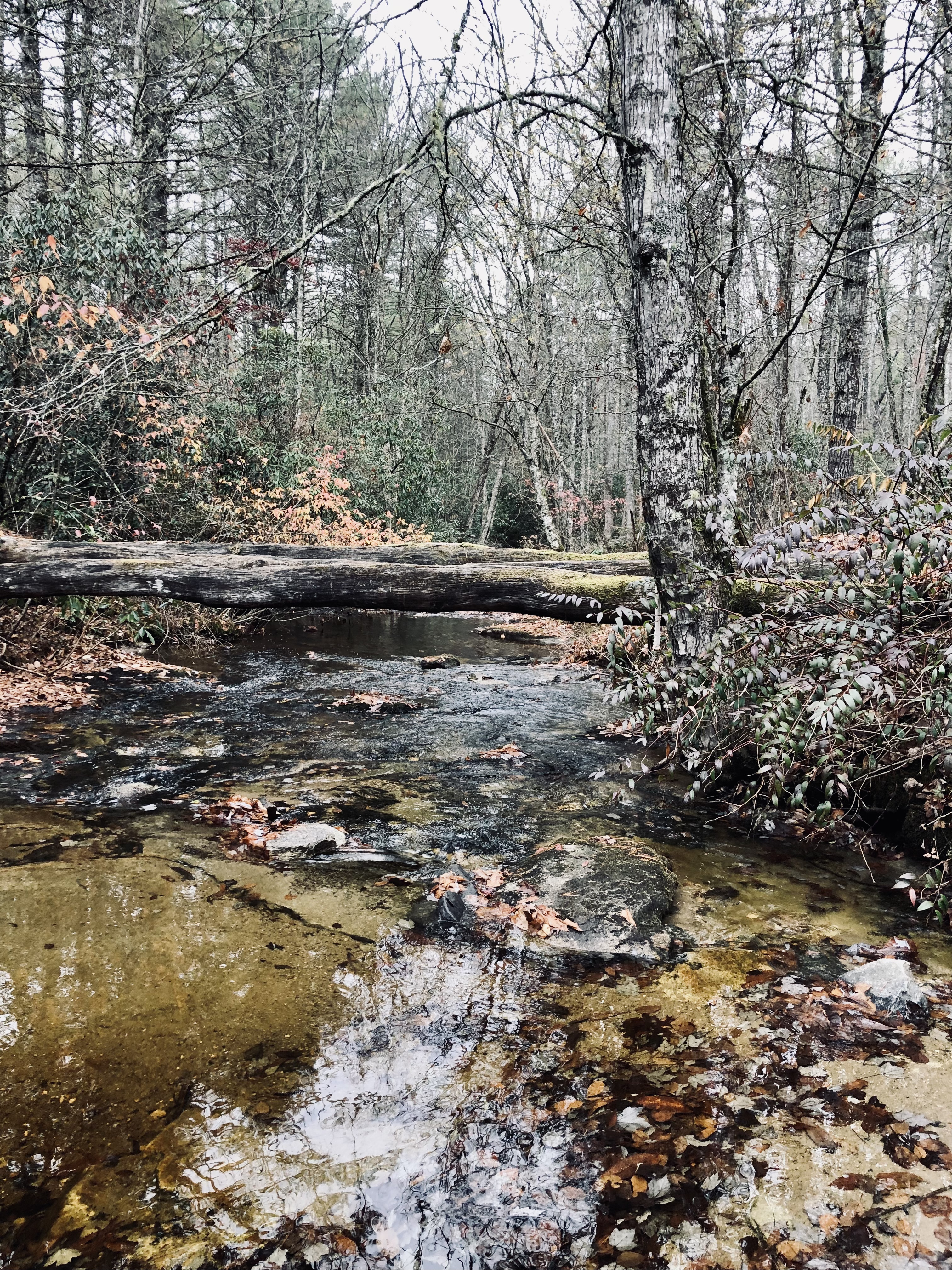
Search & Rescue in Panthertown

At least they picked a pretty place to get lost.

This morning was spent rescuing some hikers from the Panthertown wilderness. There is not and never was a town in "Panthertown." It is named for the panthers, which are still regularly attested by backpackers in this area. Panthertown also includes a bear sanctuary region.

A map of today's SAR area.

Aside from taking a while, this rescue went as well as you could want. The hikers had a chilly night. One of them had fallen into a creek during the previous day, so her clothes were wet. They were from Colorado, so they weren't used to land navigation in heavily forested country where even clear landmarks can be obscured by trees and ridges. Making a fire in an alpine rainforest like this is not like making a fire out West, either: it takes a special skillset to know how to obtain sufficiently dry wood and get it going in this environment. 

Still and all, everyone is fine and now back on their way to food and rest somewhere warm and dry. 

Halloween

The Fire Dog was worn out by all the children. 

Jack